 |




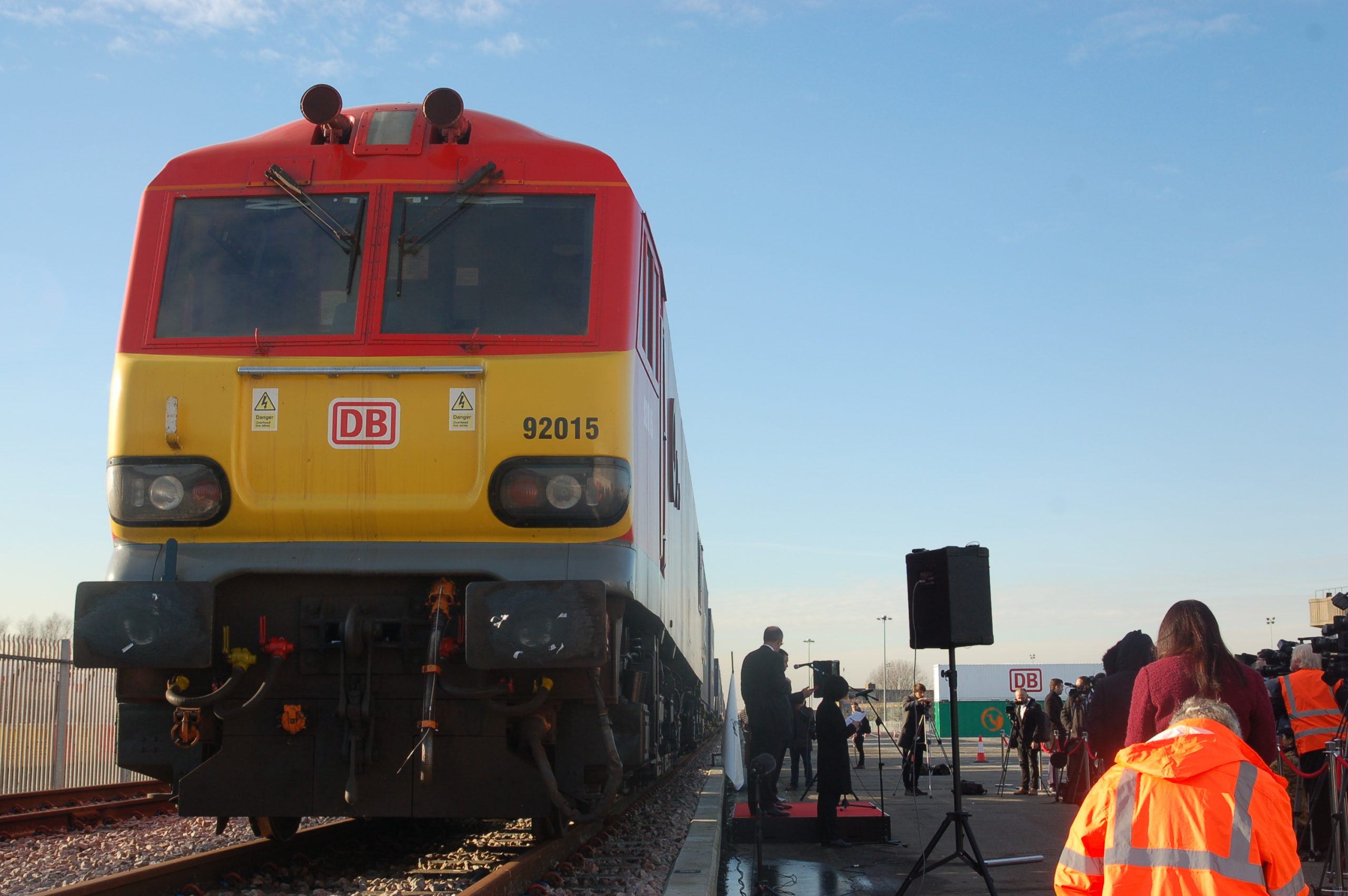
Chinese embassy officials joined media, local politicians, business leaders, and railroad industry personnel to greet the train. Trade Minister Zhu Qin from the Chinese embassy in London spoke warmly of the growing commercial trade that the service will support.
“In two weeks we celebrate the Chinese New Year. It is the year of the rooster who we regard as the break of day, a new beginning, just like this service,” Qin says. “It is 45 years since ambassadorial relations were created between our two countries. This is a tangible link between China and Britain which can only grow stronger.”
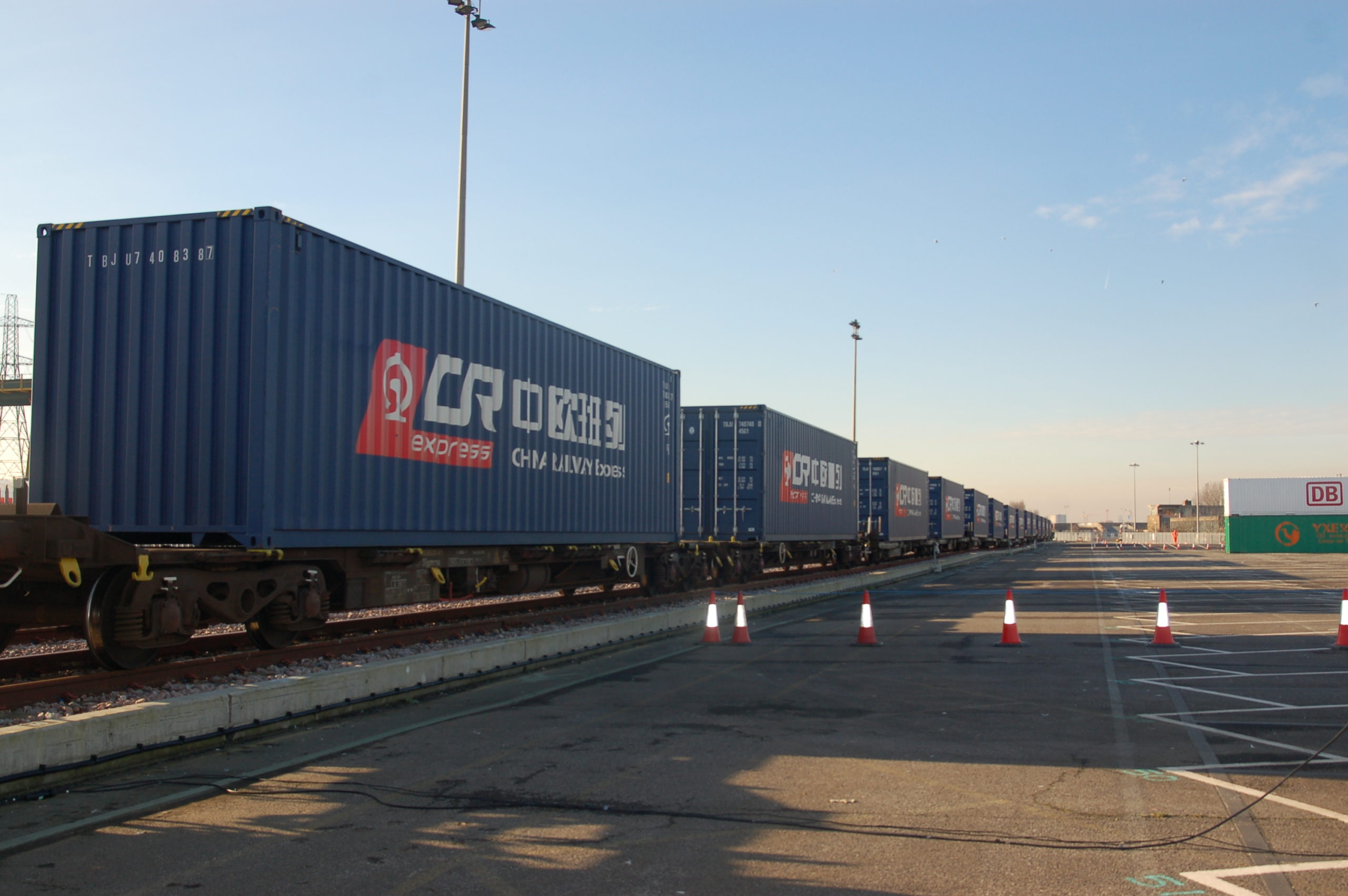
The train was announced by a cacophony of train horns as it entered the freight yard. It had been loaded with 34 40-foot containers in Yiwu for Europe. Six of the UK-bound containers were not permitted in the Channel Tunnel for safety reasons and went via a ferry crossing. The twelve Chinese Railway Express containers that arrived in London were loaded primarily with textiles and other consumer goods.
“It is great that this train has arrived here in London with merchandise for the British market,” says David Martin, Director of the China-Britain Business Council. “I look forward to the return segment when quality British goods are being sent in the other direction.”
The Rail Freight Group, an industry body that promotes freight by rail, welcomed the initiative as a further effort to remove containers from Europe’s crowded roads.
The 18-day expected transit time is under half that of a typical sailing from Shanghai to Europe.
Power haul
The train was provided with two locomotives as the Channel Tunnel link is electrified while the Barking depot is not electrified. Pulling the train was 23-year-old Class 92 92015, a dual-voltage electric locomotive which can run on 25 kilovolts A.C. from overhead wires or 750 volts D.C. from a third rail. It was designed specifically to operate services through the Channel Tunnel between Britain and France and is based at Crewe. The 139 ton loco has a top speed of 140 mph.
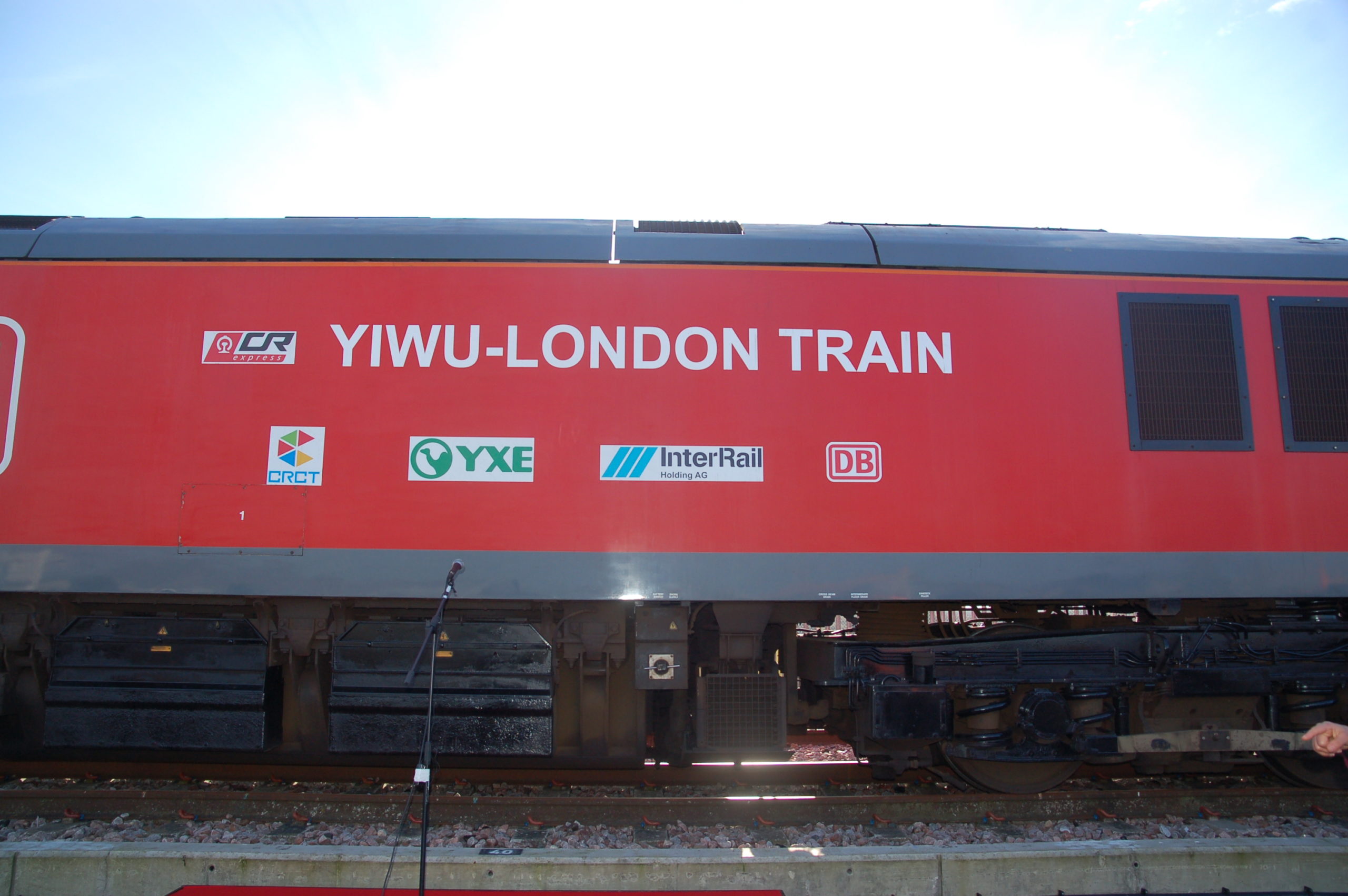
In the rear was 17-year-old EMD-built Class 66 66136, a six-axle diesel electric freight locomotive based in the Midlands. It weighs 143 tons and has a top speed of 105 mph. The locomotives, both in DB livery, were embellished with logos associated with the operation.
Initial suggestions are that the service will operate weekly in a west-bound direction until traffic can justify a daily service.
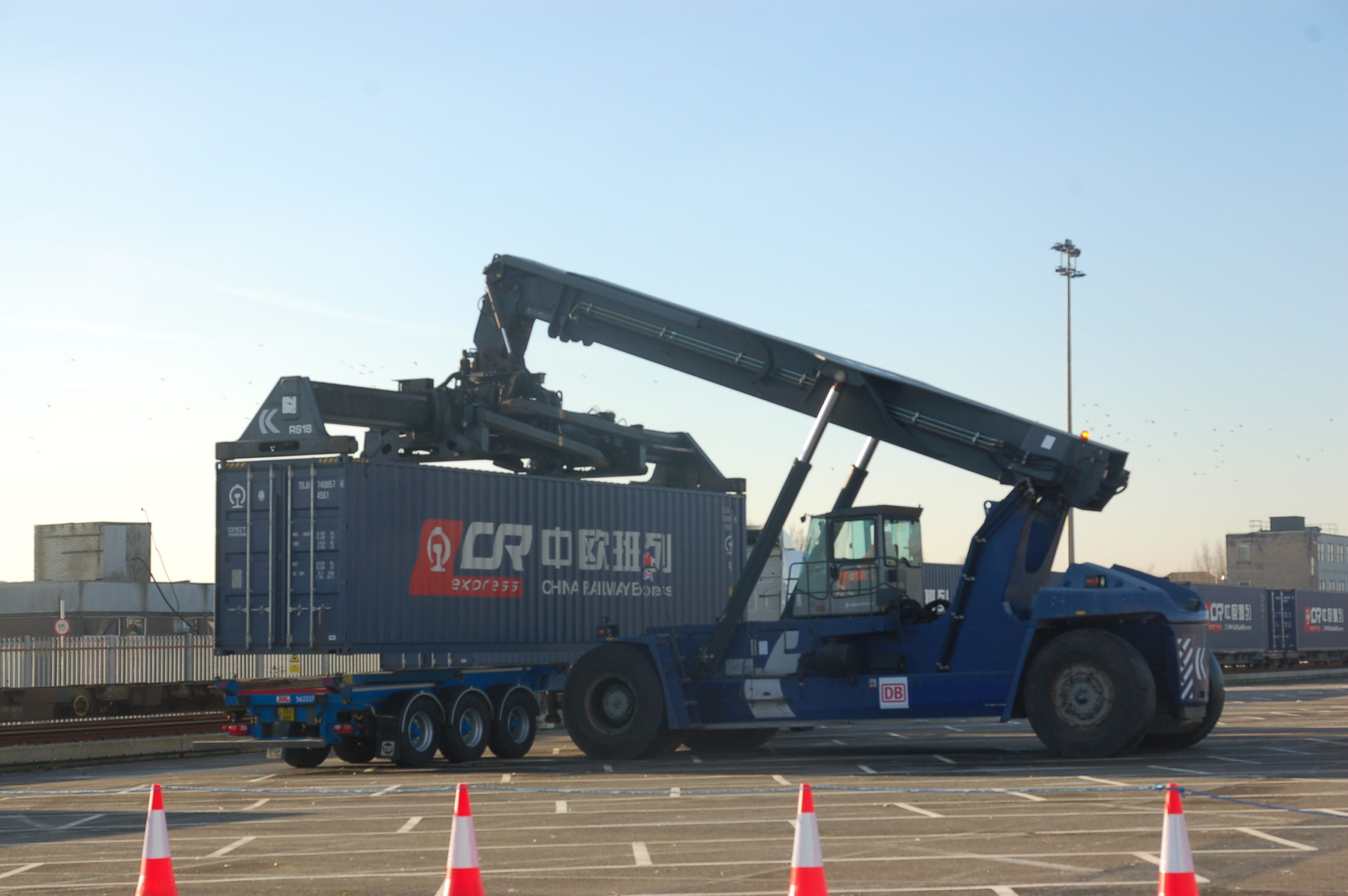
After the official speeches, guests were entertained by a troupe of Chinese dragon dancers. They then watched a demonstration of how quickly a crews can unload a container.
The train was operated by the Swiss-based multinational freight forwarder InterRail Group on behalf of Beijing-based China Railway subsidiary China Railway International Multimodal Transport. DB Cargo was responsible for the Duisburg–London section via the Channel Tunnel. The containers required specifically for the UK were loaded on to Deutsche Bahn’s container platforms at the Duisburg container terminal, which are specially approved for the Channel Tunnel.
The train traversed Kazakhstan, Russia, Belarus, Poland, Germany, Belgium, and France before reaching the U.K. Three gauge changes were encountered on the journey where containers were transshipped between the different gauges rather than wagons swapping wheel sets.
London is the latest destination added to the China–Europe rail link dubbed the “One Belt — One Road” corridor, an initiative of the Chinese government, which serves Duisburg, Germany; Madrid, Spain; Afghanistan; and Riga, Latvia.