Converting hump yards to flat-switching facilities was a key element of E. Hunter Harrison’s PSR strategy at Canadian National, Canadian Pacific, and CSX Transportation. And at CSX, where Harrison idled eight of the railroad’s dozen humps, executives zeroed in on a target number of humps the railroad was likely to keep in operation.
But the focus on shutting down humps is misplaced, Vena told an investor conference this week. Instead, the emphasis should be on reducing car handlings and moving them across the system as quickly as possible.
“Did we shut down and curtail operations at two hump yards? Absolutely. Is there probably more that we’re going to do? Absolutely,” Vena says. “But at the end of it what it comes down to is: What can you do to move a railcar faster? A hump yard works very efficiently. There’s nothing better than a hump yard when you’re humping 1,800 cars and you’re trying to classify them.”
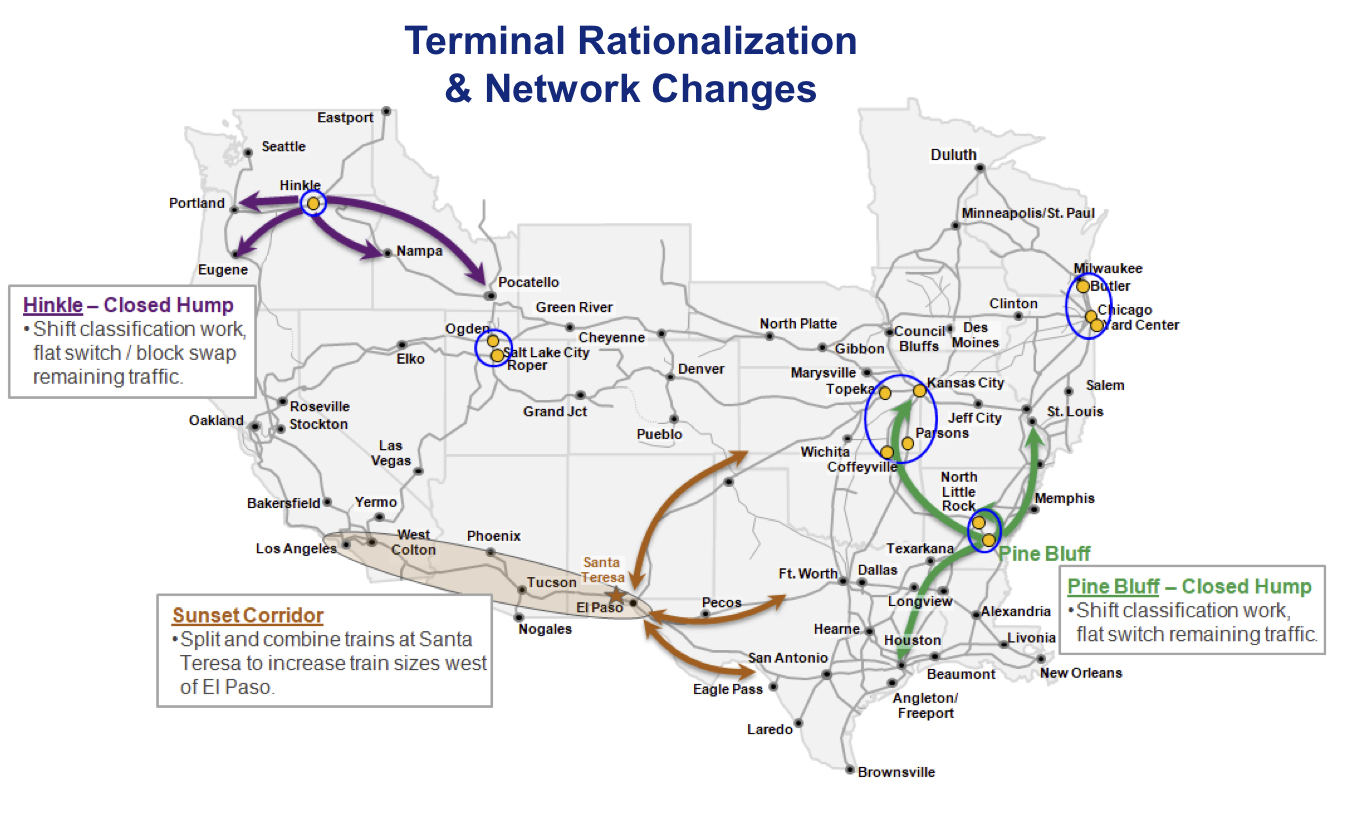
But if you’re classifying only 1,000 cars per day at a hump yard, you’re better off figuring out a better place to handle that traffic, Vena says. That’s what UP did when it idled the humps at Hinkle, Ore., and Pine Bluff, Ark., earlier this year.
UP did not have a lot of local traffic that needed to stop at Hinkle, for example.
“So you’ve got a step in the process that you don’t need,” Vena says.
Removing intermediate switching is key to improving car velocity, Vena says.
“If I can only touch it at L.A. and go all the way to Chicago with it, that’s what I want to do,” Vena says.
Vena says he’s not sure how many hump yards UP will ultimately have in its network — and that observers can’t infer how many UP should have based on the numbers at other Class I systems.
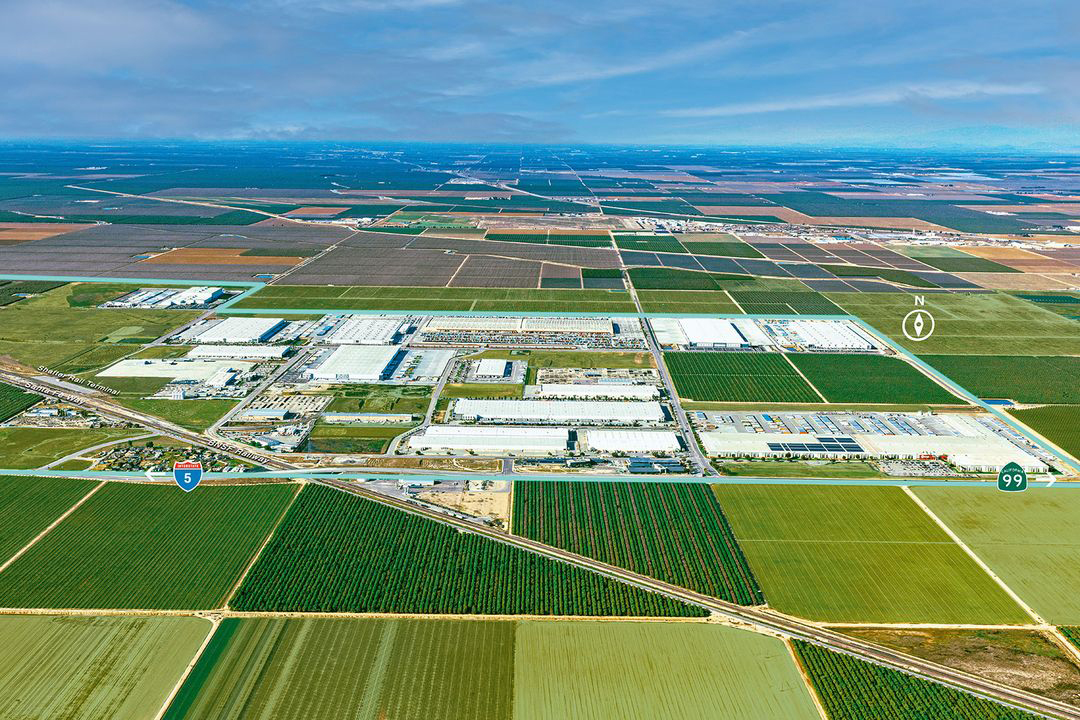
UP paused construction of Brazos Yard, the $550 million hump yard that was being built near Hearne, Texas, to classify cross-border Mexico traffic as well as volumes destined to and from the Houston area.
Construction was halted because UP doesn’t yet need the yard’s classification capacity and the money earmarked for Brazos could be better spent this year on new and extended sidings that will enable the use of longer trains on the Sunset Route west of El Paso, Texas.
“When we look at the network that we have today, you look at every facility you have and you decide whether you can handle the business and have growth in the business at this point with the capacity that you have,” Vena says. “You do not want to miss and have a railroad that is not capitalized properly so that you can’t handle growth in the business that you see in the next few years.”
After that review — and boosting yard productivity elsewhere in the system — UP concluded it does not yet need Brazos.
Before CN veteran Vena arrived at UP in January, CEO Lance Fritz said the railroad’s Southern Region hump yards were all operating near, at, or above fluid capacity.
Vena says the best planners in the company thought the hump at North Little Rock, Ark., for example, could handle a maximum of 1,800 cars per day.
“With a few tweaks and a little bit of hard work — getting some dirt under the fingernails — we’re doing 2,500-2,600 cars there,” Vena says. “So if you do that, it changes the infrastructure needs that you have.”
Vena says UP will move ahead with the Brazos project when it needs more classification capacity.
Vena spoke on Tuesday at the Bank of America Merrill Lynch 2019 Transportation Conference.