Both new lines were built using a public-private financing arrangement with two private concession companies. This approach was chosen to reduce the amount of government funds used, but will result in higher user access charges for trains operating on the line. The 189-mile Tours to Bordeaux project cost $10.3 billion, of which 42 percent was privately financed with a 50 year concession whilst the shorter 114-mile Le Mans to Rennes line cost $3.8 billion, of which 26 percent was privately funded with a 25 year concession. Both new lines have several new connections to existing parts of the rail network enabling cities near but not actually on the line to benefit from new high-speed service.
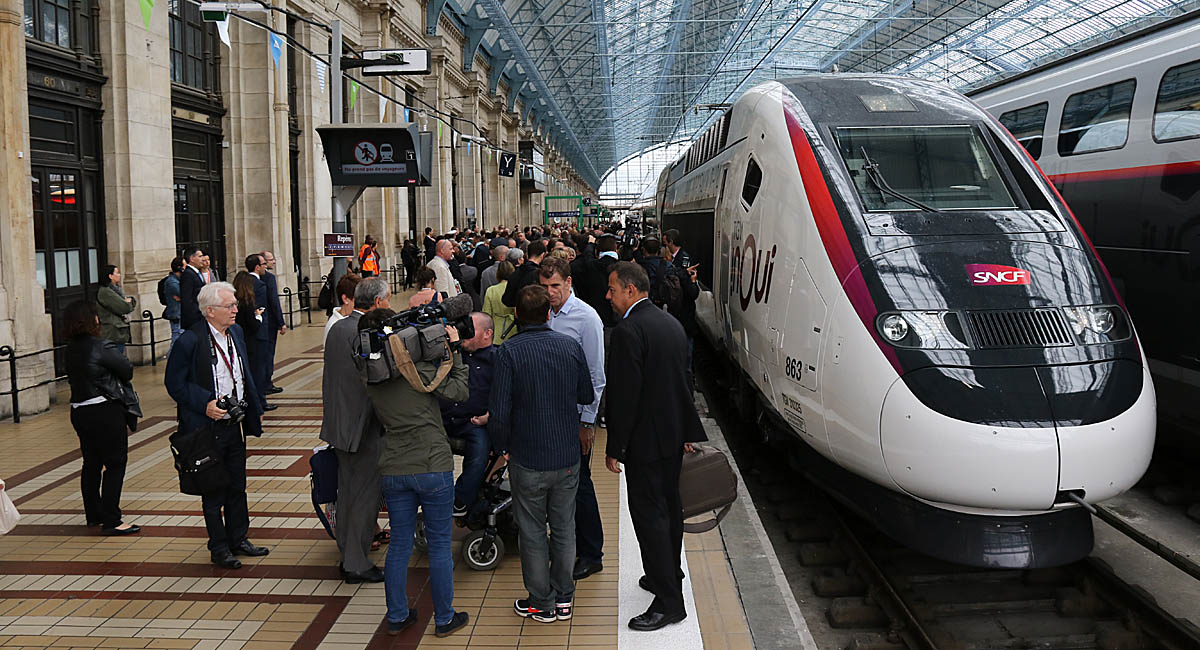
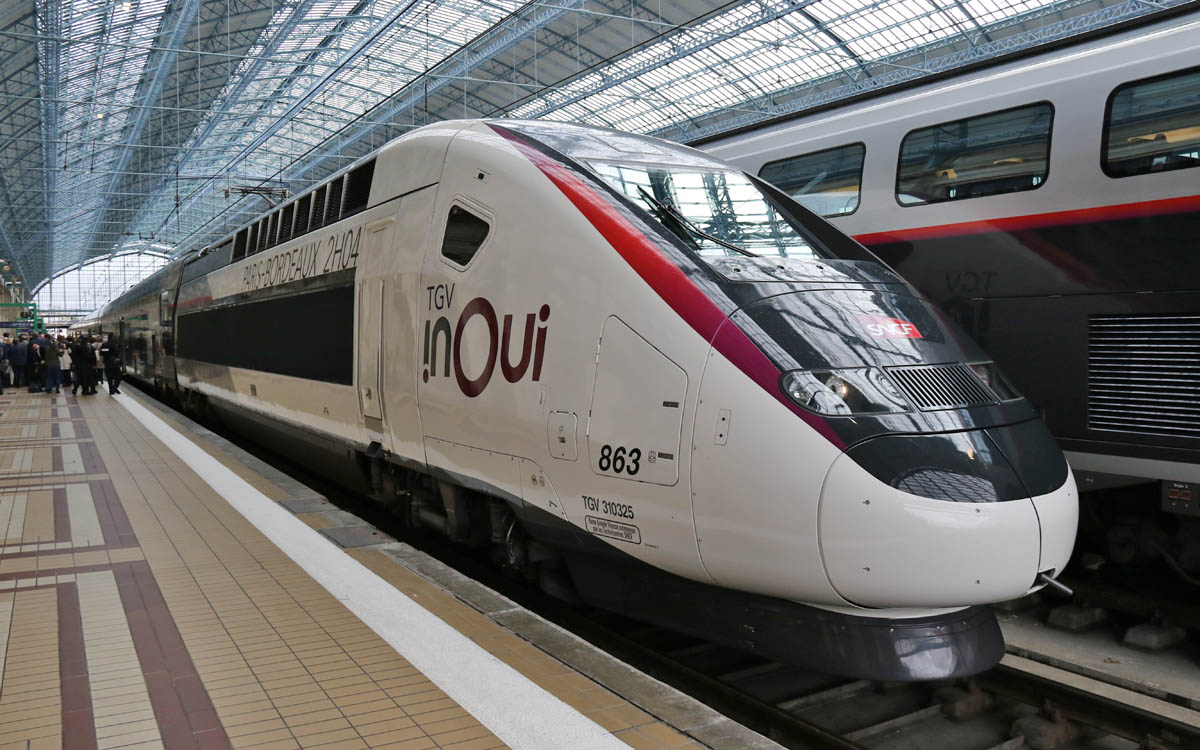
Major passenger stations on both routes have been renovated in advance of the new high speed services. The historic station at Bordeaux has been totally renovated with its large iron-and-glass roof – one of the largest at any station anywhere in the world – completely repainted for the first time in about 100 years and fitted with new glass to replace the old.
Regular passenger services on both new lines started July 2. Journeys from Bordeaux to Paris are reduced to 2 hours, 4 minutes, down from 3 hours, 15 minutes. Before any of the high-speed line was built, the fastest time in 1990 was 4 hours, 5 minutes with 125 mph operation on the original line. The Rennes to Paris journey is now only 95 minutes, a reduction of 39 minutes.
SNCF plans to offer more trains along with faster service on the new routes with 27 pairs of TGV trains daily Paris to Bordeaux and 20 pairs of TGV trains from Rennes to Paris.