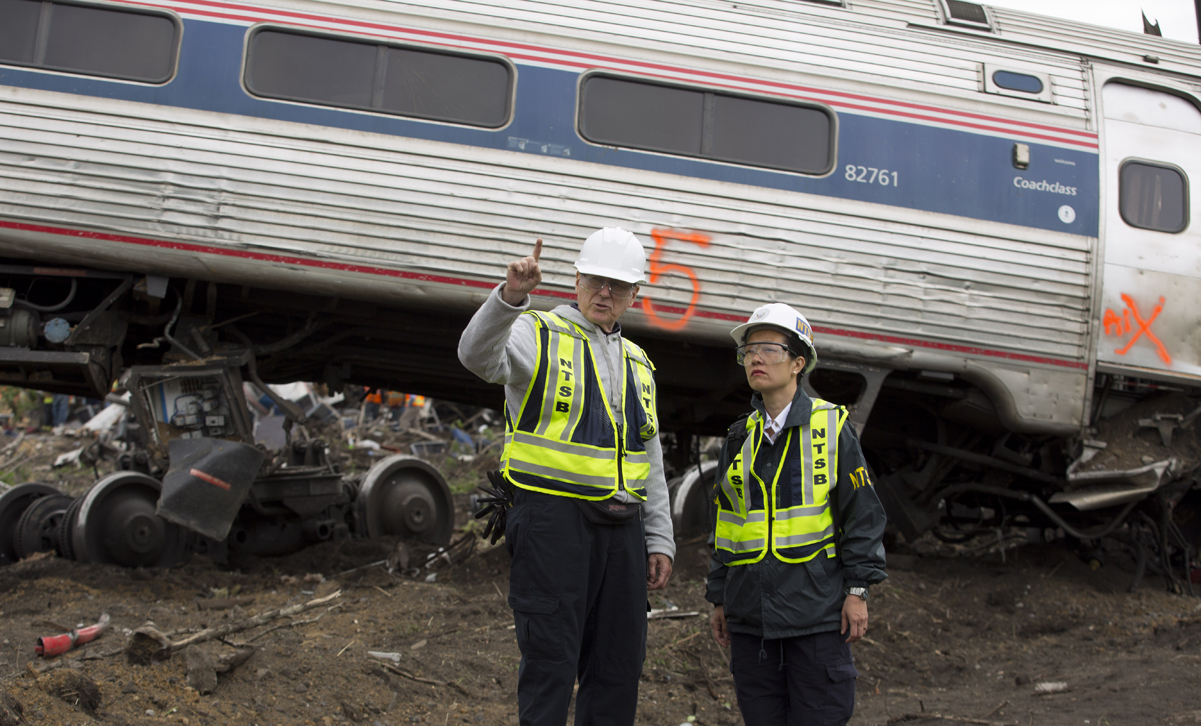
PHILADELPHIA — The trial of engineer Brandon Bostian, at the controls for the fatal derailment of Amtrak train 188 in 2015, is slated to go to the jury today (Friday, March 4) after the prosecution and defense presented closing arguments on Thursday — although the judge indicated skepticism that the evidence supports the prosecution’s case.
Bostian, facing charges of causing a catastrophe, involuntary manslaughter, and reckless endangerment from the derailment that killed eight people, did not take the stand during the defense’s presentation of its case.
Jurors will be asked to determine if the errors that led Bostian to take the train into a 50-mph curve at 106 mph constitute a crime; the prosecution has characterized the events as gross negligence, while the defense contends Bostian made an honest mistake.
The Associated Press reports Common Pleas Court Judge Barbara McDermott said she wasn’t sure the evidence was sufficient to prove the crimes, and that McDermott said she may review the sufficiency of the evidence after the jury returns its verdict.
Interpretation of radio reports that are said to have distracted Bostian — reports of rocks being thrown at other trains in the area — was prominent in both sides’ closing arguments, the Philadelphia Inquirer reports.
Defense attorney Brian McMonagle asked if Boston should be punished for a mistake he did not create, saying the individuals throwing rocks at a commuter train and an Amtrak Acela created the distraction. Prosecuting attorney Christopher Phillips argued Bostian’s training should have prepared him to deal with projectiles being thrown, and that the engineer negligently accelerated past the track’s speed limit despite knowing the risks. The prosecution also called into question whether Bostian did not know where he was prior to the derailment, citing conflicting statements by the engineer at the crash scene and later.
Share this article