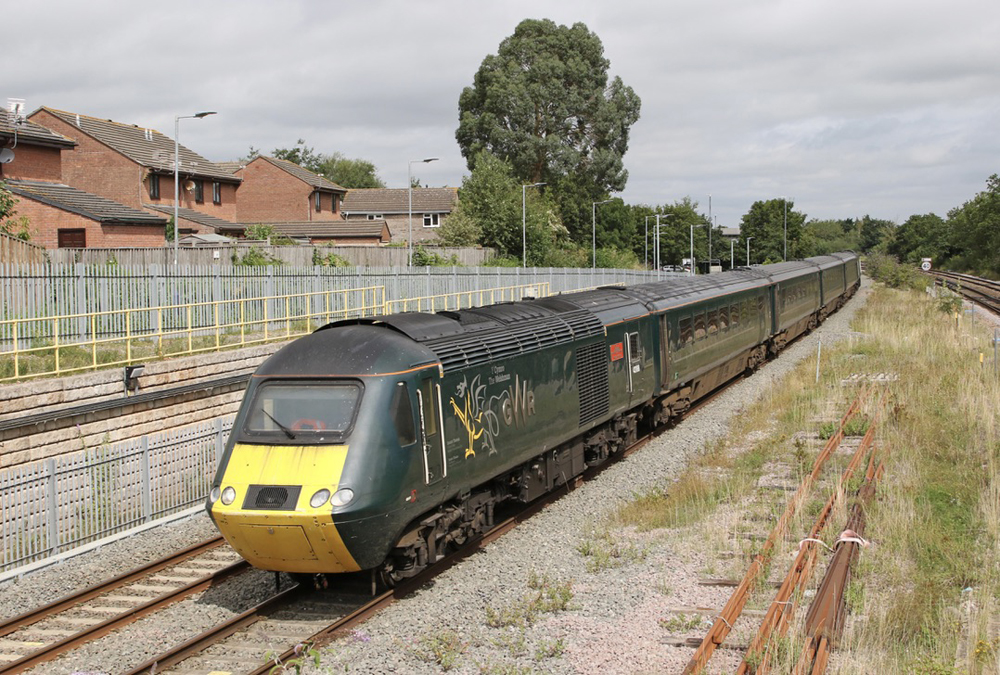
Some of Britain’s iconic High Speed Train locomotives and cars are currently in transit across the Atlantic to Mexico for use on a rail line being rebuilt for the Mexican government in a project led by the country’s Navy.
The British HST equipment, along with two Spanish built ‘tram-train’ light rail vehicles previously used for a short-lived service in Puebla, Mexico, will be used on the Tehuantepec Isthmus Railway (Ferrocarril del Istmo de Tehuantepec) which is being rebuilt. A small number of passenger cars and locomotives have also arrived from the U.S. for the same project.
The Isthmus Railway crosses the narrowest section of Mexican territory, connecting the Gulf of Mexico port of Coatzacoalcos, served by CG Railway’s rail ferry from Mobile, Ala., with the Pacific Ocean port of Salina Cruz. Opened in 1907, the 214km (134-mile) line was part of shipping and rail routes from Hawaii and San Francisco to New York until the 1950s. Like the rest of Mexico’s railroads. it was privatized in the 1990s. The line was leased by a Genesee & Wyoming subsidiary until 2007, after which it wasn’t used. The Mexican government announced its $1.2 billion rebuilding program in mid-2020, which will enable the line to handle double-stacked containers. It will also offer passenger service.
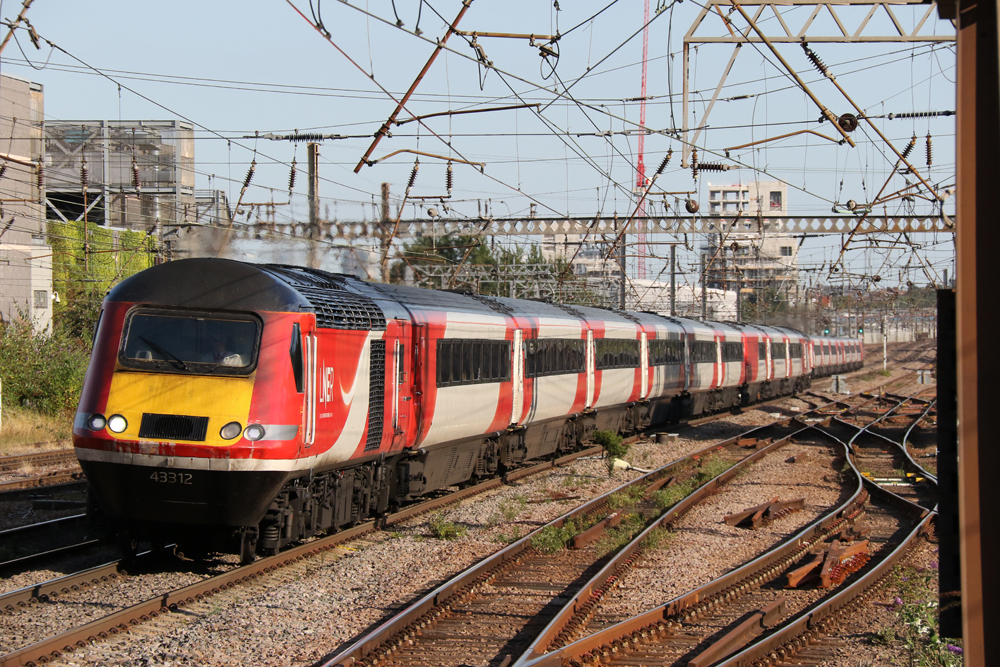
The railway has bought eleven HST cars and three HST Class 43 diesel power car locomotives. These trains, introduced from 1976 to 1982, were used in Britain at up to 125 mph, typically with seven or eight trailer cars sandwiched between power cars at each end. The equipment shipped consists of power cars formerly used by British operator Great Western Railway and trailer cars used on the London- York-Edinburgh route of operator LNER. The trains have been largely replaced in the last decade; most remaining examples, which had been modernized with new interiors, will be taken out of service in the next year [see “Plan to close English ticket offices brings controversy,” Trains News Wire, July 29, 2023]. All of the diesel power cars were equipped with new engines as part of mid-life refurbishment; the former Great Western examples have 2,250-hp MTU V16 4000 R41engines.
Unconfirmed reports in Britain suggest the initial shipment may be the first of several, although leasing company Angel Trains — which owns the equipment shipped so far — has declined to offer any public confirmation.
The HST equipment left the English east coast port of Great Yarmouth on the German-registered BBC Arkhangelsk on Aug. 9, and via calls at Castellón, Spain, and Corpus Christi, Texas, is bound for Coatzacoalcos, Veracruz, Mexico. The ship is due to arrive early on the morning of Sept. 7.
U.S. equipment also acquired
In late August Mexican President Andrés Manuel López Obrador announced at the delivery of one of the line’s locomotives, former Union Pacific SD70M No. 4738, and that the tests of the Tren Interoceánico/Interoceanic train have begun. He said regular service would begin on the line in September.
In addition to the SD70M presented publicly, another similar locomotive has been acquired, along with three ex-Amtrak Amfleet cars, sold by equipment sales and leasing firm Railexco. Those were delivered in late August via the ferry from Mobile to Coatzacoalcos. Also acquired by the Isthmus railway from Railexco was dome-coach Stampede Pass, which previously had been at the Western Maryland Scenic Railroad. That car was built by Budd in 1954 for for the Chicago, Burlington, & Quincy for service on the North Coast Limited.
Mayan Train fleet being delivered
The rebuilt Interoceanic route is not the only new passenger rail line in Mexico nearing completion. The 950 km (594-mile) Mayan Train/Tren Maya route has been under construction since mid-2020; it is largely new, although some sections are rebuilt former freight lines.
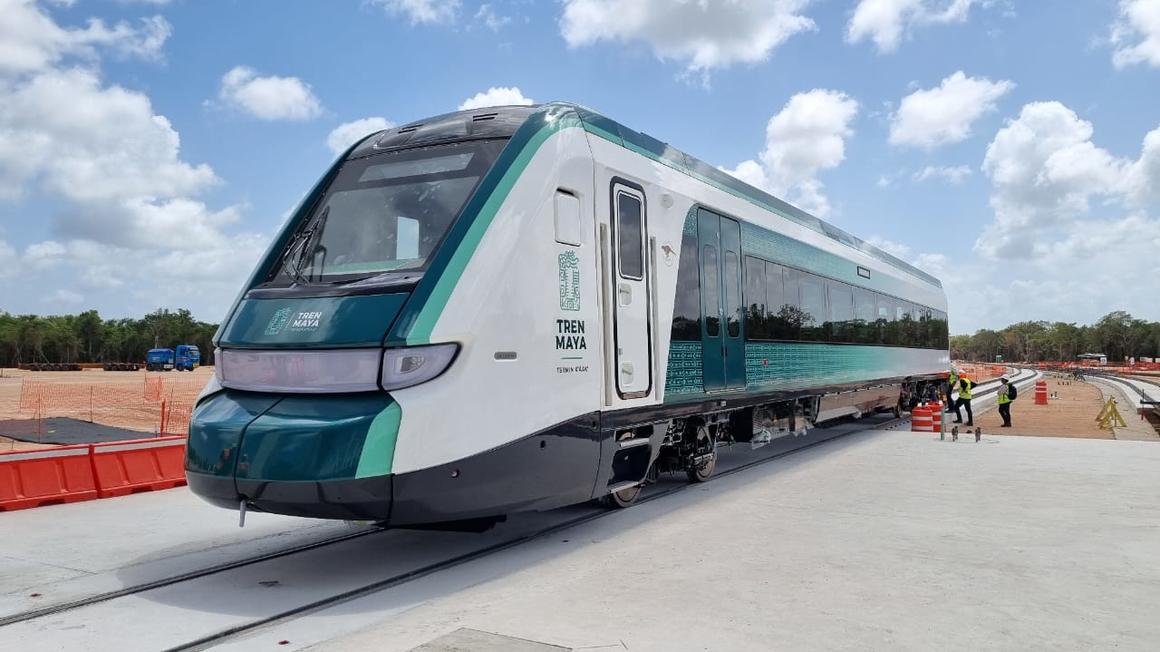
When open, which is penciled in for 2024, the new line will enable tourists visiting Cancún to visit tourist sights inland, especially the ruined Mayan cities in the Yucatán such as Chichén Itzá – hence the Tren Maya / Mayan Train name given to the new route. The line will have 16 stations and will be used by both passengers and freight trains. It will be operated by a company owned by the Mexican military.
Passenger services will use 42 new Alstom-built X’trapolis multiple-unit trainsets; 219 cars in several formats are on order. These are being delivered as a mixture of 10 straight diesel multiple-unit sets and 32 hybrid dual-mode diesel and electric trains, as parts of the route serving Cancún will be electrified. The X’trapolis design has been sold widely around the world. Alstom is building the trains in Mexico at its Cuidad Sahagún, Hidalgo, plant. Alstom delivered the first of the new trains in July.
The line is being built using locomotives imported from as far away as China; with some Chinese companies among the contractors, at least eight ex-Chinese Railways DF-4D locos are in use. The construction has also seen Vossloh type G2000 units and older locomotives imported secondhand from Europe.
Share this article