
O. Winston Link Museum opens

Click to enlarge.

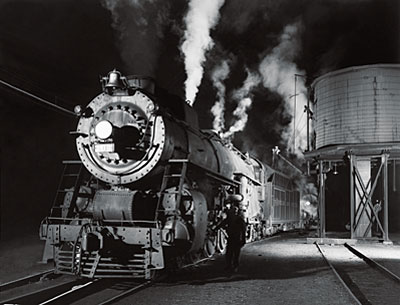
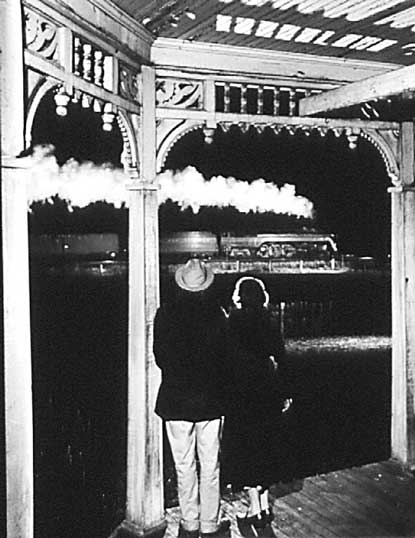
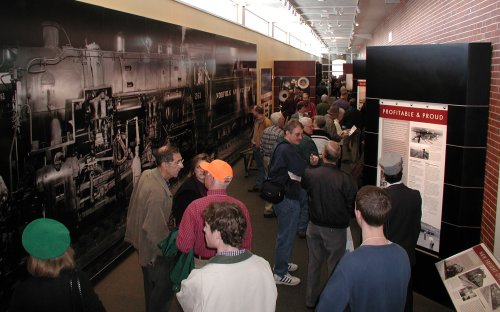
Visitors gather in the main gallery of the new O. Winston Link Museum during its grand opening ceremony on January 10, 2004. Robert S. McGonigal In Roanoke, Va., an estimated 1000 people attended grand opening ceremonies for the O. Winston Link Museum on Saturday, January 10, 2004. The museum, located in the former Norfolk & […]

Read More…

Robert A. Hadley

Classic Trains logo

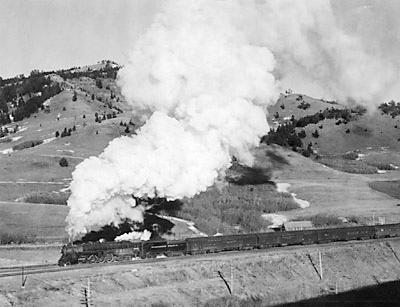
From his home turf in Michigan and the Upper Midwest, Robert A. Hadley documented the transition from steam to diesel on American railroads. While Hadley often used conventional angles in his photographs, unlike other photographers he would step back and take in more of the scene, using generous foregrounds and backgrounds to demonstrate that the […]

Read More…

Stan Kistler

Click to enlarge.

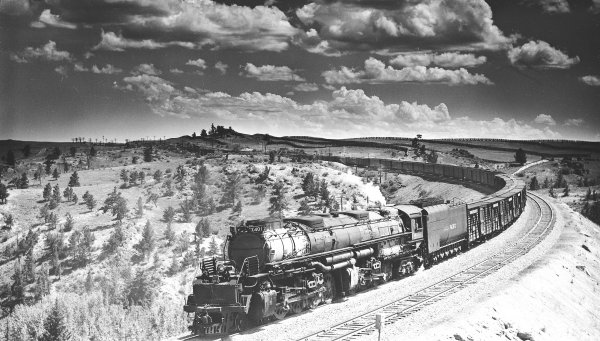
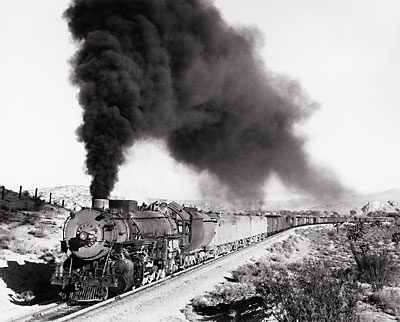
A Union Pacific 2-10-2 helps a four-unit Alco FA diesel roll a westbound freight up Cajon Pass near Victorville, Calif., in October 1950. Stan Kistler Stan Kistler is a well-known professional photographer and photofinisher in Grass Valley, Calif. Kistler began photographing trains in the early 1940s when he was growing up in Pasadena, documenting the […]

Read More…

NORAC: Northeast Operating Rules Advisory Committee

Modern railroad dispatching systems and movement controls have evolved by trial and error into a two-tier system of centralized dispatching and trackside signaling. But while the physical means of controlling traffic converged on a few types of lineside signal equipment – semaphores, position-lights, searchlights, etc. – the colors and arrangements (“aspects”) they presented, and the […]

Read More…

A railroading staple: The caboose

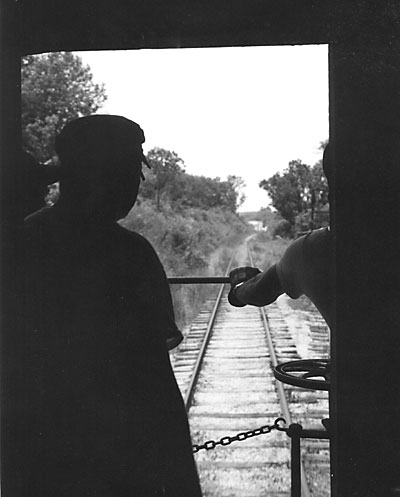
Caboose For more than a century, the caboose was a fixture at the end of every freight train in America. Like the red schoolhouse and the red barn, the red caboose became an American icon. Along with its vanished cousin the steam locomotive, the caboose evokes memories of the golden age of railroading. There are […]

Read More…

Booster units

Say you’re an engineer running a multi-unit diesel consist on a freight train. During the trip, it becomes necessary to remove the lead unit because of a grade-crossing entanglement, some mechanical problem, or to give to another (underpowered) train. No problem – the second unit can lead as well as the first, so you resume […]

Read More…