
Improve short locomotive wiring in 7 steps
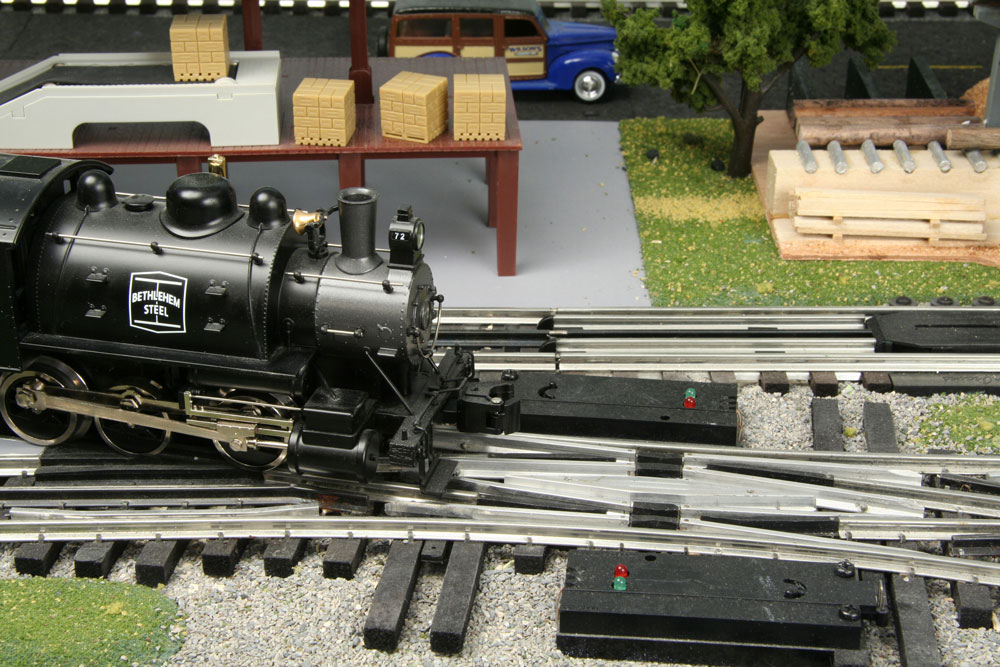
A short O gauge 0-6-0t steam switcher approaches a pair of track turnouts

Some of today’s short-wheelbase locomotives have issues with the prototypical switches and narrow-angle crossings that make an O gauge railroad look realistic. Here’s a quick fix that will allow any locomotive­ ­- even this economical Bethlehem Steel saddle tanker from Lionel – to perform reliably over the troublesome trackwork. THIS IS A PHOTO FEATURE. CLICK […]

Read More…

Weathering with powdered pastels

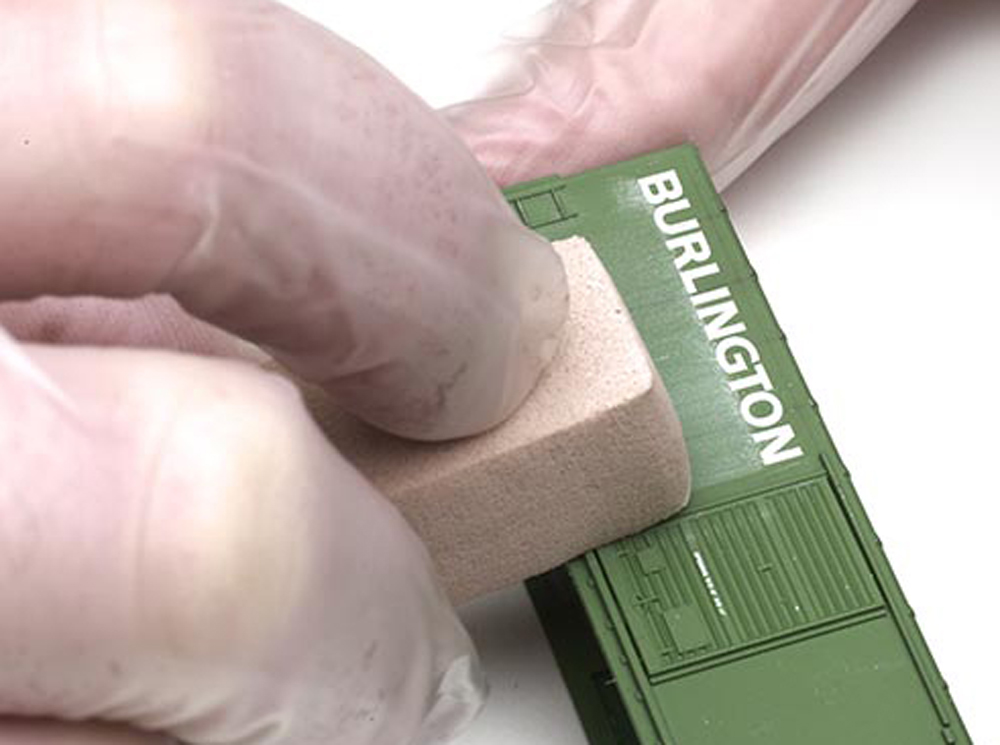
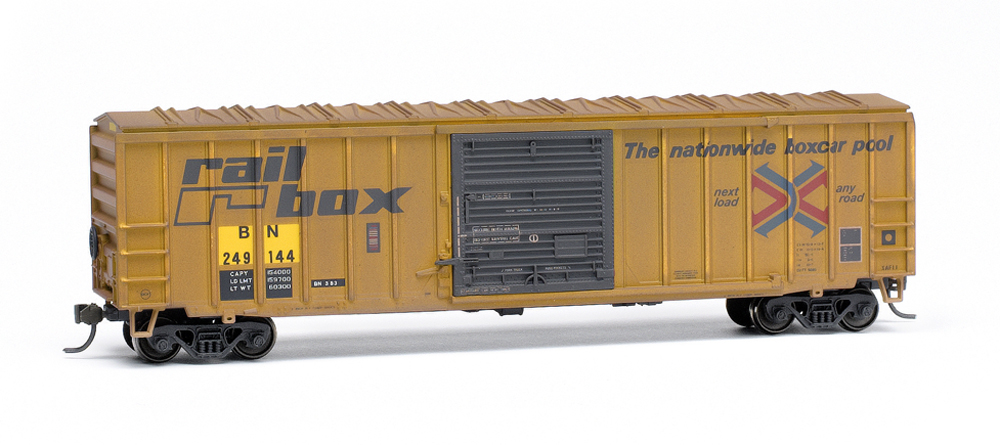
Simulating faded lettering with pastels and sponge.

Powdered pastels have long been a popular choice for weathering locomotives, freight cars, and buildings. Several firms offer ready-to-use weathering powders, or you can make your own by scraping pastel sticks with a hobby knife. I started work on this N scale Micro-Trains boxcar by spraying the entire car with Model Master Lusterless Flat. The […]

Read More…

Ballast track easily

Applying Woodland Scenics Scenic Cement with pipette.]

On Model Railroader’s Beer Line project layout, which was set in 1947 Milwaukee, I ballasted the track on the entire layout using a favorite technique. I used a 50:50 blend of Highball Products Light Gray and Dark Gray limestone ballast, which looks similar to ballast used by the Milwaukee Road [Highball Products ballast is no […]

Read More…

Tips for better passenger cars: Car height

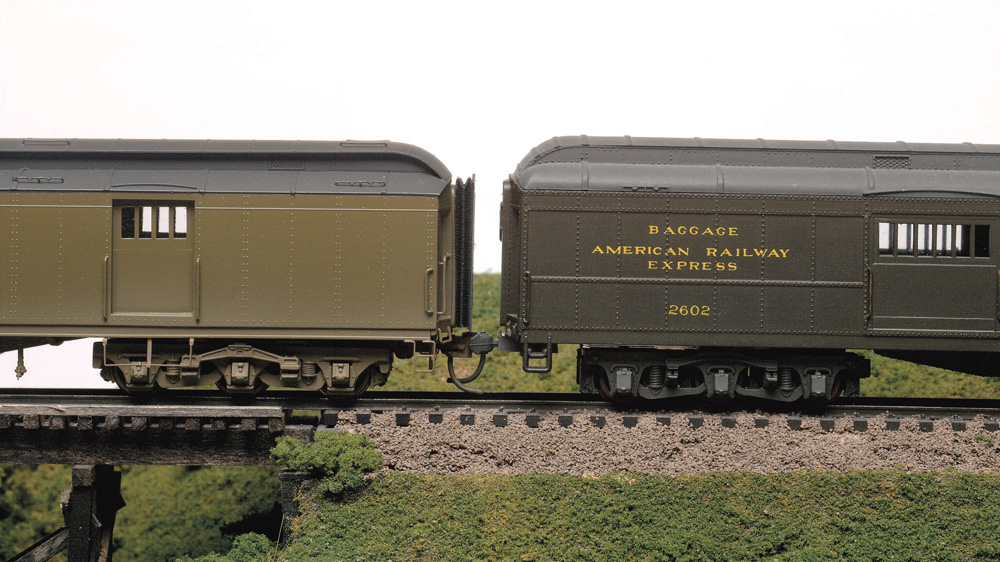
Two olive green HO scale heavyweight passenger cars are compared for height.

The height of freight cars can vary tremendously, but passenger car heights were very consistent in late steam/early diesel times. Most heavyweight cars, including the Pullman Co.’s standardized sleepers, measured 14 feet from the rails to the top of the roof. It’s important to me to know that Atchison, Topeka & Santa Fe heavyweights were […]

Read More…

10 tips for using MTH Trains’ RealTrax

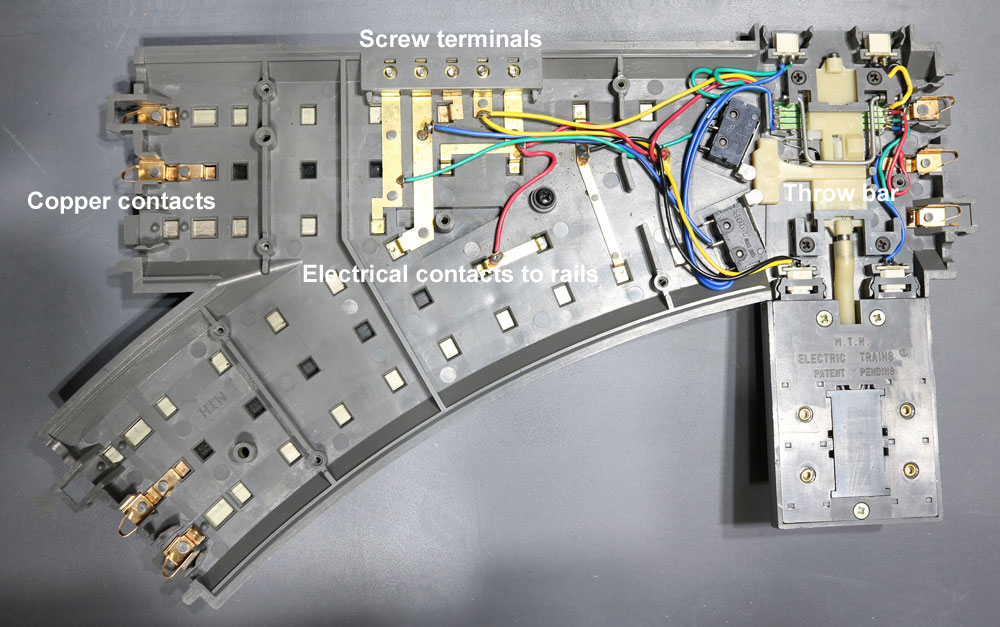
RealTrax switch with bottom cover removed

Here are a few tips and tricks when working with MTH RealTrax:   The two ground rails are not tied together. This is true for other track systems using non-metallic ties, including those from Atlas O and GarGraves. If you add a switch, you need to add a lockon and make sure it’s on the […]

Read More…

Cut door and window openings

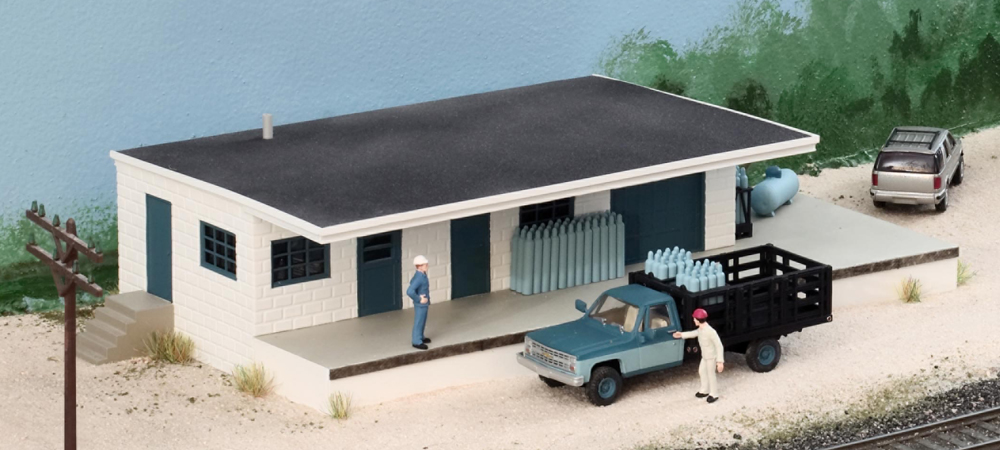
HO scale liquefied petroleum gas dealer at Hales Corners on Milwaukee, Racine & Troy.

I enjoy scratchbuilding structures from styrene because it’s easy to cut, it takes glue well, and it’s readily available, 1. Though cutting wall sections is easy, making door and window openings can be tedious. However, with the Nibbler cutting tool, you can cut openings quickly and accurately. The Nibbler is a hand-operated punch-and-die tool that […]

Read More…

Make couplers look realistic

Atlas Model Railroad Co. Electro-Motive Division GP40 diesel locomotive with weathered couplers.

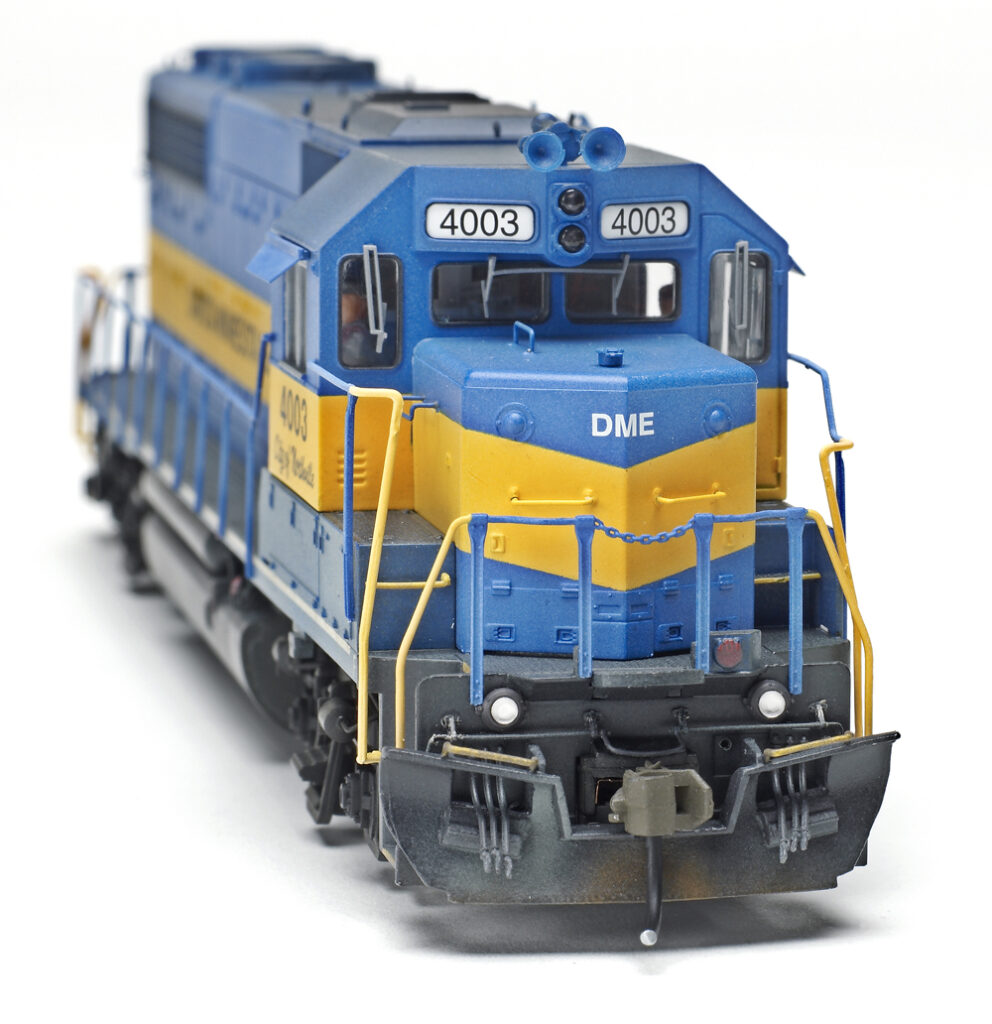
I’ve seen many well-weathered models, but too often the effect is ruined by shiny black couplers with bright metal centering springs. But in three easy steps, you can weather your couplers to look more prototypical, 1. On my Dakota, Minnesota & Eastern GP40, I wanted the couplers to look older, so I sprayed them with […]

Read More…

Tune up turnouts

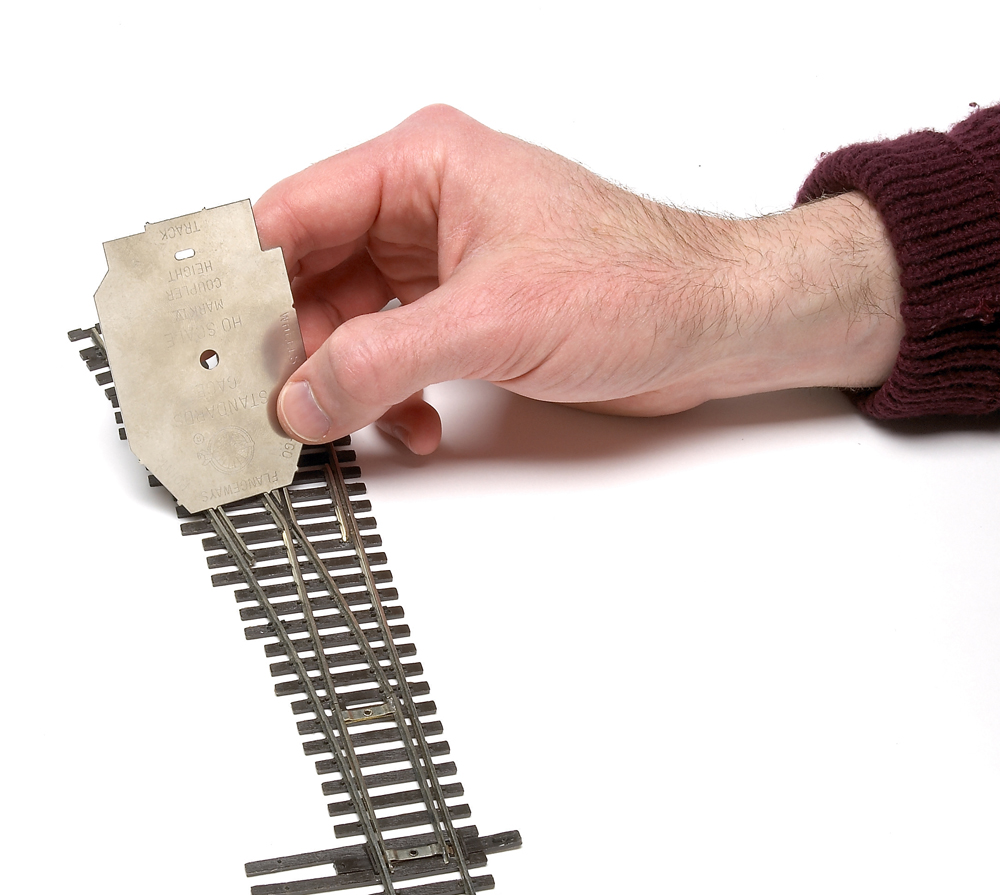
Checking a turnout with a National Model Railroad Association standards gauge.

Many modelers build their layouts with commercial turnouts with the expectation that these components are ready to install. However, building my HO Ohio Southern has convinced me that most commercial turnouts are really “ready to finish.” They may need a little tune-up to ensure smooth performance and reliable operation. Gauge (the proper spacing of the […]

Read More…

Simulate rust with makeup applicators

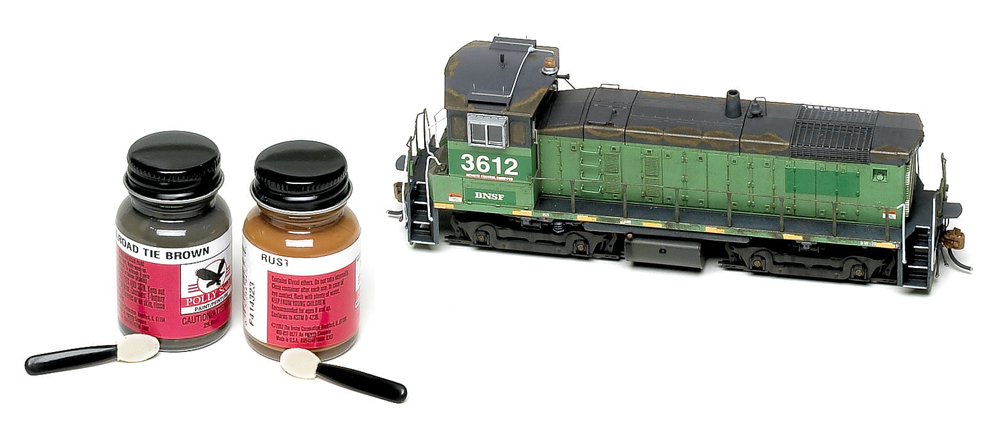
Athearn HO scale SW1000 weathered with acrylic hobby paints and makeup applicators.

When I asked my wife if we could walk through the cosmetic department at the local drugstore, she gave me a somewhat puzzled look. This part of the store is home to some fantastic weathering tools, including foam-tipped cosmetic applicators. I used these applicators to simulate rust and paint wear on this Athearn HO scale […]

Read More…