Survey finds New Yorkers are wary of return to transit NEWSWIRE

Survey finds New Yorkers are wary of return to transit NEWSWIRE

By Angela Cotey | May 15, 2020

| Last updated on November 3, 2020


News Wire Digest second section for May 15: Nova Scotia makes new deal to subsidize closed rail line; China sees increased rail freight traffic to Europe

Hudson_Yards_Lassen
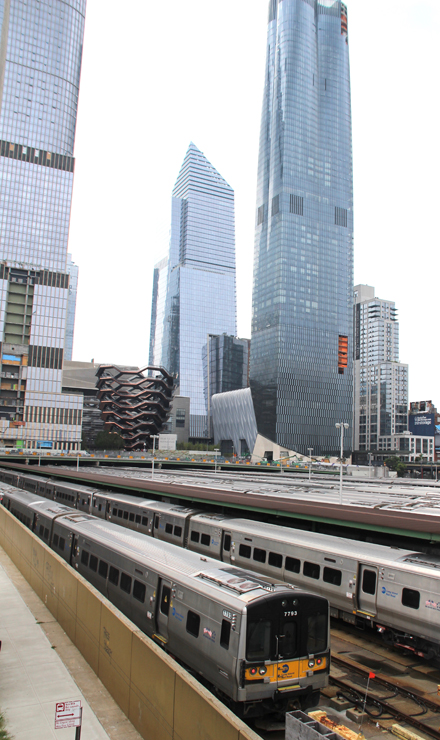
Long Island Rail Road trains await action at New York’s Hudson Yards. More than 40% of New Yorkers surveyed indicated they will avoid transit after the coronavirus pandemic.
TRAINS: David Lassen

More Friday morning rail news in brief:

— More than 40% of New York City residents surveyed say they plan to avoid mass transit when the coronavirus stay-at-home restrictions ease, while just 18.5% say they’ll return to their pre-virus transit use, according to results from research company Elucd. The New York Post reported that 31.5% said they would use transit less by choosing to walk, bike, or travel by car, while 61% said they’d feel more confident taking public transit if passengers were required to wear masks.

— The government of Nova Scotia continues to subsidize a closed rail line on Cape Breton Island, but will do so at a lower rate next year, the CBC reports. The line, part of Genesee & Wyoming’s Cape Breton & Central Nova Scotia Railway, has been inactive since 2015, but the government pays to keep it available while development efforts continue for a container terminal at Sydney, N.S. The government had been paying $60,000 a month, but has negotiated a new rate of $30,000 a month for one year. Nova Scotia Business Minister Geoff MacLellan had said he would need to see evidence of progress on the port project before continuing the subsidy, and indicated that development group Sydney Harbour Investment Partners has lined up significant funding.

— The coronavirus pandemic has helped boost freight rail traffic between China and Europe, with China Railway Corp. saying it had a record 976 trips in April, a 47% increase over the same month a year earlier. The Wall Street Journal, in a paywalled article, says the increased traffic has involved everything from personal protective equipment to automobiles, a first for the service. The increased rail traffic, representing the equivalent of four large container ships, has been helped by the cancellation of ocean shipping sailings because of decreased factory output and consumer demand.

Share this article