UP coal traffic has hit bottom, CEO says NEWSWIRE

UP coal traffic has hit bottom, CEO says NEWSWIRE

By Bill Stephens | February 27, 2020

| Last updated on November 3, 2020


Fritz tells investor conference that improvement is unlikely; BNSF coal volume has fared better

UP_Coal_GlenEllyn_Lassen
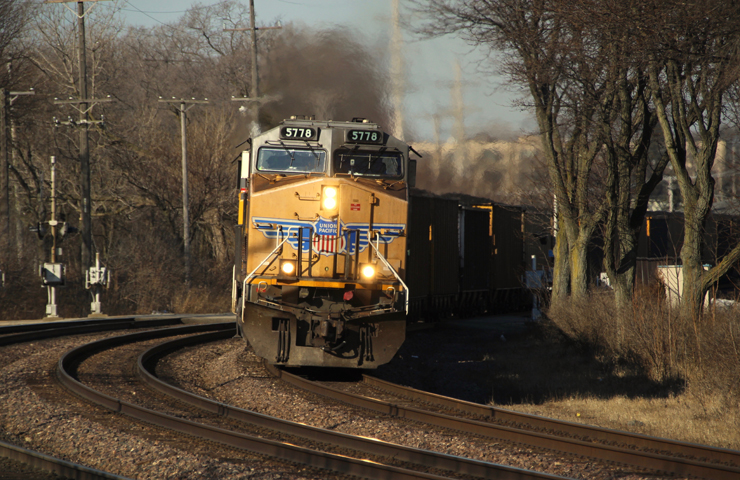
A Union Pacific coal train heads east through Glen Ellyn, Ill., on Feb. 23, 2020. The railroad’s coal traffic has hit bottom as low natural gas prices lead to shutdowns of coal-fired power plans, according to CEO Lance Fritz.
TRAINS: David Lassen

MIAMI BEACH, Fla. — Union Pacific’s coal traffic — which is down 30% this year, on top of a 16% decline last year — has hit bottom as only the most efficient coal-fired power plants remain in operation, CEO Lance Fritz says.

“We think that what you’re seeing right now is all about natural gas below $2,” Fritz told an investor conference earlier this month. “Once you’re in that ballpark, only the most efficient coal electricity generating units are fired up. And there’s precious few of them left today. So I think you’re seeing absolute baseload right now in terms of coal loadings.”

Last year natural gas prices were at their lowest point in three years, according to the U.S. Energy Information Administration. UP doesn’t expect coal to rebound due to the abundant supply of low-cost natural gas used in electricity generation, Fritz says. 

Renewable sources of energy, including wind and solar, also are elbowing out coal. Last April, renewables produced more power than coal for the first time ever, according to the EIA. The federal agency sees another wave of coal-fired power plant retirements coming over the next five years.

Fritz says UP is poised for growth in other areas, but points to coal’s decline as the main reason the railroad’s overall traffic volume has been stagnant over the past 15 years.

“That’s a big, big deal,” Fritz says of coal’s decline. “That in and of itself is tens of thousands of carloads a week.”

Last week UP handled 15,294 carloads of coal. A decade ago, during the same week in 2011, UP handled 43,007 coal carloads.

UP also has bled substantial coal market share to rival BNSF Railway: Over the past decade, UP’s coal volume is down more than twice as much as BNSF’s, largely due to the railroads’ different approaches to the business. 

BNSF has studied energy markets and cut its rates when reduced transportation costs could prevent a coal plant from falling to low natural gas prices. UP instead has focused on “judicious pricing” of its traffic to earn an acceptable return, Fritz says. 

Over the years UP has claimed that BNSF’s coal pricing is irrational, independent rail analyst Anthony B. Hatch says. 

Another reason for the divergence in coal volume: BNSF owns most of the trackage in the Powder River Basin, so it has a larger fixed cost burden and therefore has more incentive to keep coal moving at lower rates. 

The railroads’ different approaches show up in their annual coal carload figures.

Since 2008 — the year Powder River Basin coal production peaked — BNSF coal volumes have declined 24% and UP’s have fallen 59%, according to a Trains News Wire review of carload data reported to the Association of American Railroads.

In 2008, BNSF had a 52% to 48% market share advantage over UP. BNSF hauled 2.5 million coal loads, while UP handled 2.3 million. 

Last year BNSF’s market share topped 66% as it hauled 1.9 million coal carloads, while UP handled half as much, or 932,161 carloads.

BNSF’s coal volume is down 6% this year to date and was down 6% last year.

BNSF hauled 35 trains of coal out of the Powder River Basin last week, compared to 12 for UP, according to data filed with the U.S. Surface Transportation Board.

Fritz spoke on Feb. 19 at the Barclays Industrial Select Conference.

Share this article