Canadian Pacific was the only Class I railroad to show volume growth in 2019.
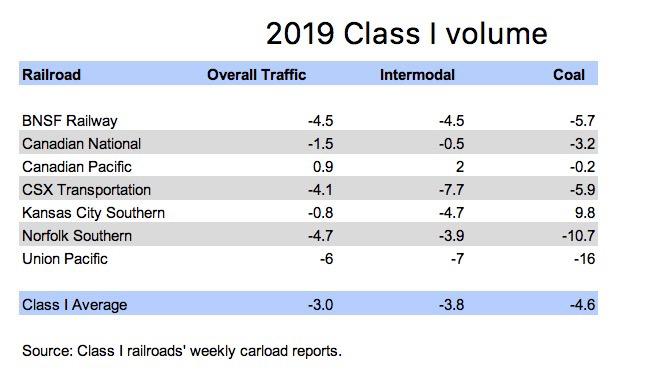
CP eked out 0.9% growth in total traffic, well above the industry average of a 3% decline in total volume measured by carloads and intermodal units, according to a Trains News Wire review of the railroads’ weekly carload reports.
CP also was the only railroad to show intermodal growth for the year thanks largely to international intermodal contract wins. Also contributing to CP’s gains: Energy, chemicals and plastics traffic, plus growth in forest products shipments.
Kansas City Southern’s traffic was down 0.8%, landing the smallest Class I in second place for the year.
Sitting in third place: Canadian National, with a decline of 1.5% in total traffic. CN’s intermodal volume fell 0.5%, while its coal volume was down 3.2%.
Union Pacific was the Class I cellar dweller. Its volume was down 6% overall thanks largely to a 16% plunge in coal and a 7% decline in intermodal volume.
UP’s rival in the West, BNSF Railway, saw its volume fall 4.5% for the year. BNSF’s intermodal volume was down 4.5%, while coal was down nearly 6%.
In the East, CSX Transportation’s 4.1% overall traffic decline bested Norfolk Southern’s 4.7% drop.
CSX’s intermodal volume was off 7.7%, while its coal volume fell nearly 6%. Much of the CSX intermodal volume decline was due to the intentional shedding of lower-margin traffic.
NS intermodal units were down nearly 4%, while its coal traffic dropped almost 11%.
The overall volume numbers are not as bad as they seem partly due to comparisons with an exceptionally robust 2018, according to analysts at the Association of American Railroads.
Coal sinking to record low volumes, lingering trade uncertainty, and a manufacturing slowdown were largely responsible for the rail traffic slump of 2019.
Intermodal volumes for the year were among the best on record and followed a record 2018. The AAR will report 2019 volumes later this week.