That’s the conclusion of transportation consultant Rod Case, a partner at Oliver Wyman who spoke at the RailTrends 2019 conference last week.
“We would like to reinforce the issue is not the driverless truck,” Case says. “The issue is competing on the energy inputs and the rate this gets adopted.”
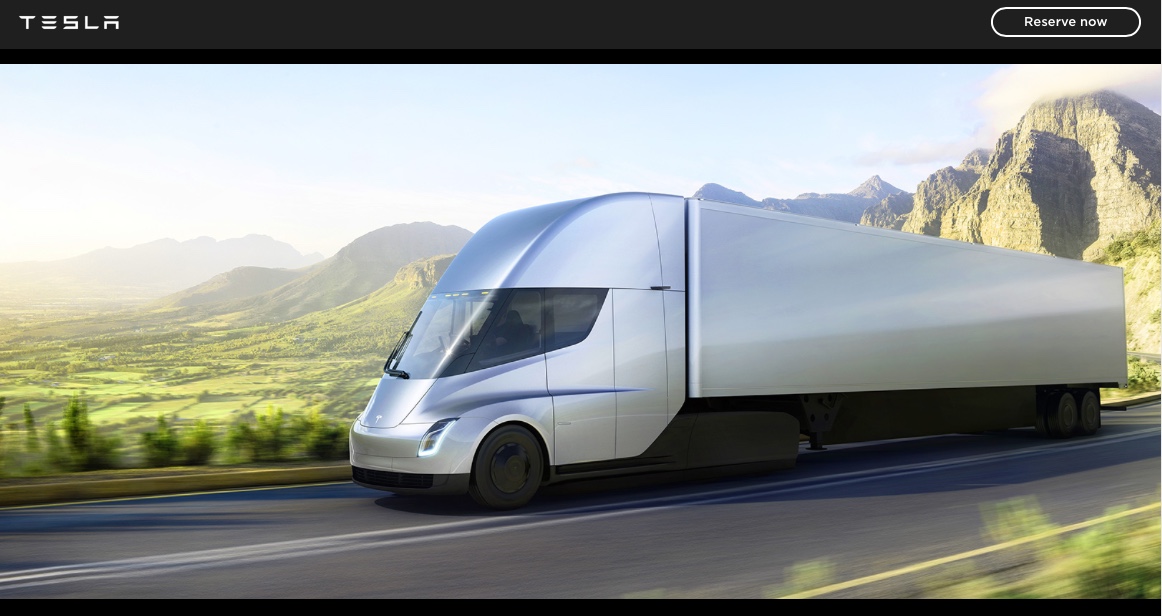
Skeptics chuckled in 2017 when Tesla unveiled plans to produce a battery powered truck that company founder Elon Musk said would be a railroad killer. The Tesla truck, Musk said, would be 20% cheaper to operate than diesel trucks.
Since then, battery technology has improved, electricity costs have declined as natural gas and renewables have pushed coal aside as a generation source, and more electric truck manufacturers are entering the fray, Case says.
The result? The energy cost per mile for a battery-electric truck could be as much as 80% below that of diesel trucks.
“This is effectively a steam to diesel transition” for the trucking industry because of the efficiency gains of battery power over diesel rigs, Case says.
Trucking companies are not rushing out to buy battery powered trucks, which have yet to develop the range or carrying capacity of their traditional fuel counterparts.
But Amazon announced in September that it has ordered 100,000 electric delivery vehicles from start-up electric automaker Rivian.
The $10-billion order, set for delivery between 2021 and 2024, is what Case calls the “gateway drug” for the widespread commercialization of electric trucks.
“That is an immediate issue that we have to pay attention to,” Case says. “And it’s getting more real.”
A positive trend for railroads is that big companies are aiming to reduce the carbon footprint of their supply chains.
Walmart, for example, wants its supply chain partners to remove a gigaton of carbon emissions by 2030. One gigaton is equal to about 880 million tons — the rough equivalent of 88,000,000 loaded 100-ton hopper cars.
One way they can move toward that goal, Case says, is by increasing use of railroads and intermodal, which are more fuel efficient than conventional diesel trucks.
RailTrends is sponsored by independent analyst Anthony B. Hatch and industry trade publication Progressive Railroading.