





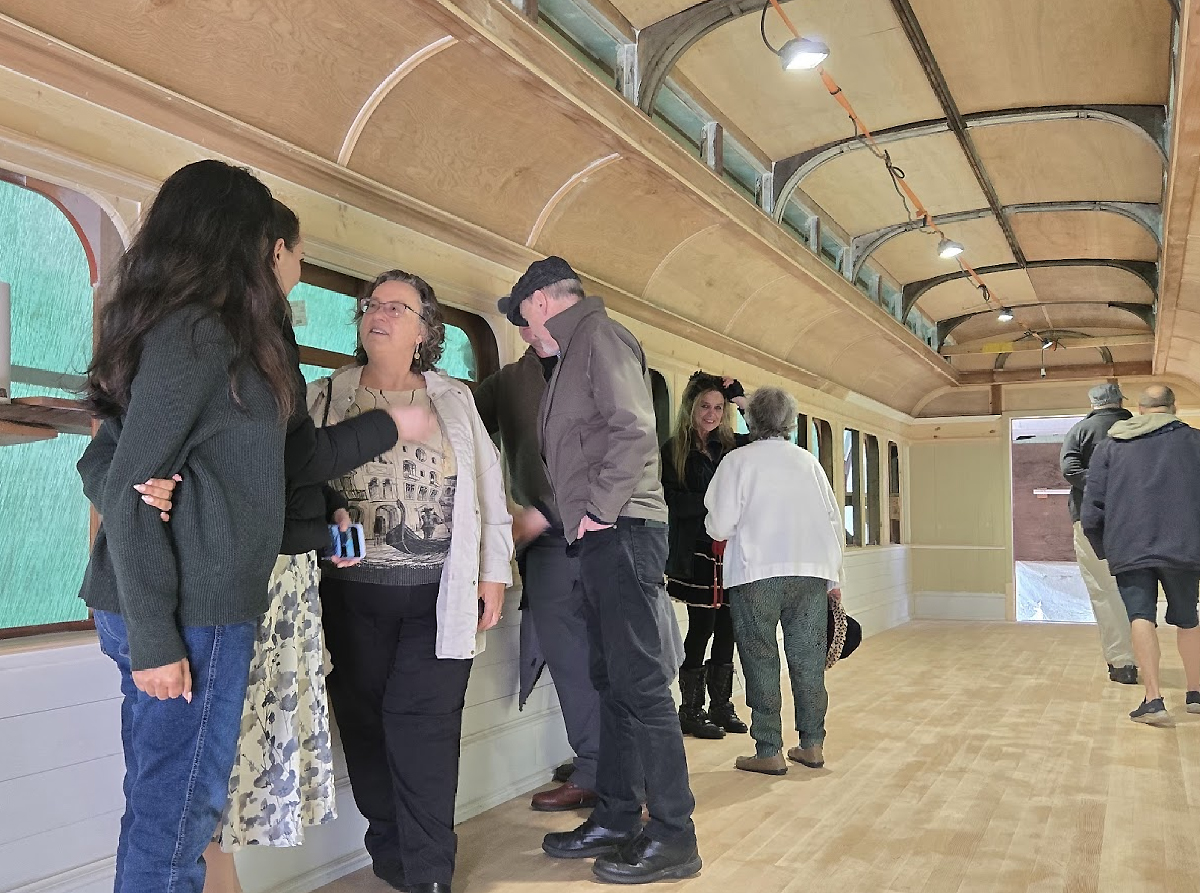
PACIFICA, Cal. — Following more than 20 years of work, the restoration of Ocean Shore Railroad No. 1409 is finally coming together. At a recent fundraising event, the Pacifica Historical Society, which is responsible for restoring the historic 120-year-old coach, told local residents and stakeholders that work has “come a long way.” No. 1409 is the last car in existence from the long-defunct line that ran along the ocean south of San Francisco.
Managed by the historical society, No. 1409’s restoration is conducted through a team of dedicated volunteers and paid contractors like Bob Azarro, an experienced carpenter, who has spent 10 years working on the car.
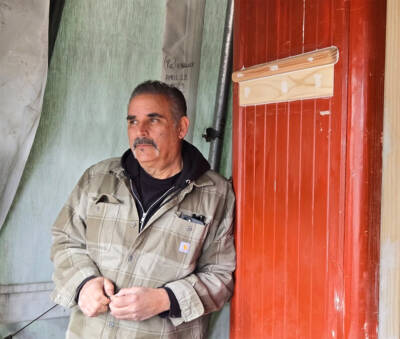
“Restoration is nothing new to me,” Azarro said. “I’ve restored old homes in San Francisco. Plus, taking things apart and figuring things out was my entire childhood.”
Resurrecting No. 1409 from a decrepit state presented a different challenge. Without blueprints, Azarro and the team are forced to rely on thorough research to put it back together.
“It’s a lot of detective work to find and figure out where things would have gone. Nobody is alive to tell you what to do or how to do it. It’s just guesswork and trial-and-error.”
The team has spent years searching for, picking through, and duplicating rotting artifacts. Items in good condition, like some of the car’s arched clerestory beams, join faithful reproductions wherever possible. However, according to Azzaro, certain compromises had to be made.
“None of our materials would have been used originally,” he said. “About 80% of the car is new. Back then, it would have been oak or walnut, but we have to work with what’s available and cost-effective.” An example is No. 1409’s new roof, which is made of synthetic rubber to protect the car from Pacifica’s harsh weather.
Even with years of research, the team is still coming across new features to add to the car. “We just added these,” he said, pointing at freshly installed trims on the car’s exterior. “We spotted them in a picture — it’s just a lot of research.”
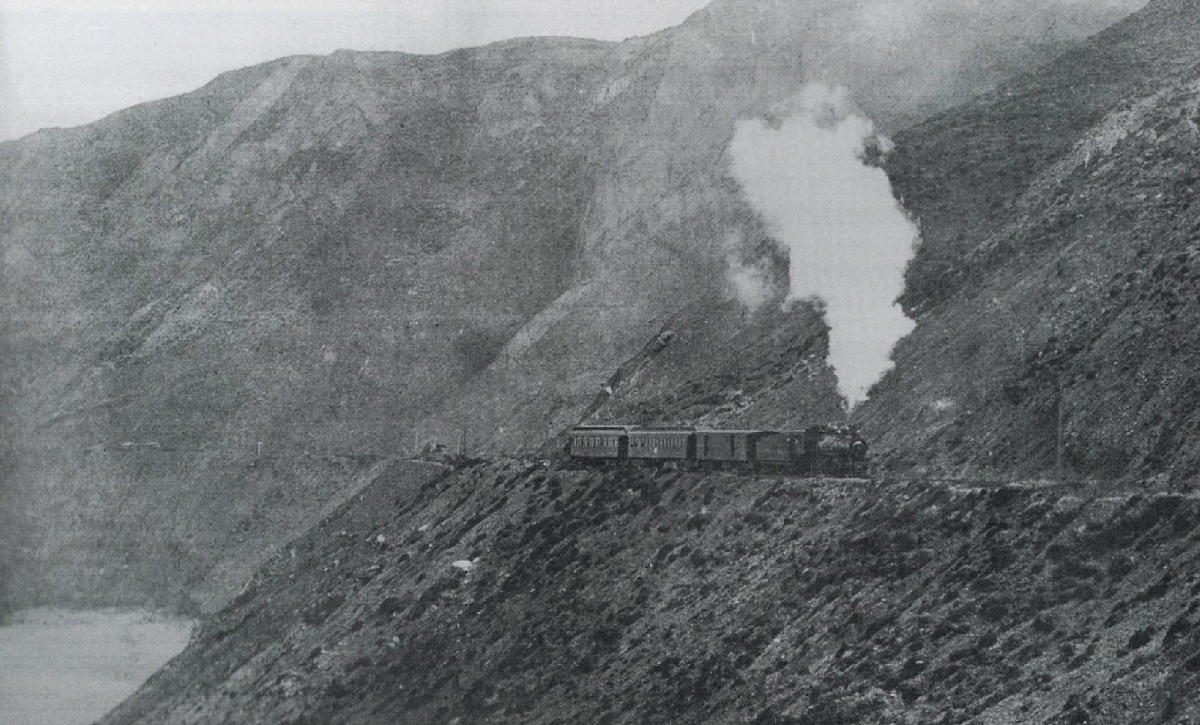
Built by the W.L. Holman Co. in 1909, No. 1409 is the only surviving car from the ill-fated Ocean Shore Railroad. Founded in 1905, the railroad attempted to link bustling San Francisco and the growing city of Santa Cruz with a double-track electric interurban line. When the 1906 earthquake killed investment and plunged track into the sea, steam engines ended up dominating the scenic but precarious route, which was carved into often unstable ocean cliffs.
Starved of funds, the railroad was never completed. To make the full trek to Santa Cruz, passengers from San Francisco rode coaches like No. 1409 to Tunitas Glen, where they boarded a rickety bus to Swanton, the start of the railroad’s southern division. Although the dream of bridging the 26-mile gap persisted, money never came.
To bring in traffic, promoters placed heavy emphasis on land dealings and established seaside towns like Pacifica.
“It was all real estate,” explained local enthusiast Bruce Moore. “They knew the Bay Area was going to grow. If you looked at the railroad’s office in downtown San Francisco, the land company was right next door.”
However, development didn’t materialize in time to save the railroad. After a series of devastating storms, it defaulted on its debts and closed in 1920. No. 1409 was subsequently sold and ended up on a farm in Sebastopol, where PHS discovered it in 2003.
“We were thrilled,” recalled restoration chairwoman Kathleen Manning, who helped to bring No. 1409 back to Pacifica. “It was key to telling our history, as a symbol of our city, which was a railroad stop, and as a rare artifact.”
Fundraising for the restoration typically comes from monthly rummage sales at the adjacent Coastside Museum, a PHS institution. However, on Feb. 15, a joint fundraiser was held with Capitola-based author Gordon van Zuiden, whose new book Never A Dull Mile chronicles a ride on the Ocean Shore Railroad.
“The end goal is to accelerate fundraising,” explained van Zuiden. “A lot of history tends to be static; informational like a textbook. It doesn’t have to be that way. You can read about No. 1409 and stare at pictures of it, but to stand and feel what it was like? That’s much more fascinating than any textbook.”
Part of van Zuiden’s book proceeds go to the restoration. Elsewhere, others are looking ahead to how No. 1409 could further help the community.
“It’s a core of who we are as a city,” says Pacifica Mayor Christine Boles. “We’re hoping to bring the city to a place of financial sustainability. Our environment, history, and arts make Pacifica an incredible place to visit — sharing No. 1409 to inspire the youth, it’s intrinsic to who we are.”
As Pacifica faces up to $3 million in deficits, city officials hope that No. 1409 could become more than just a historic train on display. Pursuant to this, the city is closely working with PHS to visualize future uses for the restored car.
“It’ll be an attraction for people and hopefully a symbol,” Manning says. “People think it could be used as an entertainment center, bed and breakfast, or event center for small weddings and parties.”
For the time being, the group intends to use No. 1409 for railroad-themed exhibits. Currently, ideas are floating about employing technology to recreate the experience of riding No. 1409 — a move inspired by the exhibit of Canadian National Railways sleeping car No. 1683, St. Hyacinthe, at the California State Railroad Museum, which uses devices to recreate the rocking, sounds, and visuals of riding a sleeper car.
“We want it to be partly authentic inside, so school kids could come in and see what their old train might have looked like. We’re looking into all of the modern technology that can recreate what the experience was like.”
For now, the restoration will continue. PHS estimates that the car will be moved in a year to a permanent spot at the corner of Francisco Boulevard and Salada Avenue, closer to the Coastside Museum and directly parallel to the old Ocean Shore Railroad.
— To report news or errors, contact trainsnewswire@firecrown.com.


I really like this story. Good writing. Particularly, I like the comments from people involved in the story. There is much more value in a story like this, than a summary of something that first was written up in a newspaper, although that is worth something too.