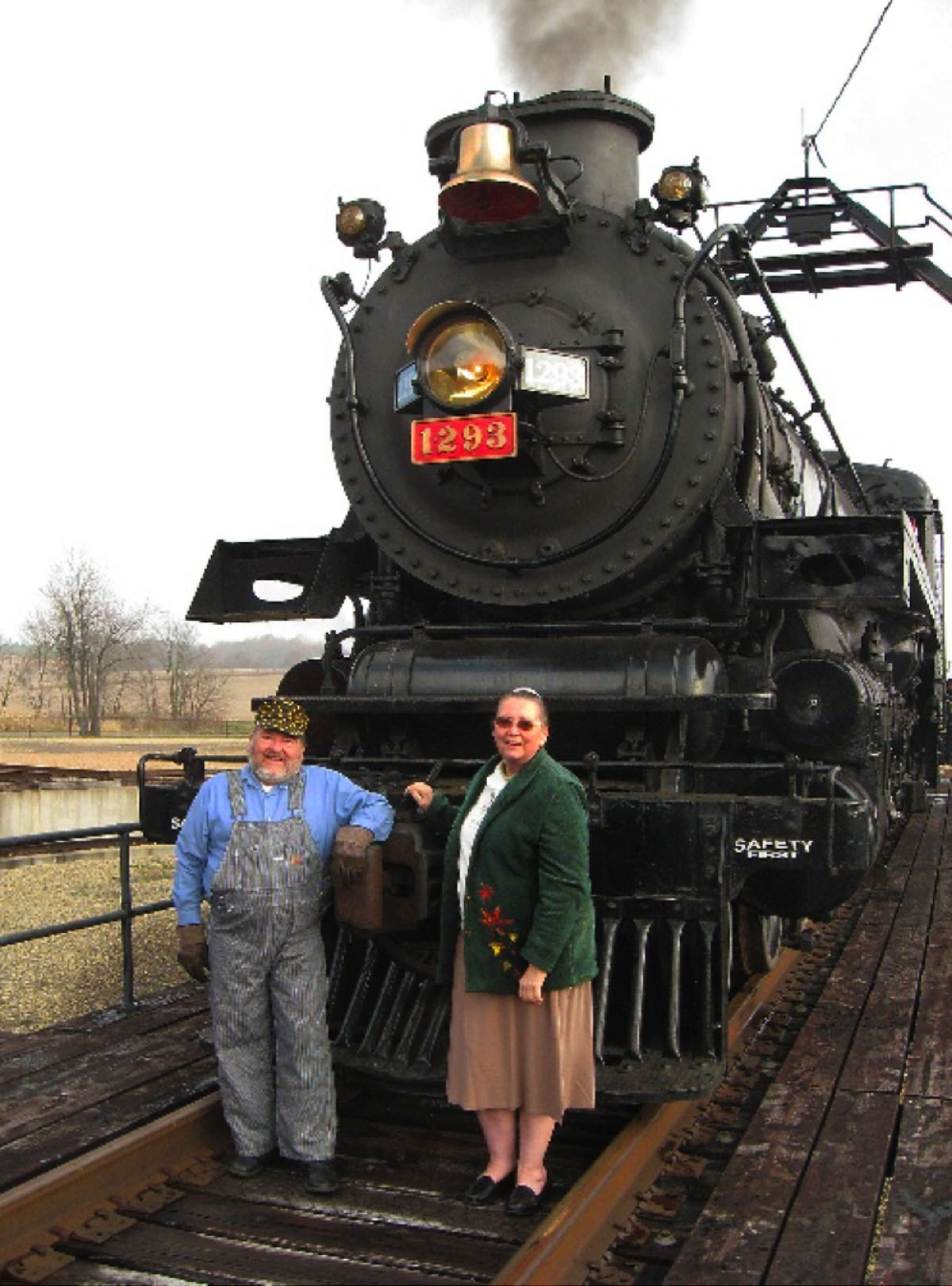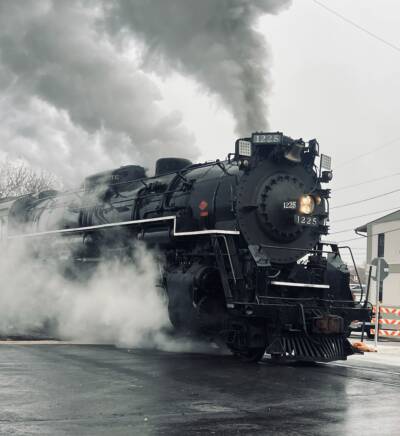
OWOSSO, Mich. — The 2025 season for Pere Marquette 2-8-4 No. 1225 was nothing short of eventful. The Berkshire-type locomotive, owned by the Steam Railroading Institute (SRI), was sidelined in late 2024, missing all of its North Pole Express excursions due to serious superheater concerns. [See “Pere Marquette No. 1225 sidelined…,” News Wire, Nov. 30, 2024].
Early last year, the SRI’s deep dive into the issue revealed the need for extensive boiler work. Mechanical Officer Justin Hamilton confirmed that testing of the superheaters performed by Detroit’s Purvis and Foster, Inc., along with testing of some of the extracted tubes and flues by SRI backshop staff and volunteers, prompted their overall removal and ultimate replacement.
“This, in conjunction with the smokebox [door ring replacement, sections of the throttle assembly restoration] and superheater units being removed, led us to the decision to retube the entire boiler barrel,” he said. “While the barrel was empty, all interior surfaces were scaled, sandblasted, and inspected using non-destructive examination techniques. Stress calculations were performed with the current barrel measurement values.”
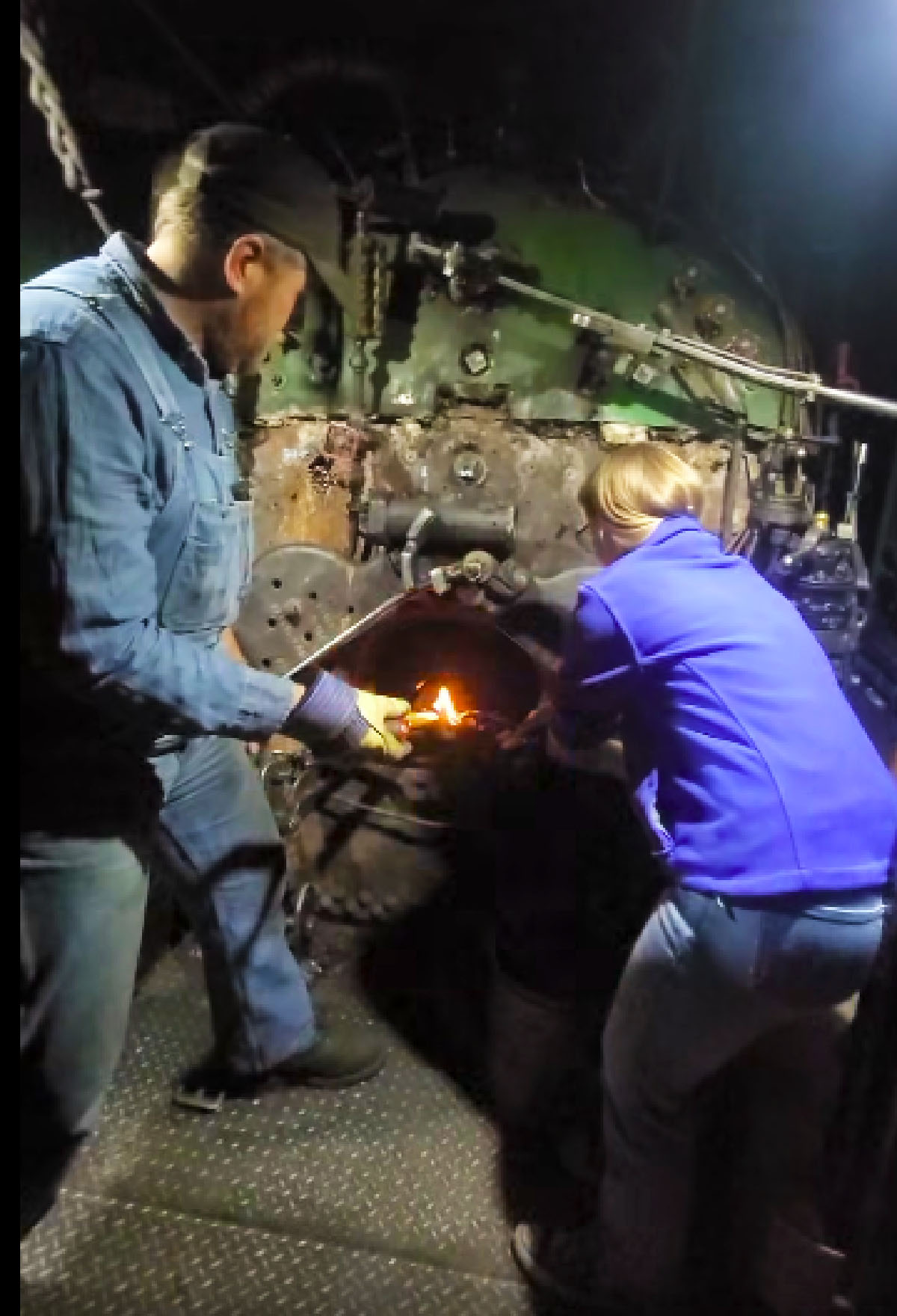
No. 1225 was retubed by September, followed by the in-house construction and installation of 27 new superheaters over the fall. The retubing resets the 15-year flue time, though the boiler’s 1,472-day inspection remains scheduled for 2028, according to Hamilton.
In a Herculean effort to meet the deadline, the SRI crew had No. 1225 fired up the week prior to the opening of the organization’s 2025 North Pole Express season to complete its annual inspection under the Federal Railroad Administration. A few days later, however, on a Nov. 20 test run from the Institute to Ashley, Mich., along the Great Lakes Central Railroad (GLC), the wheel of chance played a dirty trick.
“The temperature of one of the driving boxes continued to climb past the normal range it had been operating at for the past 1,000 miles”, Hamilton explained. “The locomotive was brought back to our shop at SRI for inspection, and possible repair methods were discussed to return it to service as soon as possible.”
The hot bearing meant No. 1225 missed the first two weekends of excursions, requiring diesel substitutes. However, the locomotive’s operating season could have been completely jeopardized had it not been for GLC’s drop pit next door being generously available.
“Our mechanics and crews, however skilled and passionate, lack the facilities at SRI to perform this type of heavy work quickly,” said Hamilton. “This repair would not have been possible in the amount of time it ended up taking without help from GLC/Watco and the use of their shop. For that, we are deeply grateful and honored that we can have this type of working relationship with them.
“The driving axle was lowered from the bearing for inspection. The bearing itself did not look visually terrible, but there was a two-inch-wide scorch mark indicating that it ran dry of oil for a duration. Both axle journal and bearing were polished, oil pads were replaced, force-feed oil lines were pressure tested, and No. 1225 was back together in a few days for another test (Nov. 25).
“What we did not know at the time was that the clearances designed into the bearing geometry to produce an even oil film over the bearing were no longer correct, something that could not be seen during visual inspection and measurement without removing it. Our best guess is that the bearing initially got debris in it. This caused enough heat to deform its shape and erase the required oil clearance.”
The second test resulted in sending No. 1225 back to GLC’s drop pit to have the bearing removed entirely for remachining at the Institute. “This entire process was especially taxing on our mechanics and volunteers doing this in below-freezing temperatures, on top of working 16 hours a day,” said Hamilton.
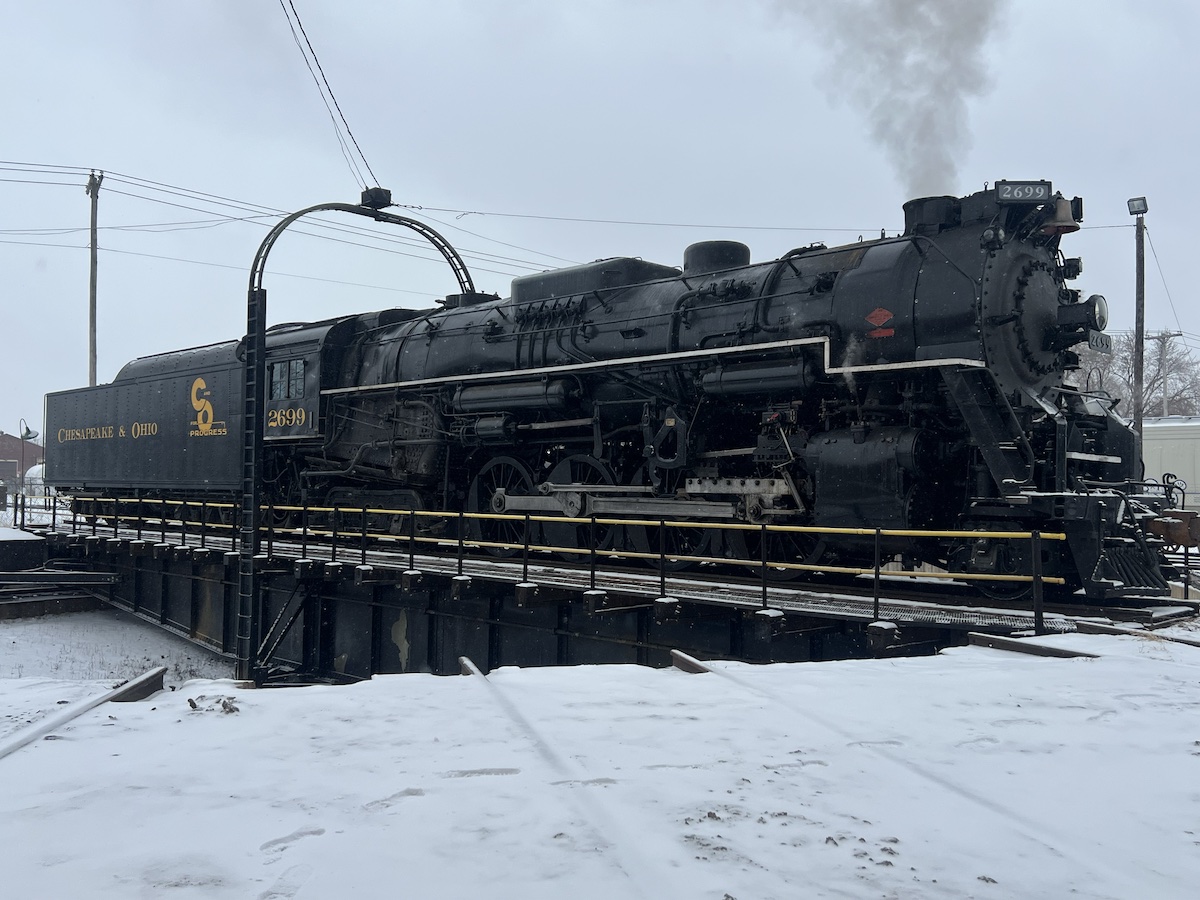
The third and final test run on December 2 was successful, putting No. 1225 back in service in time for the third weekend of trips. Hamilton reported that the remaining 2025 season, plus the January 2026 photo charter by Pete Lerro with the locomotive masking as Chesapeake & Ohio No. 2699, showcased a strong performance from the 2-8-4. “Our biggest hurdle was combating the low temperatures and mitigating freeze damage to exterior water/steam lines.
“Based on what we have seen on past miles and from this season, barring unforeseen circumstances, we have no reason to have any long-term concerns regarding any other bearings. The next box to check off will be operations at higher speeds to see how they behave. We will be modifying No. 1225’s temp sensor system to provide a faster response time this winter by relocating the thermocouples closer to the bearing surface.”
Additional work for the 2026 offseason will include:
- Building and installing the remaining 25 superheaters by March
- More modifications in the front-end arrangement to improve drafting
- Minor spring rigging adjustments
- Restoring the steam dome gasket surface, complete with new studs
No comments were made regarding the full 2026 operating season, including a possible return to Virginia’s Buckingham Branch Railroad. “We have a lot to accomplish on both our locomotives and passenger cars in a relatively short amount of time,” Hamilton explained. “But we will try our best with the means we have available.”
Announcements and updates are to be expected on the Steam Railroading Institute’s website.
— To report news or errors, contact trainsnewswire@firecrown.com.