





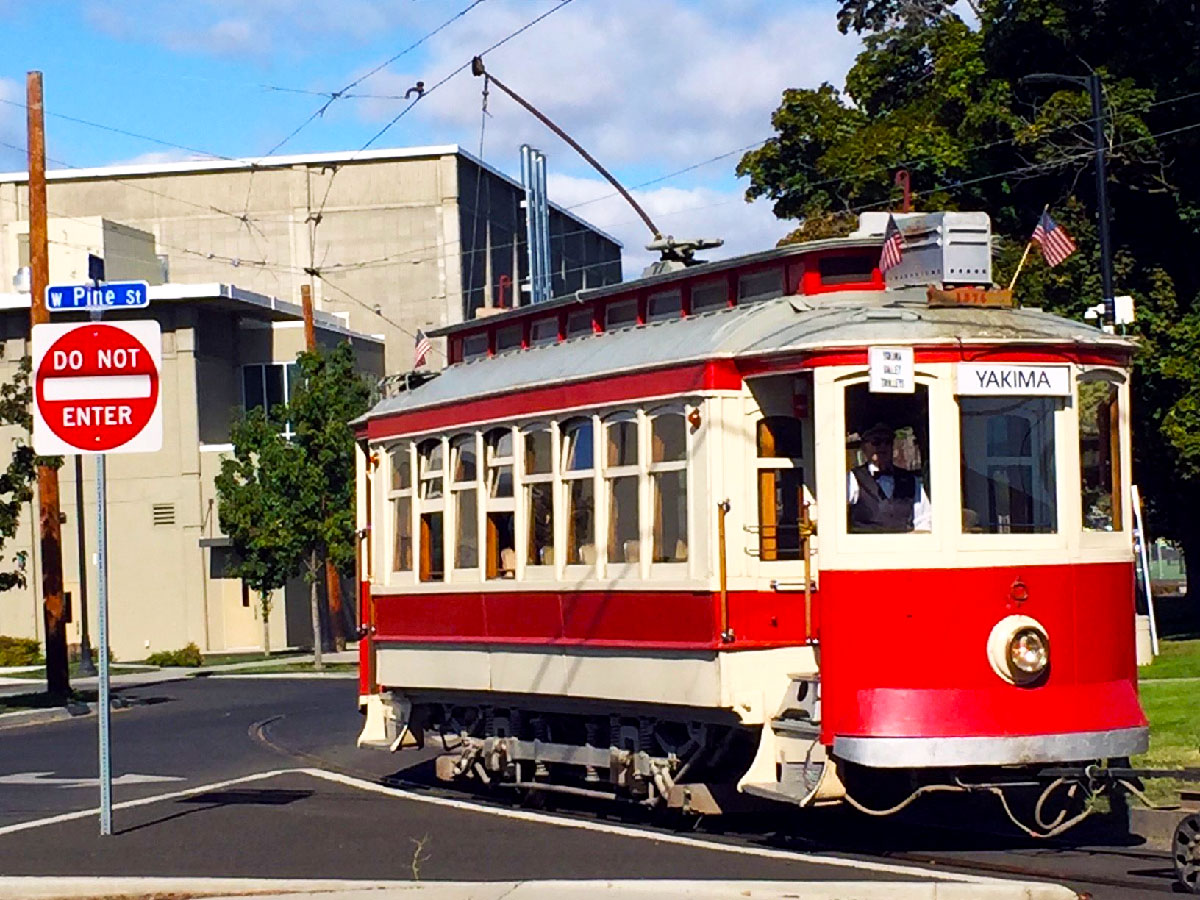
YAKIMA, Wash. — At its regular meeting on Dec. 9, the Yakima City Council voted five to two in favor of postponing discussion and action on a new operating agreement with the Yakima Valley Trolleys until its Jan. 20, 2026 meeting. The nonprofit group operates trolleys on what remains of the Yakima Valley Transportation Co. and maintains a museum in the trolley barn and adjacent facilities. The city owns the trolley vehicles and infrastructure. The current operating agreement expires at the end of 2025.
For now, the action means the YVT will not be able to conduct any operations, open the museum, or have access to the facilities from Jan. 1 through 20, 2026, and possibly beyond, depending on the council’s decision.
The current agreement permits the YVT group to run and maintain the equipment within certain financial parameters. The trolleys operate between Memorial Day and September, plus for special events like Halloween and Christmas. The YVT is also permitted to maintain a museum and provide educational programming.
As part of the operating agreement, the city pays for gas and electricity, water and sewer use, trash removal, and phone, internet and security alarm services. The funds are designated as part of the annual city budget.
Bill Preston, Yakima’s community development director, presented the new operating agreement to the council. The agreement had been worked out with YVT over the past several months and came with a staff recommendation for adoption.
Yakima is dealing with a $9 million budget shortfall in 2025. The City Council cut $3 million from the police, fire and parks departments with the hopes that voters would approve a $6 million tax levy to make up the difference. Voters rejected the levy in November, leaving the city to find other solutions to close the gap. A small portion may come from discontinuing trolley operations.
“We are in a severe budget situation,” Councilman Rick Glenn said in the Dec. 9 meeting. “The biggest usage [of the trolleys], over half of it, was during the Christmas program. What we have is a trolley with a lot of sentimental value. It has an appeal to a certain part of the population, but it is not extensively used. As I compare that usage with Harman [Senior] Center, Franklin Pool, or Lions Pool, I think those assets are all much more important than allocating money for the trolleys.”
The Yakima Valley Trolley was built between 1907 and 1913. Currently about 5 of the original 44 miles remain. Since 1907, a trolley has operated on the line every year. The Union Pacific Railroad purchased the line in 1909 with the idea of expanding the existing system as a freight feeder connecting to its main line. Street car service was terminated in February 1947. The UP abandoned the freight operations in 1985, donating the remaining system to the City of Yakima.
YVT now has until Jan. 20, 2026 to make its case to the City Council. The organization’s Facebook page lists five ways anyone can help communicate the group’s message.
To view the Yakima City Council discussion on the YVT operating agreement, please visit this link. The trolley discussion begins at 2:17:20 in the meeting. The proposed operating agreement can be found with the meeting agenda, item 9d.
For more information on the Yakima Valley Trolleys, visit its website or Facebook page.
To report news or errors, contact us at: trainsnewswire@

How about asking for donations? City council is doing the right thing. There’s a budget shortfall. Yakima Valley Trolleys needs to figure out a way to fund it’s operations. It’s not an essential service.
It’s certainly sad news… Note that, in the meantime, Yakima Valley Trolleys is urging the public to sign a petition supporting the operation and to ride some of its upcoming holiday excursions.