 |


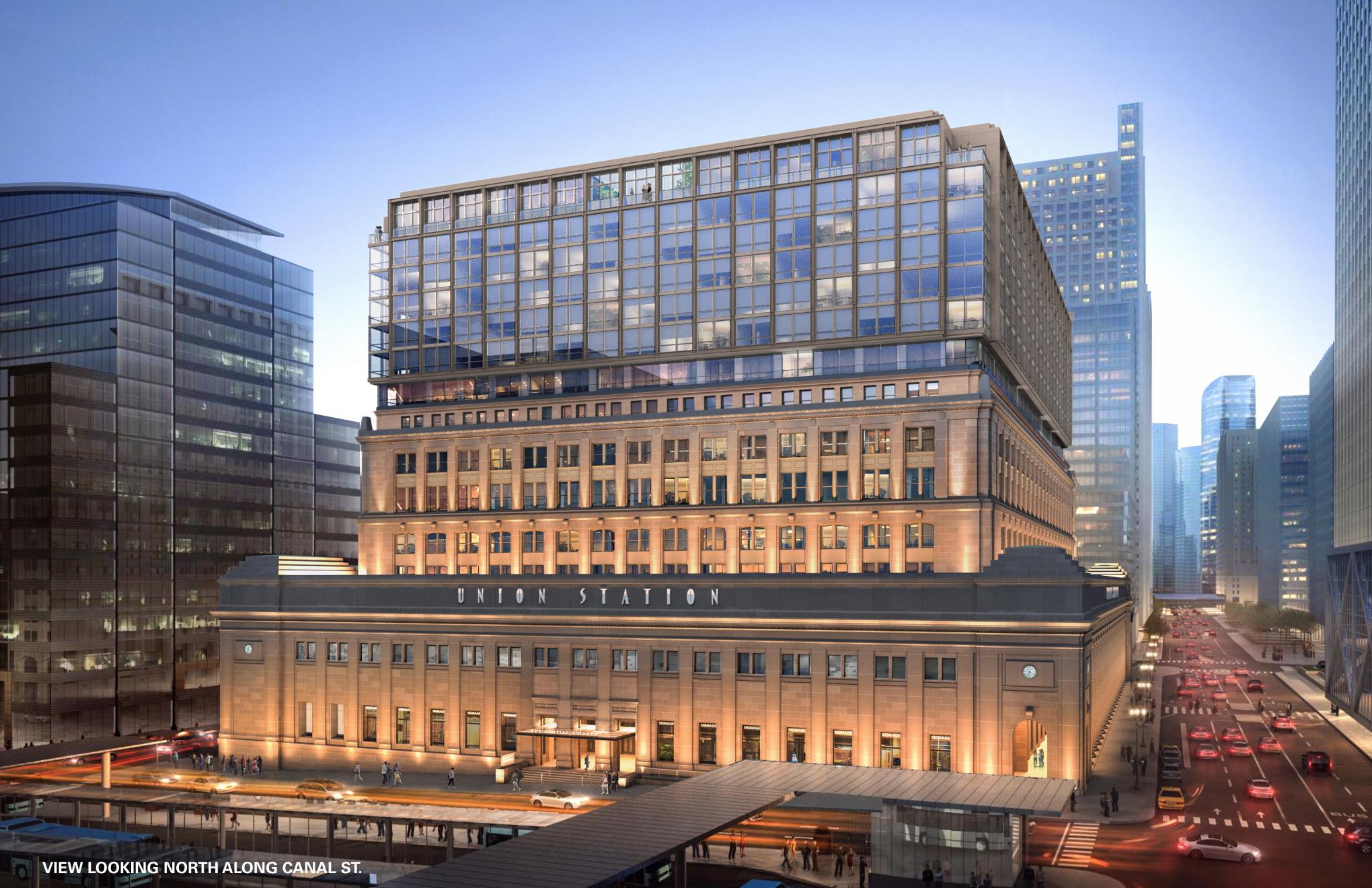
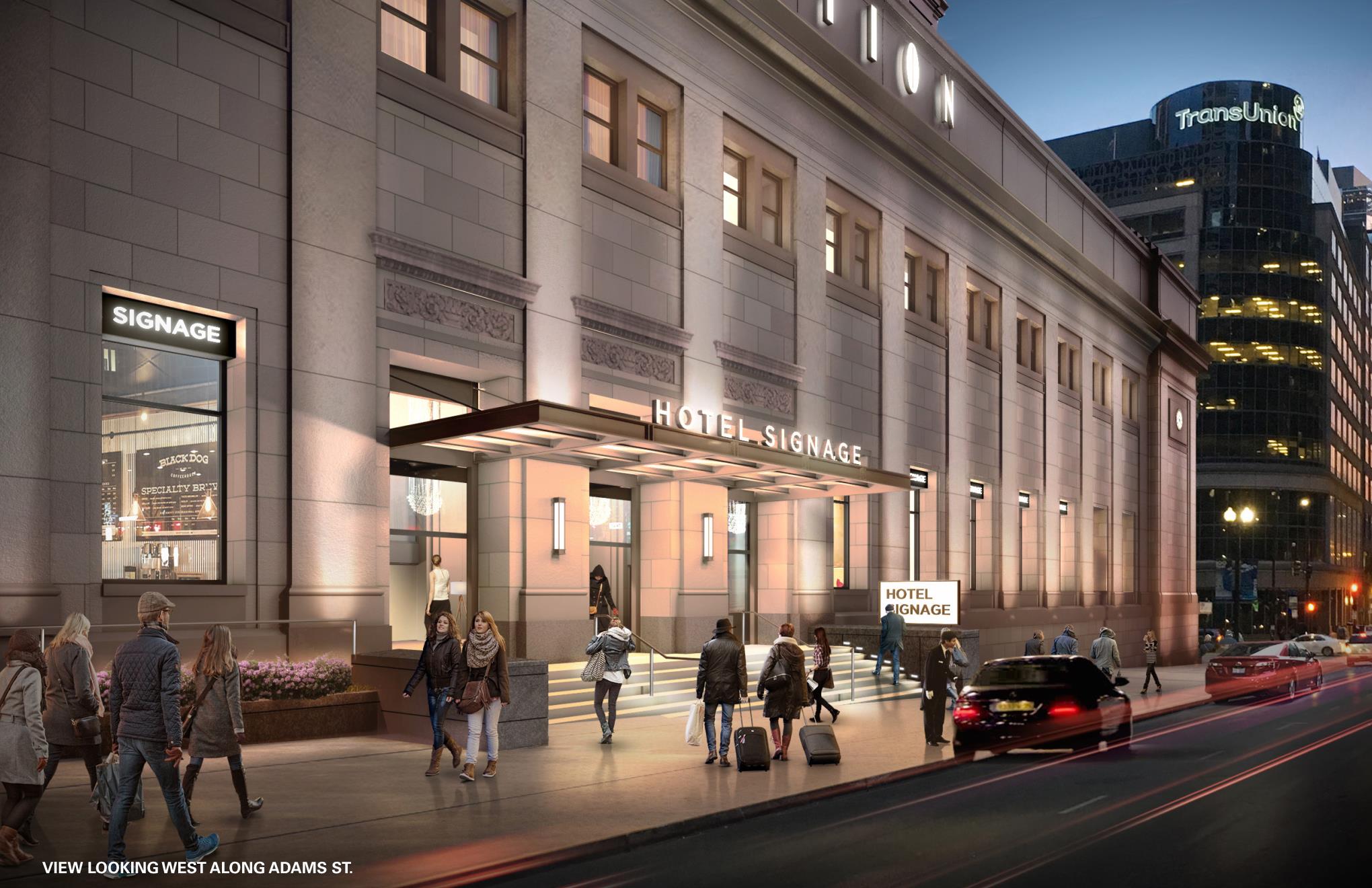
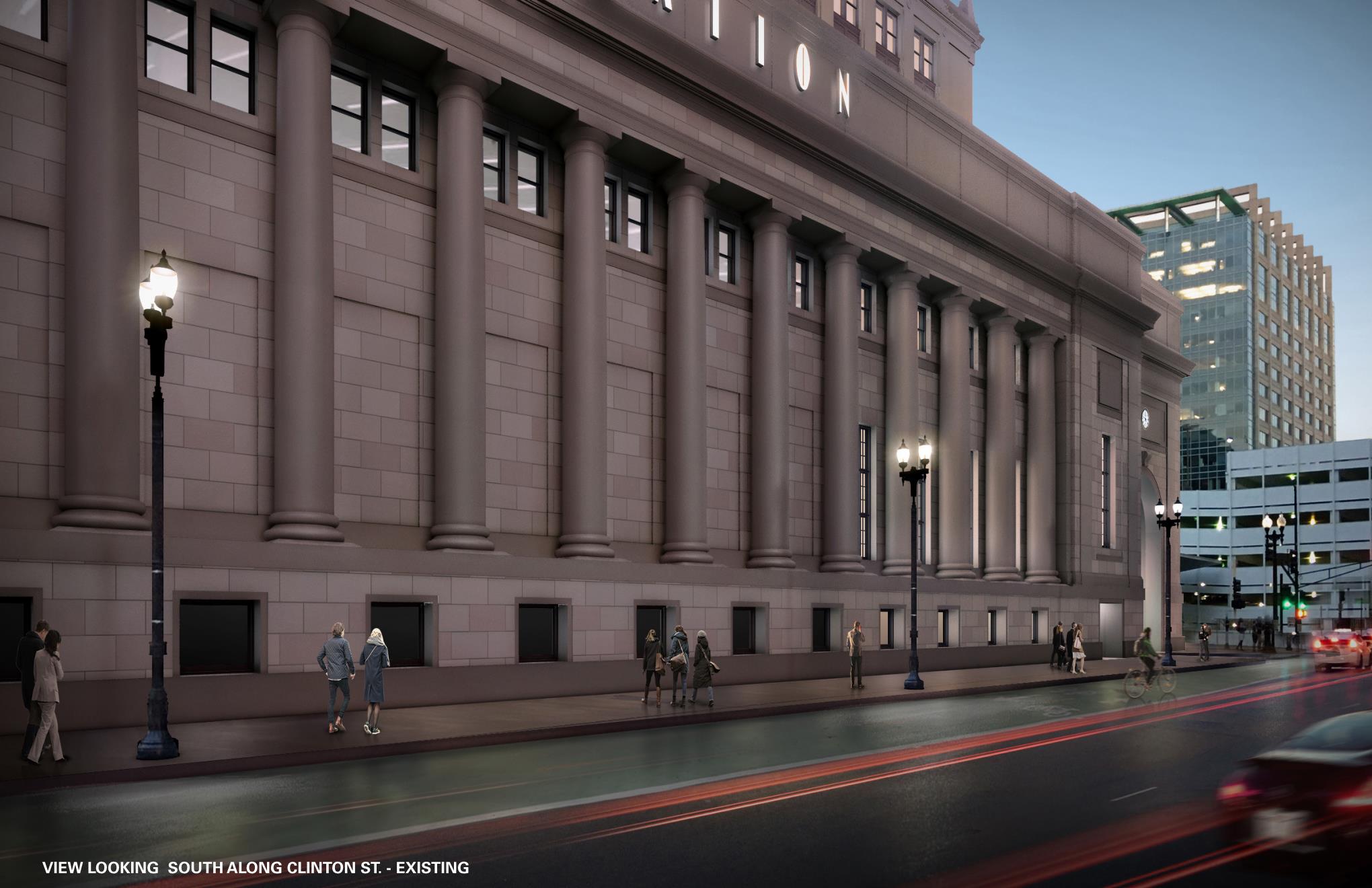
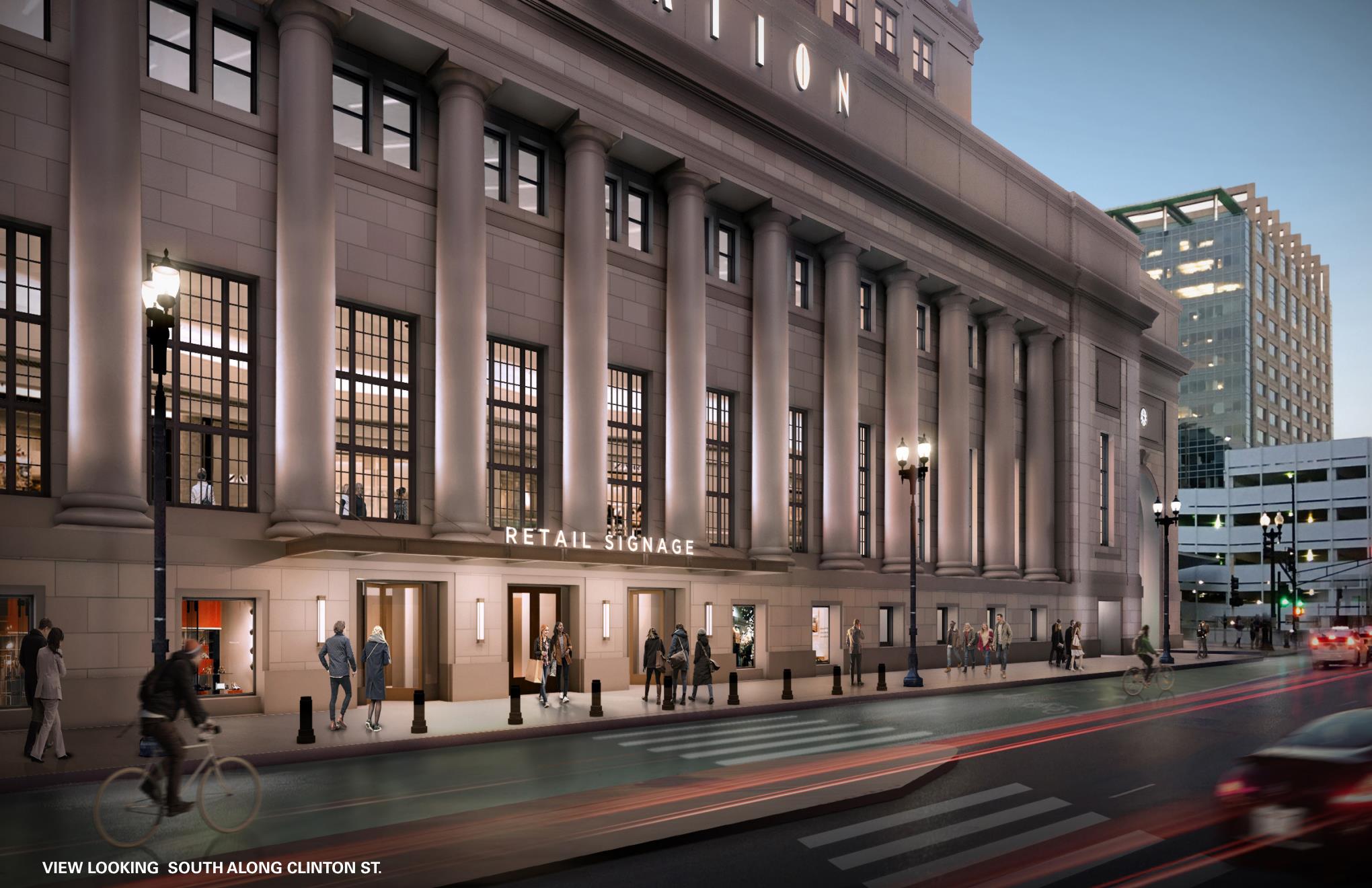
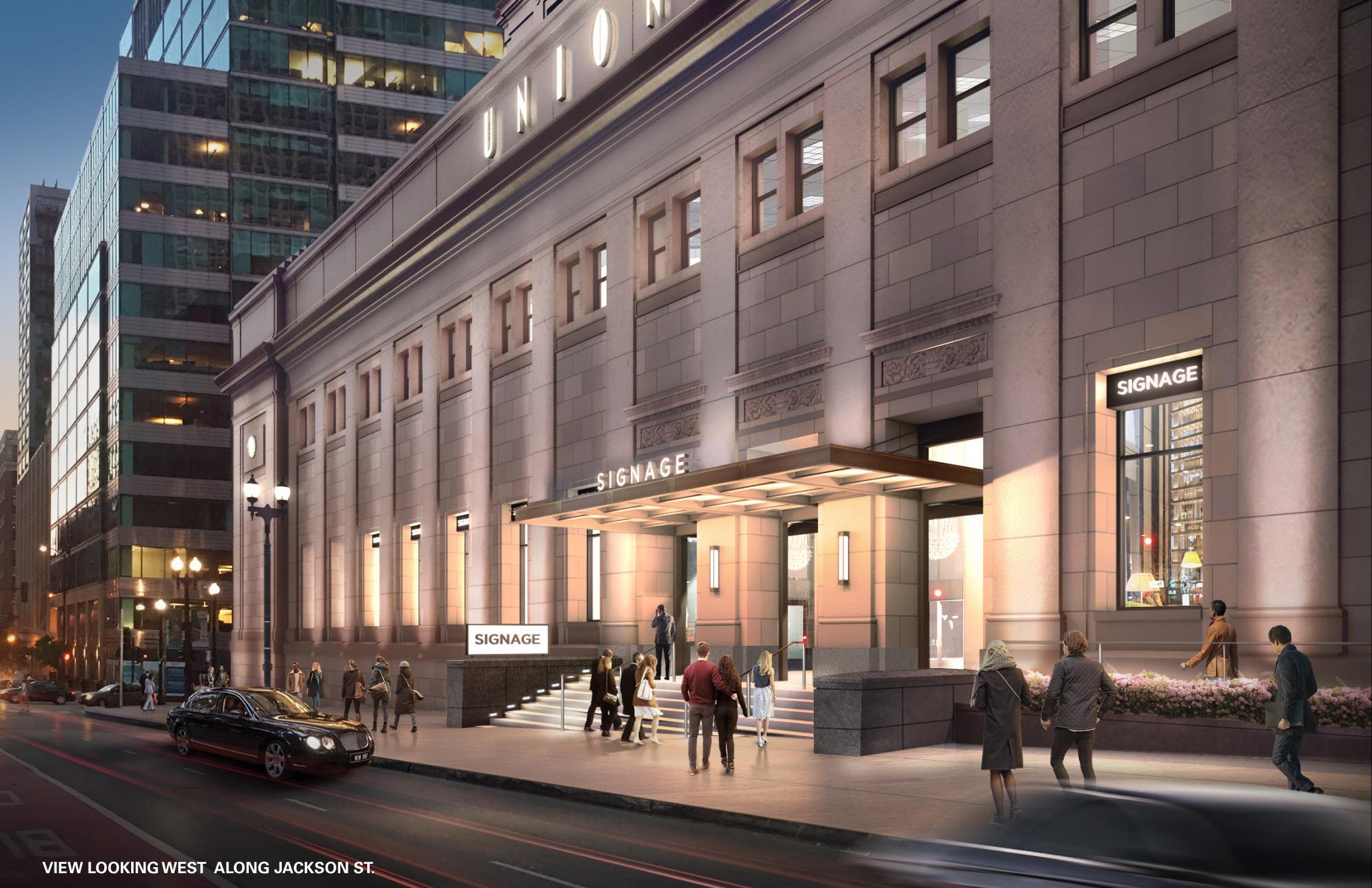


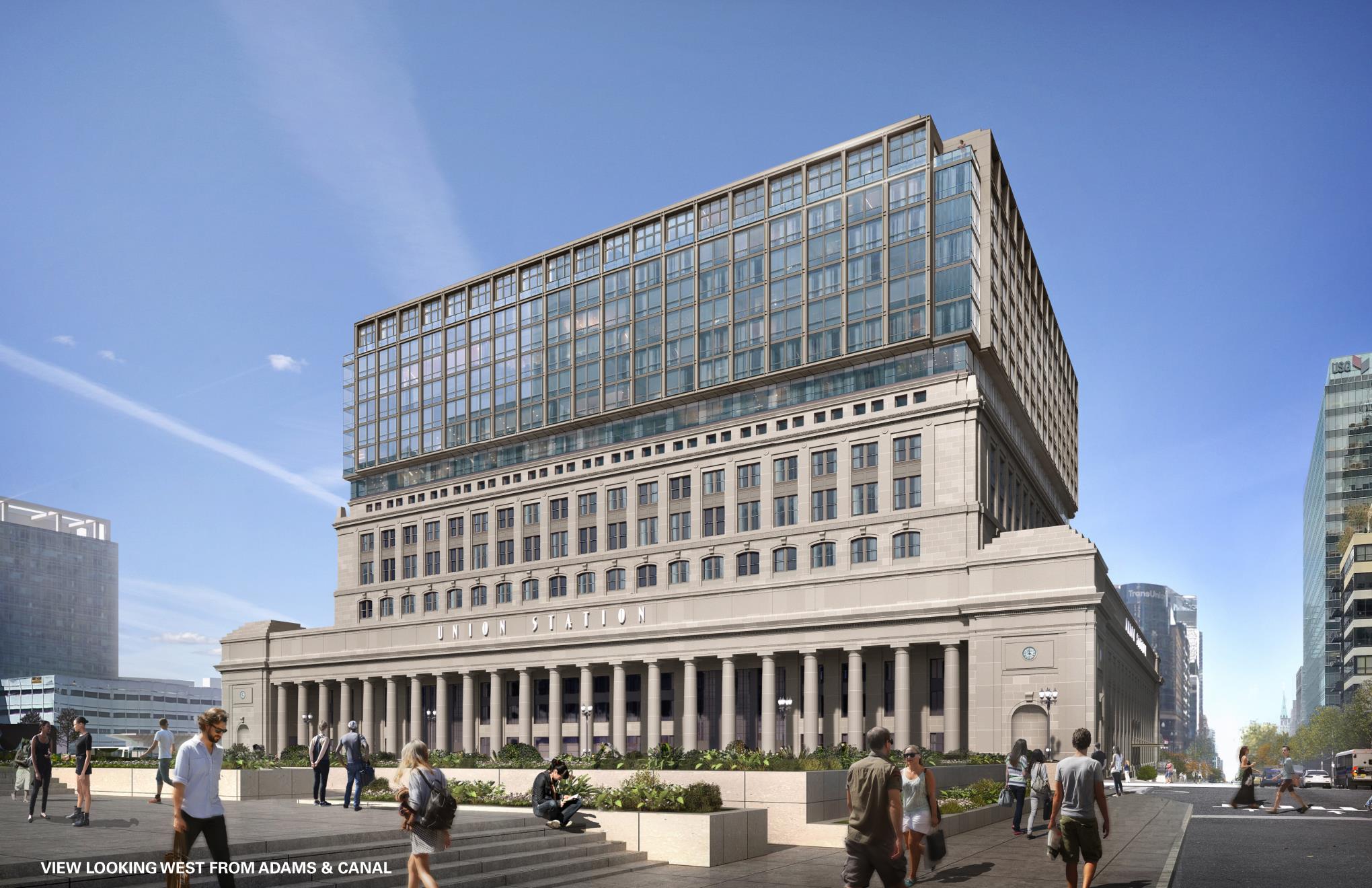
The addition would provide for a hotel, apartments, offices and new retail space within the eight-story headhouse, where passengers wait for trains.
Amtrak, which owns Union Station, selected Chicago-based Riverside Investment & Development and Convexity Properties in May 2017 to come up with plans for the redevelopment.
It’s the second time in recent years that plans for a hotel/office/retail for Union Station have been proposed. A 2002 proposal went nowhere.
The new construction would still allow natural light to illuminate the station’s Great Hall via its famed glass skylight, according to the developers.
Over the decades, the 219-foot-long skylight has deteriorated due to water damage and flaws within the original design, according to Amtrak. It is undergoing a $22 million restoration.
Union Station, completed in 1925, was designed by Daniel Burnham and successor firm Graham, Anderson, Probst & White.
The addition would be part of a multiphase redevelopment of the entire station and surroundings, and would not directly impact train traffic itself.
Amtrak and Metra commuter train operations are housed in a Concourse building across the street from the Head House and connected by a tunnel.
Plans for the $1 billion project were unveiled Monday evening at a meeting in Union Station’s Burlington Room, called by the Chicago alderman in whose ward the station is located.
The plans must be approved by the Chicago City Council, but developers say they are hopeful the project could start in spring of 2019. Amtrak’s board must also give the go-ahead.
“Amtrak supports this important step in the plan as we continue to work to bring this important project to our Board of Directors,” an Amtrak representative said in a statement.
John O’Donnell, the CEO of Riverside, told the meeting that the goal is to make Union Station a seven-day-a-week, year-round “destination.”
A representative for Riverside did not respond to Trains News Wire’s requests for comment Tuesday. The bold plans prompted an immediate thumbs-down from the architecture critic for the Chicago Tribune, who called them “utterly underwhelming.”
The addition’s exterior, said Blair Kamin, “a skeletal metal and glass grid, is at odds with the station’s carefully composed classical aesthetic.
“Despite the architect’s best efforts, it’s as though one era of architecture had been piled, willy-nilly, atop another,” Kamin wrote.
Kamin points out that Burnham once envisioned Union Station as a magnificent gateway to Chicago’s west loop area, and that an office building had been originally planned for atop the station but never built, though foundations were laid.
In 2002, another Chicago architect, Lucien Lagrange, previously unveiled a plan for a 400-foot tower above the station, with hotel offices and apartments. That plan fizzled.