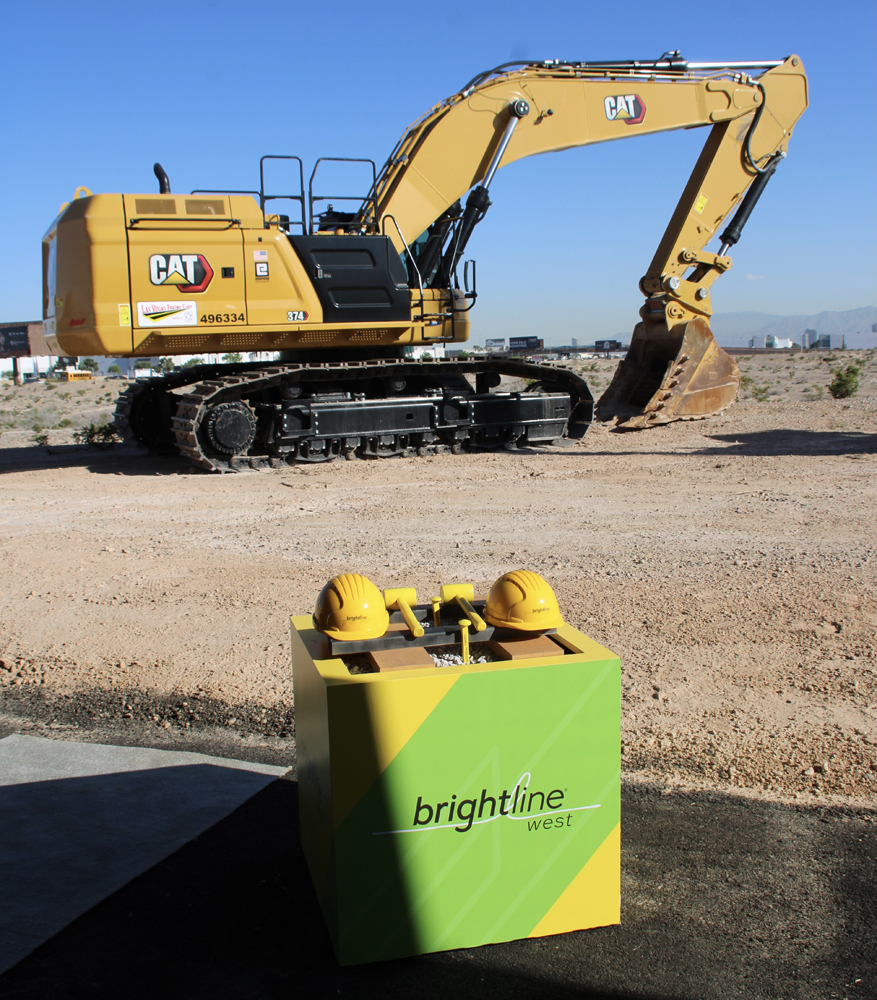
LAS VEGAS — One thing Monday’s Brightline West groundbreaking ceremony drove home — probably unintentionally — is that there are jurisdictional reasons it’s difficult to undertake major infrastructure projects in the United States.
In this case, however, those factors seem to be lining up in a positive, rather than negative, way.
“On a project of this magnitude, you need everybody to say yes,” said Brightline founder and chairman Wes Edens. “If one person said no, it could stop everything. And we were really blessed to have people who share a vision of what this could do in terms of the economy, the environment, [getting] 3 million cars off the road.”
In this case, as previously noted, everyone has indeed said yes. The construction permits are in hand; the environmental clearances have been obtained.
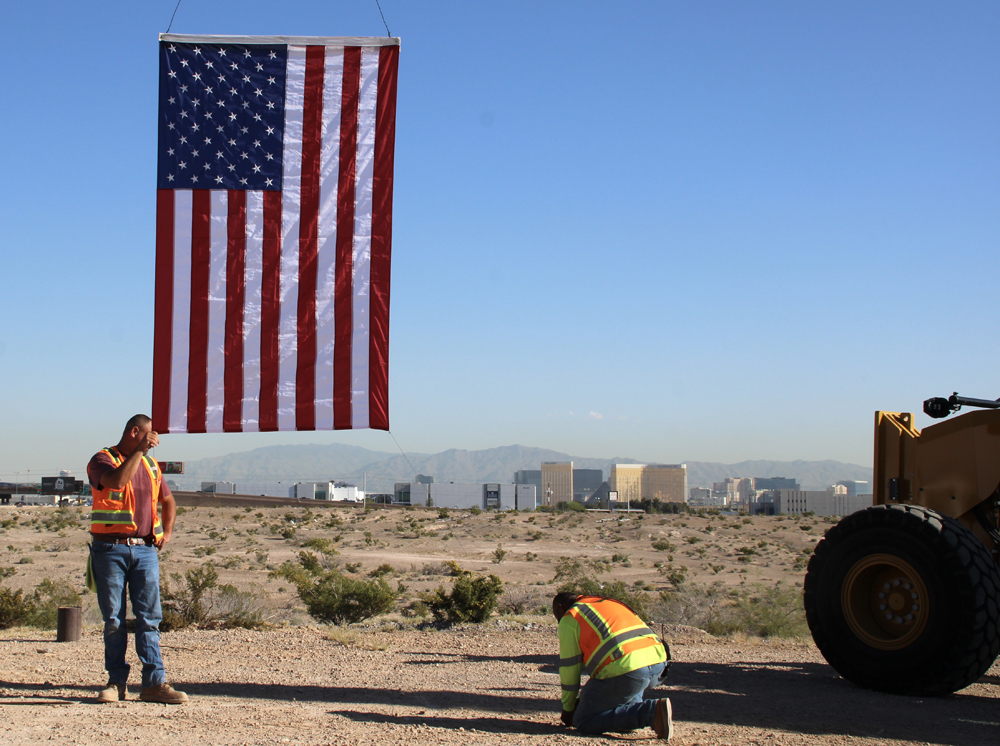
That may be one reason there were so many government officials of all stripes and levels among the VIPs in the massive temporary structure at the future site of the Las Vegas station. While the federal and state officials literally were center stage, community and county officials from along the route were also out in force. (In that last area, Brightline West has remarkably few governments to deal with. The 218-mile route crosses just two counties, one of them San Bernardino County, Calif., at more than 20,000 square miles the nation’s largest county, larger than nine states.) After the first-spike ceremony, Edens and U.S. Transportation Secretary Pete Buttigieg spent a good 15 minutes posing for group photos with each of the various sets of officials. All of them, presumably, have had or will have at least some say in the construction process.
But one reason the project has broken ground — and why the people behind it believe it can be completed in four years — is that for this project, those various governmental bodies seem to be of one mind.
In other notes from Monday’s event:
The $400 question: In a March article, the Los Angeles Times reported that Brightline founder and chairman Wes Edens said Brightline West would eventually charge $400 for a round trip, a comment which generated some negative news coverage then, as well as some pointed questions from the press on Monday. “How do you justify it?” one reporter asked.
Edens said the comment needed quite a bit of context, that he had said that comparable high-speed routes — London-Paris, for example — tended to generate between 50 cents and a dollar per mile of revenue. “The Acela service between New York and Washington averages about $1.25,” he said. “That’s what I told them. So those are just good information points. We’re four years away from actually having a train that’s running out here, so we’re hardly ready to set prices for it right now.” He did say, however, that the cost would have to be competitive with flying.
Transportation Secretary Pete Buttigieg was also asked about the potential for $400 tickets.
“What I do expect is that they’re going to be competing with aviation. What we’ve seen on the northeast corridor is that there are many passengers who would be willing to pay at or even above the level of an airfare for the same route because it’s more convenient and every time they do, there’s a climate payoff there, too. So we do see an opportunity for this to be one more competitive option.
“At the end of the day, as a consumer, [it’s] the more choices you have. If you have not just two choices, fly or drive, but three — fly, drive, or train — that’s going to be better for you as a consumer.”
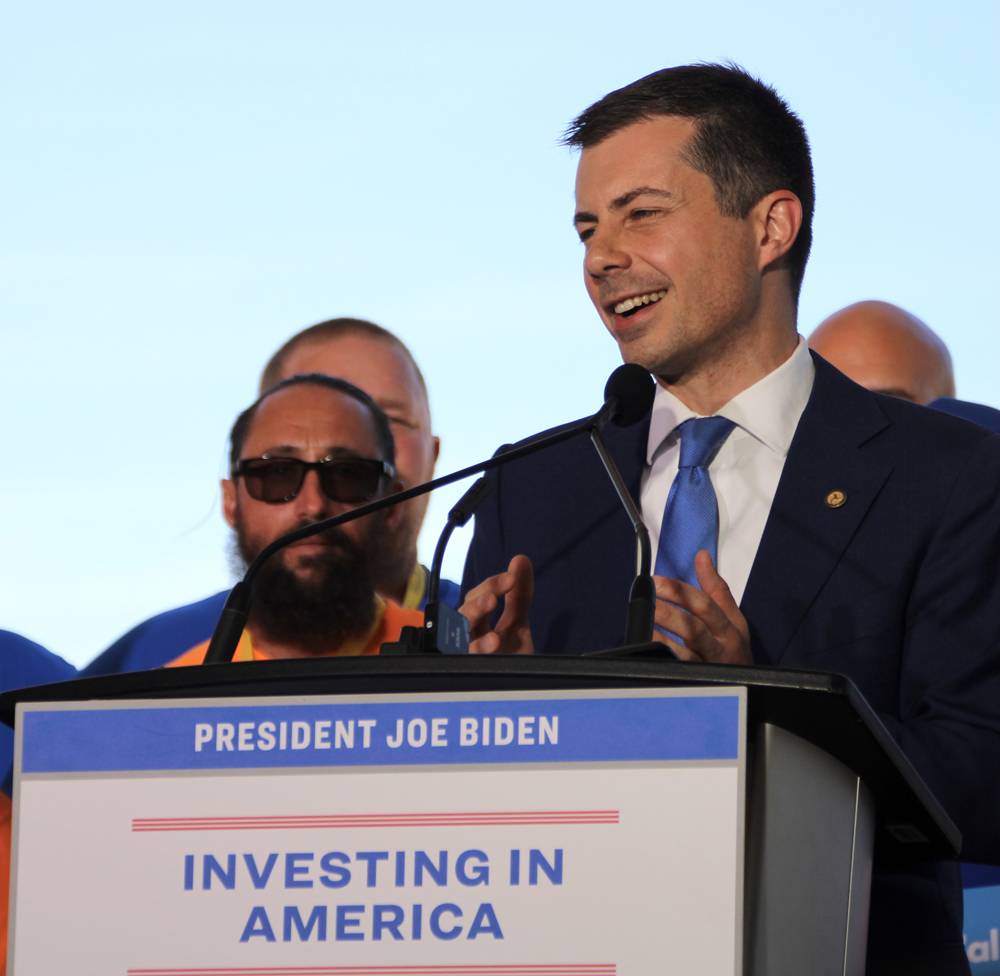
The federal role: At one point during his 12-minute speech, Buttigieg laid out why Brightline West had received $3 billion in federal funding in what he described as “a very competitive process.
“When this line opens … there’ll be a million fewer cars struck in traffic,” he said. “So even if you don’t use it, you’ll be benefitting from the people who do. And because I-15 is such an important freight route, that reduced congestion will have a material benefit to America’s supply chains. Everyone who lives near the 15 will breathe less pollution into their lungs, and everyone across the country will live in a climate with 800 million fewer pounds of carbon pollution annually.” He also outlined the projected economic benefits, and then returned to the transportation aspect.
“I am firmly convinced that once they first customer buys that first ticket to ride true high-speed rail on American soil, there will be no going back,” he said. “People will demand and expect this everywhere and leaders will respond, and more high speed rail lines are coming. Or to put it another way, in this particular case, what happens in Vegas should absolutely not be confined to Las Vegas.”
Earlier, Buttigieg had been asked what the federal government’s role in the project was, given that financial involvement.
“Well, it’s everything from accounting controls around how those dollars are spent and the kind of transparency you need there,” he said, “to making sure that they meet federal standards around safety. … Again, this is not done lightly, but we also want to make sure that we tear down any unnecessary bureaucratic areas to really get these dollars flowing, because this public-private partnership, I think is a very important example of how something ambitious can also be done quickly in the United States of America.”
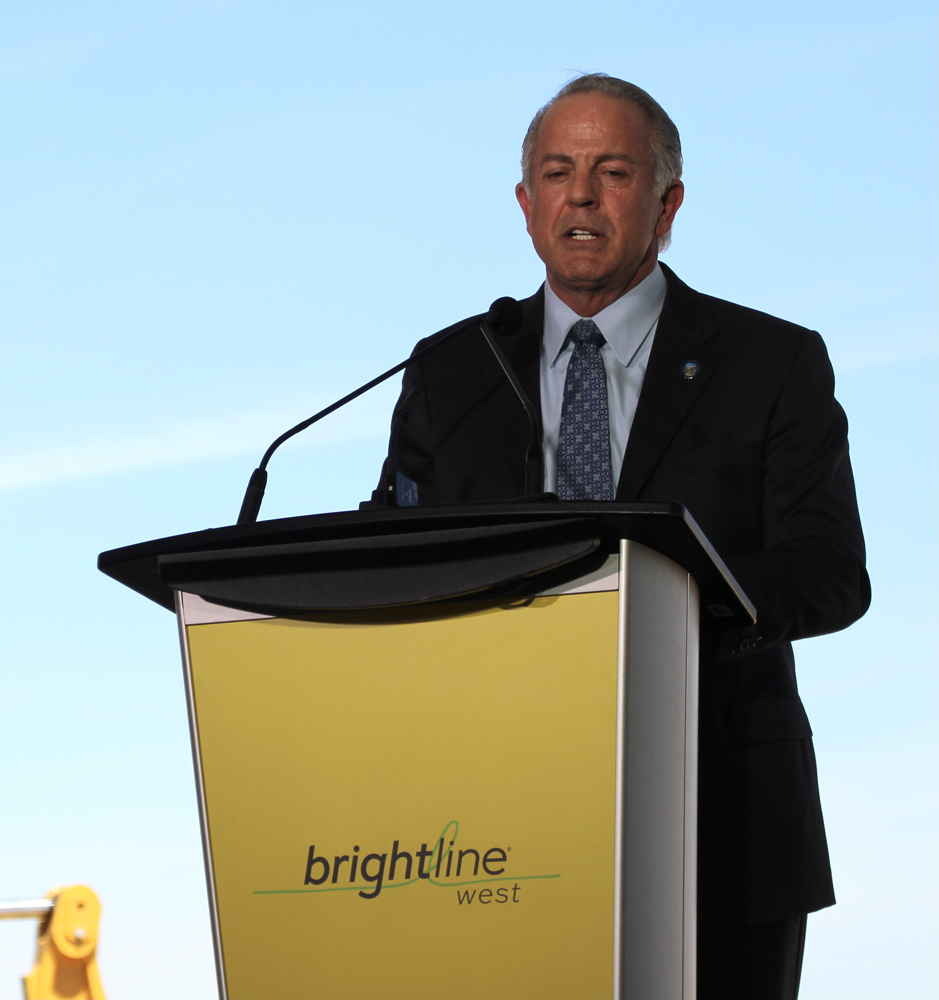
Political sensibilities: With a governor, a Cabinet member, two U.S. Senators, and five members of the House of Representatives on hand, Monday’s groundbreaking was, unquestionably, a political event. And for the most part, while everyone preached bipartisanship, it was a Democratic political event. The most notable exception was Nevada Gov. Joe Lombardo, a Republican, and a subtle visual concession was made to Lombardo’s party affiliation during his speech.
During the rest of Monday’s event, the speakers’ podium featured both the Brightline logo and a small sign: “President Joe Biden: Investing in America.” During Lombardo’s speech, the Biden signage was removed.
By the numbers: There may be no greater contrast between Brightlines West and East than this one: thanks to the planned construction in the median of Interstate 15, Brightline West will have zero grade crossings. The frequent grade crossings between Miami and Cocoa, Fla., have proved to be an ongoing safety problem for Brightline and local communities.
Brightline West offered some other numbers about the upcoming construction project. The company says it will use 700,000 concrete rail ties, 2.2 million tons of ballast, and 63,000 tons of American steel rail during construction. Upon completion, it will include 322 miles of overhead lines to power the trains and 3.4 million square feet of retaining walls. The project covers more than 160 structures including viaducts and bridges.
— Updated at 6:25 p.m. CT to correct name of governor of Nevada and the number of counties on the Brightline West route. News Wire apologies for the errors.
Share this article