NEW YORK — Extension of New York’s Second Avenue Subway project, which will add stations in East Harlem, has received a boost from a new funding agreement signed on Saturday.
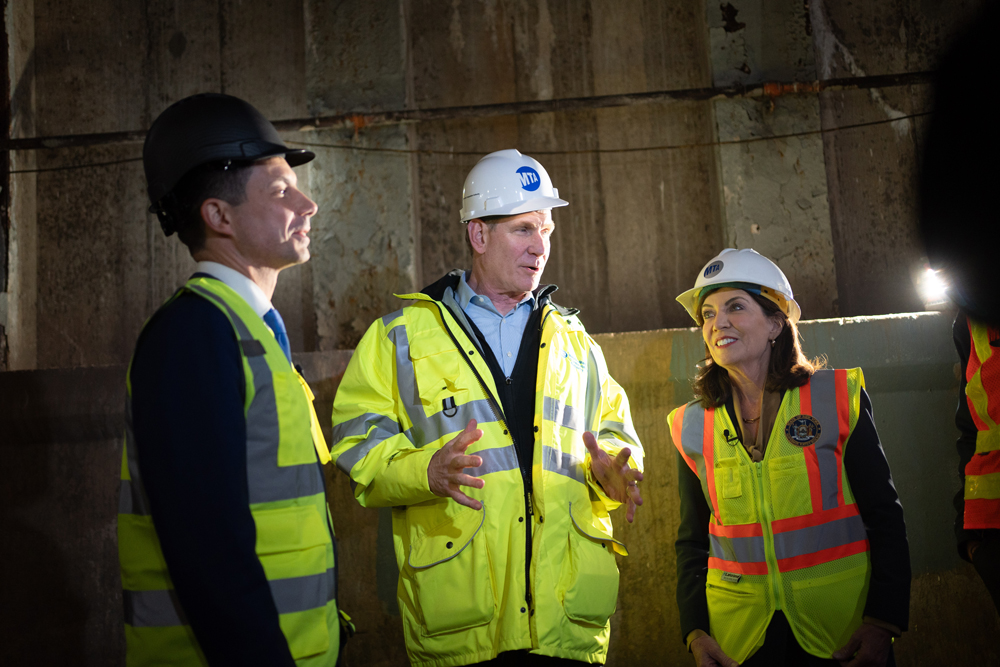
The $3.4 billion grant — “the largest Capital Investment Grant in the history of the program,” according to a social media post by U.S. Sen. Chuck Schumer — was signed in a Saturday morning ceremony adjacent to the Harlem-125th Street Metro-North and subway stations, with those in attendance including Transportation Secretary Pete Buttigieg and New York Gov. Kathy Hochul.
It was the second straight day for a major rail infrastructure event and funding announcement in New York. On Friday, Buttigieg and Hochul took part in a ceremony marking the start of work on part of the Hudson Tunnel project; at that event, Schumer announced the tunnel project would receive an additional $3.8 billion in federal funding [see “Hudson Tunnel project lands more federal funding …,” Trains News Wire, Nov. 4, 2023].
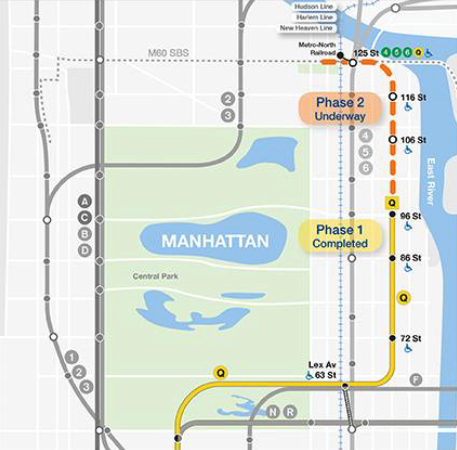
The project will extend the Q line subway from its current endpoint at 96th Street, with new stations at 106th, 116th, and 125th street. The 125th Street station will provide connections to Metro-North and the existing 4,5, and 6 subway lines.
“When people talk about transit deserts, and also transportation equity and racial equity, they seemed to forget about this area for a long time,” Hochul said. “… Finally, people recognize that this is a community that matters, and it matters deeply.”
The New York Post reports the grant application for the subway project has been stalled since 2018, a year after the first phase of the project opened. The Metropolitan Transportation Authority began soliciting the first contract for the project — to relocate utilities ahead of construction — earlier this year [see “New York MTA takes first step …,” Trains News Wire, July 6, 2023].
The website Gothamist reports the $3.4 billion grant will cover less than half the cost of the 1.8-mile extension. The project is currently estimated to cost $7.7 billion, which places it among the world’s most expensive transit projects on a per-mile basis.
Gothamist reports Buttigieg both defended the price and acknowledged the cost issues with major U.S. public works projects. “America has struggled to deliver infrastructure as cost effectively as other places around the world, “ he said, “which is why a major line of effort in our department is to find all of the means that we have, whether that’s on the bureaucratic side or on the engineering side, to accelerate and improve the cost effectiveness of our infrastructure spending.”
Share this article