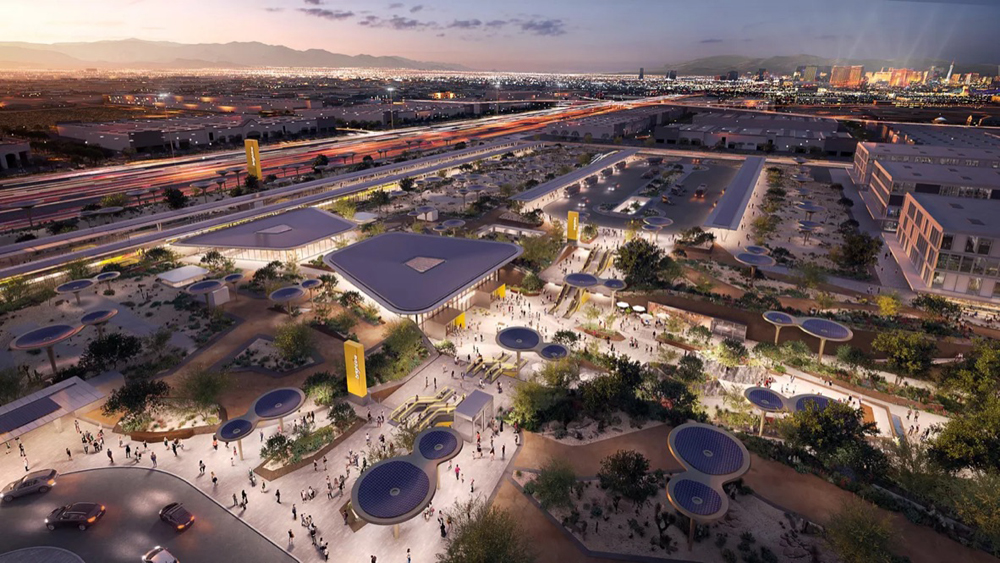
WASHINGTON — For the second time in a month, Brightline West has filed “Expedited Action Requested” documents with the Surface Transportation Board, seeking approval of the company’s plans for building a 186-mph electrified rail line between Las Vegas, Nev., and Southern California.
On Tuesday, Aug. 15, Brightline West urged the STB to rule favorably on a “Petition to reopen” proceedings from 2019 that specified changes to the original Desert Xpress Enterprises construction plan for the Las Vegas-to-Victorville, Calif., route. Brightline Holdings LLC acquired Desert Xpress that year.
The petition explains that the Federal Railroad Administration and the Office of Environmental Analysis determined in a 2020 “Reevaluation Summary” that a 2011 Final Environmental Impact Statement was still valid under the new proposal, which calls for more single track with passing sidings and a slightly different alignment along Interstate 15 than the original all double-track route.
The 2020 document did require that a plan be developed to evaluate and assess potential impacts on historic or cultural resources during construction, but the FRA and California and Nevada preservation offices have agreed on procedures. The final signatures were obtained Tuesday.
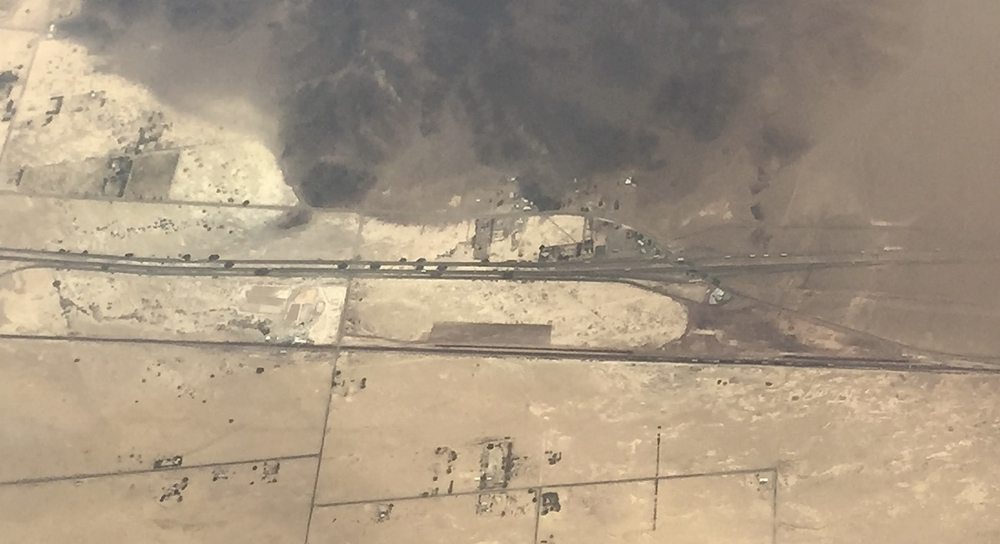
The Victorville-to-Rancho Cucamonga, Calif., portion of the route was the subject of a similar request to the STB on July 21. The regulators were asked to sign off on a “Petition for Exemption” from the need for a separate environmental analysis because a Finding of No Significant Impact had been issued.
Construction of both segments can only move forward with Surface Transportation Board approval. Obtaining that green light now is especially important, because Brightline West has requested $3.75 billion from the Federal-State Partnership component of the Bipartisan Infrastructure Law. That would finance about 25% of the total investment, with other funding coming from $1 billion in federal private activity bonds already allocated, another $1.5 billion private activity bond request, and private equity contributions and construction loans.
Tuesday’s filing states, “[Brightline West’s] objective is to commence construction before the end of the current year so it can initiate high-speed passenger rail service between Las Vegas and Southern California in time for the 2028 Summer Olympics hosted by the City of Los Angeles.”
Gaining quick “shovel-ready” approval is particularly important because proposals are being evaluated now by the FRA for $4.566 billion available for the upcoming fiscal year in competitive Federal-State Partnership grants for projects outside the Northeast Corridor. Many big-ticket rail initiatives are competing for that funding, including the Amtrak-led bid for major Chicago-area improvements [see “Chicago Hub projects vies for a big chunk …,” Trains News Wire, Aug. 3, 2023].
This is a five-year investment program not subject to annual appropriations, so a full FRA commitment to Brightline West would mean the funds could be spread over multiple years.
“Allocations are currently under review,” FRA Administrator Amit Bose told the Midwest Rail Conference in Toledo, Ohio, on Tuesday. “And while I can’t talk about them specifically, I want to reiterate that FRA intends to invest strategically and to grow a safer, cleaner, and more equitable rail system.”
Share this article