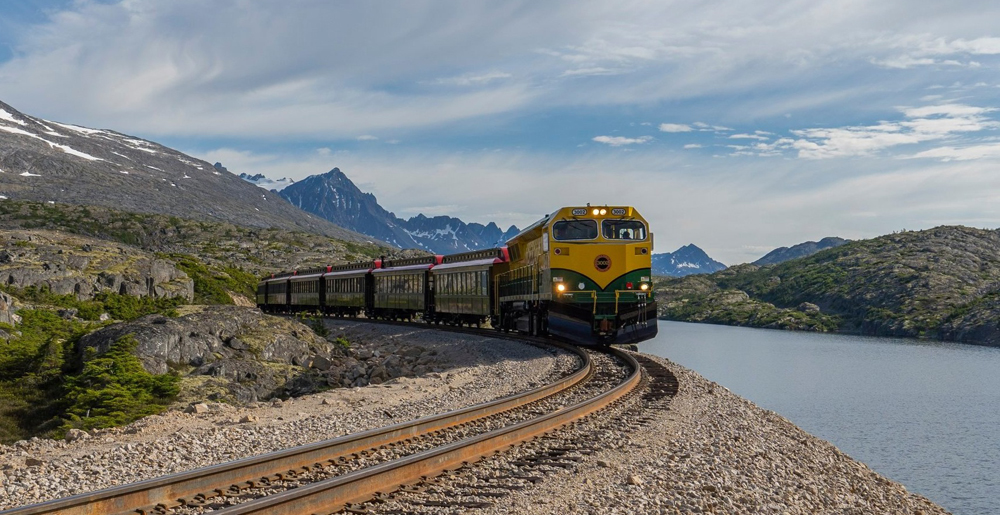
SKAGWAY, Alaska — The White Pass & Yukon Route Railroad and the union representing its train and engine workers have reached a tentative agreement on a new contract, the two sides announced Tuesday.
The agreement, which would run through 2027, is subject to ratification by the more than two dozen employees represented by the International Association of Sheet Metal, Air, Rail and Transportation Workers-Transportation Division (SMART-TD). Details will not be released until after a ratification vote.
“With this agreement, we can now move forward together continuing the WP&YR’s 125-year legacy,” Mark Taylor, the railroad’s superintendent of rail operations, said in a press release.
SMART-TD announced earlier this month that members of Local 1626 had voted to authorize a strike after working for almost six years without a contract [see “White Pass & Yukon operating employees vote to strike,” Trains News Wire, July 7, 2023]. Along with not having seen a pay increase in that time, the union was concerned about increasing health care costs and the railroad’s desire to reduce the workforce by a third by removing brakemen from its trains.
Jason Guiler, who led the union’s local negotiating team, said the long negotiating process “has allowed us to express our concerns and urge the carrier to offer a contract that is fair and addresses workers’ needs.”
White Pass & Yukon Executive Director Tyler Rose said the negotiating process had been “challenging … but we are happy that both parties have been able to come together and get this done in the best interest of our employees. It is a good agreement for both sides and we believe shows the respect, value, and appreciation we hold for the work our people do.”
KTUU reports the two sides were in the middle of a 30-day cooling-off period, which came after mediation failed to resolve the dispute and the two sides did not agree to arbitration. A strike could have begun at the end of the cooling-off period.
Share this article