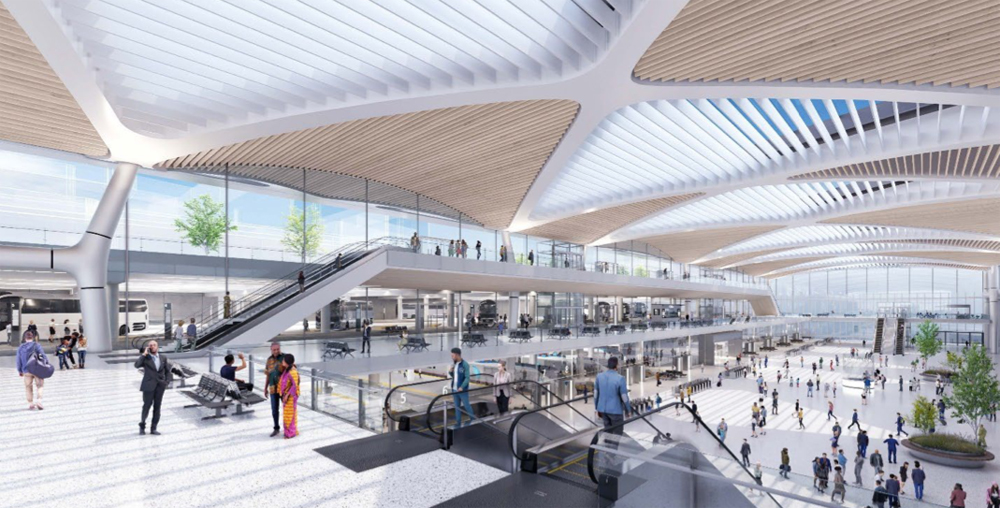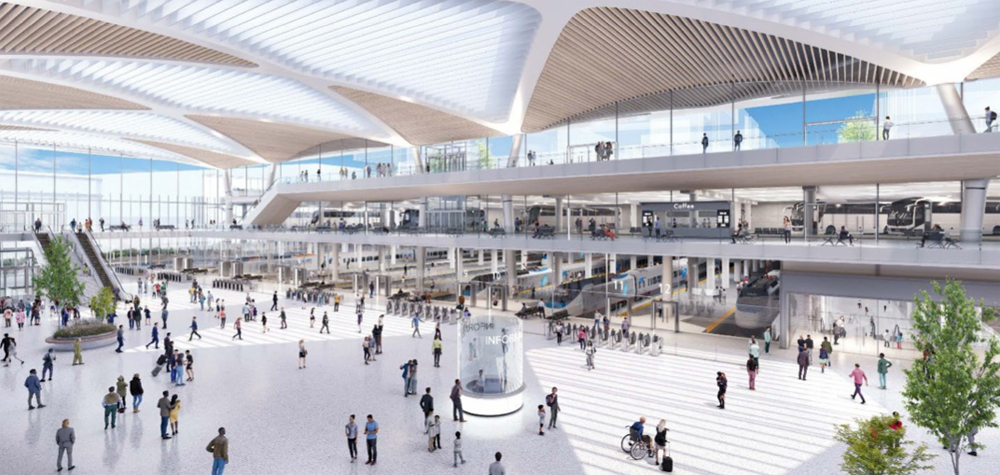
WASHINGTON — A significant reduction in parking spaces — including elimination of above-ground parking and bus facilities — and a larger train hall are key features of a revised plan for redevelopment of Washington Union Station released Friday.
The Washington Post reports the revised plan from the Federal Railroad Administration — developed after a two-year delay to address complaints the previous plan were too car-centric — also will include below-ground pick-up and drop-off areas, better integrated access for pedestrians, bikes, and buses, and concourses lined with shops and restaurants.
The project is expected to cost $8.8 billion with completion by 2040. The full report, available here, details changes including the replacement of a 1,600-space, six-story parking garage with a single of underground parking with 400 to 550 spaces. It will include four new concourses, and larger east-west train hall than the original proposal. It would rebuild the existing tracks and platforms with 19 new tracks — 12 stub-end tracks on the facility’s west side and seven run-through tracks.
The new train hall would cover approximately 150,000 square feet, while the new concourses would cover about 330,000 square feet. There would be approximately 64,000 square feet of retail space.
The FRA will hold public hearings on the new plan on June 28 and 28, and accept comment through July 6. More information is available here.