Precision Scheduled Railroading has become a target for members of Congress, federal regulators, shippers, and rail labor. Hunter Harrison’s low-cost operating model — in place on all of the Class I railroads except BNSF Railway — has come under criticism as rail traffic has rebounded from pandemic lows.
Intermodal terminals faced monumental congestion this summer. Carload shippers have complained about poor service, particularly on CSX Transportation and Norfolk Southern, which are both short of train crews. And some people in high places, including Surface Transportation Board Chairman Martin J. Oberman, have questioned whether railroads have cut their workforces too deeply over the past five years.
About the only people happy with railroads are investors, who have cheered lower operating ratios, higher profits, and rising stock prices.
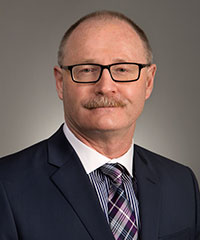
But Tony Marquis, who held high-ranking operating positions at the Harrison-led Canadian National and Canadian Pacific, says PSR is getting a bad rap. “I don’t think it’s fair at all,” he says. “They are trying to blame the railroads and PSR for a worldwide logistics problem.”
The bigger issue, Marquis says, is that CSX, NS, and Union Pacific have not yet gotten their PSR makeovers quite right. “The one thing people miss about PSR is it’s a culture change. It’s not just an operating change,” says Marquis, who retired as senior vice president of operations for CP’s Eastern Region in 2019 and is now a consultant. “And that’s probably the biggest miss that I see from those that are trying to implement it and are struggling.”
It’s critical, Marquis says, that the entire company understands PSR and buys in. “It’s not about cutting costs. It’s not about making sure the shareholders get rich. It truly is about being the lowest-cost, best service provider. It is a full-scale culture change,” Marquis says.
Somehow that message has gotten lost, Marquis says, and the U.S. Class I systems need to explain the “why” of PSR to employees, customers, regulators, and lawmakers. Marquis says he learned that lesson the hard way at CP, where a fast implementation of PSR left little time for explanations. Later, though, Marquis and the other operations senior vice presidents would spend two or three days each month conducting leadership sessions with CP’s operating people. Standards, goals, and expectations were set, and PSR operations were explained, he says. These sessions ultimately were expanded to all departments at CP.
A PSR railroad streamlines its operations, pre-blocks traffic at origin, and bypasses intermediate switching as much as possible. Moving traffic in fewer but longer trains allows a railroad to reduce the size of its locomotive and car fleets, which in turn allows the railroad to operate with fewer train crews and far smaller locomotive and carshop workforces. Most importantly, Marquis says, there is an operating discipline to run to the schedule for all functions. This includes track maintenance windows, inspectors, intermodal yard employees, and train crews. “Scheduling allows for optimization,” he says.
And what of job losses? The U.S. PSR railroads have, on average, eliminated 25% of their workforce since 2017. “It does have an immediate impact that is bothersome,” Marquis says. “But it means that you can become a low-cost, high-service provider – which means you’re going to get more business and then more jobs.”
CP, he notes, has led the industry in growth since 2017 and now has more operating employees than it did before Harrison arrived in 2012, but far fewer headquarters employees. “And that’s what you want,” Marquis says.
The STB’s Oberman has criticized the big U.S. PSR systems and questioned whether they are shirking their common carrier obligations to accept all kinds of traffic. Marquis says railroads shouldn’t be saddled with unprofitable business and notes that Class I systems have been demarketing traffic for years when it didn’t make sense, like rumbling down a 10-mile branch to retrieve two hoppers of grain.

Instead, PSR systems work with customers that fit the railroad’s operating model so they can grow together, Marquis says. PSR gets the railroad and its customers thinking differently, such as converting some carload traffic to intermodal or shifting to a unit grain train model involving loop tracks at both origin and destination that can handle 8,500-foot trains that don’t require switching. “Customers also benefit with faster cycle times — they can reduce highly expensive railcar leasing costs and schedule their own operations to optimize their assets,” Marquis says.
“The growth model is based on capacity and service, built on understanding the customers’ needs and the operating plan that optimizes the network where all assets are accounted for, from passing siding capacity to the number of locomotives and crews needed to bring on new business,” Marquis says. “It is a partnership with the customers and understanding volume levels and service delivery expectations in exchange for the railroad making capacity investments to support the new traffic. Customers are willing to make a commitment if CP is willing to make a commitment. That’s pretty fair.”
All PSR railroads can grow in this way, Marquis says. “When traffic fits the model, the customer wins and you win,” he says.
You can reach Bill Stephens at bybillstephens@gmail.com and follow him on LinkedIn and Twitter @bybillstephens
Share this article