WASHINGTON — On a typical day, BNSF Railway has about 30 international stack trains staged along its main lines, waiting for space to open up at intermodal terminals in Chicago, Memphis, and Alliance, Texas.
The terminals are clogged due to an unprecedented combination of record volume and shippers and receivers being slow to pick up containers that have been unloaded from inbound trains.
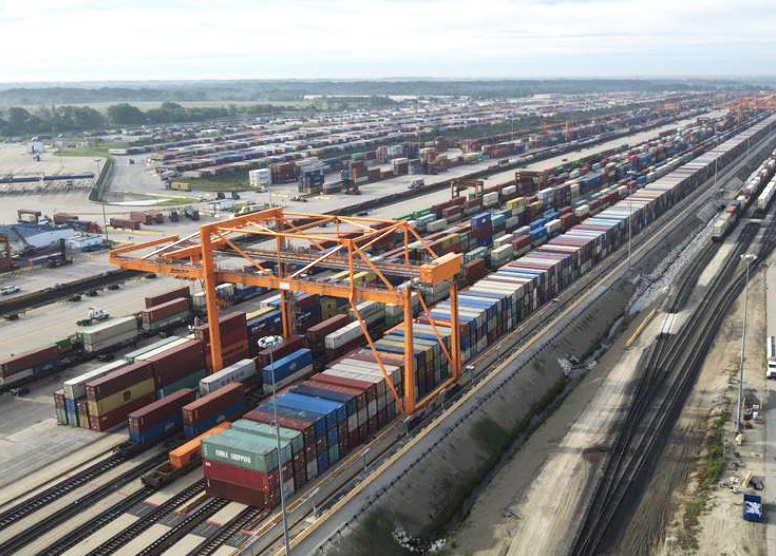
At Logistics Park Chicago, BNSF has temporarily converted two production tracks into a storage area where containers sit awaiting pickup. The boxes stretch as far as the eye can see. And the number of containers dwelling at the terminal — an average of 7,816 per day in July — has nearly doubled since March.
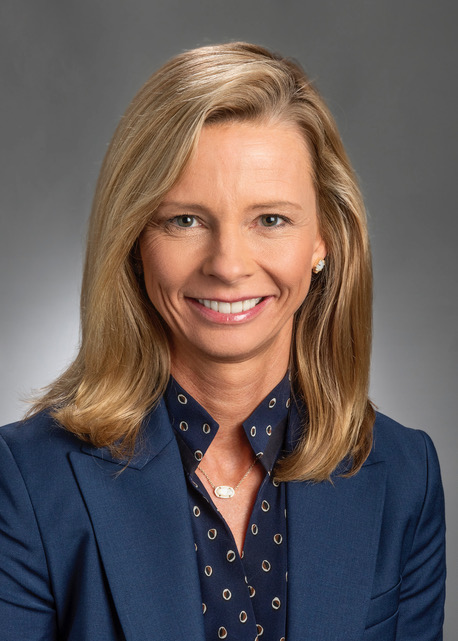
“As even more freight is being put into the global intermodal pipeline, the shortage of chassis, drivers, and labor to support distribution center unloading is causing shipments to back up into rail facilities,” BNSF CEO Katie Farmer wrote in a letter posted on the Surface Transportation Board website on Thursday. “The backlog is not limited to our physical intermodal terminals either — at any given time we have around 30 trains (holding around 7,500 containers) staged for prolonged periods outside our intermodal facilities because there simply is not space in our hub to get those containers unloaded for pickup until the appropriate party coordinates the pickup of the older containers for delivery to processing locations.”
BNSF has taken steps to increase capacity, terminal throughput, and storage, as well as limiting the flow of containers from the ports of Los Angeles and Long Beach to some inland destinations.
“However, the measures we take to maximize efficiency in our handling of cars across our network and within our terminals are largely rendered meaningless if receivers are not ready to pick up those containers from our facility,” Farmer wrote. “For example, while we are transporting and unloading volumes this year at a pace exceeding our peak year of 2018, international containers are dwelling in our yard after unloading nearly 30% longer. The reality is that significantly more freight is coming into BNSF facilities than is being picked up and that simply is not sustainable.”
Farmer was responding to STB Chairman Martin J. Oberman’s request for information from the Class I railroads regarding intermodal congestion and storage fees charged to cargo owners [see “STB chairman wades into intermodal …,” Trains News Wire, July 22, 2021]. Railroads use storage charges and demurrage fees to encourage shippers to keep freight moving.
“Unless BNSF can utilize the few tools we have available to incentivize timely pickup – including storage charges when containers are left in our yards beyond free time – rail operations will degrade and ultimately come to a halt,” wrote Farmer, whose railroad handles the largest intermodal volume in North America.
A Stressed Supply Chain
The various elements of the intermodal supply chain – from ports and main lines to inland terminals, chassis and truckers who provide drayage – have enough capacity to support current volumes, Farmer says. “But only if all parts of the supply chain do their part. Operating 24/7 in all parts of the supply chain, not just rail, would generate substantial capacity immediately,” she wrote.
Distribution centers and warehouses are facing labor shortages, as well as pandemic-related restrictions, that have significantly curtailed their ability to receive and unload containers. Retailers, meanwhile, continue to import goods to keep up with consumer demand and to restock depleted inventories, which remain well below normal levels.
Farmer outlined the side effects of creating storage space out of 8,000-foot production tracks at Logistics Park Chicago: “Taking these two tracks out of service allows us to stack the equivalent of an additional 10 trains of inventory on the same footprint and free up 10 railcar sets to return to the West Coast. However, this footprint modification came with considerable expense and the loss of rail production capacity.”
CSX Remains Fluid
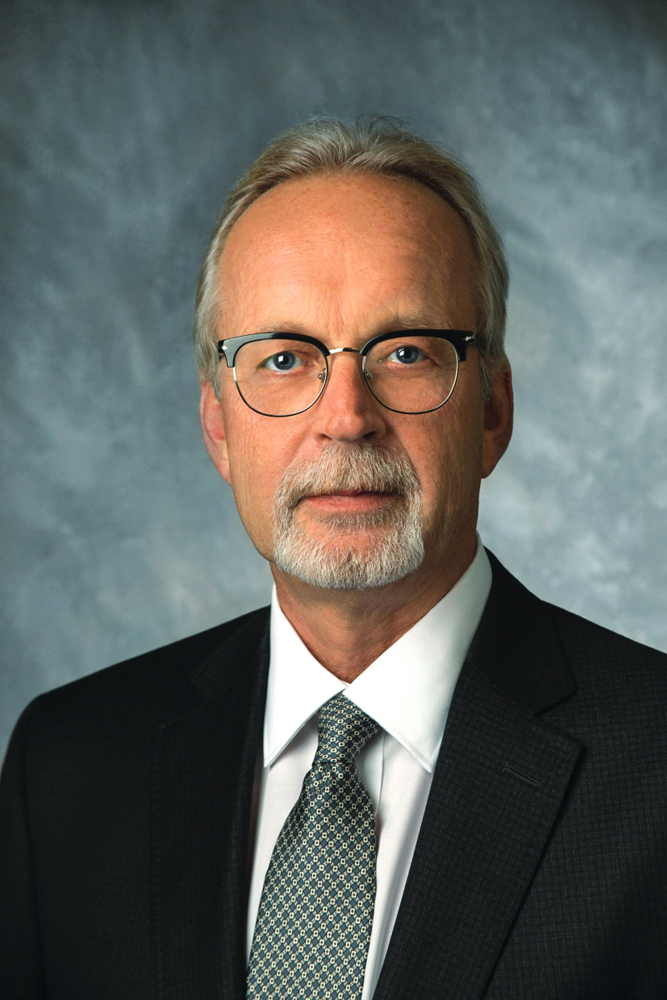
CSX Transportation CEO Jim Foote, in a Monday letter to the STB, wrote that railroads are just one part of a broader global supply chain and can’t be held accountable for problems outside of their control.
“While intermodal rail terminals are important, railroads only facilitate the movement of international containers through its relatively small segment of the overall transportation pipeline,” Foote wrote. “An intermodal terminal has a designed throughput capacity and CSX depends on receivers and steamship lines to maintain a relatively consistent flow of freight out of our facilities to accommodate the additional freight being moved in. Rail intermodal terminals simply transition containers off railcars and make them accessible for distribution to consumers – they were not designed for, and are not physically capable of, long-term container storage for significant volume.”
While the number of containers dwelling at CSX terminals has increased this year, particularly in Chicago, the railroad has kept its terminal gates open. The railroad has boosted efficiency by increasing ground storage capacity, moving containers to off-site parking, and converting its Bedford Park facility in Chicago into an international terminal and its 59th Street terminal into a domestic facility.
Foote said demurrage and storage charges are necessary. “Our preference is to have fluid terminals and not charge demurrage at all – but it’s nonetheless a vital and effective means of advancing the flow of assets out of our terminal,” he wrote.
Kansas City Southern CEO Pat Ottensmeyer also replied to Oberman’s request for information this week, noting that the railroad has been able to manage its intermodal operations effectively despite the surge in demand. KCS is not a major player in international intermodal traffic.
Share this article