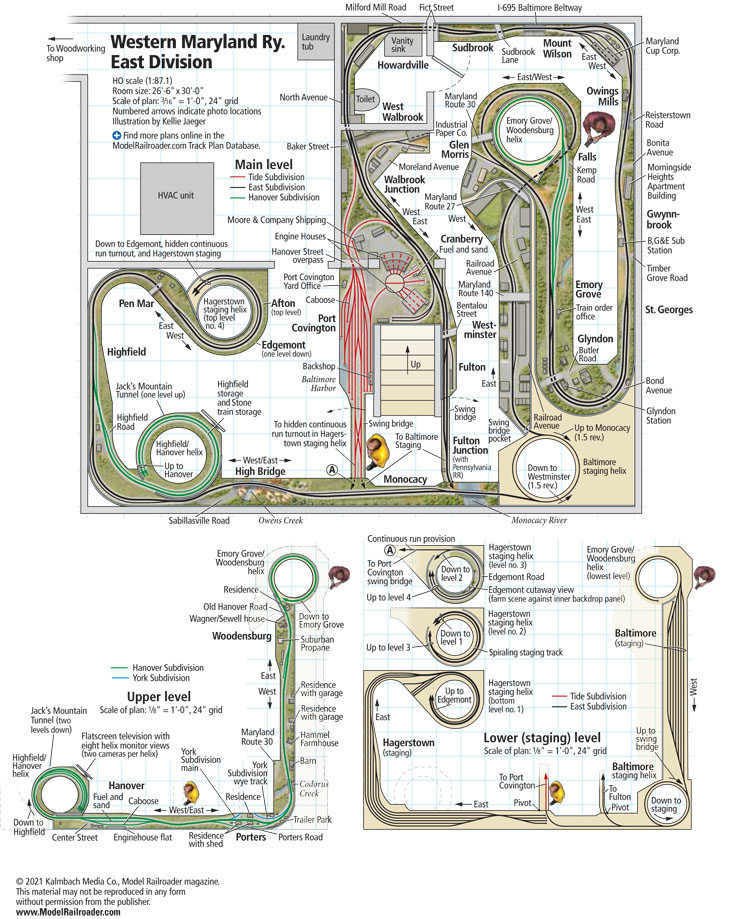

HO scale Western Maryland Ry., East Division

overview of a track plan

The layout at a glance Name: Western Maryland Ry., East Division Scale: HO (1:87.1) Size: 26′-6″ x 30′-0″ Prototype: Western Maryland Locale: Baltimore, central Maryland, and south central Pennsylvania Era: late spring/summer 1965-1973 Style: around-the-walls shelf with peninsula, four helixes Mainline run: 342 feet (including mainline helixes, excluding staging and staging helixes) Minimum radius: 22″ (main), […]

Read More…

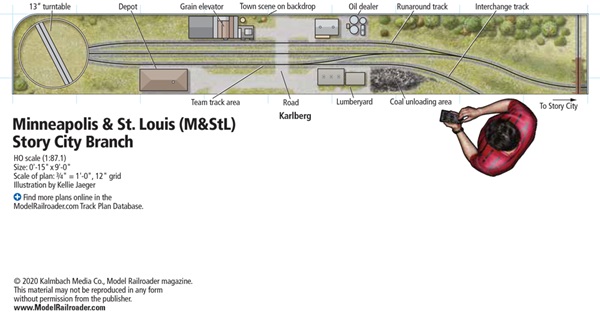
HO scale Karlberg Shelf Plan

The layout at a glance     Name: Karlberg Scale: HO (1:87.1) Size: 15″ x 9′-0″ Theme: generic granger road Locale: upper Midwest Era: 1950s Style: shelf Mainline run: 8 feet Minimum radius: 30″ Minimum turnout: no. 5 Maximum grade: 4 percent (interchange) Benchwork: tabletop Height: 54″ Roadbed: Homasote Track: Micro Engineering code 55 Scenery: extruded-foam insulation board Backdrop: photographs Control: Digitrax Digital Command Control plus ProtoThrottle See a PDF version of this […]

Read More…

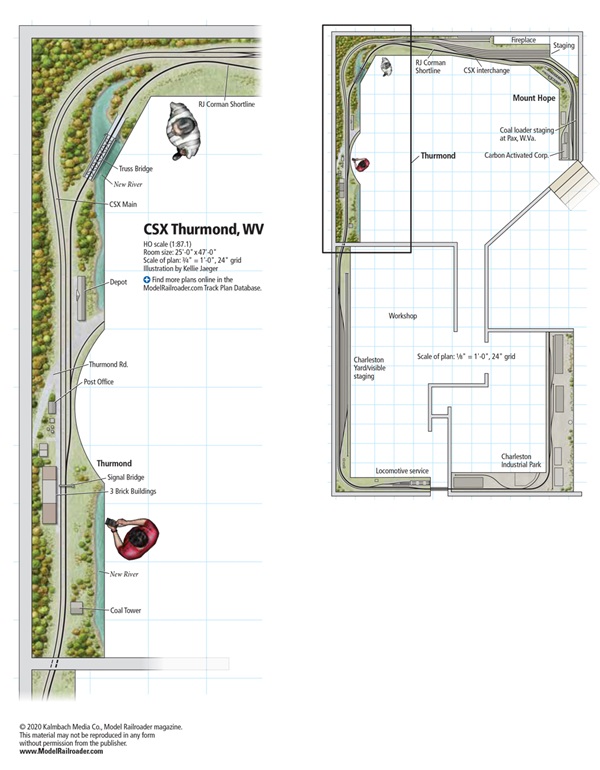
HO scale CSX Thurmond, WV

Layout at a glance Name: CSX Thurmond, W.Va. Scale: HO (1:87.1) Size: 25 x 47 feet Prototype: proto-freelanced CSX Locale: Thurmond, W.Va. Era: Present day Style: Shelf Minimum radius: 32″ main, 24″ in industrial park and RJ Corman shortline Minimum turnout: no. 6 Maximum grade: none Benchwork: box girder Height: 56″ Roadbed: birch plywood Track: Peco code 83 flextrack Scenery: extruded-foam insualtion board Backdrop: hand-painted on medium-density fiberboard Control: NCE wireless Digital […]

Read More…

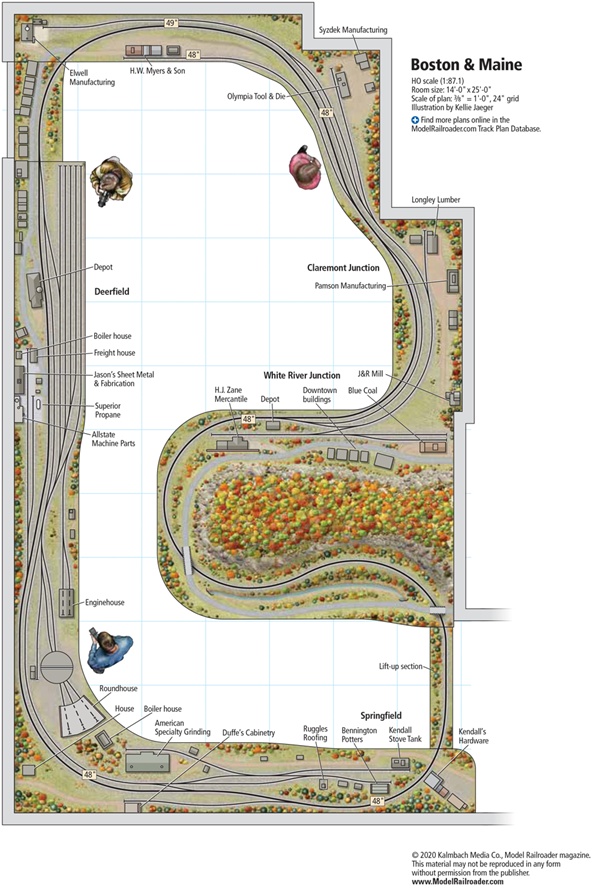
HO scale Boston & Maine

Track layout

The layout at a glance Name: Boston & Maine Scale: HO (1:87.1) Size: 14 x 25 feet Prototype: Boston & Maine Locale: Springfield, Mass., to White River Junction, Vt. Era: Autumn, late 1950s Style: around-the-walls Mainline run: 80 feet Minimum radius: 32” Minimum turnout: no. 5 Maximum grade: less than 1 percent Benchwork: L-girder Height: […]

Read More…

Turnouts with troubles may benefit from these advanced tips

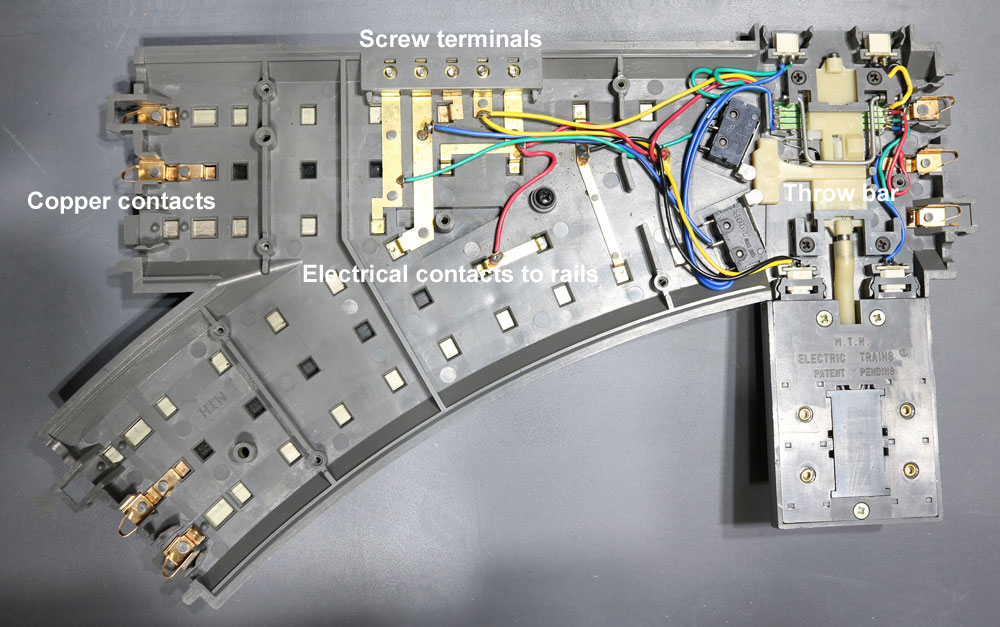
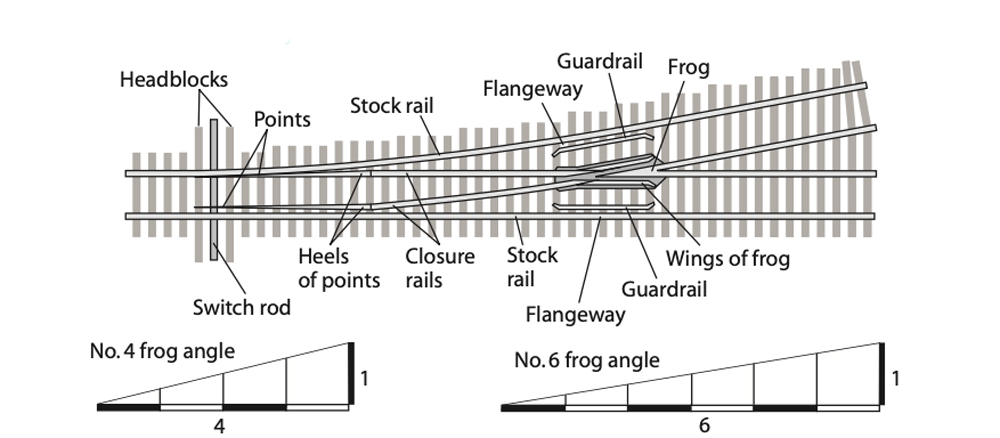
Diagram of a model railroad turnout with callouts naming the key components and showing their relative locations

Turnouts are generally reliable right out of the package. But sometimes problems arise that simple fixes can’t solve. Here are 3 advanced tips to try. 1. Fill flangeways In a perfect world, the wheel treads are wide enough, the gauge is  correct, and the flangeways are precise enough that a wheel never drops into the […]

Read More…

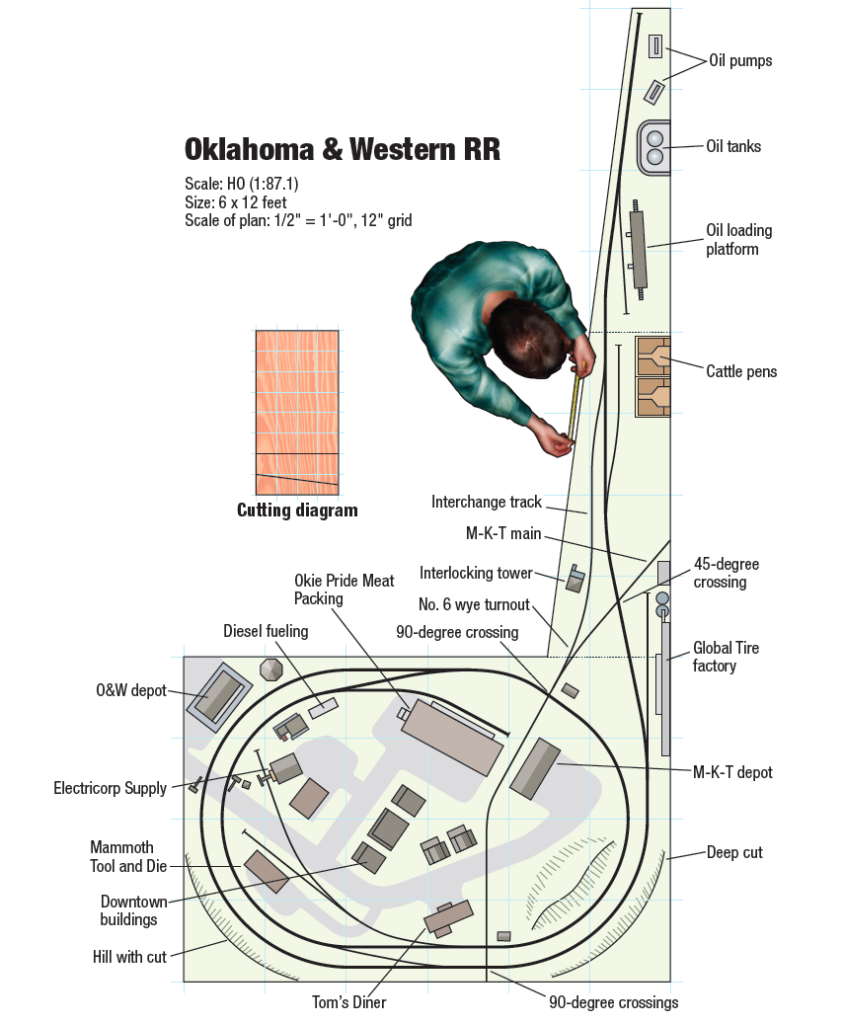
A beginner’s HO scale layout from one sheet of plywood

track plan

(From the article “Three track plans for one sheet of plywood” from the August 2008 Model Railroader) HO scale model railroads are often small layouts based on 4 x 8-foot sheets of plywood, for obvious reasons. A flat tabletop is a lot easier to build than L-girder benchwork, and almost any home has room for […]

Read More…

HO scale Danefield Modules

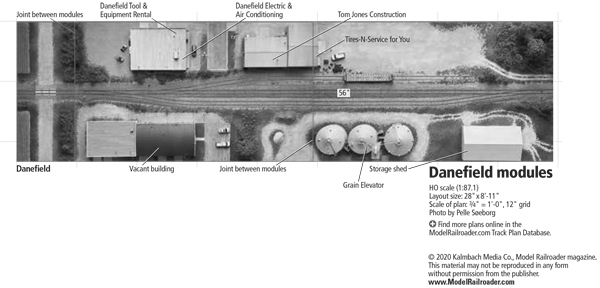
HO scale Danefield modules

The layout at a glance Name: Danefield modules Scale: HO (1:87.1) Size: 28″ x 8′-11″ Prototype: Union Pacific Locale: generic Midwest Era: modern Style: module Mainline run: none Minimum radius: none Minimum turnout: no. 7 Maximum grade: none Benchwork: laser-cut plywood modules Height: 56″ Roadbed: cork Track: handlaid codes 83, 70, and 55 Scenery: plywood […]

Read More…

HO scale Royal Gorge Route

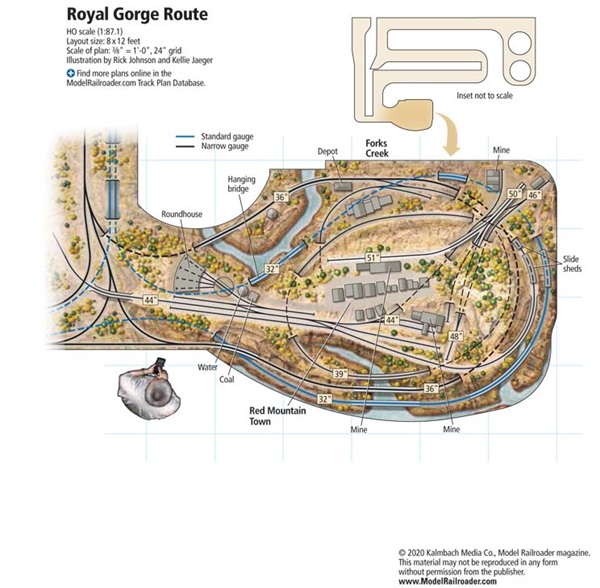
HO scale Royal Gorge Route

The layout at a glance Name: Royal Gorge Route Layout owner: Florida Scale Rails club Scale: HO (1:87.1) Size: 8 x 12 feet Prototype: Denver & Rio Grande Western (standard and HOn3 narrow gauge); Atchison, Topeka & Santa Fe; and Union Pacific Locale: Colorado Era: 1930s to ’60s Mainline run: 75 feet Minimum radius: 22″ […]

Read More…

N scale Bone Valley v. 2

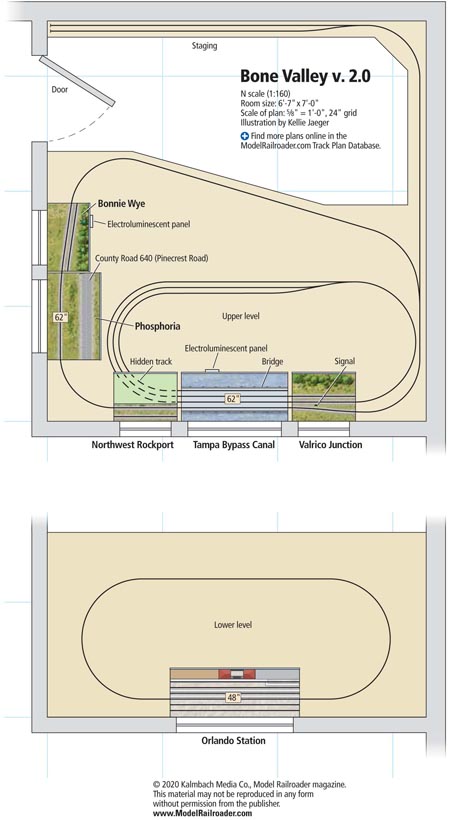
N scale Bone Valley v. 2

The layout at a glance Name: Bone Valley Layout owner: Alex Marchand Scale: N (1:160) Size: 6′-7″ x 7′-0″ Prototype: CSX/Seaboard System Locale: West Central Florida Era: late 1980s Style: multilevel, gallery Mainline run: 40 feet Minimum radius: 12″ Minimum turnout: no. 6 Maximum grade: none Benchwork: extruded-foam insulation board on 1 x 2 frame […]

Read More…