
Guide to N scale couplers

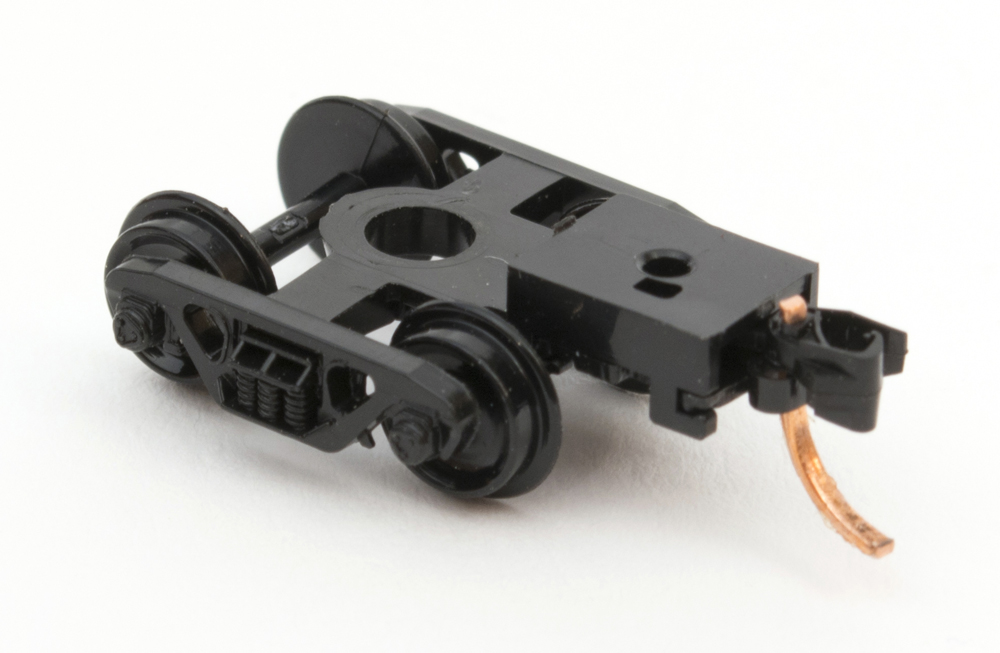
Color photo of freight car truck with a Mange-Matic coupler.

In the 60-plus years that N scale has been around, there has been a great deal of change in couplers. Rapido, an early manufacturer of N scale models (not to be confused with today’s Rapido Trains), let other companies use its coupler design. The wedge-front coupler, which was used on most N scale models (except […]

Read More…

Model a pike-size passenger train

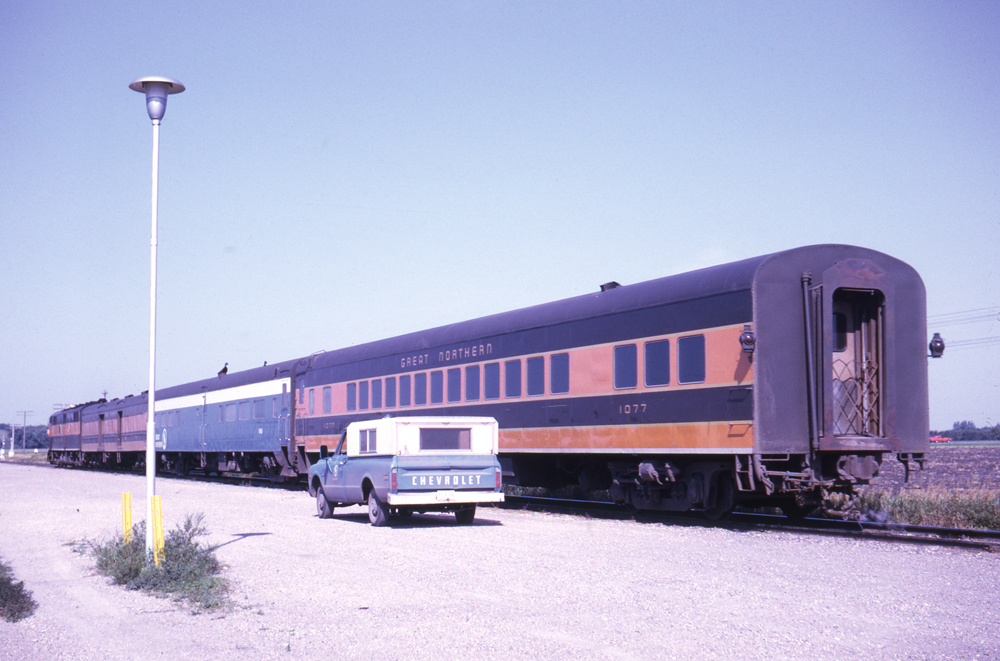
Color photo of three-car passenger train with blue truck in front of last car.

When you think of Burlington Northern, passenger service may not be the first thing that comes to mind. But from March 2, 1970 (Burlington Northern’s first day) to April 30, 1971 (the day before Amtrak started operations), the railroad offered passenger service. Among the name trains were the Empire Builder, Mainstreeter, North Coast Limited, and […]

Read More…

How to choose a power pack for your model railroad

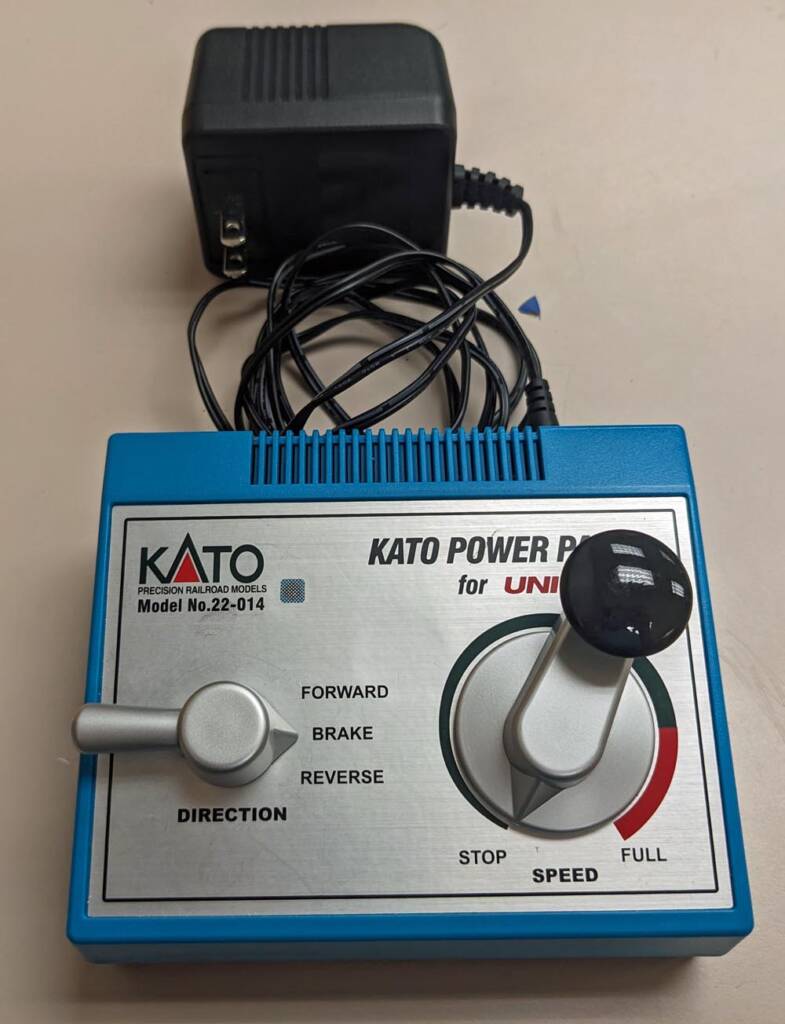
Blue Kato DC Power Pack

Though multiple manufacturers offer power packs meant for model railroads, three main companies currently offer the packs as separate-purchase items: Model Rectifier Corp., Kato USA, and Bachmann Trains. If you choose to use direct-current control instead of Digital Command Control (DCC) on your layout, buying a DC power pack (or power supply) that fits your […]

Read More…

Locomotive models in Bicentennial paint

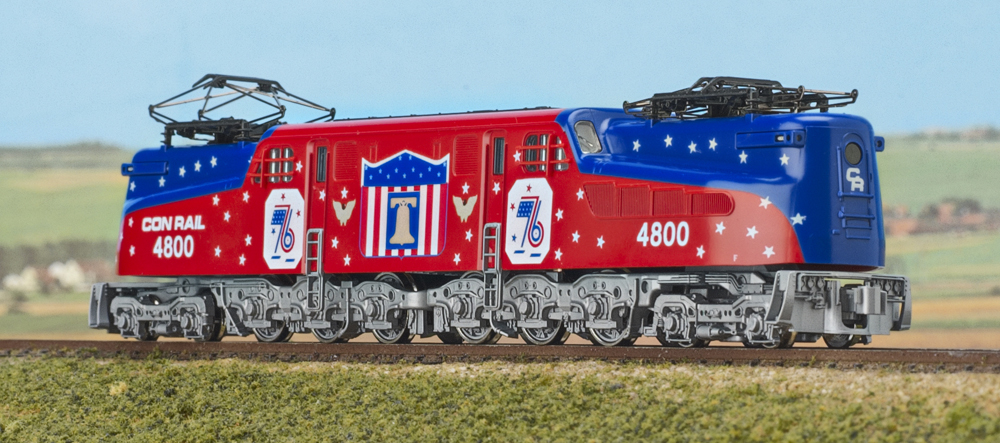
Color image of electric locomotive in patriotic paint scheme.

With Independence Day just around the corner, we thought it would be fun to take a look back at some N and HO scale locomotive models in Bicentennial paint schemes. As the 200th birthday of the United States approached, numerous prototype railroads renumbered and repainted locomotives in patriotic schemes to pay tribute to the nation. […]

Read More…

Short Amtrak consists of the 1980s

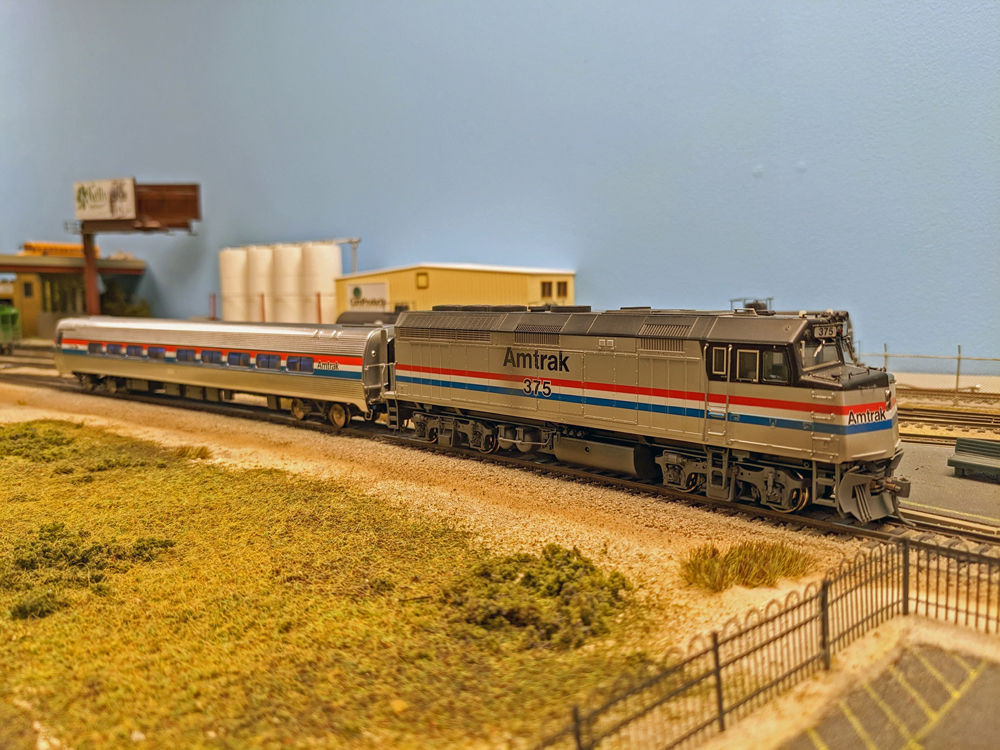
A model passenger train stops at a station.

Throughout the past few months, I have shown you how different small Amtrak trains can be modeled with only a few pieces of equipment. If you’ve read those previous articles, you might have noticed a pattern. Amtrak trains that operate between a big city and a much smaller city or town, such as Chicago and […]

Read More…

Early short Amtrak consists

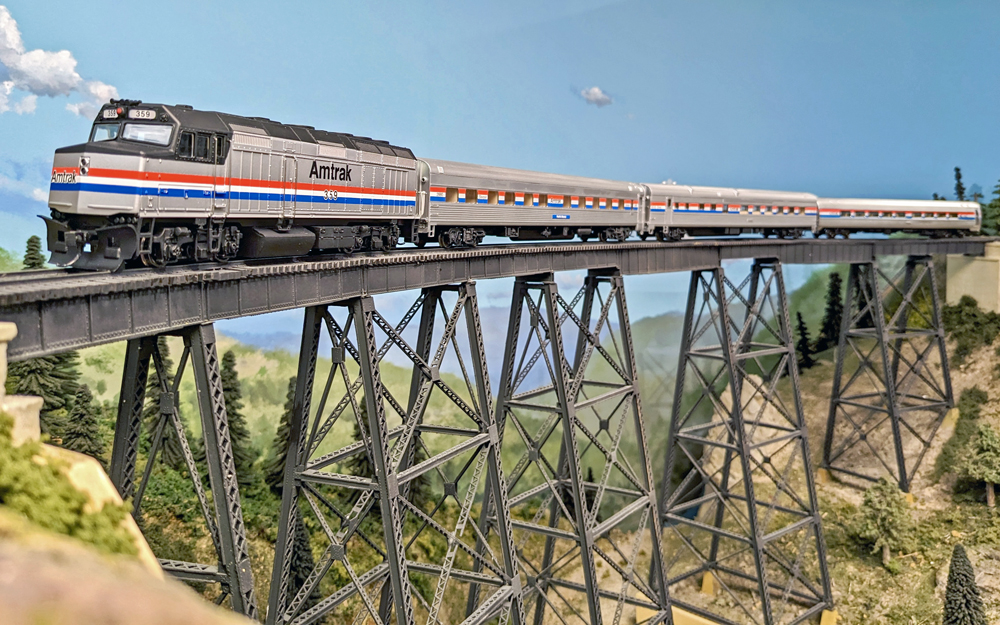
A model passenger train on a bridge

On May 1st, 1971, the National Railroad Passenger Corporation, or Amtrak, was formed. On this 52nd anniversary, I thought we should take a look at small Amtrak trains from the start. If you want to learn about how to model modern short Amtrak consists, check out my previous article. Instead of focusing on two individual […]

Read More…

Model modern Amtrak passenger train consists

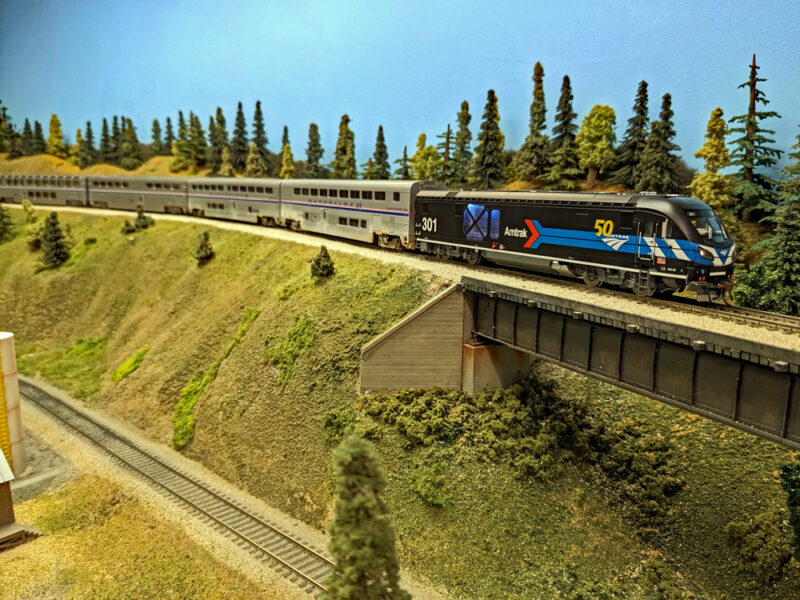
A black model diesel locomotive pulls a modern passenger train down a grade

If you love traveling around the country on the rails like I do, you probably want to know how to model modern Amtrak passenger train consists. Amtrak’s consists vary between regions and train-by-train. For instance, there is a height limit in the New York City area so any train going in or out of New […]

Read More…

How many Amtrak cars do you need for a prototypical train?

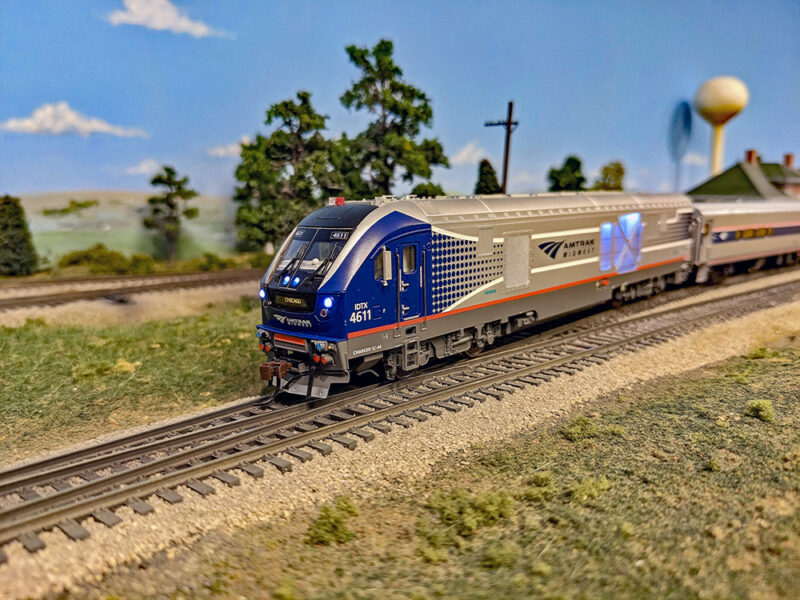
Model of new Amtrak diesel locomotive with passenger car at station

If you’re like me, you love riding Amtrak and modeling the trains you have ridden. But scale passenger equipment can get expensive, especially if you add lights and figures. The first two Amtrak cars that I got were Superliner coach and diner cars; I thought I needed to save up for a whole train. This […]

Read More…

Should I use terminal joiners on Kato Unitrack?

Q: I’m building a new layout using Kato HO scale Unitrack. I have read many different opinions on whether to solder all track joints. What’s the best practice? Some say that using terminal joiners on Kato Unitrack for connection to the DCC bus is OK, while others say they’re unreliable. I use terminal joiners every […]

Read More…

HO scale number 6 turnouts

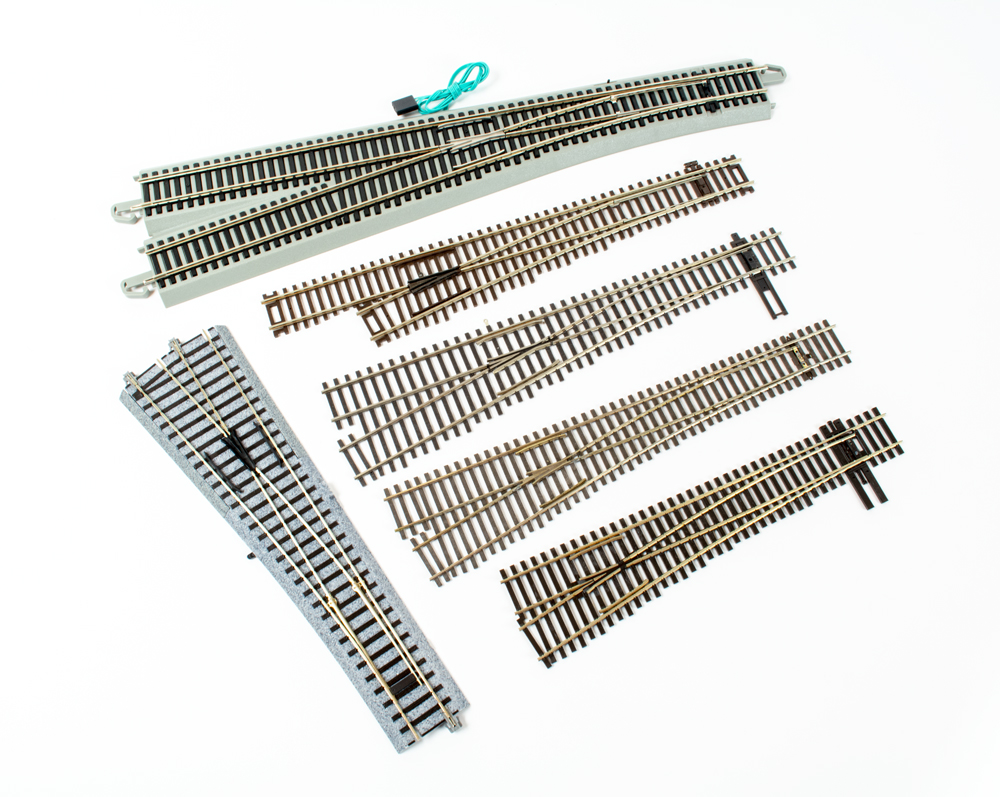
Group photo of HO scale No. 6 turnouts

HO scale number 6 turnouts HO scale number 6 turnouts. Running trains in a circle or oval may hold your attention for a little bit, but eventually you’ll want your trains to go somewhere beyond that basic loop. That’s where turnouts enter the scene. Turnouts let you split one line into two, design yards, model […]

Read More…