
Freight car trucks and carbodies
Freight_car

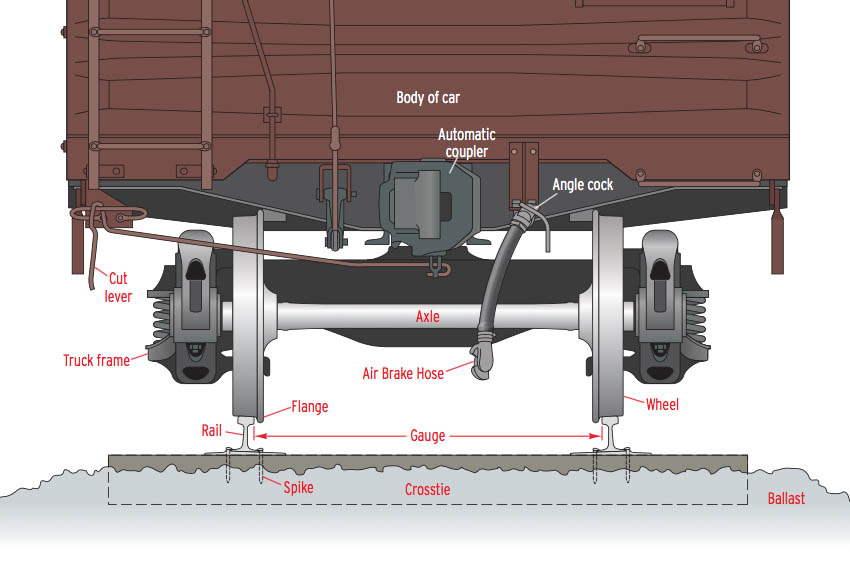
Car trucks and carbodies Do you remember running boards and full-height ladders on box cars? They are known in the railway supply trade as freight-car components, and while running boards and full-height ladders have followed the telegraph key and the steam locomotive into railroad technological history, other components remain as key elements of the freight […]

Read More…

Introducing the horn section

Leslie and Nathan may sound like a dull couple from the ‘burbs, but they’re actually the first chairs in railroading’s horn section. The diesel locomotive horn section, that is. Many of today’s train-watchers recognize a railroad by the sound of its diesels’ horns. It’s only natural since sound is a strong memory-jogging sense, second only […]

Read More…

Locomotive classification lights

Class_lights

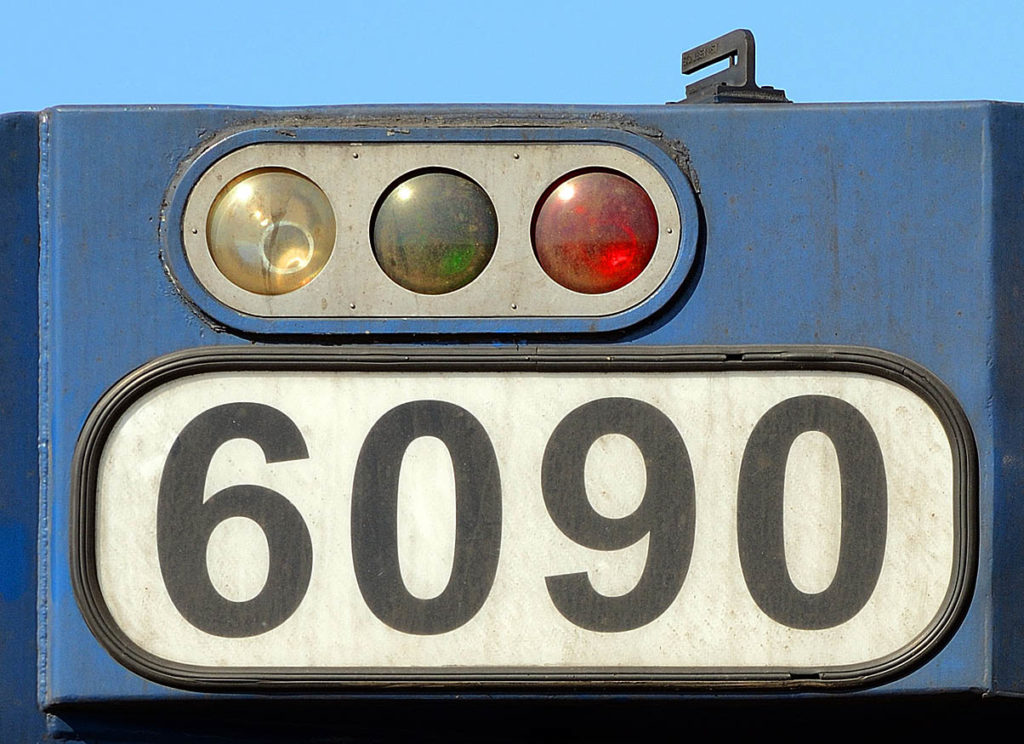
Locomotive classification lights Locomotive classification lights — colored flags by day, lights by night — were once used throughout North American railroading. U.S. railroads used a single light and outer lens, with colored lenses in between that could be changed as needed. Canadian roads used three separate lights; on diesels these were often located near […]

Read More…

Trackage and haulage rights

Because shippers’ distribution patterns are rarely congruent with any one rail carrier, railroads have developed two traditional methods of extending their reach over each others’ lines. The first is the joint rate and route. Two railroads, by agreement, establish one rate from an origin on the first to a destination on the second. One of […]

Read More…

Tuscarora project railroad trackplan

Ten years on the Tuscarora

Download this free trackplan that accompanies our Tuscarora project railroad series. In the June 2006 issue: Determining a trackplan, surveying the land, and defining objectives In the August 2006 issue: Breaking ground and building a stone retaining wall In the October 2006 issue: Building a PVC-based trackbed In the December 2006 issue: Laying track In […]

Read More…

Designing a garden railway for live-steam locomotives

A Roundhouse “Fowler,” fitted with a coal-fired boiler by John Shawe, at work on the author’s garden railway near Toronto. Jeff Young photo When we acquire a small-scale live steamer, it is usually to run on an established garden railway. The selection of your live-steam locomotive was probably influenced by the physical characteristics of the […]

Read More…

Lillian “Curly” Lawrence and the history of live-steam locomotives

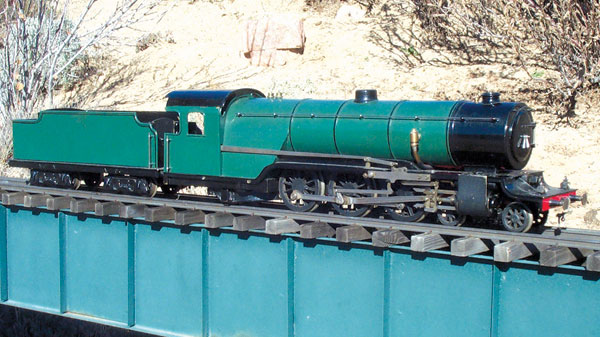
green and black model steam engine on track

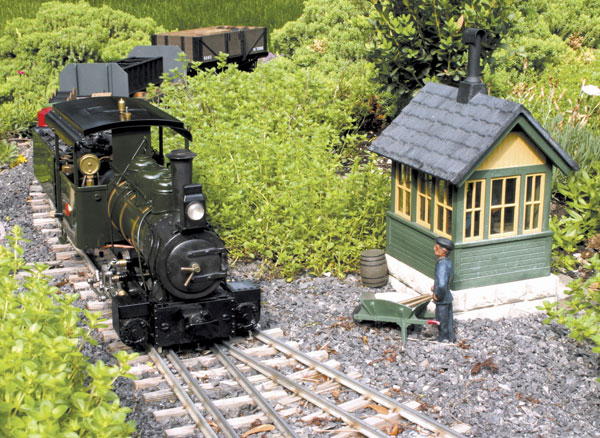
Lillian “Curly” Lawrence and the history of live-steam locomotives Lillian “Curly” Lawrence was a British model engineer who lived from 1882 to 1967. He built his first live-steam locomotive at the age of 13 on a used treadle lathe. A curious and reclusive fellow, he wrote live-steam columns for British model-engineering magazines under the pen […]

Read More…

Design an interesting garden railway with a simple loop of track

Marc Horovitz When trains run over and under bridges and trestles, a garden railroad becomes more interesting to watch Randy Mower Marc Horovitz Marc Horovitz Many garden railways occupy a corner of the back yard in an area big enough for only a simple loop of track. Although an HO or N scale railroad would […]

Read More…

Project railroad: Selecting plants

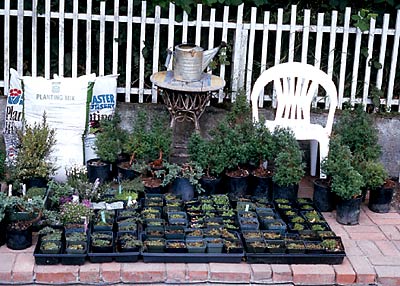
A variety of plants have been chosen to populate the railway. Marc Horovitz While building the railroad we casually discussed plant material. What would look good here, what kind of effect were we trying to create there, how should we plant this rock formation? So, when it finally came down to it, we had a […]

Read More…

Project railroad: Selecting trains

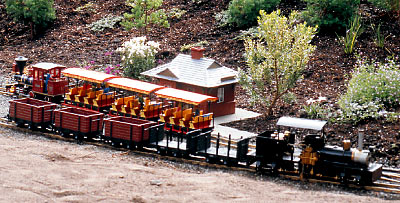
Small trains give the illusion of traveling long distances in a garden railway. Marc Horovitz As mentioned in the first installment, since we had a little, tiny railroad, small equipment was called for. The smaller the equipment, we reasoned, the greater the illusion of distance travelled. So, we opted for the smallest equipment we could […]

Read More…