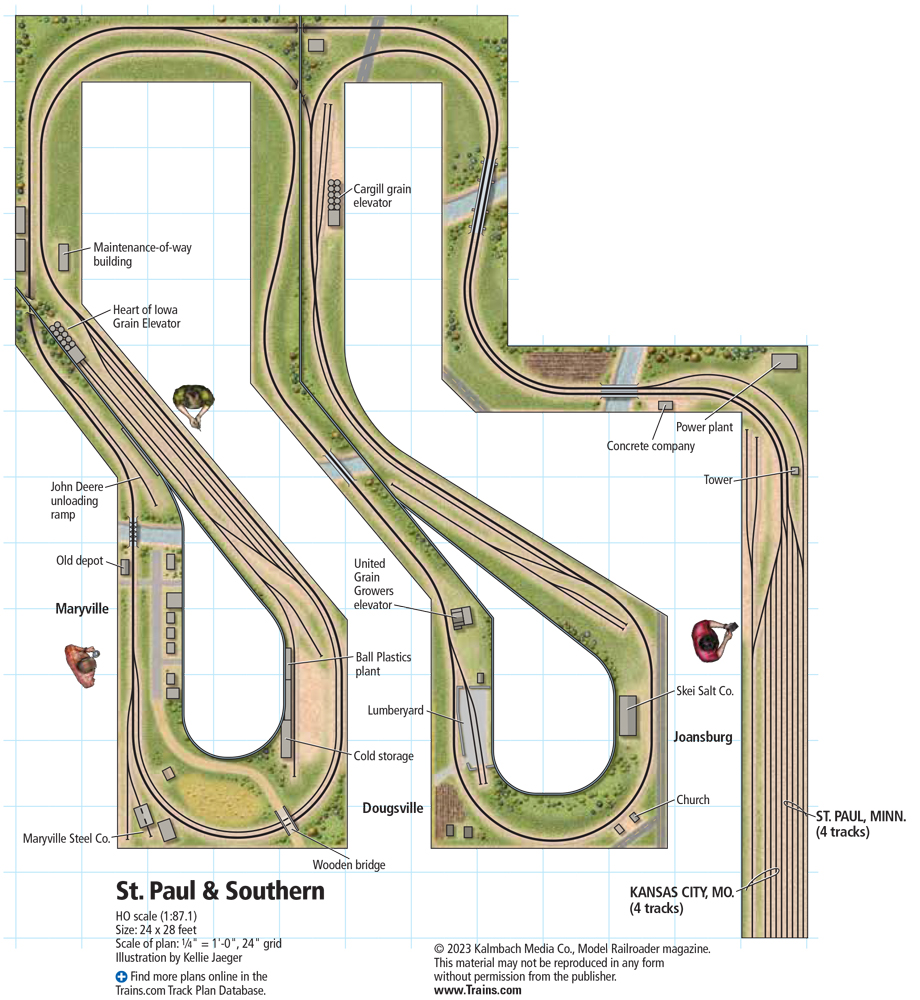
Facts & features Name: St. Paul & SouthernScale: HO (1:87.1)Size: 24 x 28 feetPrototype: Chicago & North Western’s “Spine Line”Locale: Minnesota, Iowa, and MissouriEra: 1995Style: Walk-inMainline run: 200 feetMinimum radius: 36″Minimum turnout: No. 6Maximum grade: FlatBenchwork: Open gridHeight: 47″Roadbed: CorkTrack: Micro Engineering flextrackScenery: Extruded-foam insulation boardBackdrop: Painted tempered hardboardControl: Switchable between DC cab control and MRC Prodigy […]
Read More…
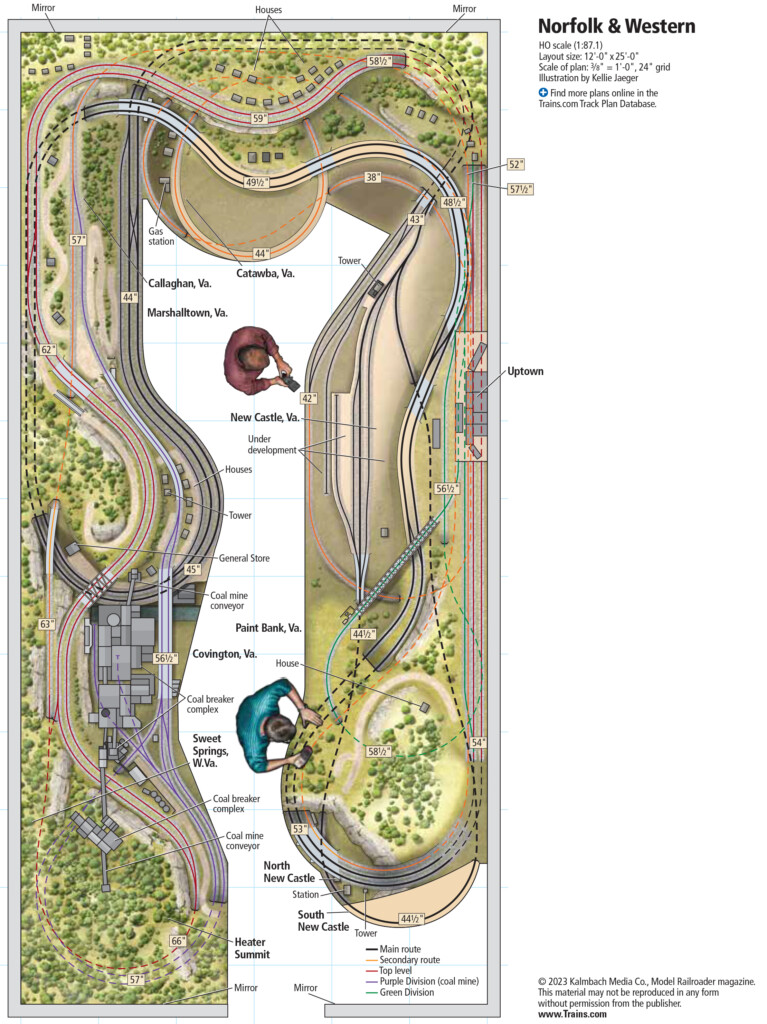
Facts & features Name: Norfolk & Western Scale: HO (1:87.1)Size: 12 x 25 feetPrototype: Norfolk & Western with Baltimore & Ohio and Chesapeake & OhioLocale: Virginia and West Virginia Era: 1950sStyle: Around-the-wallsMainline run: 240 feetMinimum radius: 22″Minimum turnout: No. 4Maximum grade: 4%Benchwork: open gridHeight: 38″ to 66″ Roadbed: corkTrack: Atlas code 100 flextrackScenery: Plaster-impregnated paper […]
Read More…
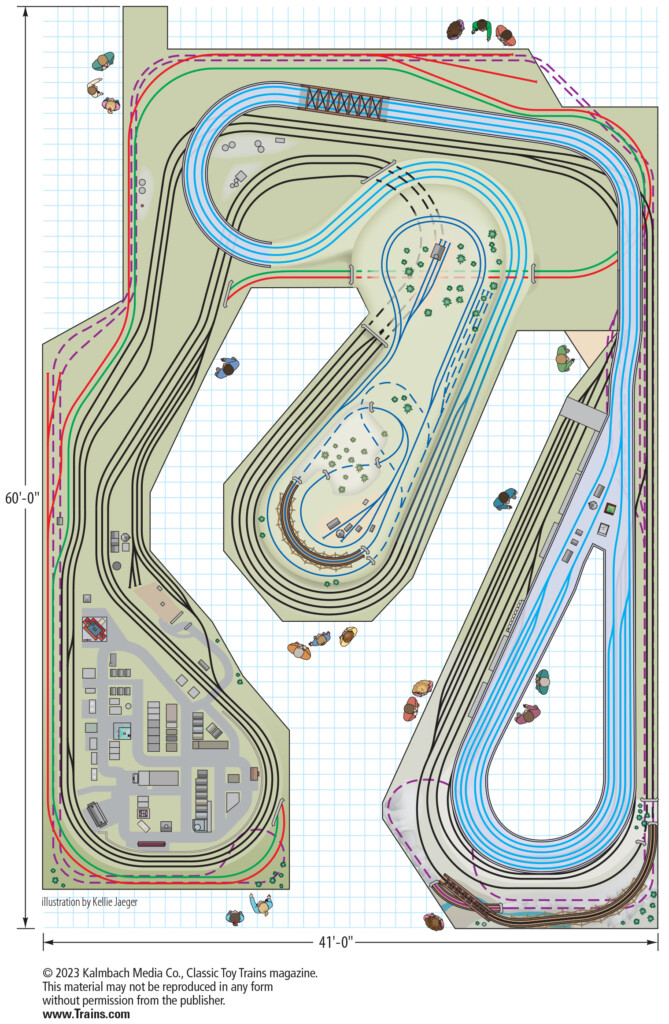
Name: The Train Masters of Babylon Gauge: ODimensions: 41 x 60 feetTrack: GarGraves (diameters range from 128 to 180 inches)Turnouts: Ross Custom SwitchesMotive power: Atlas O, K-Line, Lionel (postwar, modern), MTH, Weaver, WilliamsRolling stock: Atlas O, K-Line, Lionel (postwar, modern), Menards, MTH, Weaver, WilliamsControls: Lionel Type-ZW (5), MTH Nos. Z-1000 (2) and Z-4000 (11) transformers […]
Read More…
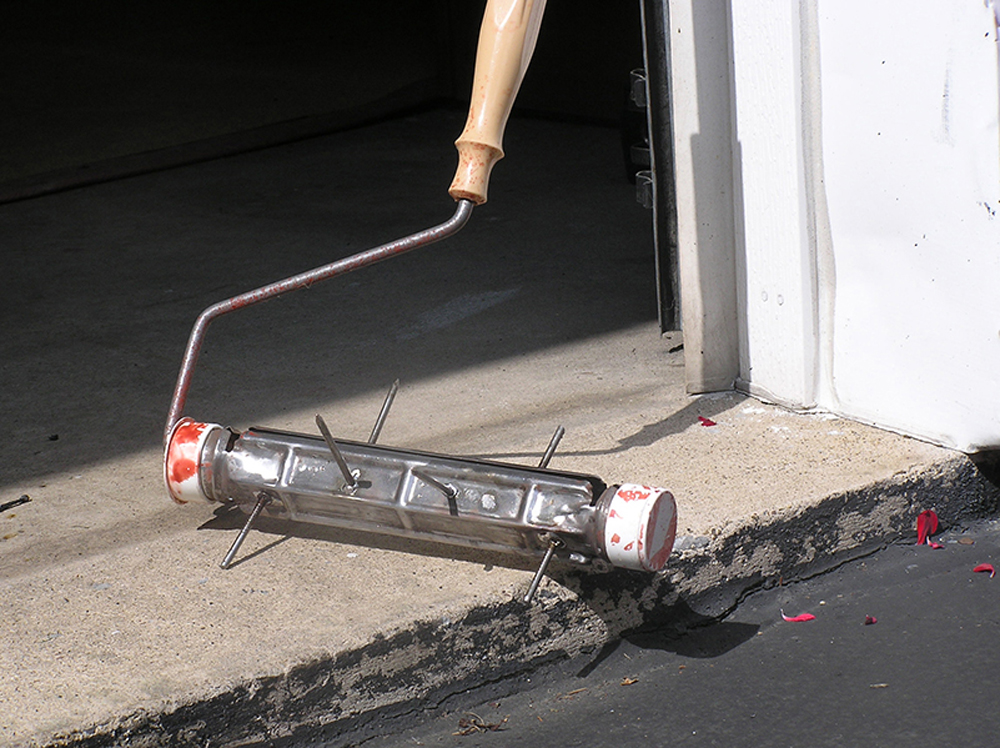
7 tips for your roadbed and right-of-way: Keep your trains rolling with these easy tips. Learn how to store ballast nearby, easily pick up leaves, clear switch points, and more! Piping under the roadbed When we built our garden railroad, we found that we needed to provide water to plants on the far side of […]
Read More…
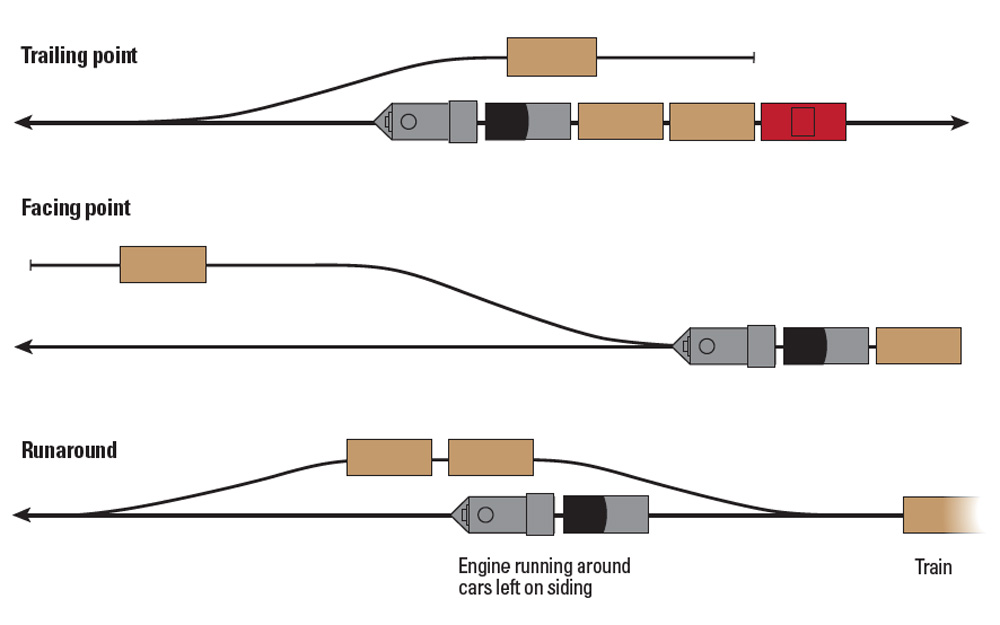
Q: I’m planning my first layout and I need to learn about train movements and switching a model railroad. Specifically, how are cars spotted on facing-point turnouts versus trailing ones? How do I plan for trains running in both directions? – Jesse Brinson A: For those who are new to switching a model railroad, let’s […]
Read More…
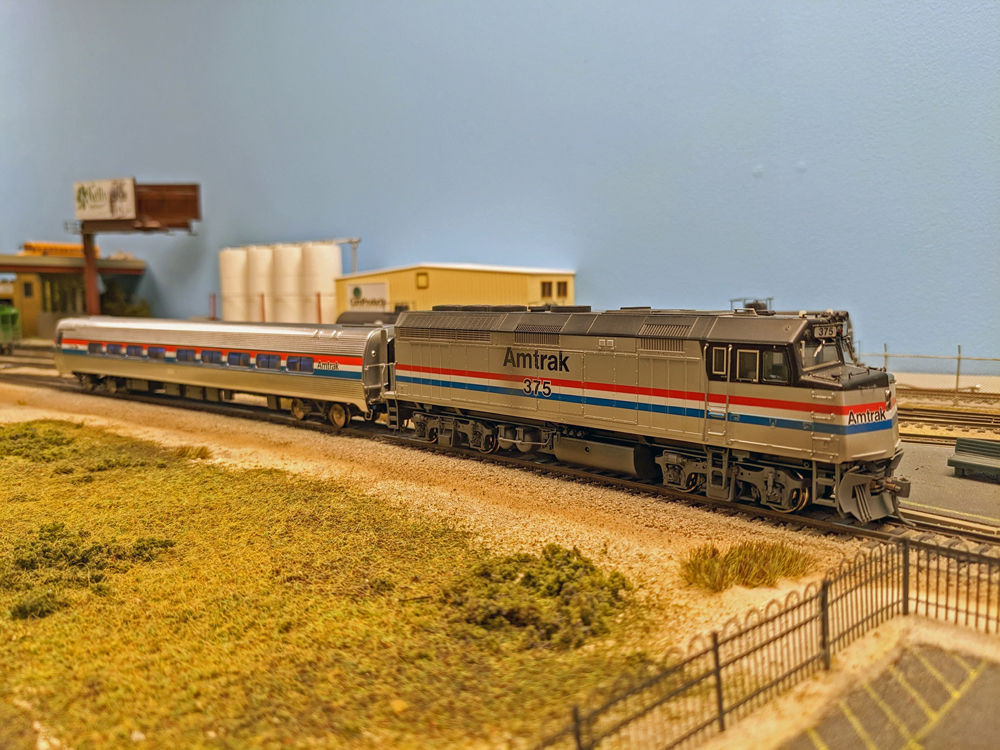
Throughout the past few months, I have shown you how different small Amtrak trains can be modeled with only a few pieces of equipment. If you’ve read those previous articles, you might have noticed a pattern. Amtrak trains that operate between a big city and a much smaller city or town, such as Chicago and […]
Read More…
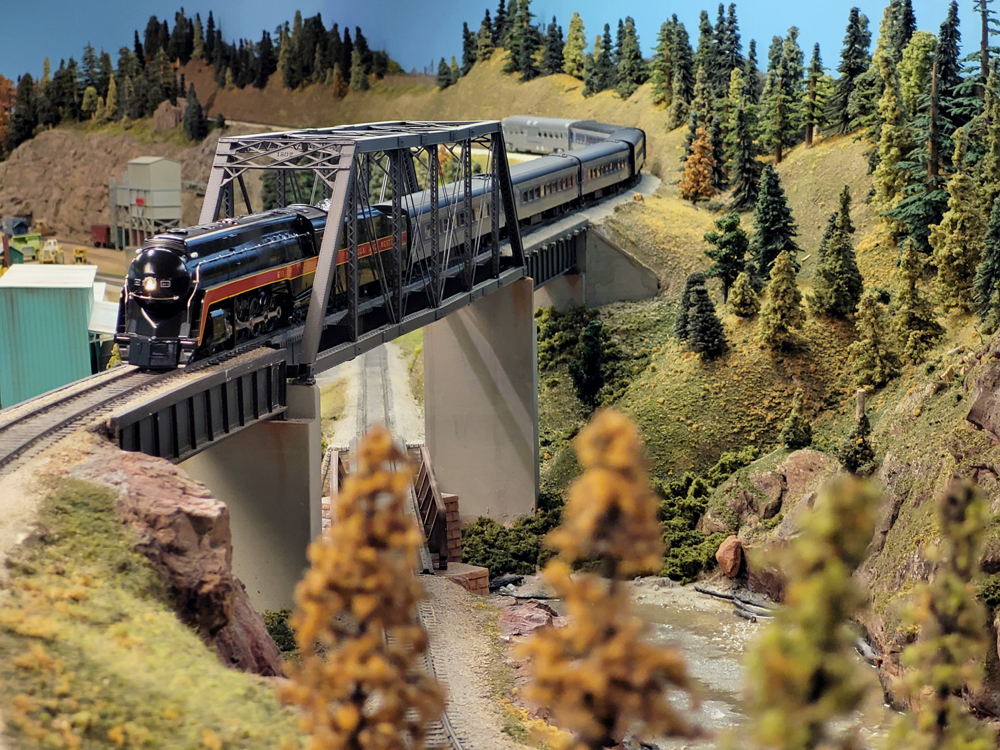
If you model the modern era like me, you may still have some equipment in your collection that doesn’t fit the era. Maybe you are a fan of one of the famous steam locomotives operating today, such as Nickel Plate Road No. 765 or Union Pacific’s Big Boy. Or maybe you have another steam engine […]
Read More…
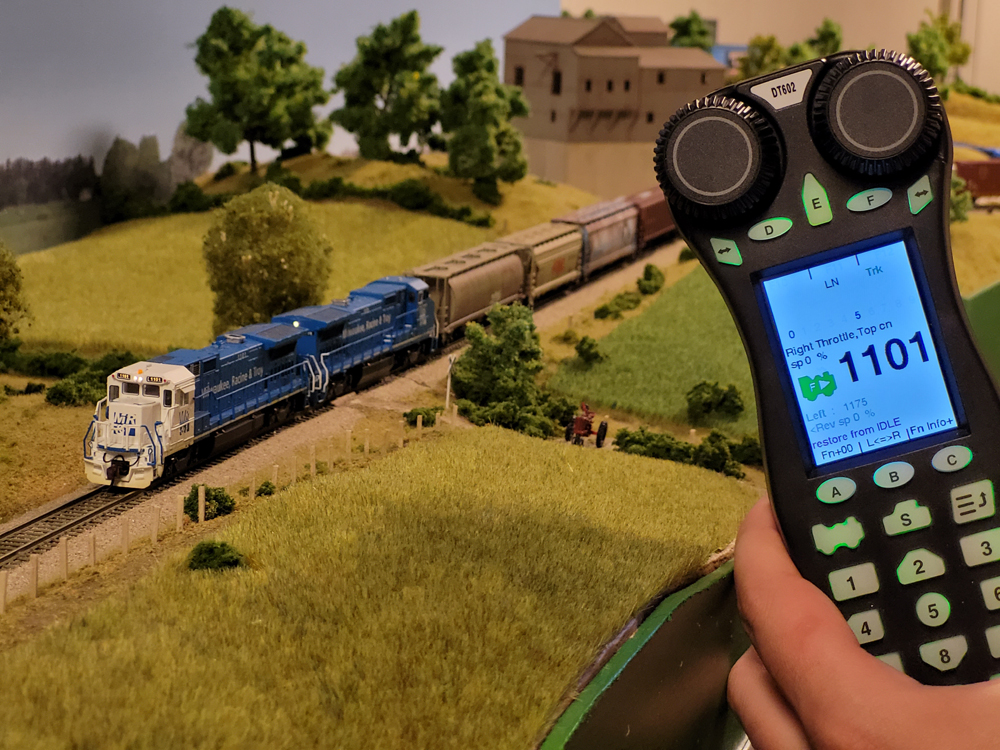
Running a locomotive around a layout is fun, but eventually you may want to make your train to be powered by more than one engine. On the railroad this is called “multiple-unit operation.” If you have two or more DCC-equipped locomotives, you can run your own multiple-unit locomotive consists. This article will explain how to […]
Read More…
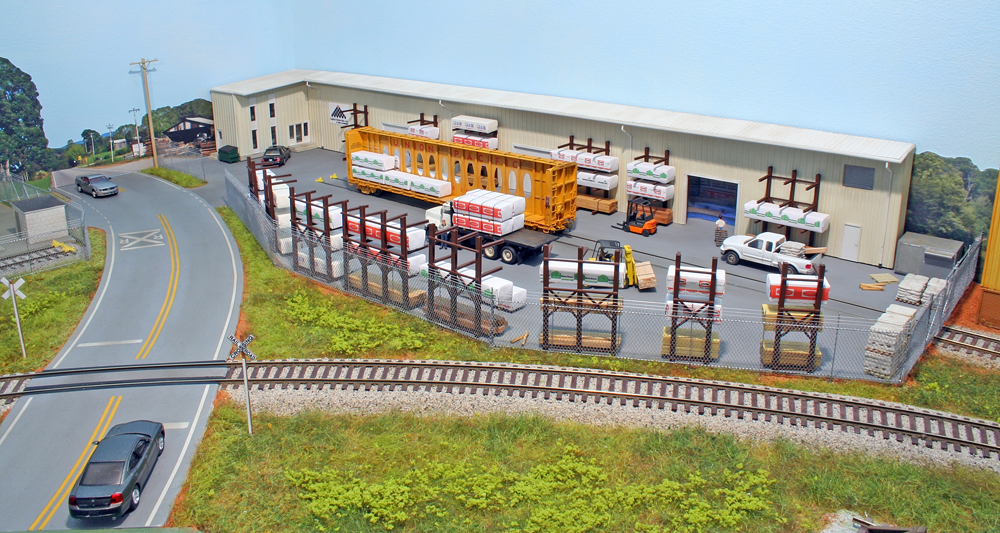
Do you need some industries for small spaces on your model railroad? If you ask modeler railroaders something they’d like to have more of, space will be a common answer. Everything in our hobby takes up space – benchwork, track, structures, and scenery, among other items. When I kick around layout plans for my basement, […]
Read More…
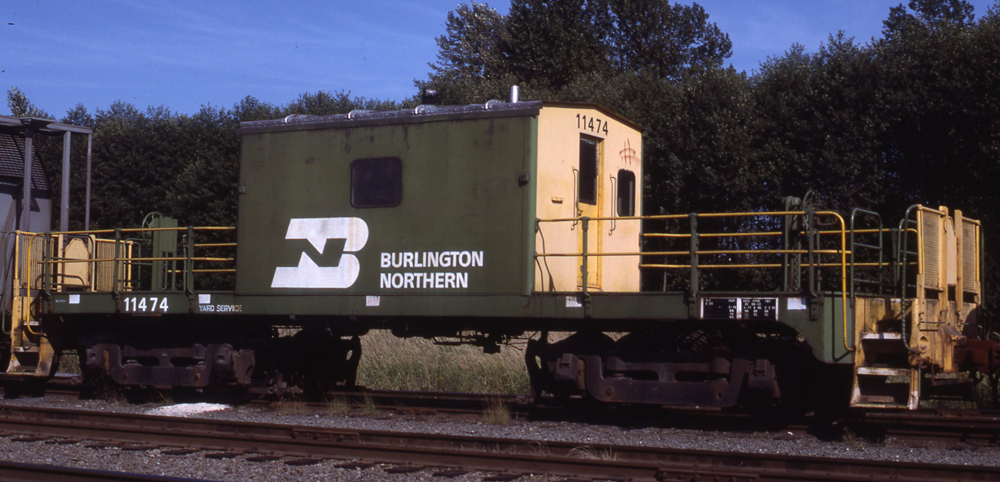
When the Chicago, Burlington & Quincy; Great Northern; Northern Pacific; and Spokane, Portland & Seattle merged to create the Burlington Northern on March 2, 1970, the new railroad had an interesting fleet of cabooses. While there were plenty of cars built by commercial builders, mainly International Car Co., BN’s fleet was also filled with cabooses […]
Read More…
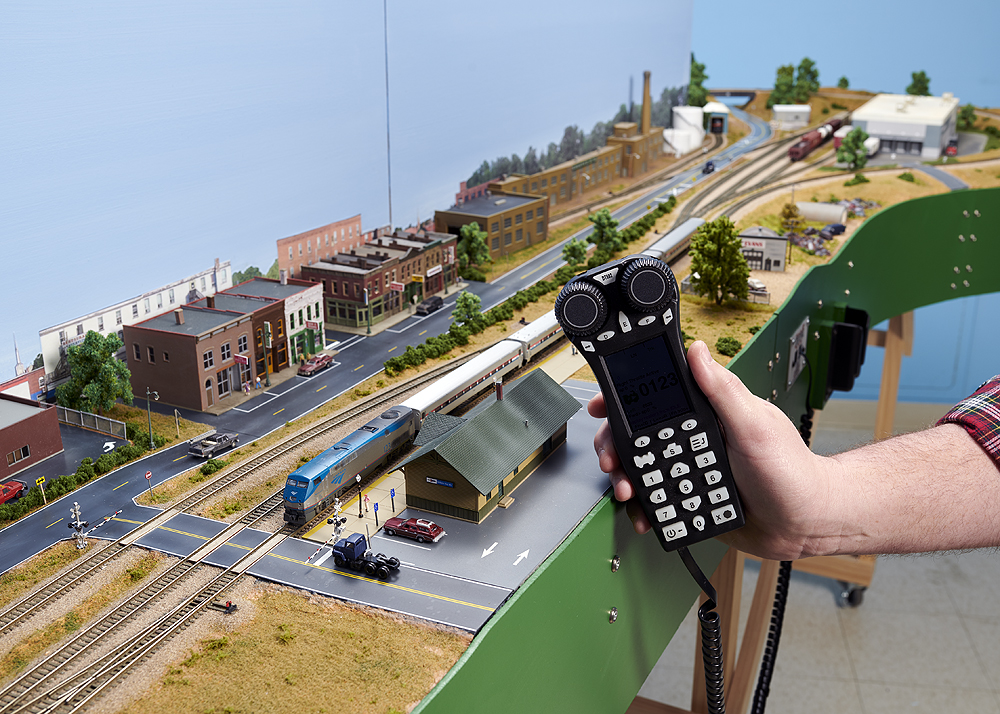
Why use Digital Command Control? Related to this is whether you should, so I’ll start by answering that first, and say the answer is yes, you should. Now, as the reasons why? Let’s make a list, shall we? Why use Digital Command Control for locomotives? Digital Command Control (DCC) allows your locomotives to do more. […]
Read More…
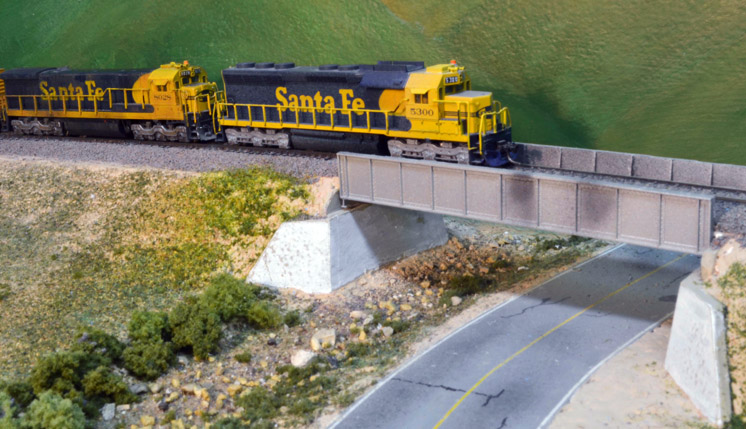
Modeling plate girder bridges: The most commonly found type of railroad bridge in the country has to be the good old plate girder. You see them everywhere. They’re simple, inexpensive, and can handle spans up to about 100 feet. (The longer the span, the deeper the sideplates on the bridge.) As long as there are […]
Read More…