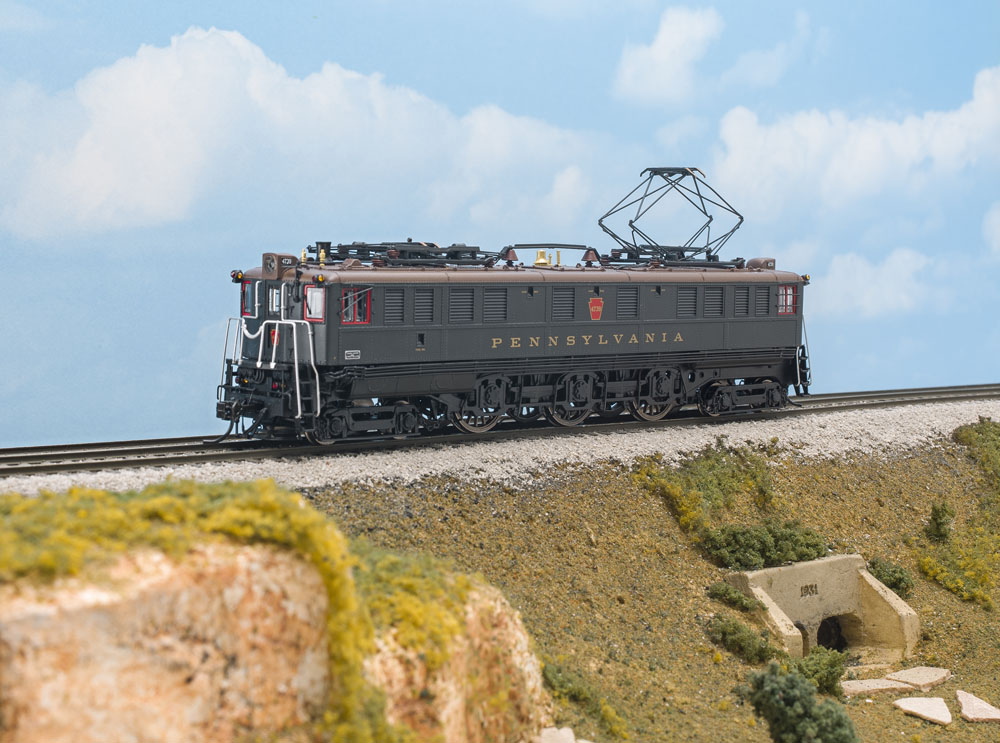
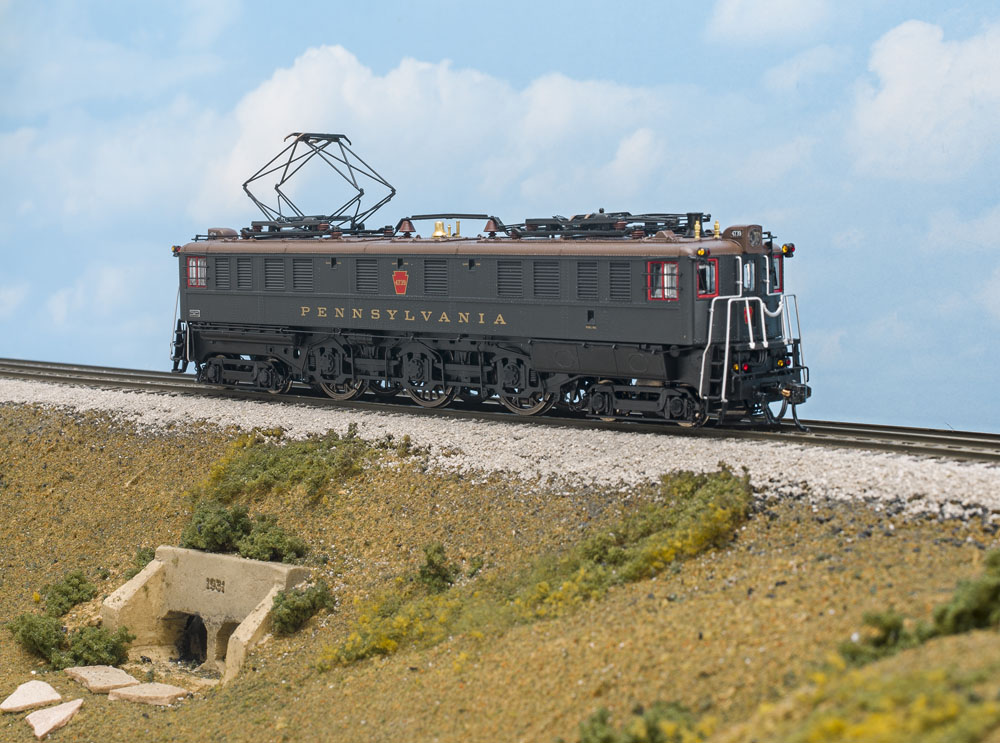
The air was crackling with electricity as Broadway Limited’s HO scale Pennsylvania RR P5a electric locomotive arrived for a sneak peek. Well, at least the air was crackling in the Pennsy fans’ offices. We recently had the opportunity to review and run a preproduction sample of the BLI Paragon3 P5a.
Previously available only in brass, these boxcab electric models are primarily die-cast metal construction, giving them 1 pound, 6 ounces of heft for hauling long freight or passenger trains.
Note that the model shown is a preproduction sample. Some details are omitted that will be on the actual production models.
A single P5a had trouble pulling heavy passenger trains on a fast schedule, dominated by “Clockers,” essentially long-distance commuter trains that eventually connected New York City with Washington, D.C. and all points in between. In addition, the locomotives put heavy lateral stresses on the track network, wearing out rail.
Once the “modifieds” came into service, they were mated with boxcabs as multiple units so that in at least one direction crews would have more protection. By this point, most P5as were working as freight engines, where they were used in multiples of two or three.
But with 3,750hp on tap continuously, and 5,000hp available for short bursts, a P5a was no slouch. In a search for more power, a prototype P5b was built with four traction motors mounted to its pilot trucks, adding 1,500hp, but cooling problems led to this being a one-off experiment.
In the late 1950s, the PRR was looking for new freight-hauling electrics. General Electric answered the call with the 4,400hp E44. These locomotives arrived starting in 1960 with the last delivered in 1963, spelling the end for P5a service. Only one P5 has been preserved, prototype no. 4700 at the National Museum of Transportation in St. Louis, Mo. The rest were scrapped by the mid-1960s.
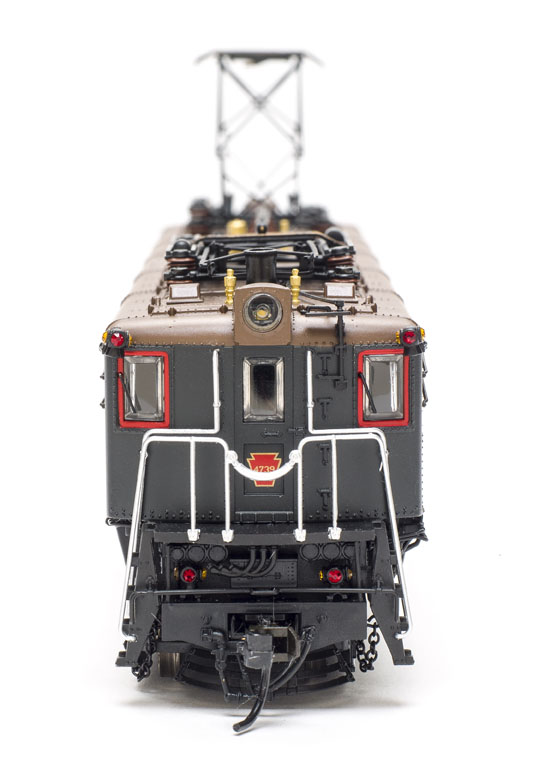
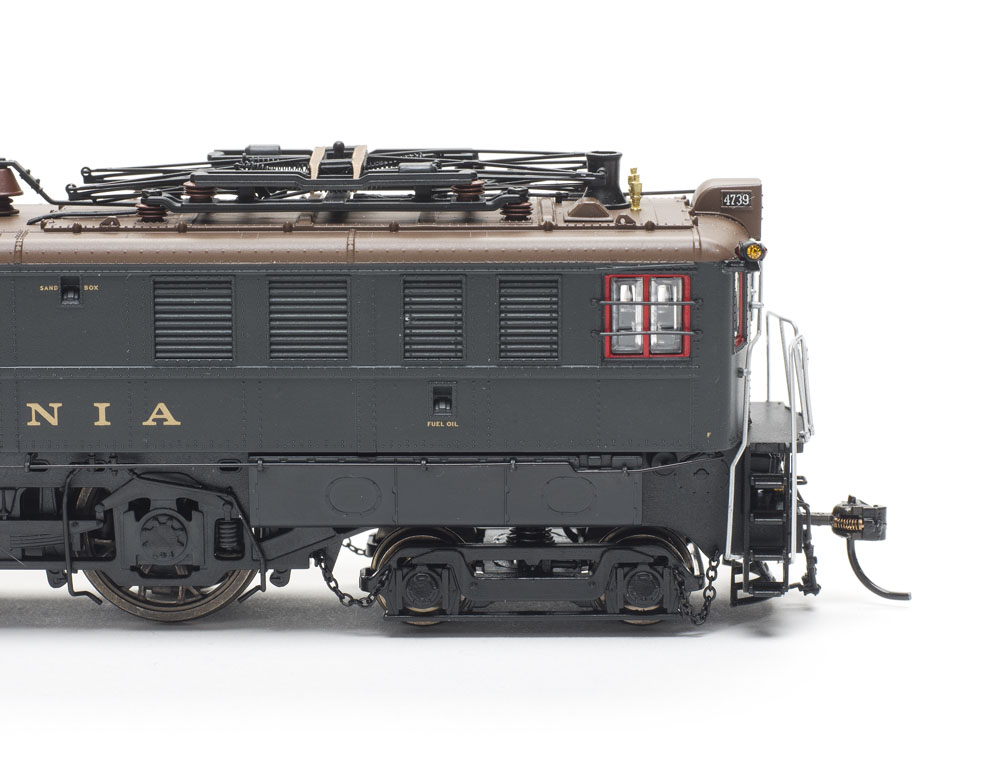
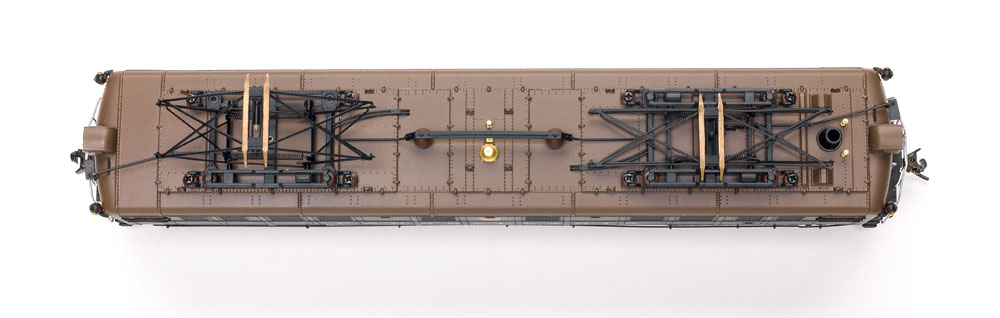
Pop-off valves for the steam generator, the bell, and the early trolley whistle are all painted with gold-colored paint to simulate brass. The window frames are trimmed in red and the end railings are painted silver to simulate the aluminum used on the full-size locomotives.
The scale-sized 72” diameter drivers have alternating spring cup detail indicative of the quill drive favored by the PRR on it’s older electrics. However, the center drivers were blind (flangeless) on the prototype, unlike the model, which relies on a significant amount of lateral movement to allow negotiation of tight-radius model railroad curves and turnout angles.
Separately applied sanding lines add extra detail to the running gear. The four-wheel pilot trucks include chain details at their ends. Wipers on their axles help improve power pickup.
The pilots have a combination of molded in detail and separately applied plastic and metal parts including coupler cut levers, m.u. hoses and connections, slatted pilot bars ahead of the pilot wheels, and classification lights with colored jewels. On this early prototype, there are also a pair of classification lights on the upper corners of the cab and each end. Metal knuckle couplers are mounted at the correct height.
Other unique options include pantograph up and down sounds and an electric arc sound. Broadway Limited also allows users to record a set of instructions the locomotive will then carry out. For a locomotive such as this, it could be programmed to run a set pattern to simulate a commuter train operating between several stations.
We hope you enjoy this first look at the Broadway Limited Imports Paragon3 HO scale Pennsylvania RR P5a. – Eric White, associate editor