





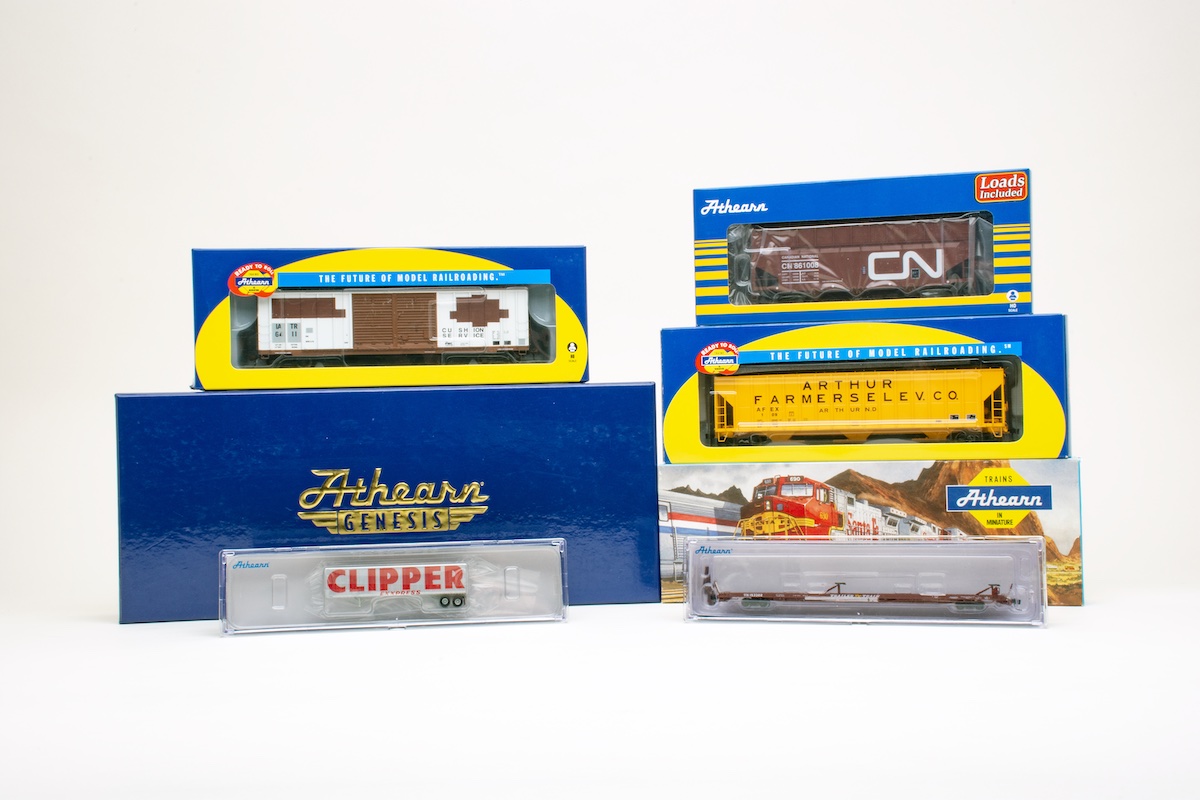
For 80 years, Athearn has been a part of the model railroading industry, producing familiar product ranges like HO scale blue box kits and Genesis ready-to-run models. In preparation for its milestone anniversary in 2026, Associate Brand Manager Jim Wiggin joined Model Railroader Senior Editor Cody Grivno and Trains.com Assistant Digital Editor Lucas Iverson to discuss more.
Watch the extended video recording of this interview with Jim Wiggin of Athearn on Trains.com Video

Q: For those not familiar with the business, what are the types of products and services Athearn offers to new and returning customers?
A: At the time of this video, Athearn has been in the business for close to 80 years now, producing HO and, more recently, N scale models. Models include both steam and diesel locomotives, and freight, passenger, and non-revenue rolling stock. We also offer an arrangement of vehicles, tractor trailers, and containers.
Q: How did Athearn get its start, and what have been the takeaways in the company’s success and growth today?
A: Athearn has a long history of model railroading, starting way back in the early days when Irv Athearn started assembling boxcar kits in his parents’ garage in California. That quickly grew into more than just a side business, as it became a full-time job.
Flash forward into the 1950s, and Athearn was one of the first companies to delve into injection-molded plastic kits. Now, keep in mind, this was an era where models were largely made from cardboard, wood, and metal. So, plastic was a new development in the industry, and Irv was right there. Of course, he introduced the RDCs [Budd Rail Diesel Cars. — Ed.], as well as the F units, which was one of the first plastic models the company made.
As Athearn continued to grow throughout the 1960s and 70s, not only did it sell directly to dealers and consumers, but also did some work for other brands that made train sets. Some of the popular sets that come to mind are the older Lionel HO scale products. Going forward into the 80s and 90s, Athearn pretty much cemented its name in the industry as being a world leader in HO scale model railroading, especially with their blue box kits. They can be found in virtually every hobby shop in the United States and beyond.
By the 1990s, though, modelers’ tastes were changing, thus wanting more detailed models. Athearn then introduced its Genesis line, and it was unlike anything that had been seen before. No more were there generic GP38-2s or F units. Models were now patterned after the full-scale prototype.
As we came into the 2000s, we saw that thirst for more detailing. Fortunately, about that time in 2004, Horizon Hobby LLC purchased Athearn, and really gave it the purchasing power to allow us to develop more models that have more details, features, and functions.
Q: Selecting which models to produce has to be a tricky process, not only in terms of what is going to sell but guessing what other companies are going to make to avoid flooding the market with similar models. Can you talk a bit about the product development process today?
A: Actually, in many ways in this digital age, it’s a bit easier. First of all, we get a lot of comments and suggestions from our fellow modelers with the ability to take a lot of those from our social media pages, our YouTube channel, and of course, talking to folks at shows while seeing the industry trends circulating through the magazines. Since everything is almost on social media now, we also see what other manufacturers are producing.
Now, something that Athearn introduced about three years ago is our product suggestion email. That allows any modeler to send us an email requesting a certain model, or maybe it’s even a model we’ve already run, but we haven’t run their road name yet. It allows them to put that in.
Every year, Athearn assembles as a group to look at some of the results from surveys that we’ve sent out, and then make determinations. Some other factors that do play into this are asking ourselves, “Is this a model that’s being produced? If it’s currently being produced by another manufacturer, can our particular model fit a different segment of the modeling community?” That’s where we’ll take a look and say, “We can offer this to a certain market.” And we usually do really well with that.
We do realize that modelers are very passionate about their railroads and certain models. However, there are times when that’s not always going to be feasible for us. We have to consider, as we produce them in the future, how many subsequent runs can we do of that particular model? Those are some of the factors that come into play when we’re selecting a new model. But generally, if it’s something that every railroad from a short line to a Class I has used, there are multiple paint schemes that we can draw from and there is a sales demand for it, we’re certainly going to take it into consideration.
Q: How do you determine which models to upgrade and what improvements to make? Is there ever a point where it’s simpler to scrap aging tooling and start over?
A: There are actually a lot of variables that go into exactly what you’re talking about. Athearn has a rather deep catalog because, again, we’re going back close to 80 years. A lot of these models can go back as far as the 1950s-60s.
It becomes really hard on the molds with the modern injection molding process, and it doesn’t matter if they were made out of steel, aluminum, or other materials. People don’t usually think about that. Over time, they will break down, and you’ll get plastic bleed when parts come out of the mold, requiring more time to clean up in the factory.
When a mold gets to the point where the cost of the factory clean-up is starting to offset our overall cost, we take a serious look at a couple of different things. We do a cost analysis. How was this model in the past sold? Is there still a market for it? Is there somebody currently making something similar or exactly like this model? How much time is it going to take a product developer to repair the mold or perhaps even update it? Are we going to see a return on all the work that we put into this?
Q: What’s been the common challenge in Athearn’s lifespan, and how much of that is reflected in today’s world?
A: The biggest challenge Athearn always has is time. Time is one of those things nobody is guaranteed, and you don’t get to bank time. When you’re working with models that are as detailed as the models we produce, time is everything.
Case in point, the GE AC4400CW took about 3 years of research before anything was cut in a mold. Then there’s still building the molds and samples, product development, working with the factory, and going back and forth on those samples before any run of product production.
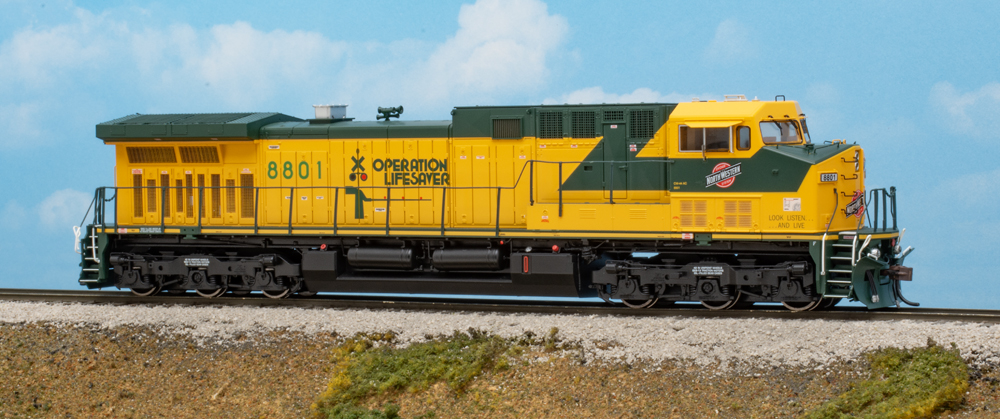
The second challenge is cost. As we all know, everything in life is getting more expensive, and model railroading is certainly subject to that. Most folks think about costs and ask, “Why is this boxcar 10% higher than it was 10 years ago?” The simple answer to that, of course, is inflation. But it goes deeper than that.
In those 10 years, raw materials like the plastic pellets that we melt down to make the actual finished product may have gone up. That really does affect the bottom line of our prices. Then, of course, there’s shipping. Shipping at one time from overseas was pretty reasonable, but we’ve seen a steady increase ever since the pandemic in 2020.
Now, bringing in tariffs into the equation, that certainly was a really trying time for not only Athearn, but all manufacturers. As you know, our models are produced overseas, and these tariffs directly impacted both Athearn and Horizon Hobby, as well as the end consumer. We had to decide how we were going to price our models going forward.
Keep in mind that Athearn lives on pre-order basis. So, we would’ve advertised prices that were over a year old, and now they’re coming in, and we’re forced to pay a tariff on those. Do we go ahead and absorb that cost or do we put the full cost of the tariffs on the customer? After working with our factory and working with Horizon management, we decided that we kind of split that down the middle.
I know that’s not a popular decision. And, of course, the tariffs have been a very divisive political theme for the last few months. But we’ve been doing our best to be honest and transparent about this while working the best we can. Of course, with tariffs, right now, nothing is set in stone.
Q: You plan to celebrate the 80th anniversary, what can people expect from Athearn during the special occasion?
A: “80 Years of Innovation” is what we’re calling it, and we’re going to be doing some great stuff coming into 2026.
We’re changing our announcement model just a little bit as we’re going to a bi-monthly announcement system. That will give customers a chance to really take in everything that Athearn is offering, and give them a little bit more time to make their pre-orders with their dealer.
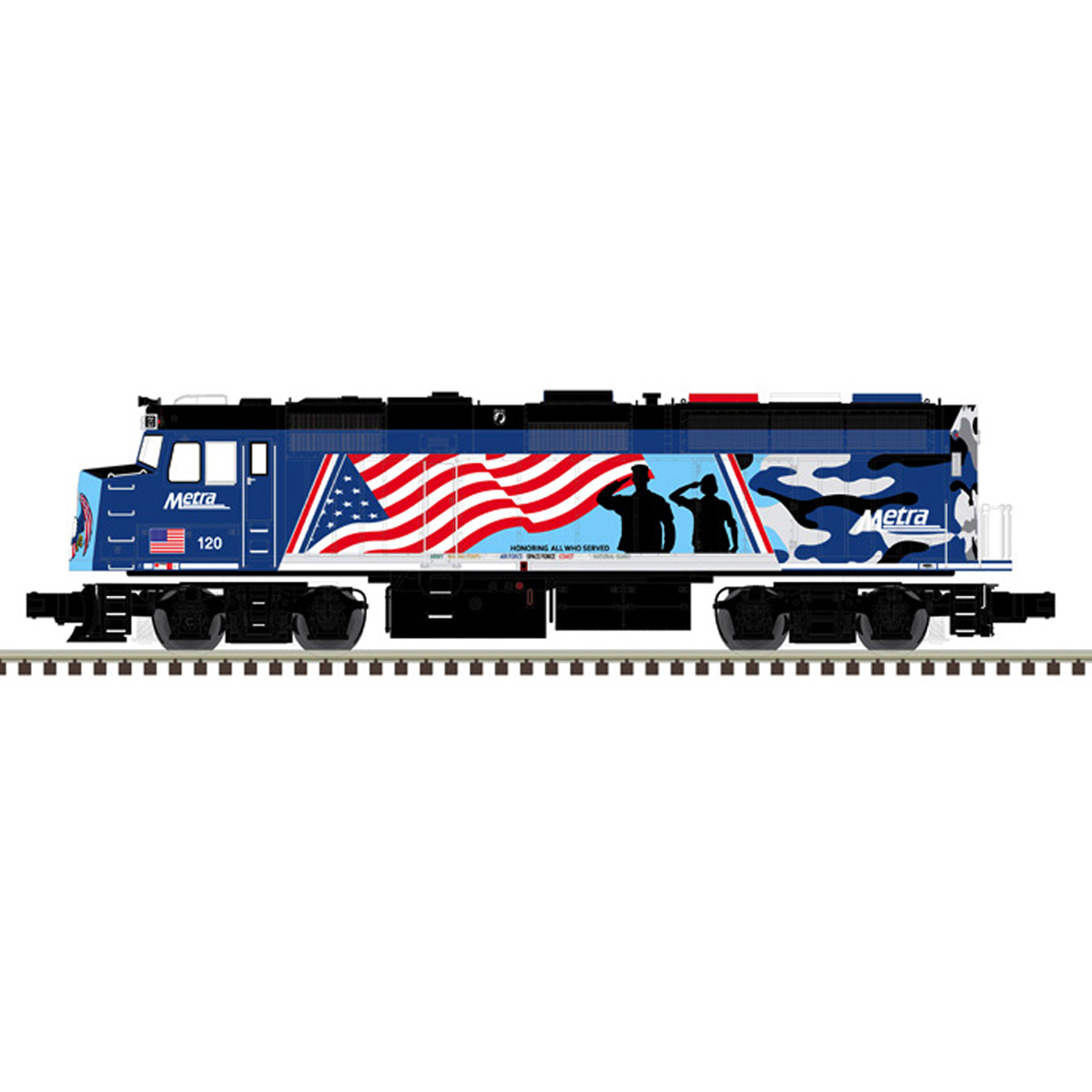
We’re also going to be offering some 80th anniversary locomotives and other models. Also, [this] year is an important year for the United States as we enter our 250th birthday. Just like what railroads did in 1976, we’re already starting to see some locomotives and rolling stock get painted into patriotic colors. You can be sure that Athearn is also going to be taking part in that with both prototypical and fictional paint schemes.
Finally, we’re going to have a lot of great announcements and new products that we want to announce coming into 2026.
Q: What does the future hold for Athearn?
A: We are definitely cognizant of our current modeler base. However, we are seeing some younger folks join the ranks of model railroading, and we don’t want to lose sight of that. So we’re trying to remain open-minded and cognizant of what they’re looking for. Quite frankly, the younger modelers are looking for more details, lighting features, and digital interaction. All of those things are things that Athearn is working on currently, while updating some of our older tooling to match those detail and function requirements.
That’s all a part of our plan going forward. We think the future looks really bright for model railroading, especially for Athearn, because not only are we going to be introducing new models, but we’re also going to be taking some of our older models and refining them for the 21st century.

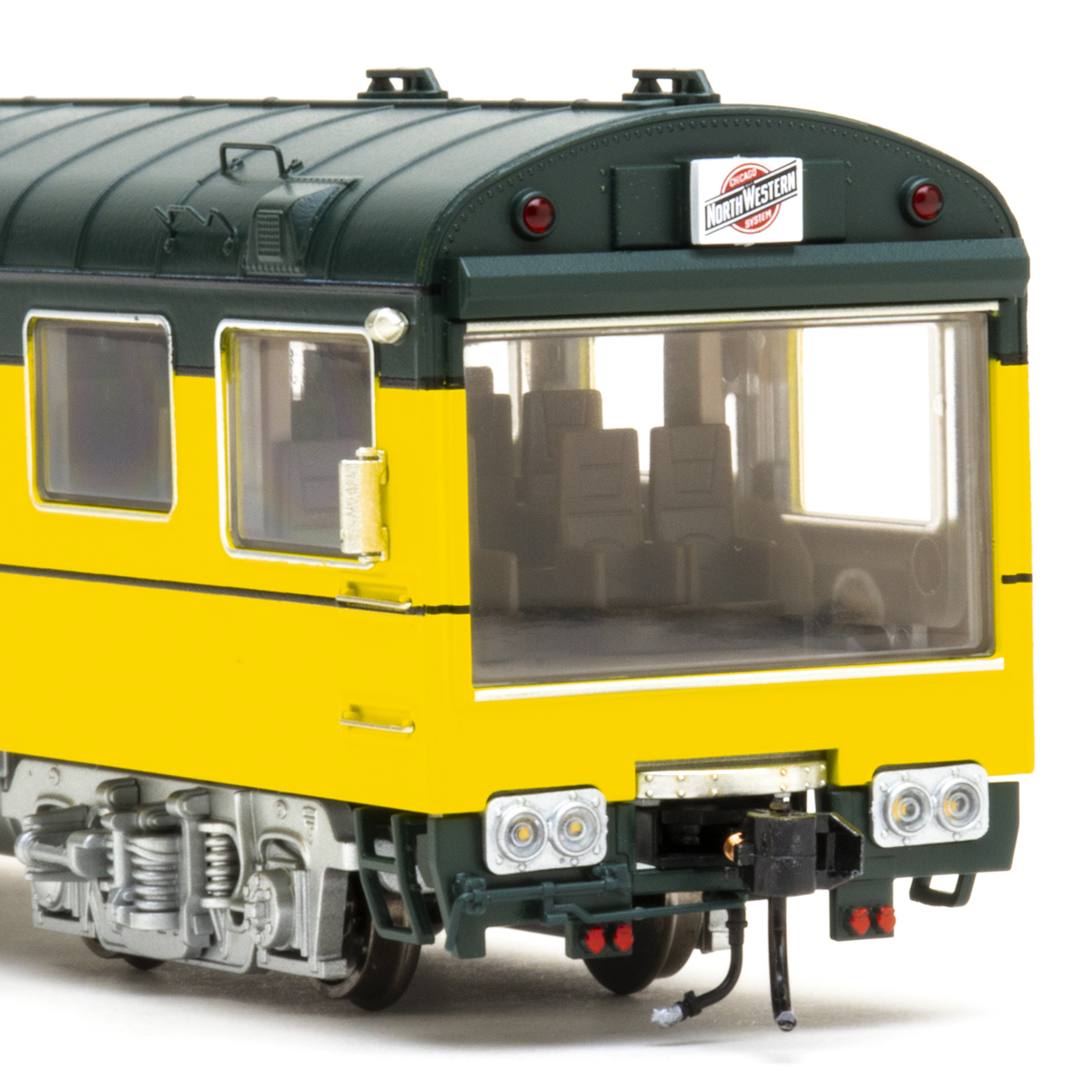
Athearn needs to lead once again with models that are in demand. They also need to stop treating N Scale as the red-haired illegitimate stepchild of the hobby. More locomotives, freight, and both standard and streamlined passenger cars are woefully needed.