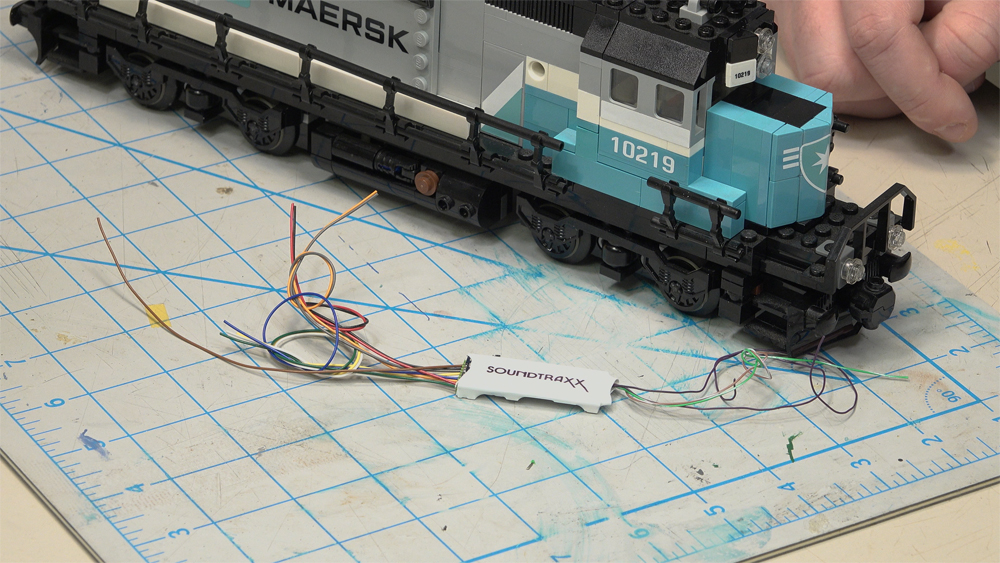
SoundTraxx’s Blunami sound decoder is taking model railroading by storm with its Bluetooth-based technology, offering a straight-through DCC connection from a smart app to the decoder (In many scales for DC and AC power). But there is much more to the 35-year-old company than just its latest innovation. Product Expert George Bogatiuk III recently joined Model Railroader’s Cody Grivno and Trains.com’s Lucas Iverson to discuss more about the company’s history and its flagship decoders.
Watch the extended video recordings of this interview with George Bogatiuk III of SoundTraxx and Blunami on Trains.com Video
Q: For those not familiar with the business, what are the types of products and services SoundTraxx offers to new and returning customers?
A: We manufacture high-quality, DCC sound and decoder products that you can install into your models that’ll help bring the locomotives to life. We saw that there were some early sound systems that were starting to become available. But they were big and bulky, and required a console to control them. One of our company founders basically looked at that and said, “I can build a better mousetrap.” He started building some of the first onboard sound systems that actually generated the sounds inside through processors as opposed to externally sending them through the rails.
So we offer DCC sound decoders with many different solutions at different price points. One of the biggest things that we’ve done is we’ve introduced our Blunami sound decoder, which makes this a whole lot easier and more fun. We try to make our products easy and fun to use, as well as realistic. So no matter your skill level, you can certainly enjoy the products from SoundTraxx.

Q: How did SoundTraxx get its start?
A: We celebrated 35 this past year. SoundTraxx started as a partnership between Steve Dominguez and Nancy Wartman.
They both worked at a marine electronics company making depth/fishing finders and sonars in Massachusetts. What’s interesting is that Steve and Nancy each had their own offices sharing a wall. He was in the engineering department, and she was in marketing. Well, Steve had always been interested in trains, and was a modeler. He tells Nancy one day, “I have this product idea. I want to build a sound system for model trains.” So they agreed to partner and create SoundTraxx.
He was ready to launch a highly expensive sound system because at the time, electronic components were bigger and more expensive than what they are today. But not having a name out there, she was afraid nobody would be ready to drop $200 on this brand-new, startup company. So they started off with what’s known as Hyperlight, which is the first processor-driven lighting module in model railroading. That’s how SoundTraxx got started.
Steve then went to school in Colorado, so they eventually moved out to a suburb of Denver. But when they came down to Durango, Colo., for the narrow gauge convention, they fell in love with the area and moved here.
We then got tired and frustrated with contract manufacturing, so we actually went out and bought all of our own pick-and-place machines to build the decoders in-house. So we actually do build here at our facility in Durango.
Q: Since 2005, the Tsunami sound decoder (Later Tsunami2) has been the headliner in SoundTraxx’s product line. Looking back at the past 20 years, what have you found to be the key takeaways in the product’s evolution and the effect it has in today’s technology surrounding command control systems?
A: Tsunami was introduced as a wave of change, and that’s where the name came from. This was the first time we had a sound decoder that had a rich and deep enough sound bit depth that we could actually hear the nuances between all the different prime movers.
So it really did revolutionize the way we looked at sound systems, because prior to that, it was expensive, gimmicky, and took a lot of work. So a lot of people would put sound in their lead units and normal DCC decoders in the trailing units. What Tsunami did was not only give each locomotive its own voice that was accurate, but also put it into an affordable price point, right at about $100.
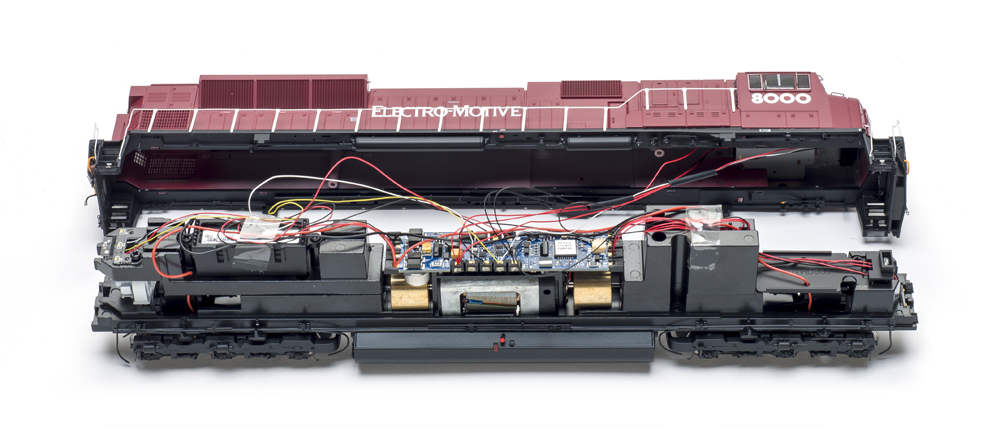
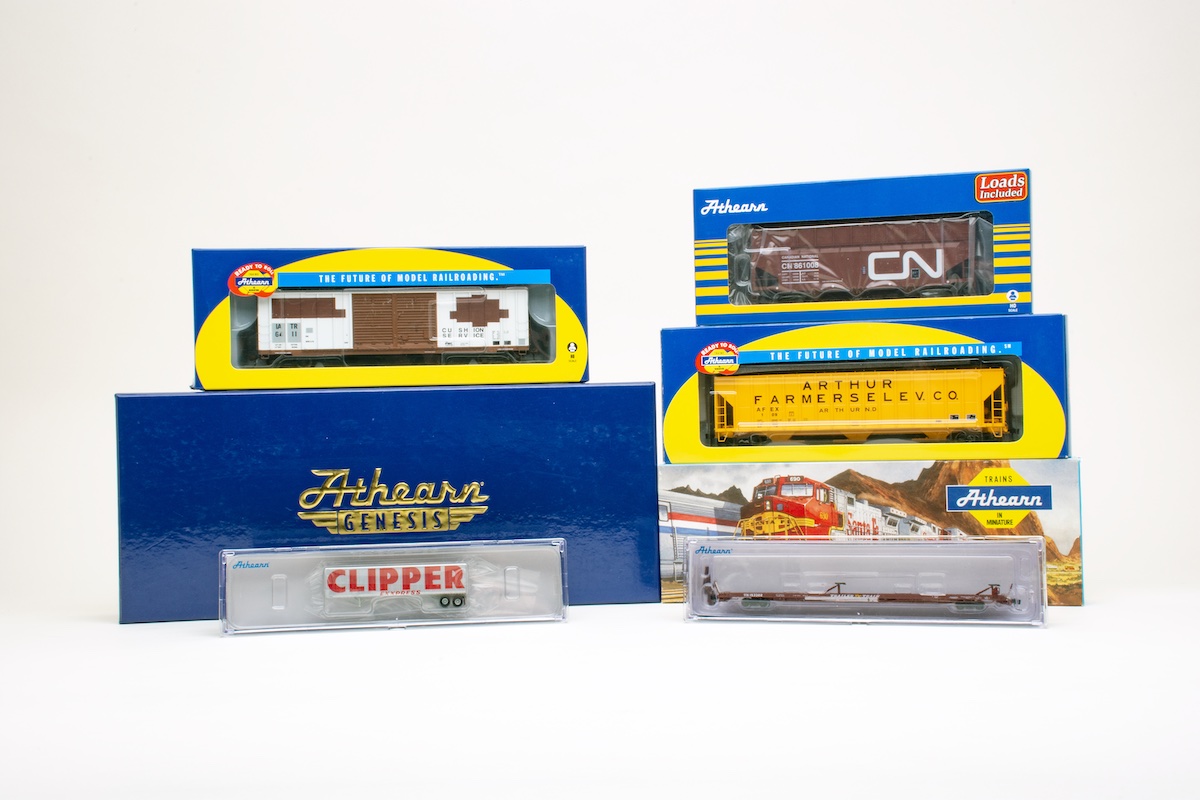
It was also a dual-mode decoder working in DCC and DC. So we started getting a lot of the OEM business [from manufacturers] like Athearn and Bachmann over the years. The clamor for sound was a lot stronger than it ever had been before.
With that, we introduced the Tsunami2, which was the second generation. We remastered the sounds and added new ones so they are crisper than what they were before, and there are many more features, including our Flex-Map Function Mapping method. This Flex-Map was so much easier that the National Model Railroad Association apparently reached out to us and asked, “Can we adopt this as a recommended practice?”
It opened up the desire and the demands. But unfortunately, because we do manufacturing here, we did lose some of the OEM business because some of the brands actually manufacture in China, and that’s their selling point. So the companies that do stick with us understand what they’re getting.
Q: The new kid on the block since 2022 has been Blunami. What led to the development of the system?
A: One of the biggest things I’ve heard over the years, doing clinics, classes and presentations, is people getting frustrated with CVs or having to do the bit math. So Blunami actually came out and took that bit math away from the user because when trying to calculate stuff, they’re always afraid they’re going to type in the wrong value and ultimately break their decoder. Now the app, that can be downloaded onto your smart device whether it be a phone or tablet, allows you to go in and make choices through menus, check boxes, and slider bars. It does all that CV math behind the scenes for you.
And since Blunami is still at heart a Tsunami2 DCC decoder, you can use the app to do all your setup, and then you can use the DCC system to run it, so you don’t lose any of that functionality.
Blunami is really taking off as more people give it a try. It gives you so many advantages over DCC, and what I mean by that is one of the biggest challenges I think people run into is when they want to run more than one unit consisting. The app now does all the hard work for you behind the scenes. So when you consist, you literally click two to three buttons to add locomotives as lead, middle, and trailing units.
When it comes to operations, the app also has all your functions labeled out for you instead of trying to remember in your head the 28 functions and what they’re all assigned to. And then with the DCC systems, it’s not necessarily intuitive on how to access functions higher than zero through nine. Sometimes you have to push multiple buttons to get to them. So over the years, I hear a lot of people tell me they don’t use a lot of the functions, and I’ve always wondered if it’s because it’s difficult to access them or they really don’t want to use them. Either is fine, but the Blunami frees that up and makes it a lot easier, so now you can use the whole decoder that you paid for.
So the good/bad problem is that we’re selling outright and having a hard time keeping stuff in stock because it’s flying off the shelf fast. Like I said, Blunami is gaining popularity as more people actually give it a try.
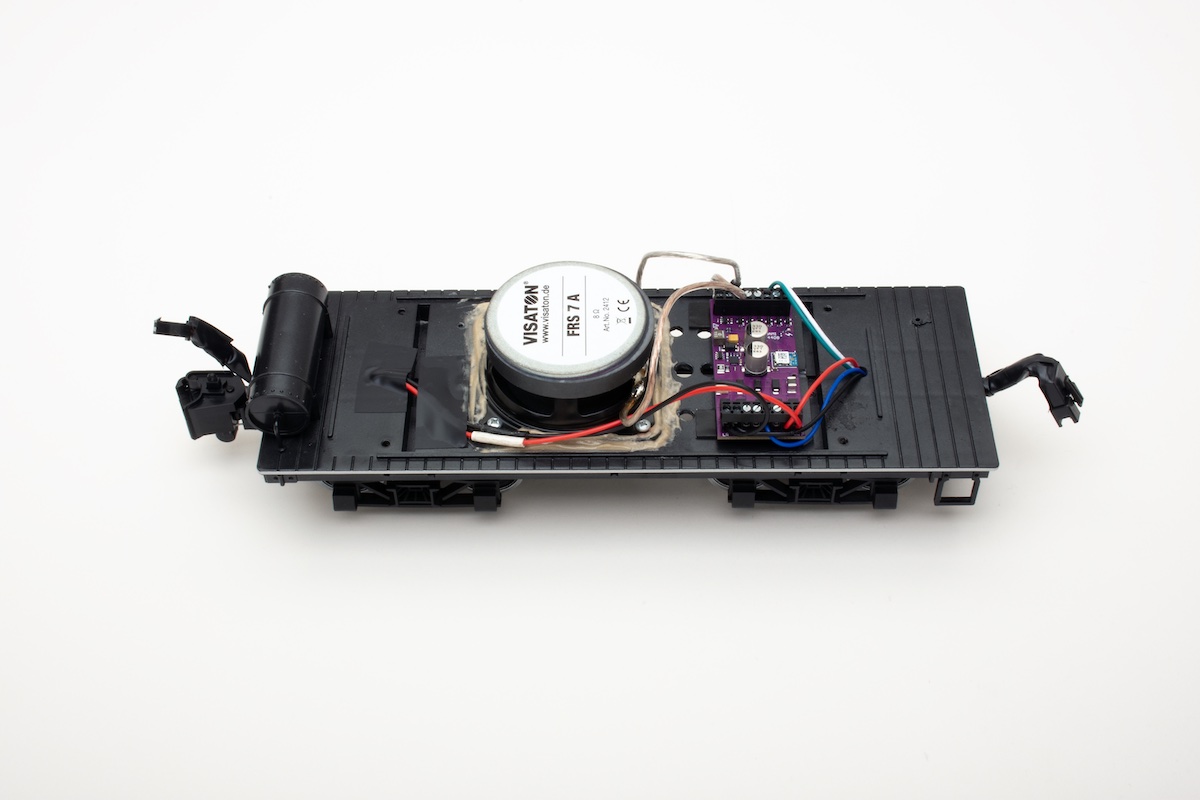
Q: SoundTraxx products can also be found in products from some of the hobby’s leading brands, including Athearn, Class One Model Works, and Kato. Can you talk a bit about partnering with manufacturers to make products specific to their needs?
A: They come to us, and they have an idea of what they want their model to do. We basically say, “Here’s the package we can certainly build.” We then build custom decoders based on their demands. Then we’ll send over samples for the company to sign off on. Once signed off, we get a production schedule, build them, and then we ship decoders overseas for their production assembly in China.
It’s a full Tsunami2, but it does have different features enabled and disabled by default. However, you don’t lose anything as you can go and set the CVs back to what an aftermarket, customer-installed decoder would be set to. You’d have it working exactly the same.
Q: What’s been the strategy in promoting the company and demonstrating its products through digital media, and how valuable has it been?
A: I’d say it’s certainly valuable because the cost is virtually whatever time it takes to make a video. It goes back to a comment I made earlier. People tend to be apprehensive of making changes to their decoder with CVs because they’re afraid they’re going to break it.
So I started putting some of these short videos on my personal YouTube channel, and eventually SoundTraxx’s channel. I use them to get the information out and show viewers that this isn’t difficult. If they take the time, open their minds, go through and learn it, I think everybody can enjoy this aspect of the hobby. This is just SoundTraxx’s way of contributing and teaching people the digital side for the hobby because it’s part of the overall hobby as well.
We also try to make ourselves available, whether it be YouTube, Facebook, or Instagram. Most of the time, we don’t respond on Instagram. It’s mostly just another avenue to get videos and share customer support or customer-submitted videos. But we do respond on Facebook.
Q: What’s been the common challenge in SoundTraxx’s lifespan, and how much of that is reflected in today’s world?
A: I would say promoting the features of the decoder is one of the biggest challenges because anybody can make a noisemaker. You can go to Walmart and pick up a gift card that plays noise. But our sound system is not just a noisemaker. It’s an interactive sound system. They’re a real-world locomotive simulator that’s designed to help make it fun and enjoyable for you.
The other challenge, and I don’t want to get too far on this because it’s just a hurdle, is that people understand the quality of our products. The convenience of buying the China-made, factory-installed decoder is, I think, where you see a lot of that going. So it’s just really trying to break that habit, so to speak, because I think our quality, features, and certainly the customer service are far superior then anything out there.
But really, it’s more of getting people to use the most of the features of our decoders and understand the value they’re getting for the dollar.
Q: What does the future hold for SoundTraxx?
A: I honestly don’t know. We’re always pushing the envelope, getting some ideas on how we want to expand, how we want to grow, and changes we want to make. How that happens, we’ll have to wait and see.
But I’m excited. I’m thrilled to death that I work here, and that we manufacture here in the States. I think that’s a big factor. Being the fact that I’ve been a hobbyist since I was 14, and now being in the industry, I feel like I’m just paying back to the community that’s given me so much.
We listen to customers, and we do implement things that they’ve asked for over the years. It may not happen right away, but we do offer as much as we can to try to help make the hobby more fun and enjoyable, overall.