News & Reviews News An interview with Atlas Model Railroad

An interview with Atlas Model Railroad

By Lucas Iverson | January 30, 2026

A century-old company turns its eyes toward the future

Email Newsletter

Get the newest photos, videos, stories, and more from Trains.com brands. Sign-up for email today!

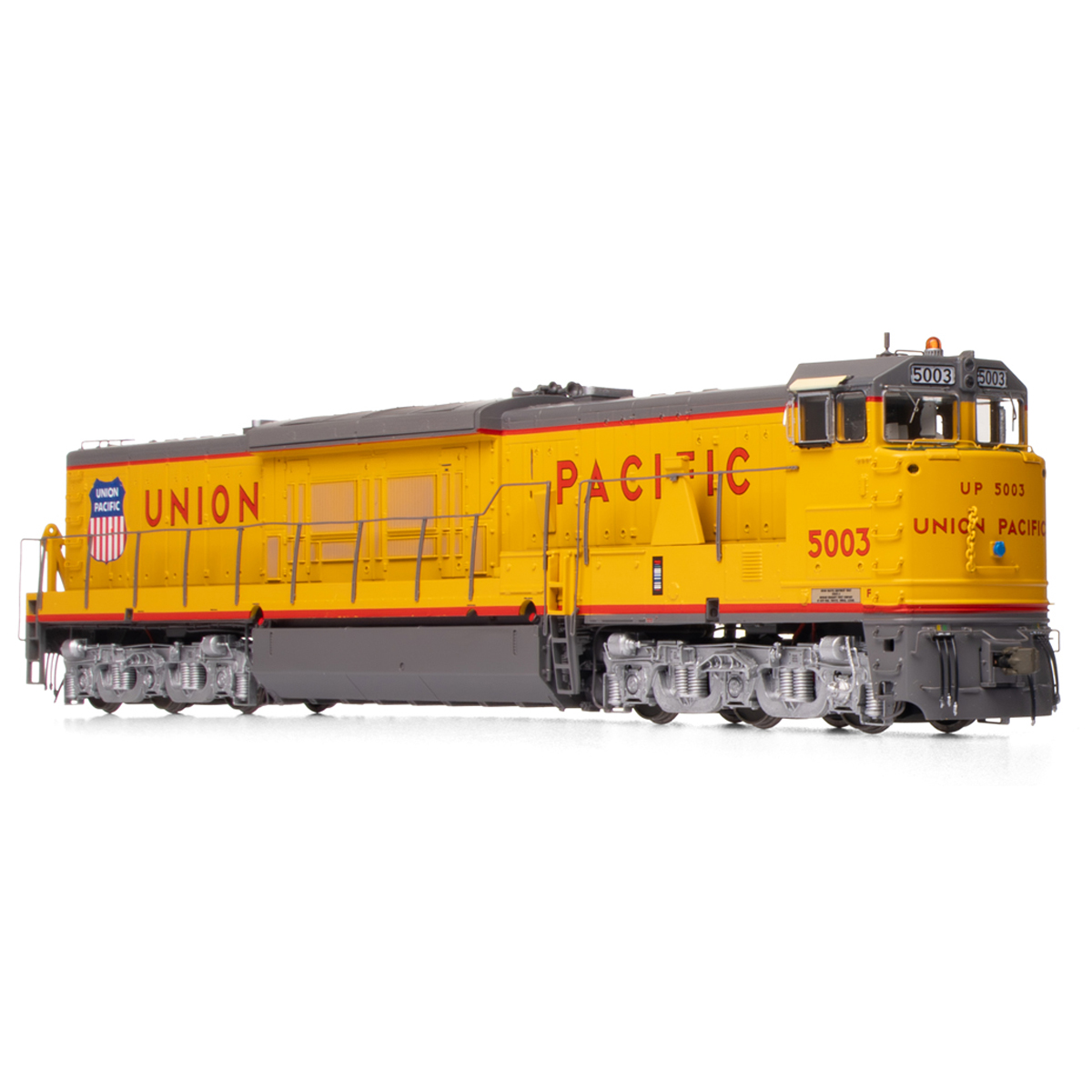
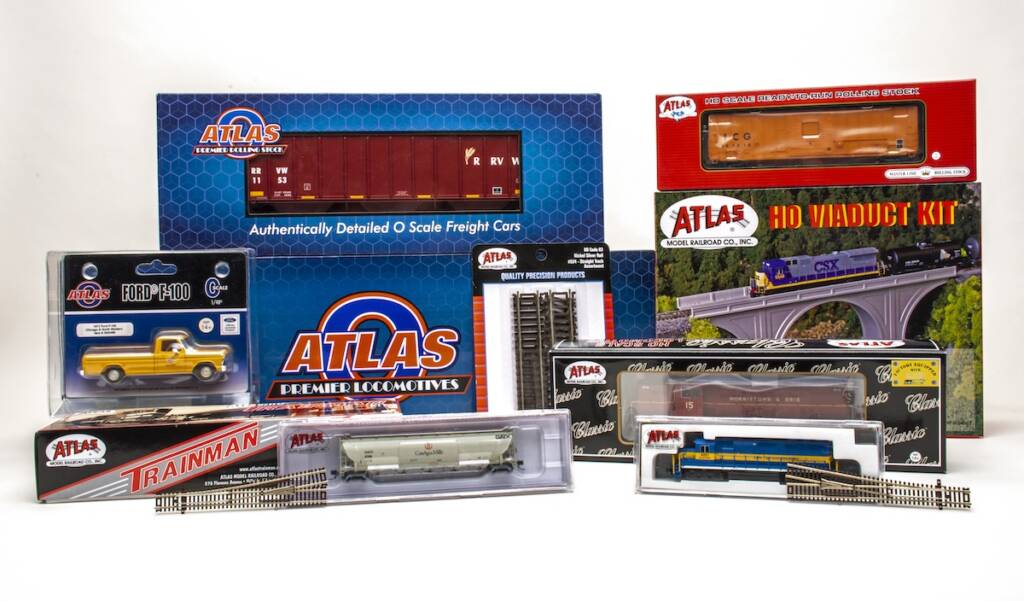
Multiple products from Atlas
Cody Grivno photo

Though its history is tied to track, the product line for Atlas Model Railroad Co. has grown and diversified from Z to O scale. General Manager Matt Moceikis and Sale Manager Ross Medine joined Model Railroader and Classic Toy Trains editors Eric White and Rene Schweitzer to discuss what’s in store for the future of the now century-old company.   

Watch the extended video recording of this interview with Atlas Model Railroad on Trains.com Video

Q: For those not familiar with the business, what are the types of products and services Atlas offers to new and returning customers?

Matt Moceikis
Matt Moceikis

Matt: We’re about 100 years old, and actually celebrated the anniversary last year. It’s a New Jersey-based company in Newark, originally. Then [we] moved over to Hillside. We have Z, N, HO, and O scale: Track, layout packages, locomotives, rolling stock, buildings, accessories, and vehicles. Really, everything you need to build a complete model railroad in at least all the scales we offer.

Q: How did Atlas get its start, and what have been the takeaways in the company’s success and growth today?

Matt: In 1924, Atlas opened as a tool and die shop, and was doing primarily odds and ends for people who had machine shops in the neighborhood. This was before model railroading was mainstream with mass production. Stephan Schaffan Jr., the son of Atlas Founder Stephan Schaffan Sr., was a railroad enthusiast. 

Because his father owned the shop, he had access to all this machinery to make these mass-produced tracks, and especially pioneered flex track. He really got HO scale into the mainstream as it was just O and S scale at the time. He came up with switch kits for HO that were available everywhere, and came up with the fiber-tie, HO track that he ran with.

Ross: [Fiber-tie track] evolved over the years. You actually still see that evolution today is on the pinnacle and forefront of a lot of different things. So, it’s definitely at our core.

Matt: Stephan Jr. was also such a businessman. He went on to expand into N scale, and really was responsible for blowing up its popularity in the United States.

Ross: Then, O scale came about [in Atlas’ product line] in the mid-1970s, and kind of went away from us. It was then in the late 80s-90s when the modern O that you know today as Atlas O came about.

So we’re still growing and still loving it. We have a lot more in store for us in the future.

Q: The company’s history ties into its specialty track. What are the different products you offer in that line today?

Matt: We have a few different lines: Custom Industrial Rail; True Track, which has the roadbed in HO and N scale; and then we have the regular, which is just ties and our 21st-century, nickel silver rail, and that’s our bread and butter.

There are different codes in each scale, and when I say code, I mean the thickness of the rail. N scale is code 55 and code 80. In HO, we have code 83 and code 100. There are two different product lines of O scale track — 2 and 3 rails. Our 2 rail track uses a smaller code that is more finescale for the flanges.

Q: Atlas is known for consistency and reliability across the smaller scales —  Z, N, and HO. What trends are you seeing for those scales?

Ross Medine
Ross Medine

Ross: There’s a bigger mass of customers that want their weathered, high-fidelity models with separately applied details and sounds. And it’s really cool as everyone has their own little flavor they like on these trains and, even something as small as Z can be incredible.

Matt: What we notice in Z is present-day prototypes sell the best for us. We especially notice with the younger crowd that it’s all about the modern stuff. In HO and N scales, we sold more in the 1960s-80s. You still get the bulk of the boomer generation as they’re [modeling] HO, and it’s very strong. If we release a boxcar from the 1970s, it does very well for us in that scale. 

Ross: But it really depends on what is offered. The sales are very different. But they’re all very strong. It just depends what they resonate with.

Q: Micro-Trains is the latest to join the Atlas family in a significant way. What are key factors in the company’s decision to acquire new assets, and how much of that played into the Micro-Trains acquisition?

Matt: A shout out to the owners of Micro-Trains, Eric and Vicki [Smith] as they’re wonderful people. They simply wanted to retire and wanted the legacy of Micro-Trains to carry on. We were at a time looking to expand N and Z scales. It was perfect timing. 

Ross: Atlas and Microtrains have mutual contacts with the N-Scale Enthusiasts, so we knew each other quite well. 

Matt: Our chairman, Jarrett Schaffan Haedrich, caught wind that Micro-Trains could possibly be for sale. There were two years of negotiating, back and forth. Finally, it all came together and we agreed on the purchase.

We really didn’t want to just buy the tools from Micro-Trains and run with it. We wanted the expertise that comes with it because they’re famous for their in-house decoration. They have a really knowledgeable staff with their 3D printing and all their innovative loads that they put in their cars as well.

So Atlas is retaining seven of the office staff, and we’re going to let them rip with their Micro-Trains line. They’re going to continue doing the announcements as closely as we can to how it was as we don’t want to step on their toes. Like I said, they’re good at what they do, and we want to connect them with our suppliers and get them help out in Oregon.

Q: How did the 2020 acquisition of MTH’s Premier, O-scale molds affect Atlas’ production roadmap/release schedule, and how has the overall partnership been with MTH so far?

Matt: It re-woke our O scale product line, really. Up until the acquisition, we had our suppliers overseas who loved making HO and N scale for us because it’s space-efficient. You can make 5,000 HO-scale locomotives, and it’ll take up the space of a hundred O-scale locomotives. When we acquired the MTH tools, we also acquired a new factory. All they do is O scale, and they’re really good at it. 

That renewed our capacity to make O-scale models. That’s why Atlas O announcements, since the acquisition, come in a timely manner. It’s like six months to a year, no later. People aren’t waiting five years anymore for Atlas O products. 

Ross: And you’re starting to see the lines meld a lot more than before. The Premier PS-5344 boxcar as an example, it’s a Master car, but it’s really from the Premier factory. It has new trucks, and it’s very cool.

Matt: You’re starting to see Atlas more in those Premier locomotives and freight cars like the ET44 diesel. We jazzed up the details and it’s all roadname-specific now.

Q: What trends are you currently seeing in the O-gauge, 3-rail world?

Matt: Realism is a big trend. We have some Atlas O models that are really nice, and literally HO models just bigger. O scalers like their fantasy paint schemes and everything, but they like them on fancy locomotives and cars. They want all the separately-applied, grab iron details.

Ross: But as far as O scale goes, the price isn’t going down. It can’t. So we try to fit as much detail and as much realism into these models while keeping that price as fair as possible. That’s something we’re very cognizant about.

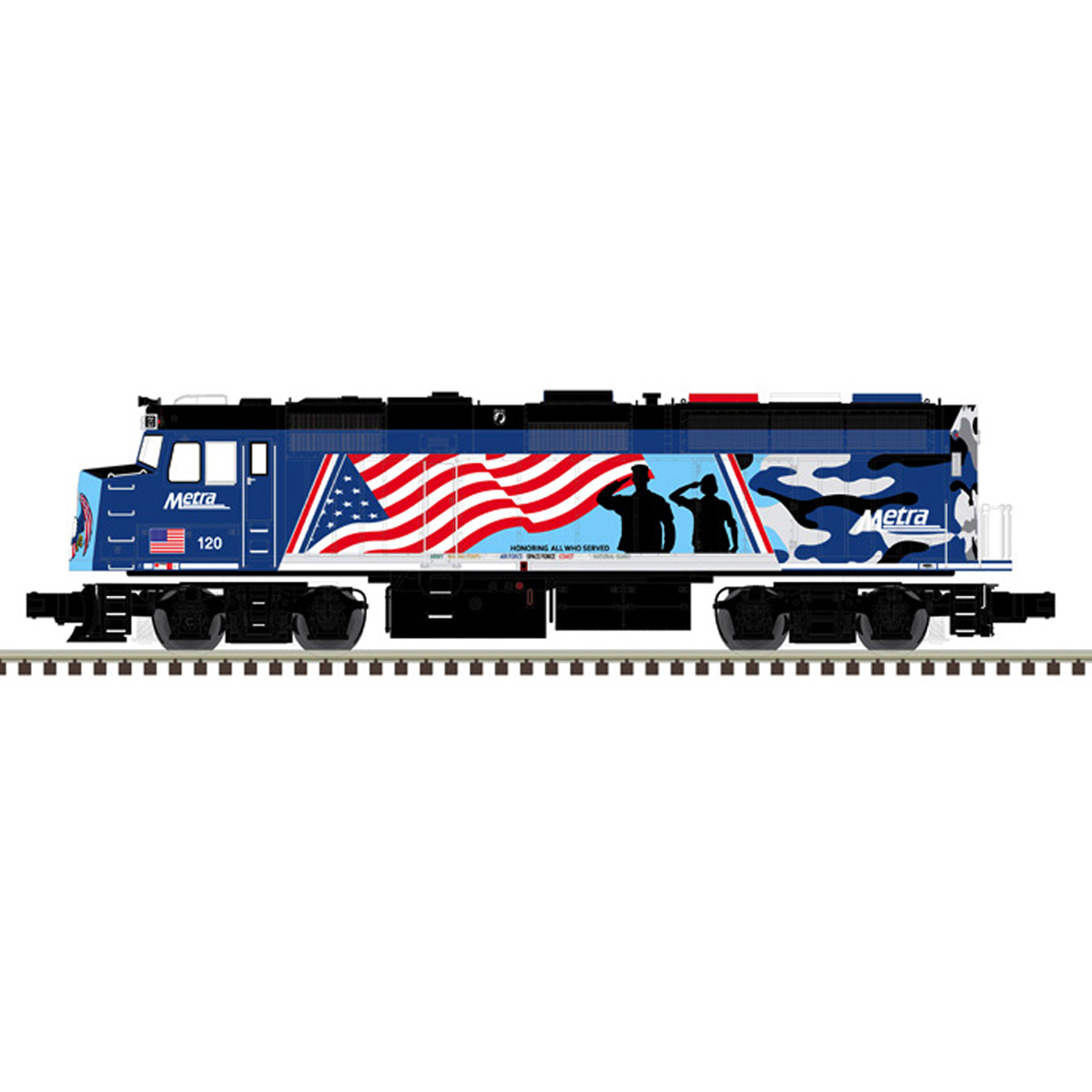
Q: We see that Atlas has announced a couple of O scale locomotives in semiquincentennial paint schemes. Can we expect more announcements in 2026 as we approach the 250th birthday of the United States?

red, white and blue model locomotive
Atlas O SD70M No. 1776

Matt: Right now, only O scale has been announced so far due to the catalog scheduling. But you’ll see some in HO and N scale come out as well. We’re watching all these railroads come out with their 250th anniversary paint schemes and we’re eagerly waiting to do the same. 

Ross: We’re pretty much going to put red, white, and blue as much as possible. If it’s at my request, let’s do it. Send it!

Q: What’s been the common challenge in Atlas’ lifespan, and how much of that is reflected in today’s world?

Matt: Flexibility and having good relationships with our suppliers that make our products. It’s really important because when COVID came around and then the tariffs last year, it caused uncertainty. With those types of situations, you really have to be close with your suppliers and tell them, “Listen, we know the world is a little crazy right now, but we want to keep forging ahead. We’re going to get you through this.” Both sides have to be on the same page.

Ross: It’s the same as well when working with industry partners, long-time dealers, and other manufacturers. We have the Hobby Industry Coalition, which is an open communication between the manufacturers. And it’s not just MTH we talked to.

Matt: For the most part, it’s model trains. It’s really a toy product. But really, whatever is going on in the world will still affect us too.

Q: What does the future hold for Atlas?

Matt: Well, in terms of O scale, for our Master line, there’s a lot of stuff that will begin to come back that hasn’t been seen for about 15 years. So we’re seeing our old library come back and seeing the Premier line continue to grow. 

HO is always going. Though the hardest part about all these product lines and the stuff going on at Atlas is making sure every scale gets the same level of attention. We’re not neglecting HO for O scale and vice versa, as well as for N and Z too. But with bringing thepeople on board, it’s awesome because it helps us with growing the N and Z scales, paying more attention to that, and even bringing their techniques into other scales as well.

Color photo of N scale gondola painted mineral brown.
The Micro-Trains N scale mill gondola is based on an Atchison, Topeka & Santa Fe class GA-47 car. The prototype was built by General American Transportation Corp. in 1937. Cody Grivno photo
You must login to submit a comment