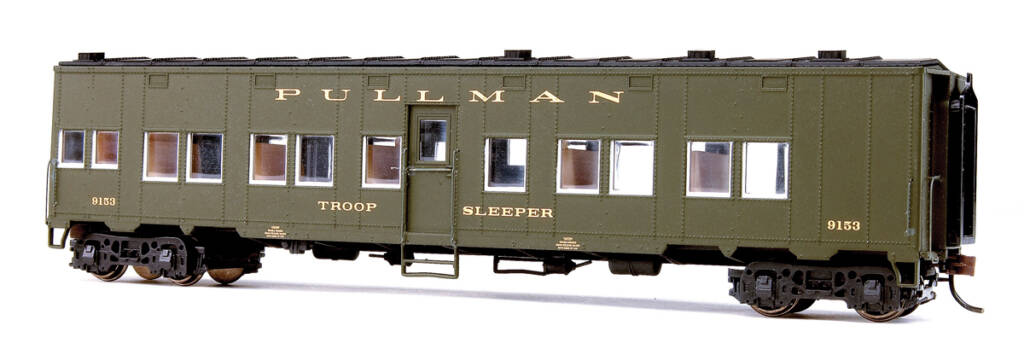
Q: While thinking through the operating scheme for my World War II-era (1944) model railroad, I wondered where troop trains sat in timetable priority. Obviously they were extras, but were they bumped up in priority to first class due to the war effort? — Callum Day
A: I reached out to our former On Operation columnist Jerry Dziedzic for help with this question. He replied:
The most interesting questions are ones whose answers are surprising. My immediate reaction was to agree with Callum: they were extras. But a few minutes of research dispelled this notion.
Adam Burns gives interesting statistics in his American-Rails.com article “A History of Troop Trains during World War II.” Its data details “regular” and “special” trains and indicates that as many regulars moved as specials. Early in 1942, there were more specials. By August, regulars took the lead. This continued for two years until August 1944 when specials became more numerous.
A trusted source says the railroads’ operating departments decided how to run them, either using timetable schedules or creating extras. Then, yes: troop trains could be bumped up to regular, scheduled trains. It’s reasonable to say that wartime priority and rulebook superiority made them first class trains. Passenger rail was frequent enough at that time that timetables had numerous first class schedules to use. It could take only one train order for a Santa Fe dispatcher to arrange a troop movement over single track from Las Vegas, N.M. to Raton, N.M. “Display signals and run as Second 19.” Two troop trains could run as Second and Third 19.
Running extras was more complicated, especially for priority movements. Extras were at the bottom of the pecking order so an urgent movement would need an order such as “Engine 3751 run extra Las Vegas to Raton with right over all westward trains.” Further, all the westward trains affected needed copies of the orders, demanding careful record-keeping.
Send us your questions
Have a question about model trains, full-size trains, or toy trains? Send it to AskTrains@Trains.com.