Q: I want to simulate the type of roof that uses rubber, tar, and then stone. I was thinking of painting the roof with a glossy black and then putting cinder ballast on it to simulate the rocks. Has anyone done this type of roof? If so, how did you do it? — Rick, via the MR Forums
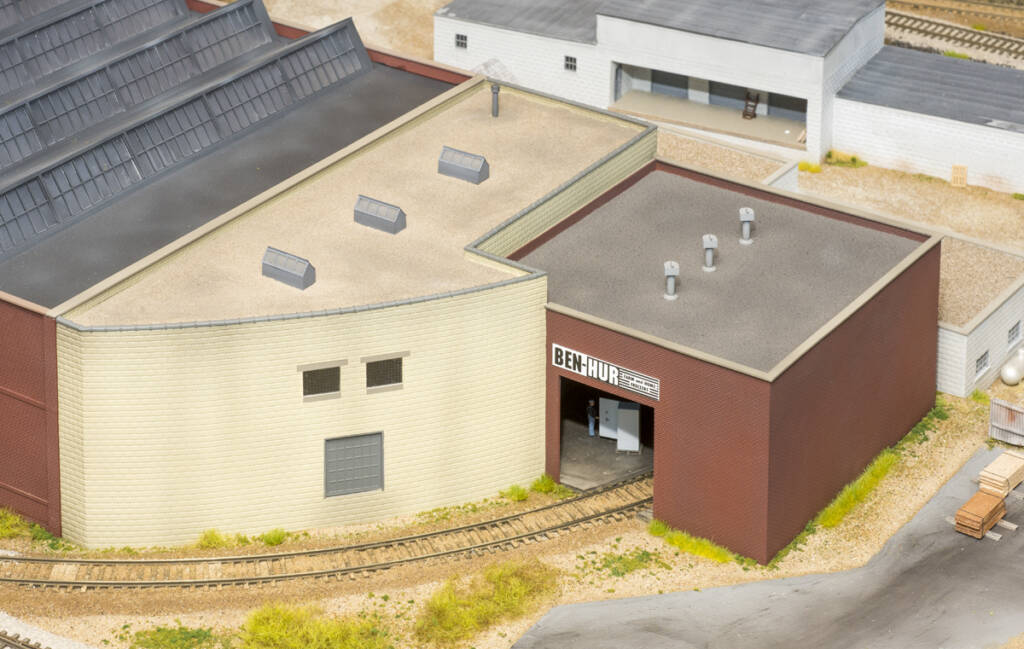
A: I’ve modeled this style of roof a few times, Rick. First, I paint the roof flat black and install it. Next, I run a bead of full-strength white glue along the joint where the roof meets the walls to seal any gaps (This prevents the isopropyl alcohol and scenery glue from running inside the building. More on that in a bit). Then I brush black paint part way up the inside of the walls to simulate sealant. The paint doesn’t have to be applied neatly. I recommend using an old brush with bristles that aren’t in the best shape to replicate this detail.
After the paint has dried, I brush full-strength white glue on the roof. With the glue still wet, I sprinkle in fine ballast (typically N scale for HO scale buildings) to simulate the stone. Work in manageable areas so the glue doesn’t dry before you can apply the ballast.
Once the roof is coated in ballast, I wet it with isopropyl alcohol using a pipette. This helps break the surface tension of the ballast. Place the pipette along the edge of the roof and let the alcohol gently flow into granules. Don’t hold the pipette too high over the roof as the drops of alcohol may leave craters in the ballast. I let the alcohol soak in for a few minutes before applying scenic cement with a pipette.
After the scenery glue has dried, you can add weathering around chimneys, pipes, and other details. You may also choose to add other items to the roof, like a ladder, boards, or a tire or two. Use prototype photos as inspiration for selecting and placing the details.
Send us your questions
Have a question about model trains, full-size trains, or toy trains? Send it to AskTrains@Trains.com.