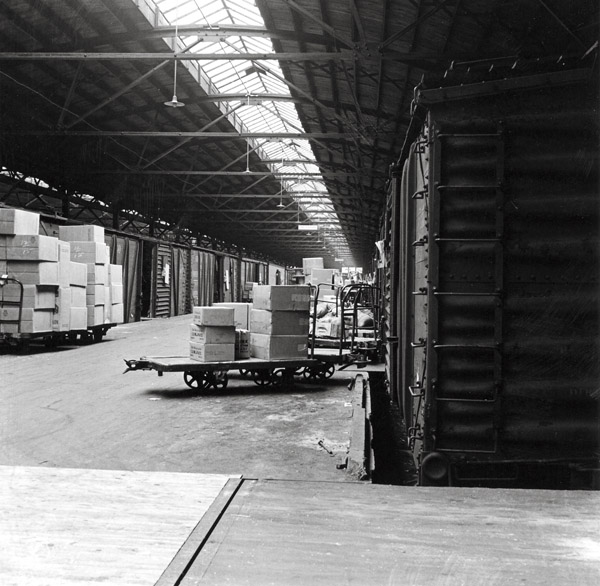
Freight stations provide rail service to businesses that don’t have their own rail sidings. You can think of a freight station on your layout as an industry multiplier. In the space you might devote to one small or medium size factory, your railroad can serve many un-modeled customers at a freight station.
Less-than-carload-lots
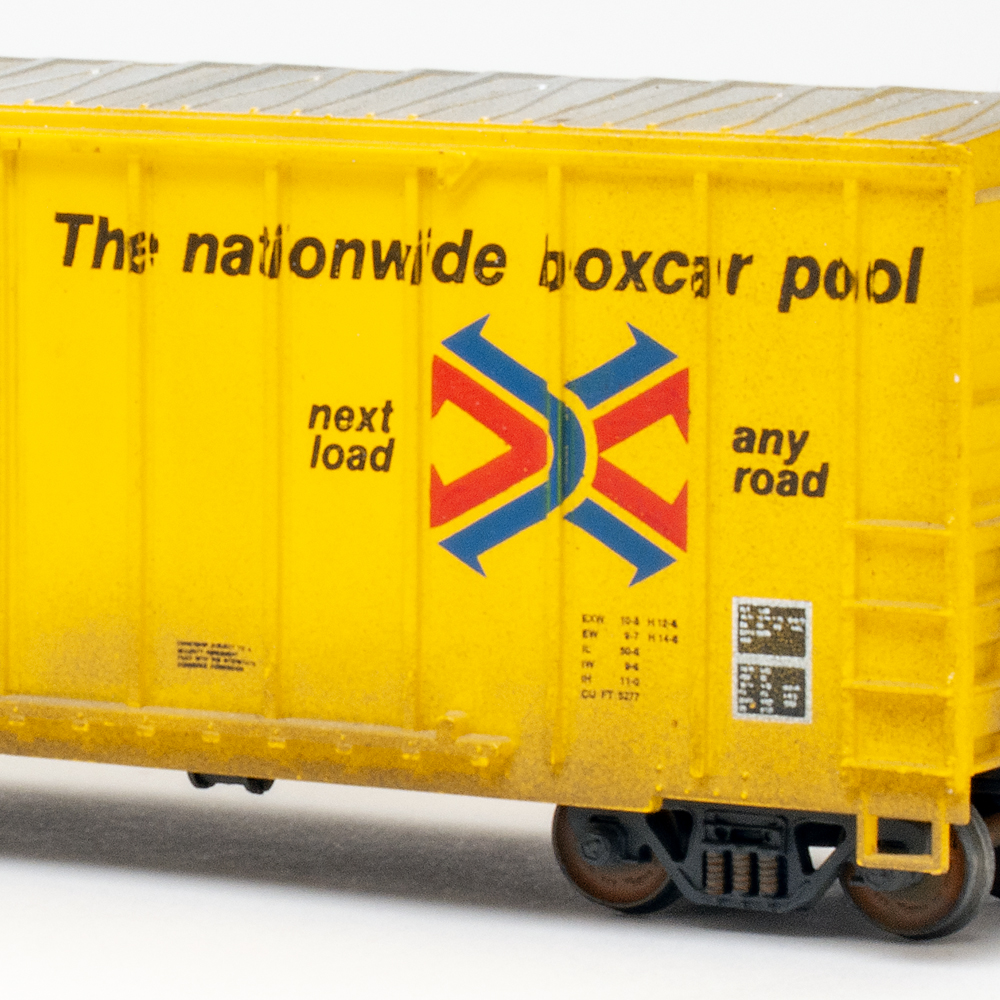
Most of the traffic moving through freight stations was “LCL,” varied cargos in less-than-carload-lots. The freight station received LCL from a variety of shippers, consolidated it into carloads moving to like destinations, and sent it on its way, primarily in boxcars. It also received carloads of LCL from other stations. Customers could pick up and deliver with their own trucks, or the railroad might have a trucking arm of its own or else contract with a private trucker.
Right into the 1950s, the railroads had enough of this traffic to schedule dedicated “merchandise” freights carrying all or mostly LCL. However, this was retail transportation and railroads are best at wholesale. As early as the 1930s, some railroads leased space in freight stations to forwarding companies that operated pickup and delivery trucks and consolidated their own loads for rail shipment. Ultimately entire freight stations were sold to freight forwarders, although for our purposes they still worked much as when the railroads owned them.
While LCL disappeared from freight stations by the end of the 1960s, a good share of it is still on the railroads in the form of TOFC (trailer-on-flatcar) traffic.
Opportunities
Here are six ways to take advantage of the operating potential of freight stations.
1. Schedule setouts and pickups
You can establish cutoff times requiring arriving cars to be spotted in time to make the next morning’s scheduled truck deliveries. Also set cutoffs to have outbound cars in the yard in time for either a merchandise train’s departure or for pickup by a merchandiser passing through.
2. Use parallel tracks for loading and unloading from one dock
It was common to spot cars so their door openings lined up, allowing bridge plates between cars to connect the outer cars to the dock.
3. Reload “foreign” empties
Cars from other railroads can arrive at your freight station with LCL from across the country. When those cars have been “unloaded,” reload them – a paperwork procedure – with outbound LCL (toward their home roads, if possible).
4. Use refrigerator cars for LCL
Empty “RS”-type reefers (ice-bunker cars without meat rails or other special loading equipment) often carried clean, dry freight on their way back to perishable-producing areas. Or if your road serves a growing region, your freight station may receive LCL in reefers coming home from distant markets.
5. Load LCL “peddler cars” for way freights
Pull the peddler boxcar from the freight station and couple it at the head end of the way freight. Besides its other work, the local will stop for five or ten minutes at each station along its run to unload and load LCL. At the end of the way freight’s trip, spot the peddler car at that terminal’s freight station.
6. Make it a separate switch job
At large, busy locations, an engine and crew might work for part or all of a shift to spot the freight station tracks and transfer cars to and from the classification yard.
For more on freight station operation, see “From the freight house to everywhere,” by Mark Vaughan, in How To Build Realistic Layouts, Industries you can model. – Ed.