Command control systems allow more ways than ever to operate your toy train today, and if you’re new (or you’ve been away from the hobby), choosing a system might seem overwhelming. Don’t worry; we’re here to help! Let’s review the choices, along with their pros and cons.
Conventional
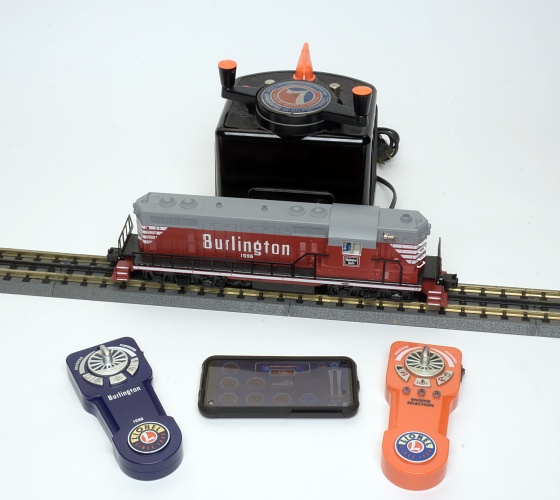
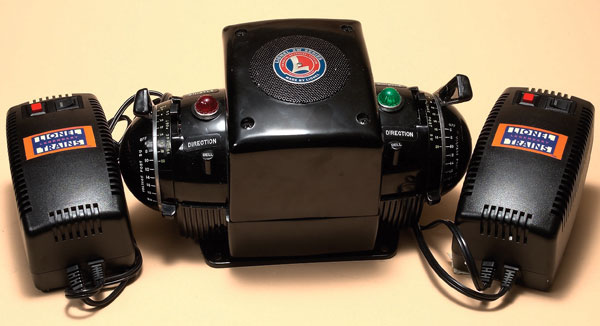
“Conventional” operation means you use a transformer (from any manufacturer) to power AC current through the track. You start and stop the locomotive with the transformer’s throttle.
Pros: straightforward; easy to set up; reliable, works for any age/type/brand of locomotive
Cons: You may have limited functionality (for the bell, whistle, etc.) on newer locomotives; you must remain near the transformer to operate your equipment
Lionel TrainMaster Command Control (TMCC)
TMCC was introduced in 1995 and is a radio-based system designed for easier operation. It consists of a command base and a handheld controller (Base-1 and Cab-1, respectively). The system was phased out in 2006, but components are still widely used and supported (see Base3 listing below).
Pros: allows multi-train operation; handheld controller allows free movement around the layout
Cons: limited functionality on newer locomotives
Lionel Legacy system
The original Legacy system was released in 2006, and essentially replaced TMCC. However, it is backward compatible with TMCC components. Read Bob Keller’s extensive review of the Legacy system.
Pros: more functionality, like speed steps, smoke and sound features, and lash ups; easy set up; handheld controller allows free movement around the layout
Cons: You can’t operate conventional/non-TMCC trains without purchasing additional equipment (see information in the review above). Not able to run MTH Proto-Sound equipment unless you have a separate control system/wiring.
Lionel LionChief system
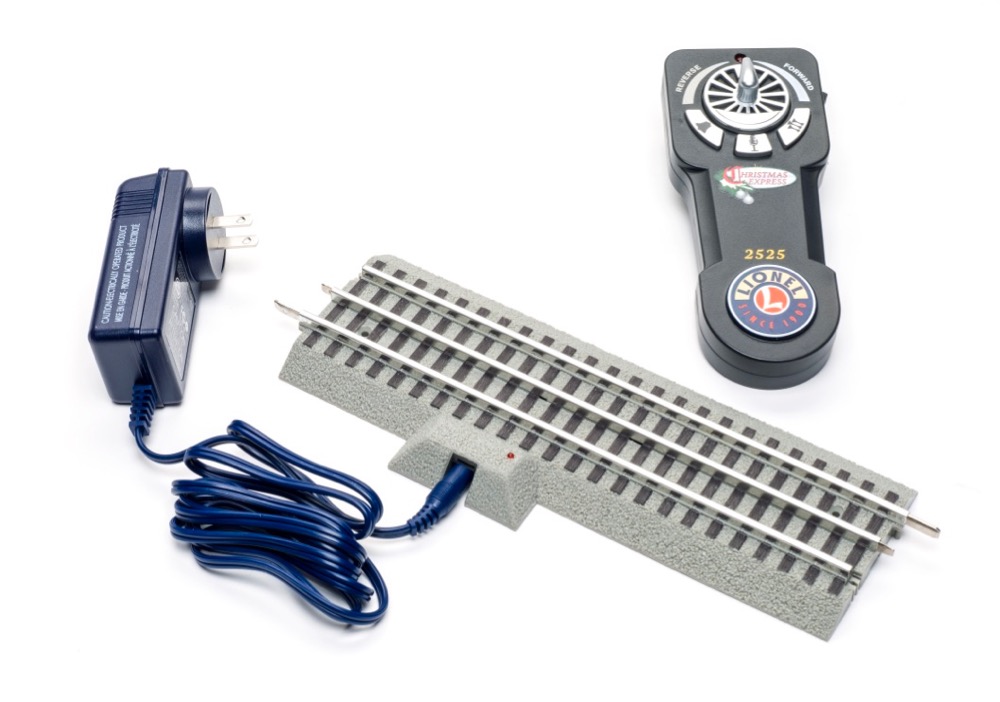
LionChief is a radio control system that allows operators to control locomotives via a handheld remote or Bluetooth app. It uses an 18-volt “wall wart” that plugs into the wall to provide power, though it can operate on any layout as long as there’s a fixed voltage.
Pros: Easy set up; able to access features via a handheld remote or smartphone app; a Lionel Universal Remote allows you to control up to three locomotives with one controller; you don’t need a separate transformer for power
Cons: Locomotive must be Bluetooth enabled to function; basic but limited features; can’t operate other brands of locomotives or Lionel locomotives without Bluetooth
Lionel Base3 system
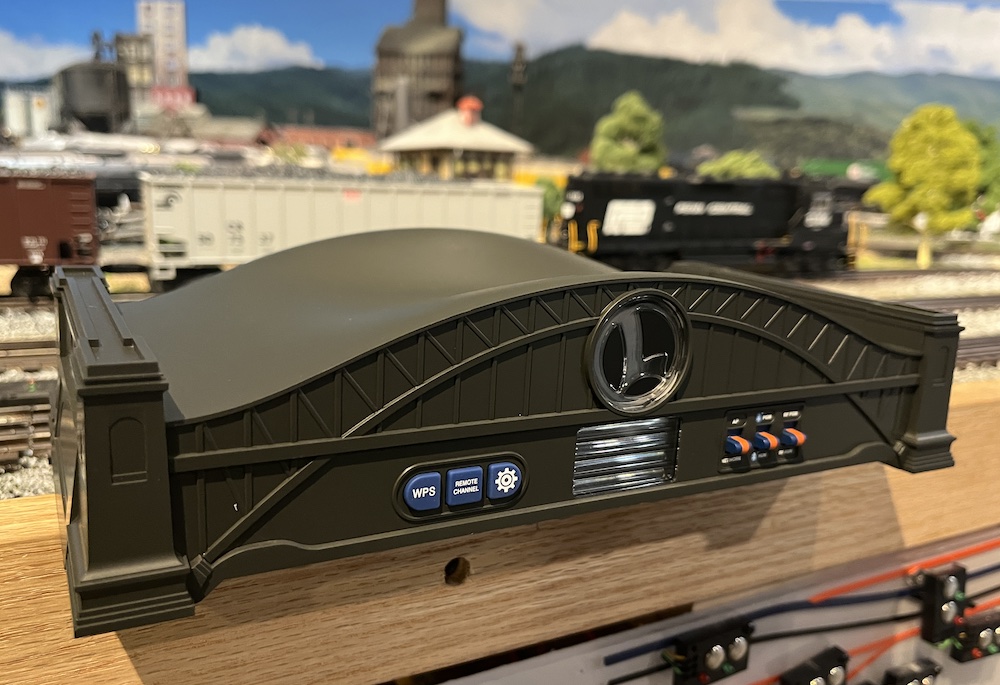
The much-anticipated Base3 system was released in 2024. The unit works for Lionel TMCC, Legacy, LionChief, and FlyerChief locomotives and supports Wi-Fi connectivity via the Cab3 app.
Using the Base3 on large layouts
Pros: Able to access features via a handheld remote or smartphone app; large signal range
Cons: Cab3 is an app only and not a remote; must use a Cab-1L or Cab-2 remote (Cab-1 not compatible); if running conventional locomotives you need a Powermaster to regulate track voltage; does not work with MTH and other brands of command systems unless you purchase other equipment or have extensive knowledge; most expensive control system
Menards
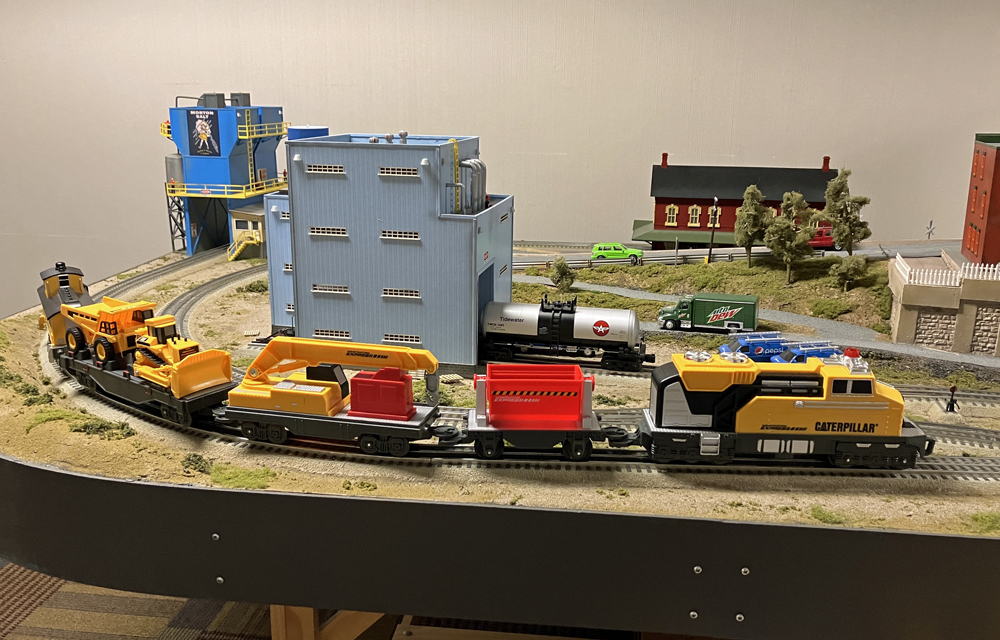
Like LionChief, Menards’ system is a radio control system that uses a handheld controller and an 18-volt “wall wart” to provide power, or a fixed voltage on any layout.
Pros: Easy to set up and use; low cost; you don’t need a separate transformer for power
Cons: Each locomotive has a separate remote control; no Bluetooth or smartphone app capability; not compatible with other systems or brands of locomotives
MTH DCS TIU system
The Digital Command System Track Interface Unit (DCS TIU) was first released in 2002, and it remains a core part of the MTH control system today. The system acts as a bridge between the transformer, the track, and a handheld controller or smartphone app.
Pros: Allows independent control of multiple MTH ProtoSound 2 and 3 engines on the same track, including conventional engines, uses either a handheld remote or smartphone app; able to add Accessory Interface Units (AIUs) for controlling switches and accessories; ability to run both Lionel conventional (with the DCS remote) or TMCC locomotives, though functionality may be limited
Cons: To access Wi-Fi functions apps, you must purchase a separate WiFi Interface Unit (WIU) though can be tricky to set up and use the phone app without instructions; limited functionality of Lionel TMCC/Legacy locomotives
MTH WTIU system
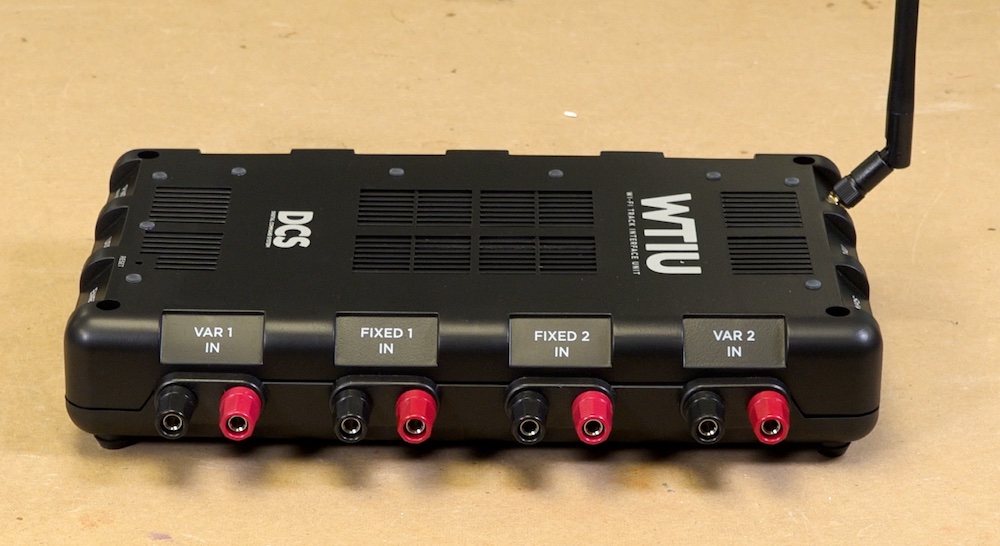
The WTUI system was released in 2024. It essentially combined the TIU and WIU units.
Can I use my handheld remote with the WTIU?
Pros: Allows independent control of multiple ProtoSound 2 and 3 engines on the same track, including conventional engines (though variable voltage), uses a smartphone app for operation; able to add Accessory Interface Units (AIUs) for controlling switches and accessories; ability to run Lionel locomotives, though functionality may be limited
Cons: WTIU comes with the app only, can be tricky to set up and use without instructions; limited functionality of Lionel TMCC/Legacy locomotives; unable to use a handheld DCS remote without a special cable (as of early 2026, not available for purchase)