Q: I have several On30 locomotives with Digital Command Control (DCC), but was recently gifted a passenger set that has a direct-current (DC) locomotive. If some DCC locomotives are sitting on the track, can I use a DC transformer to operate the DC engine on the same track without damaging the DCC locomotives? What would happen to the DC locomotive if it’s still on the track when I use the DCC controller? — Joe Mizell
A: First, let’s tackle the DC locomotive question. Direct-current locomotives, when placed on a DCC-powered track, will hum or sing in a high pitch due to the high frequency of the DCC track power. With some DCC systems, such as Digitrax, you can operate one DC locomotive using a process referred to as zero bit stretching by setting the throttle address to “00.” However this shouldn’t be done on a regular basis as it can heat the motor and may lead to failure. Use it only for testing a new locomotive. And it’s best not to leave DC locomotives sitting on the DCC-powered track for long periods as this humming may overheat the motor.
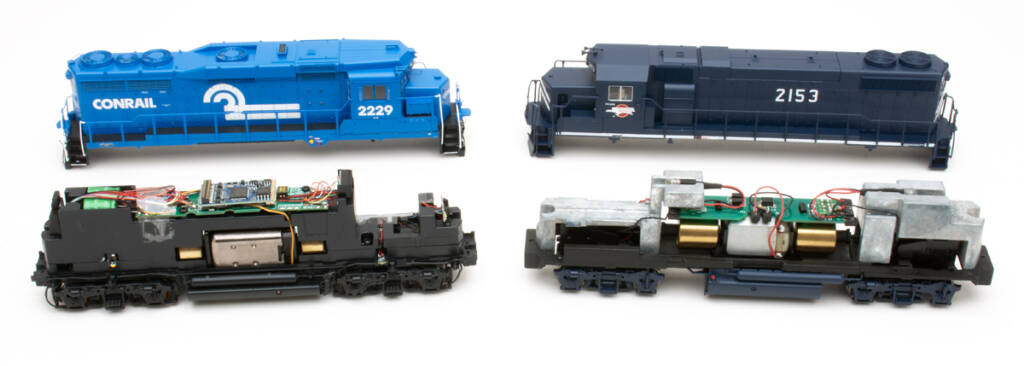
Next, we’ll look at DCC-equipped locomotives on a DC-powered track. Most decoders manufactured today support a process referred to as analog conversion. That simply means the decoder will recognize that DC power is on the track and will respond to DC throttle commands. You’ll notice a lag in locomotive response because track voltage needs to reach about 5-7 volts before the locomotive will move and the sound and light effects will come on.
Also, all DCC locomotives in the same DC power block will respond. If you don’t want that to happen, you should move the DCC locomotives to an electrically isolated track, remove them from the layout, or turn analog conversion off in their decoders. The last option is accomplished by programming CV 29 to the desired value. This may sound a bit complicated, but it’s described on many websites — just do a search for “DCC CV 29 programming.” I discussed this in video No. 48 on my YouTube channel “Model Railroading With The DCC Guy” and have a cheat sheet of CV 29 values on my website https://larrypuckett.wordpress.com. — Larry Puckett, contributing editor
Send us your questions
Have a question about model trains, full-size trains, or toy trains? Send it to AskTrains@Trains.com.