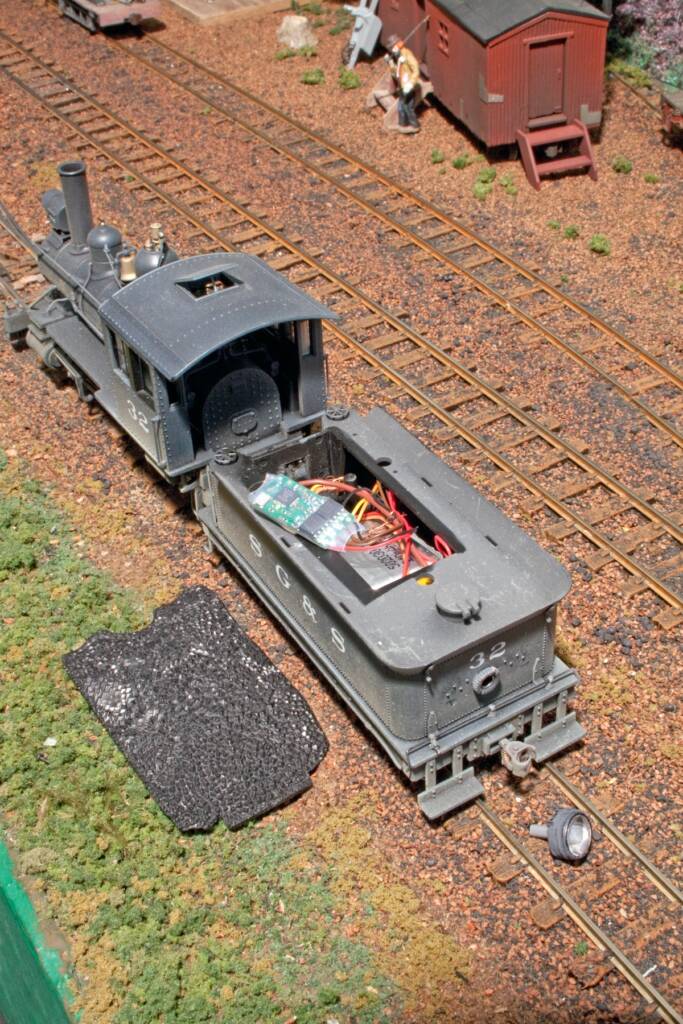
“Dead Rail” or “Power on Board” — no matter what you call it, the concept is the same: a model locomotive that carries its own power source. This eliminates the need for alternating or direct current track power, along with multiple headaches such as short circuiting, dead frogs, and dirty rails. Rechargeable batteries have become a popular Dead Rail power source, slowly but steadily extending into smaller scales and gaining interest among modelers.
Some might argue this adoption is too slow, as you still can’t buy an N-to-Large scale locomotive with a pre-installed, ready-to-run battery (outside of Lionel’s recent starter sets and selected locomotives from PIKO). Required custom installations involve acquiring separate components, including rechargeable batteries of different types, sizes, and power levels. But which option will be a good fit when stepping into the world of Dead Rail?
Recommended approaches
According to Nicholas Bulgarino, owner of Bulgarino Locomotive Works and a Dead Rail maestro, selecting the batteries’ chemistry option should align with the needs of your locomotive’s internal systems. It’s crucial to understand the voltage, amperage, and charge/discharge current your motor, decoder, and other electronics can safely handle.
“The goal is to balance the motor stall current, the decoder’s amp rating, and the battery’s charge and discharge current — C Rating,” Bulgarino explains. “Traditionally, you’d want to have the battery’s ratings exceed the decoder and motor, so the power is there if needed. The issue with doing that in this context is you risk damaging the decoder, the most expensive part of the system. The only drawback with this approach is that the batteries are always operating at 50-75% their maximum discharge in normal operation. But with the lower frequency of use most models experience, operators won’t notice the performance drop for years.”
Modelers should also consider the available volume inside the locomotive’s body. This will significantly influence your battery choice, as some types fit smaller scales better than others.
Options
Lithium-Polymer (LiPo) and Lithium-Ion (Li-Ion)
A big burst in a small package makes both Lithium-Polymer and Lithium-Ion batteries popular choices. Their flexible dimensions, consistent energy output and reasonable cost are ideal, especially for locomotive fleets in smaller scales where space is limited, even when connecting multiple cells for the required voltage.
“I primarily do HO scale, where I prefer to use the [C-Rated 2C] flat-shape LiPo batteries,” said Pete Steinmetz, owner of Dead Rail Install and co-founder of the Dead Rail Society. “I don’t use the round, cylindrical shape at all. They just don’t fit.”
Safety is a headliner to both Steinmetz and Bulgarino as each high-quality cell should have an individual regulator board, known as a Battery Management System (BMS). The BMS stabilizes current flow during charging and discharging, reducing the risk of damage to the model’s internal components. Steinmetz has seen BMS rated at 5 amps, a standard in the industry. This is particularly important for LiPo batteries, which have higher energy density but also a potential flammable risk if not handled correctly.
“The BMS increases the life of the battery as well by acting as a circuit protector,” said Bulgarino. “Li-Po batteries last around 650-850 charge cycles [completely full to completely empty] before the battery performance decreases dramatically.”
Lithium Iron Phosphate (LiFePO₄)
Lithium Iron Phosphate checks off many boxes that are similar to its Lithium-based counterparts. However, they tend to be larger (20% less capacity according to Steinmetz) and more expensive, which can limit their appeal. Despite these drawbacks, they’ll offer a longer lifespan as long as modelers are aware of potential risks.
“Most commercial cells I have seen are rated for a 3C [for O scale], which means if the battery is rated for a 5A discharge, it’ll discharge 15A safely,” Bulgarino explains. “This is normally not an issue, but if there is a surge, where the motor stalls or the mechanism binds up, and anything in the system (motor, speaker, other components connected to the decoder) wants to draw more than 4A, the battery will supply it and damage the decoder, though nothing flammable. Most BMS’s can detect a stall or short and stop the current, but it’s still a risk at that C Rating.”
Nickel-Metal Hydride (NiMH) and Nickel-Cadmium (NiCd)
Rechargeable battery options for Dead Rail locomotives aren’t solely lithium-based. Nickel-Metal Hydride and Nickel-Cadmium can be alternatives, with a moderate energy output from the former and long-lasting durability from the latter. Steinmetz praises both as proven and safe chemistries for larger scales, O and up. For smaller scales, however, these batteries will usually take the backseat in terms of popularity.
“The problem with NiMH and NiCd batteries are the cells being too big,” said Steinmetz. “So when you find the lithium’s capacity being much smaller for the same [size], that’s what people will want.
“In O scale, you can put round cells in a battery car and run a wire to your locomotive. That should work just fine.”
Quality over quantity
Regardless of which chemistry option you choose, safety is key as battery power can be dangerous if you’re not careful and don’t do your homework. For Steinmetz, being safe means knowing where the acquired battery cells come from and if they’re of the highest quality.
“The chemistry that I use is Lithium-Polymer cells, but they’re all medical grade,” he recommends. “You have to be careful, though, if you’re buying batteries on eBay, Amazon, and even at an RC shop. You don’t know what you’re going to get, as nobody publishes the cell specifications because most have no idea who made them. That can be dangerous if you end up buying junk batteries that could go south on you.”
Tracking down a reputable source for quality batteries will be part of the homework, according to Steinmetz. This comes from his experience in visiting multiple factories over the year with mixed results. Hence a visit to the Dead Rail Society website and contacting them to inquire on the best recommendations.
Learn more about dead rail in Model Railroader’s May 2015 issue.