Montreal Locomotive Works DL535E diesel locomotives have proven to be versatile narrow-gauge haulers made famous by a garden railway staple.
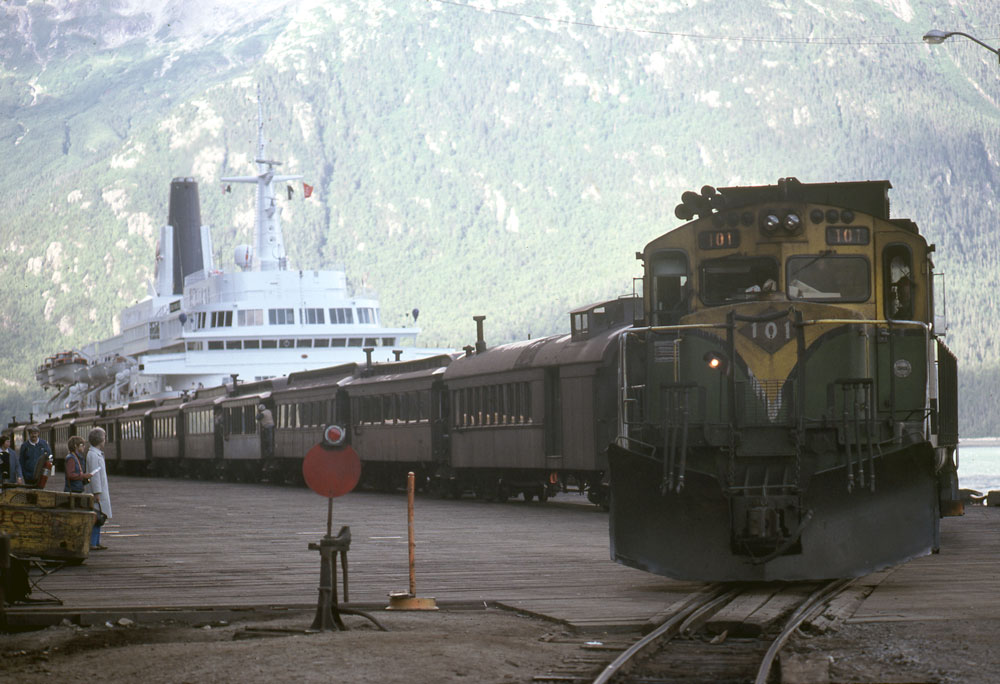
In 1969, American Locomotive Co. of Schenectady, N.Y., was building seven six-axle, 1,200-hp DL535E diesel locomotives, Nos. 101-107, for the White Pass & Yukon when the builder abruptly shut down its manufacturing operations. The units were sent by flatcar to the affiliated Montreal Locomotive Works for finishing and eventual delivery to the railroad. The ore-hauling railroad went back to Montreal for three more units, Nos. 108-110, in 1971.
The units were based on Alco’s popular DL535 export locomotive. One key difference, however, is that the DL535 export features a high short hood whereas the White Pass DL535E features a more traditional North American-style low short hood.
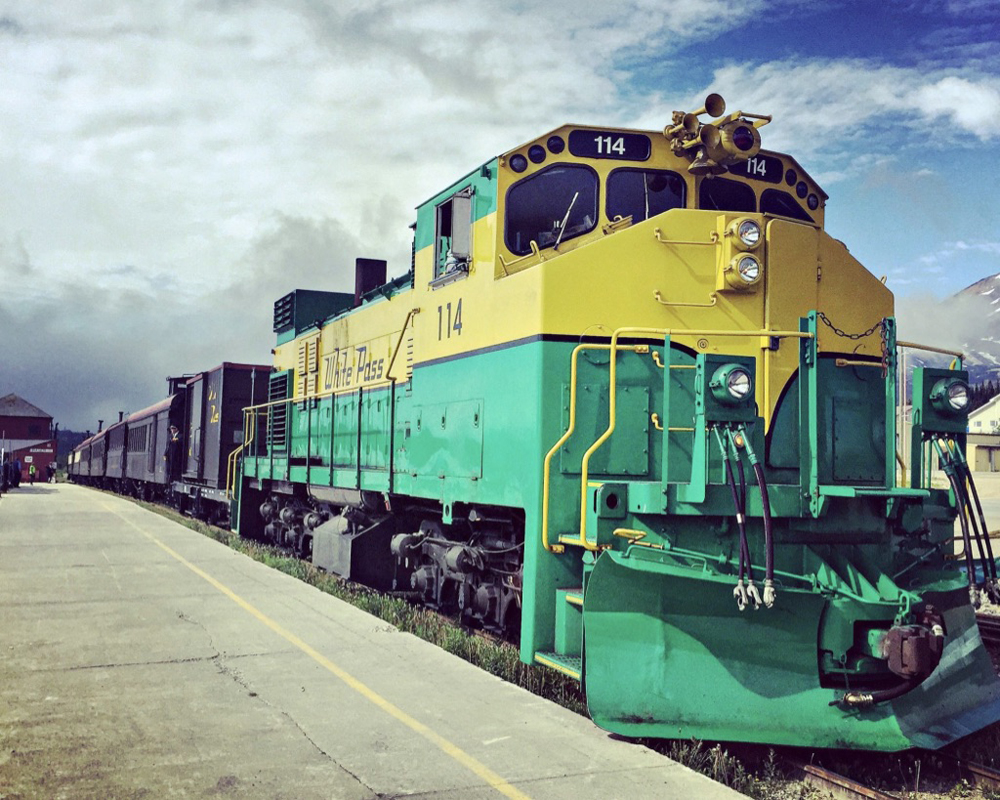
In the early 1980s, White Pass ordered four new DL535EW units with the Canadian-designed safety cab from Montreal successor Bombardier. Unfortunately, the railroad shut down in 1982 before their delivery. Three units, Nos. 111-113, went to U.S. Gypsum at Plaster City, Calif., in two transactions. It acquired Nos. 112-113 in 1991 and, after the wreck of 113, also acquired 111 as its replacement. No. 114 eventually landed at the reborn White Pass in 1995 to handle the road’s expanding tourist train operations.
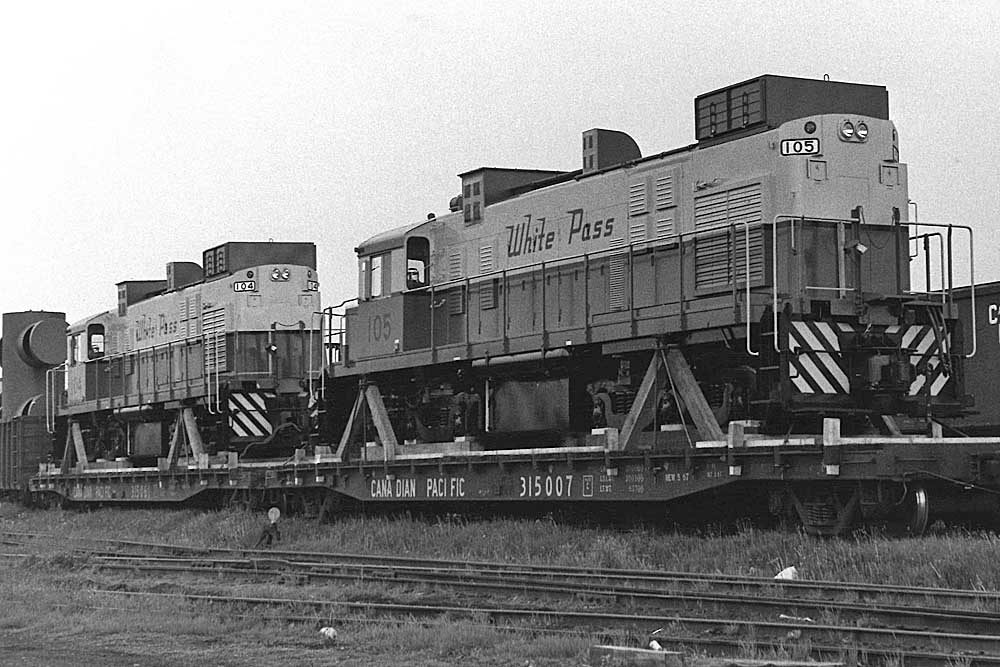
That status quo remained relatively stable until the 21st century. Colorado’s Durango & Silverton Narrow Gauge acquired four surplus DL535E diesel locomotives from the White Pass in 2020 following that road’s acquisition of newer power from National Railway Equipment. The Durango & Silverton plans to use the units to supplement its steam fleet during times of high fire danger. Then, in November 2023, the Cumbres & Toltec Scenic Railroad acquired DL535EW No. 114. It will serve as protect power, saving the daily firing of a steam locomotive on standby.
In 1990, LGB introduced a G gauge model of the DL535E, which it still produces today. It was one of the first commercially produced plastic models of North American diesel locomotives suitable for garden railway operation. Thus, it appeared on many garden railways across the continent, and throughout the world, making famous a locomotive with relatively little geographic reach.
Share this article