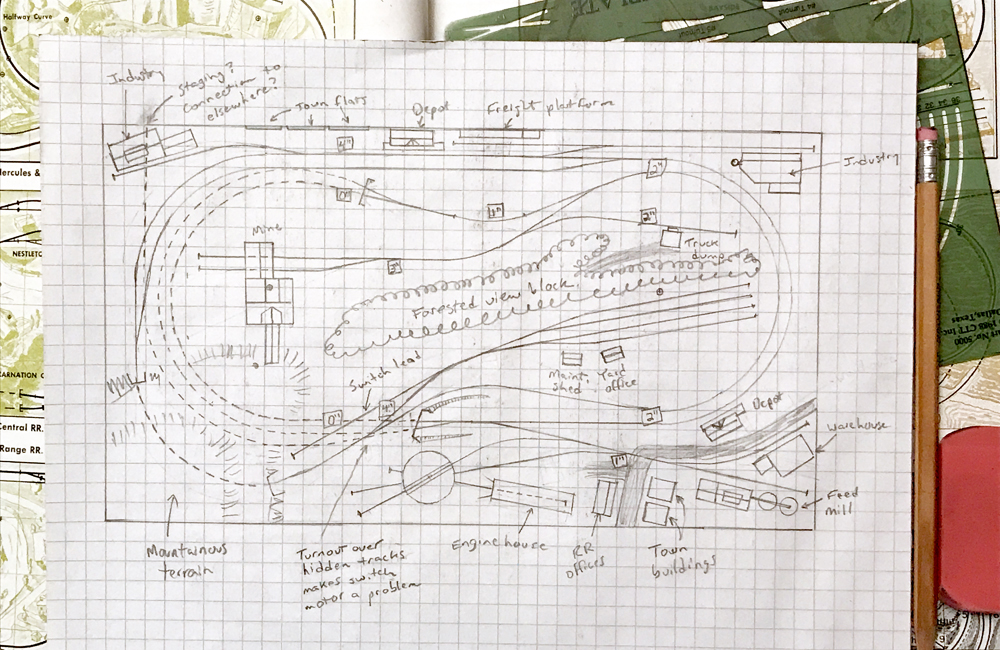

Sketching with Steve: Working facing-point and trailing-point turnouts
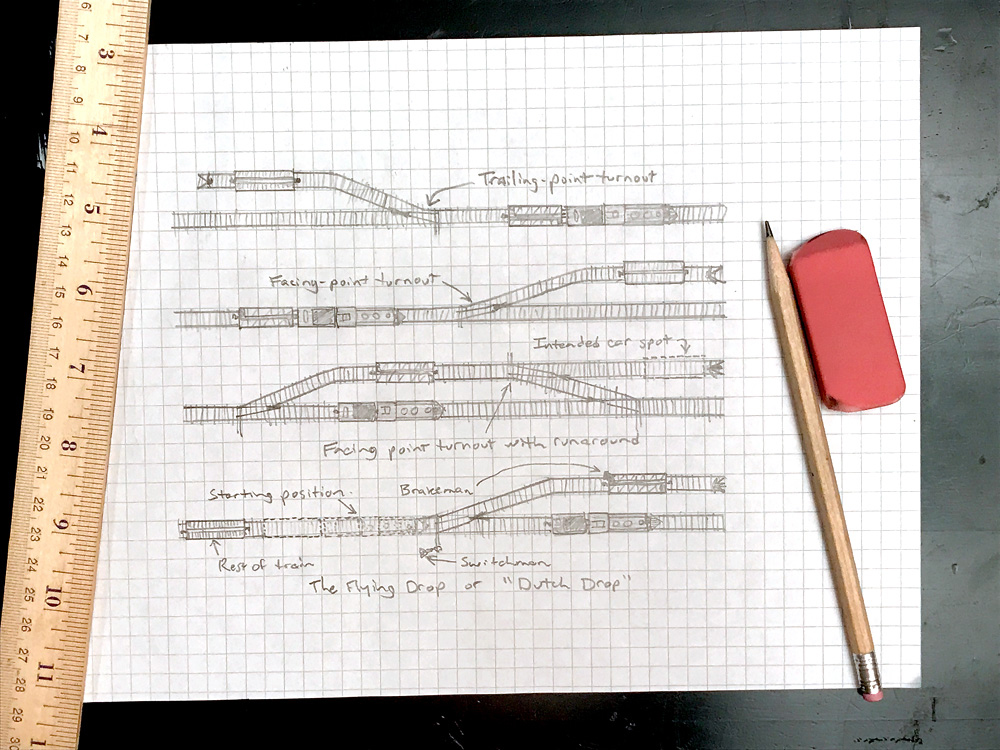
Several sketches of a short train on a track with different turnout configurations.

A turnout is where one track becomes two. The single track, where the movable point rails let a train choose between routes, is called the point end of the turnout. The two-track end, where the closure rails cross at the frog, is the frog end. And which end is which can make or break a […]

Read More…

Sketching with Steve: Big industries for small spaces

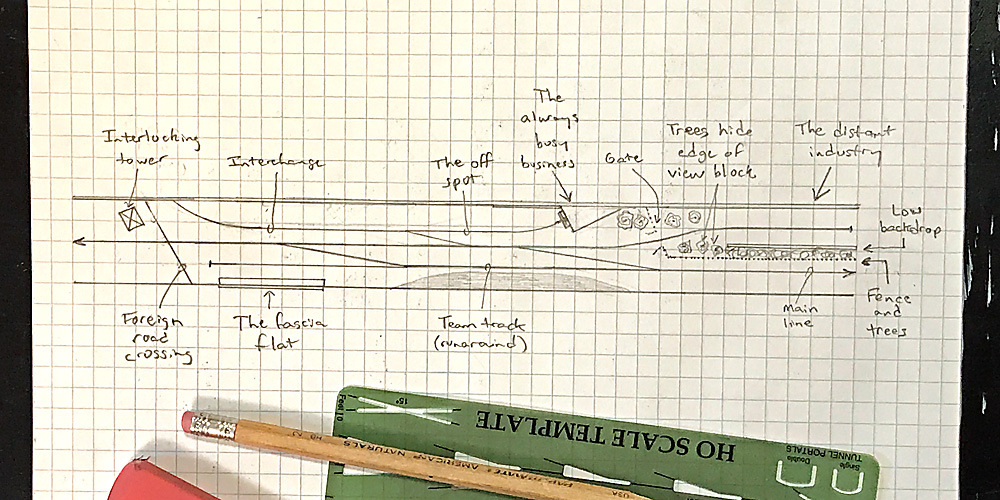
A sketch of a track plan for a one-foot-wide shelf shows several examples of compact industries.

Model railroaders who want to maximize their mainline runs often resort to narrow shelves that hug the walls and zigzag through the middle of the room on long peninsulas. The tradeoff with this kind of design is that the more shelves have to fit into a room, the narrower they have to be. This limits […]

Read More…

How to build a paper structure

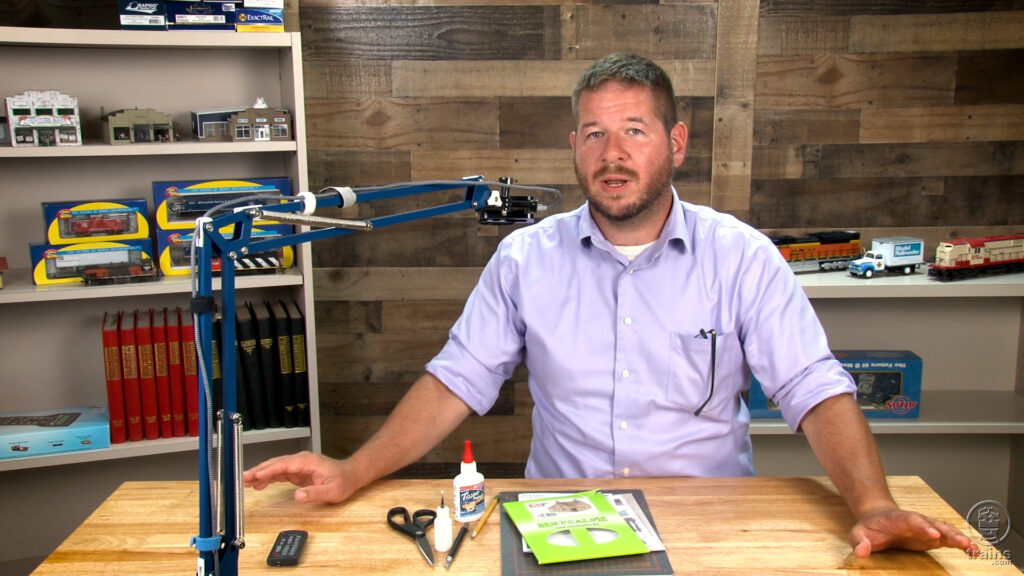
While David and Co. continue construction on the N scale project layout, Steve Sweeney shares his techniques for assembling a cardstock house kit. Follow along, as Steve walks and talks you through all of the essential tools, supplies, and processes — start to finish!   […]

Read More…

Every figure can tell a story

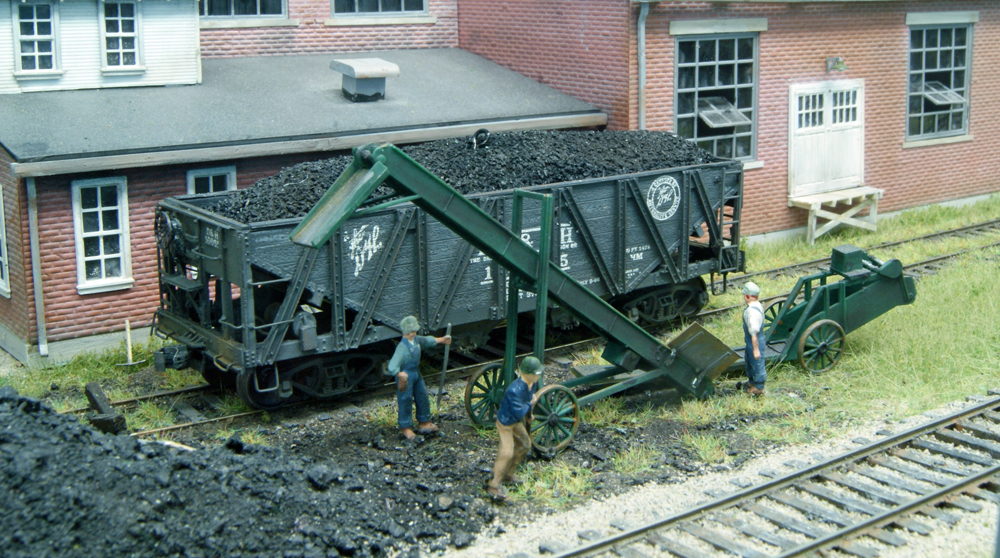
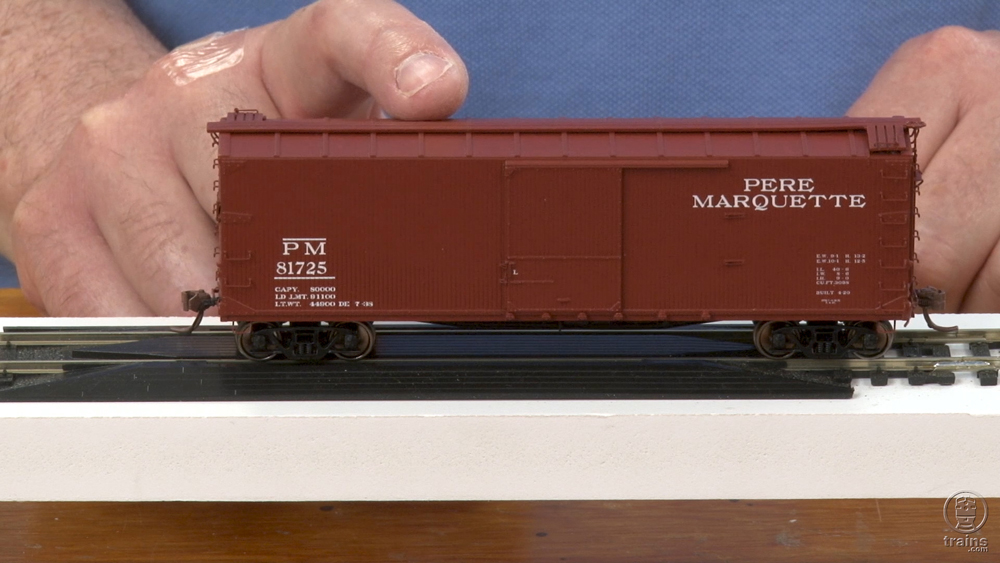
Figures near a model hopper car

When it comes to figures, it seems most modelers fall into one of two camps. Some use only figures in static poses, like sitting or standing. The others enjoy making active scenes, like busy station platforms or marching bands. I don’t remember putting very many figures on my previous layout [featured in Great Model Railroads […]

Read More…

Sketching with Steve: Staging cassettes

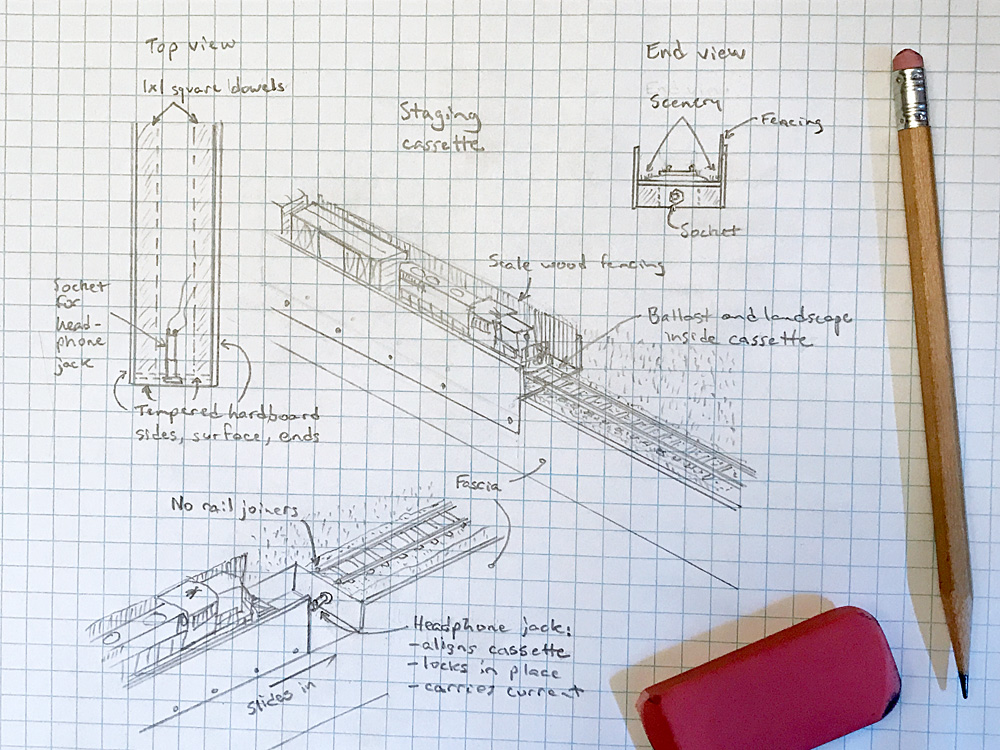
A group of isometric and orthogonal sketches show a design for a staging cassette that can slide into a socket on a model railroad layout

Staging yards are how we represent the rest of the world beyond the unavoidably finite portion modeled on our layouts. Trains that come and go from staging can be arriving from the next town down the line, the next division point, or the other side of the continent. Staging is invaluable to creating the illusion […]

Read More…

Sketching with Steve: What is a station?

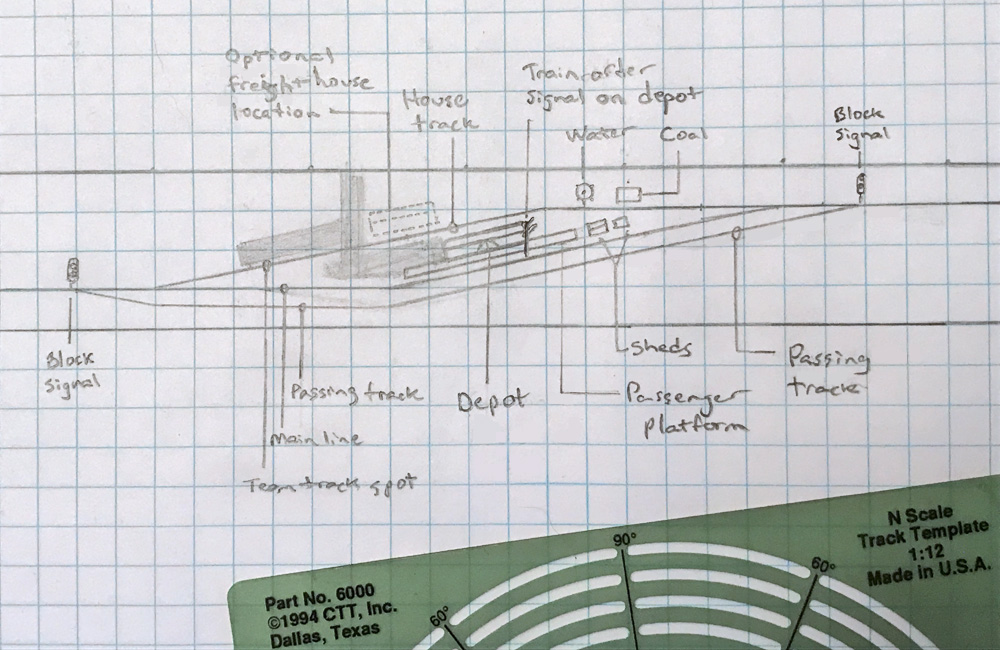
An N scale track plan sketch shows a small station scene on a 1-foot-deep shelf

If you ask a layman to define a train station, they’ll describe a big building where people buy tickets and wait to board passenger trains. A slightly more knowledgeable person might also mention the presence of freight and baggage facilities and railroad offices. But when we talk about railroad operations – whether of the full-size […]

Read More…

Secrets of staging

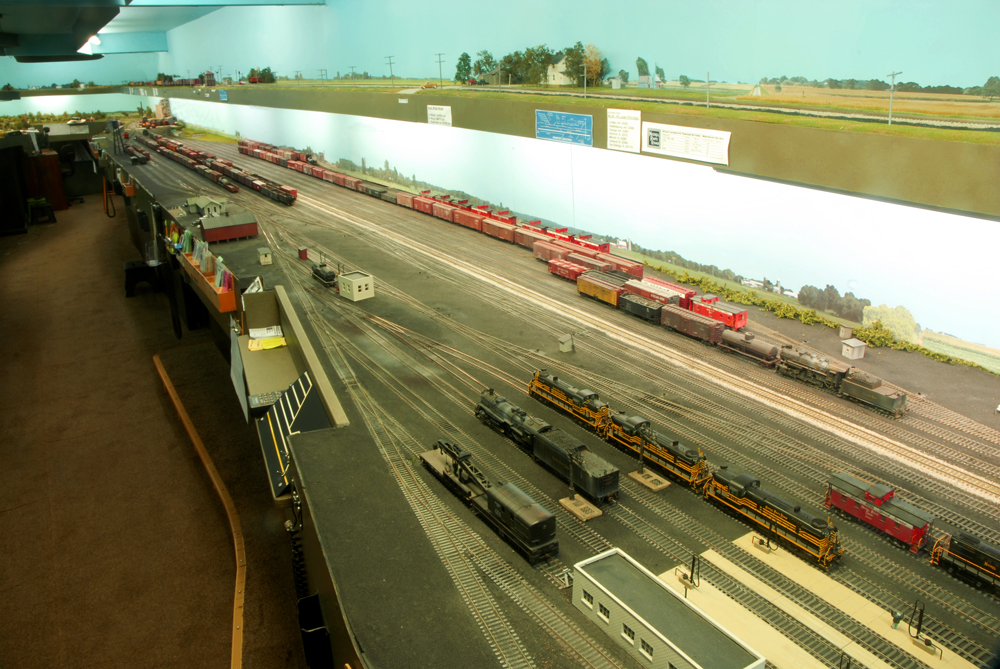
View of Frankfort, Ind., yard on Tony Koester’s HO scale Nickel Plate Road layout.

Why do you stage a model train layout? Let’s be clear about the need for staging. Unless you’re modeling a very small railroad or perhaps a branch line, you’re faced with the need to simulate the connections that the part of the railroad you’ve opted to model makes with the rest of that same railroad […]

Read More…

Expanding a 4×8

Sketching with Steve The good old 4 x 8 train table is a tradition – if not a cliché – for a reason: plywood comes in 4 x 8-foot sheets. When our dads or grandpas bought us our first train sets for Christmas, they often nailed that simple oval or figure-8 onto a table made […]

Read More…