
What about removing flanges from diesel wheels?
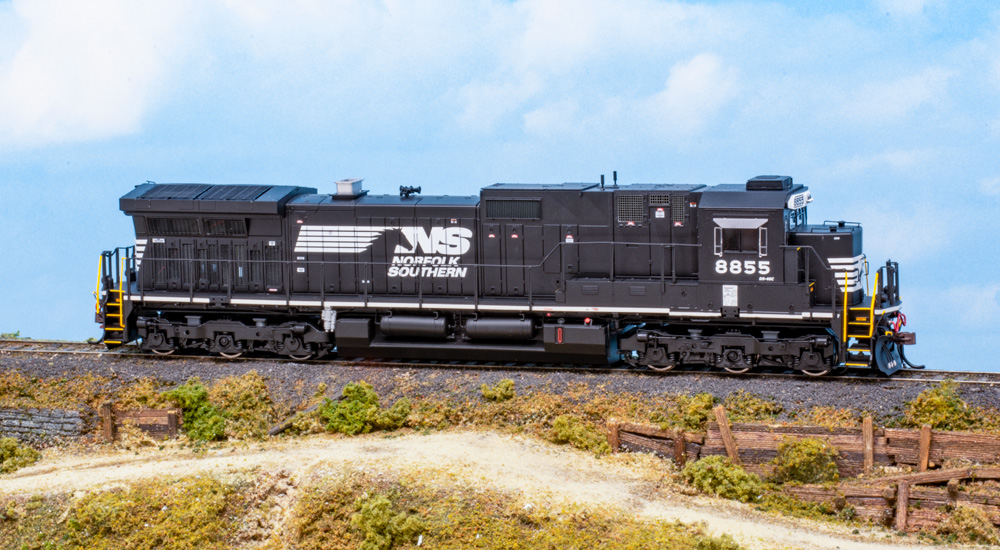
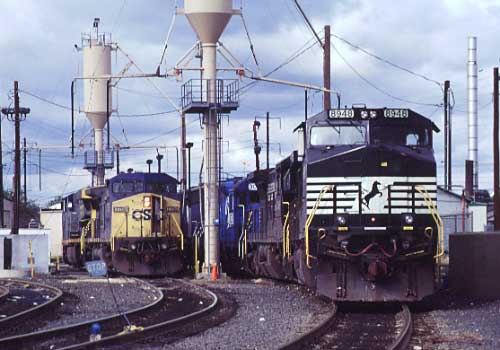
A black HO scale Norfolk Southern diesel model is seen on a scenicked base

Q: Interesting article on removing the flanges from steam locomotive drivers. So, what about those long diesel engines like the General Electric C44-9W or EMD’s FP45s or SD40? Could removing flanges from diesel wheels help my HO scale Athearn Blue Box diesels go around 19” radius curves? If so, the question becomes what’s the easiest way […]

Read More…

Booster engine under tender gave steam locomotive extra oomph

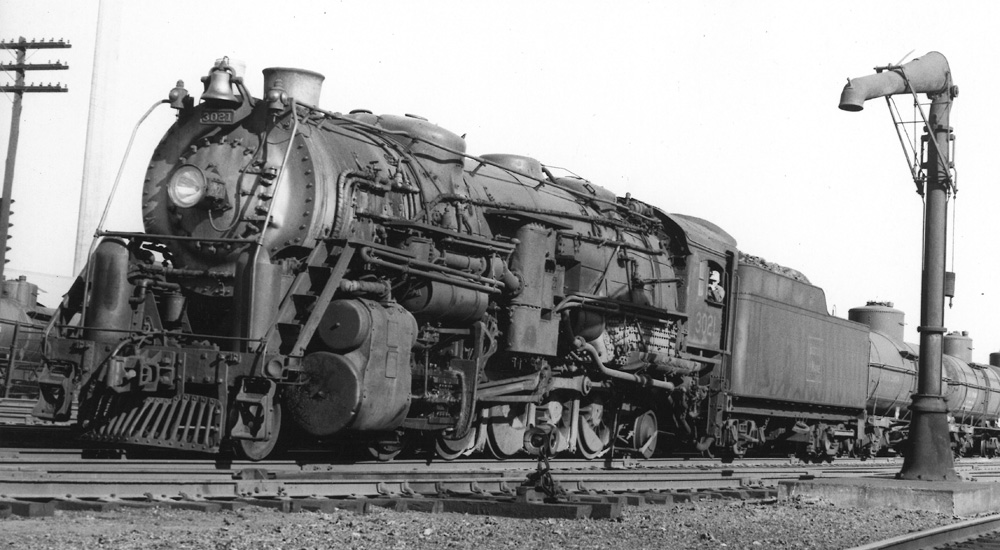
A black-and-white photo of a Boston & Maine 2-10-2 steam locomotive with a booster engine on its rear tender truck

Q: I watch videos of model railroads on YouTube. On a video of a Boston & Maine layout, I saw a strange steamer. A 2-10-2 had a long tender, and on the rear truck of the tender, the wheels were ganged together with a connecting rod and the wheels had counterweights. Why? – Robert Beadle A: […]

Read More…

Five finds at model railroad swap meets

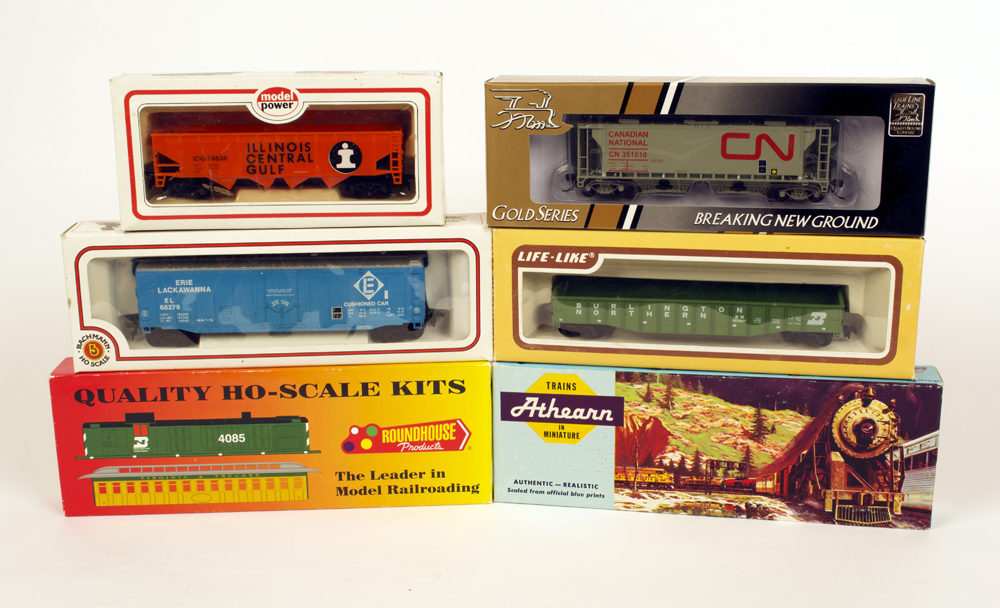
Photo of six HO scale freight cars on white background

Five finds at model railroad swap meets. I always look forward to the fall and winter months. No, not because I enjoy raking leaves and shoveling snow. In this part of the country, October through March is peak model railroad swap meet season. These events are held at venues large and small, including county fairground […]

Read More…

A 4×8 HO scale paper mill layout

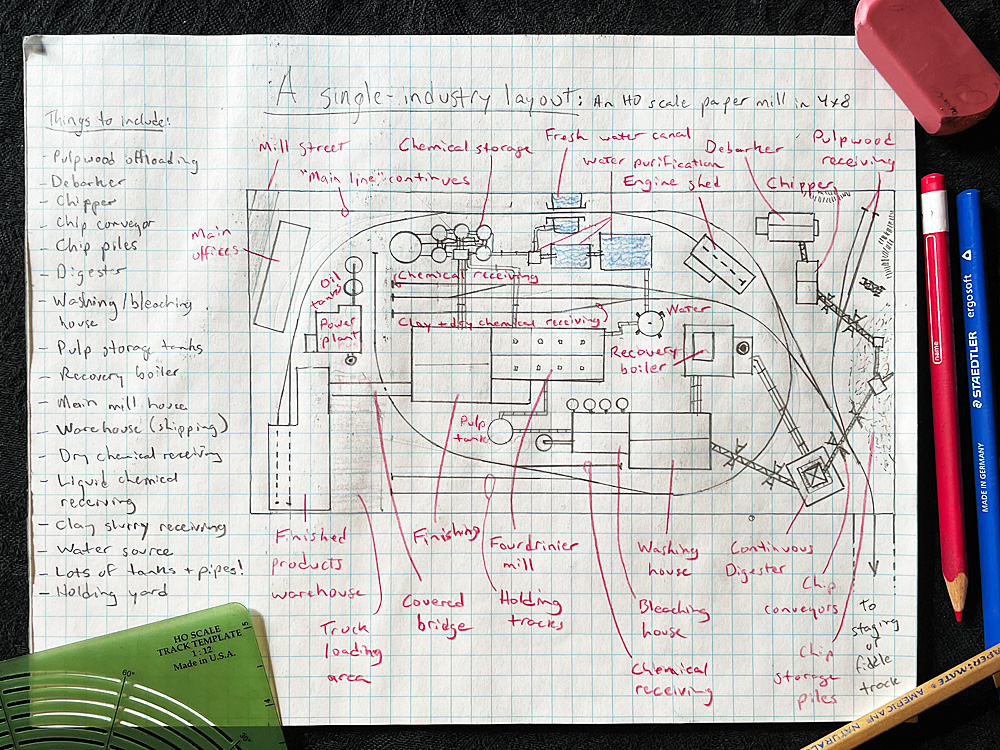
A pencil sketch of a 4x8 HO scale paper mill layout on graph paper

Modelers often compress industries to fit more of them on our model railroads. But doing the opposite – expanding a modeled industry to prototypical proportions – can create an intensely realistic operating experience that can’t be matched. Let’s explore that idea with a 4×8 HO scale paper mill layout. Some industries are just too large and […]

Read More…

Should I use terminal joiners on Kato Unitrack?

Q: I’m building a new layout using Kato HO scale Unitrack. I have read many different opinions on whether to solder all track joints. What’s the best practice? Some say that using terminal joiners on Kato Unitrack for connection to the DCC bus is OK, while others say they’re unreliable. I use terminal joiners every […]

Read More…

Basic parts of a gauge-1 switch

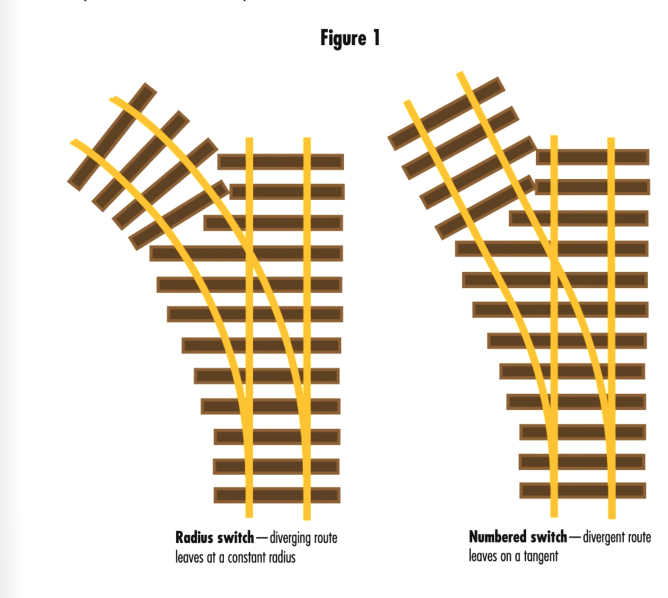
illustrations of two turnouts

Basic parts of a gauge-1 switch: Switches are necessary any time one wants to send a train in an alternate direction. They’re what makes it possible to store one train on a siding and run another around it, or any other basic operation. They’re essential if you want your trains to do more than just […]

Read More…

Class I railroads 101

Class I railroads Class I railroads: If you’re in your car watching a long 100-car freight train roll over a grade crossing, chances are good that the train belongs to one of the Class I systems. The Class Is operate 70% of the total track miles in the U.S., employ 73% of the labor force, […]

Read More…

Common questions about live steam locomotives

beginning_live_steam

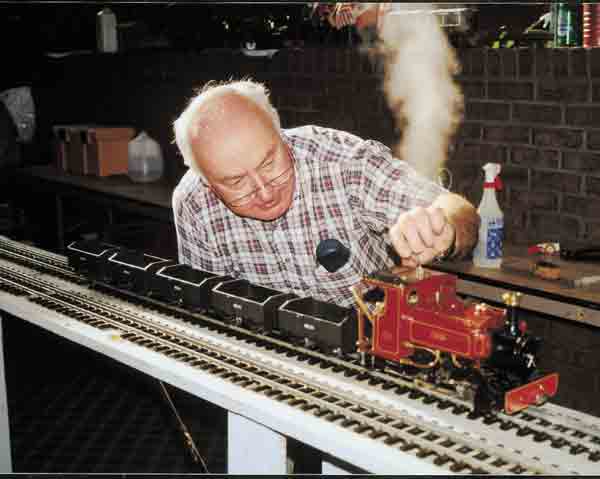
Common questions about live steam locomotives: At model-train shows and garden-railway open houses, live-steam locomotives always seem to gather a crowd of interested onlookers. Our small steam locomotives are new to many people and questions naturally arise. I thought it would be worthwhile to answer some of the most common questions for those of you […]

Read More…

Earthwork on the project railroad

retaining wall illustration

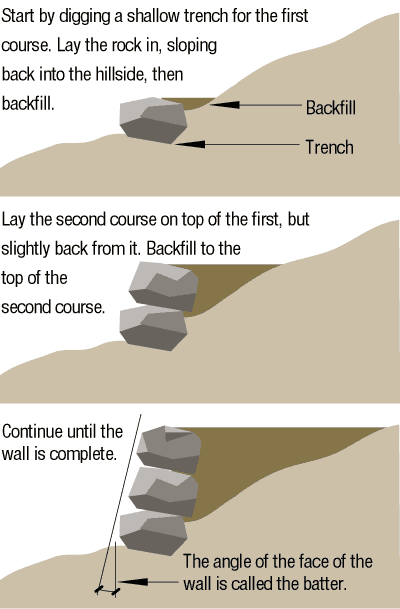
Earthwork on the project railroad: We are ready to begin grading the line. The first thing we had to do was to transfer our design to the ground. This would give us a feeling for how the railroad would actually sit in its site and it would also delineate where the earthwork had to be […]

Read More…

An overview of garden railroading

a model steam locomotive approaches a switch

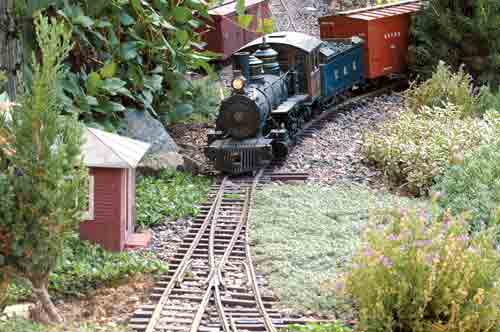
An overview of garden railroading: Garden railroading is the art of combining a model railroad and a beautiful garden to create a railway-like atmosphere. The difference between a traditional indoor layout and a garden railway is the difference between realism and reality. Indoors, the goal is to create the illusion of reality through the use […]

Read More…

Have questions about getting started in garden railroading? Start here.

Garden Railways

Have questions about getting started in garden railroading? Start here. What are large scale trains? “Large scale” is a term that denotes trains that are larger than 0 scale (1:48) but smaller than the trains that are large enough to ride on. Large-scale trains generally run on gauge 0, gauge 1, or gauge 3 track. […]

Read More…