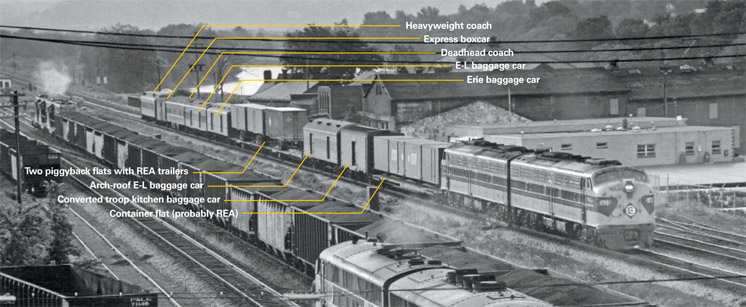
Head-end traffic helped cover some of the costs of America’s passenger trains for many years. Contracts with the United States Postal Service covered the transportation of mail, while the Railway Express Agency (REA) provided a nation- wide package delivery service. Small-to-medium-sized railroads forwarded most of the mail in Railway Post Office (RPO) cars and packages […]
Read More…
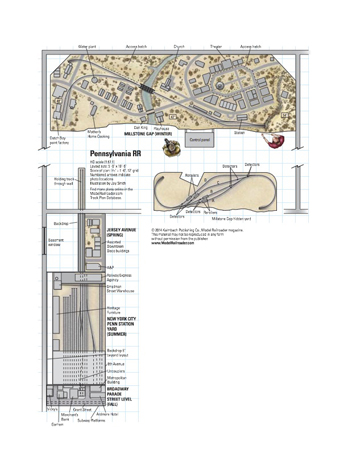
Name: Pennsylvania RR Layout designer: Brent Monahan Scale: HO (1:87.1) Size: layout 51⁄2 x 191⁄2 feet, dioramas 41⁄2 x 17 feet Locale: north of Princeton, N.J., to New York Era: 1959 Style: island (layout) and dioramas Mainline run: 10 feet (visible track) on layout Minimum radius: 30″ Minimum turnout: no. 6 Maximum grade: 2 percent […]
Read More…
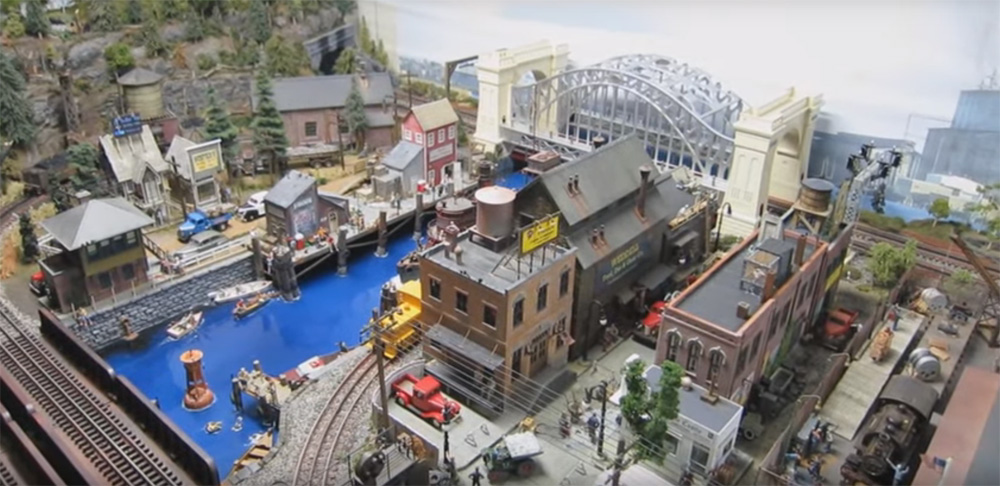
This layout has period trains, planes, and automobiles. Featured in CTT Dec 2009. Waterfront industries, a small shipyard complete with drydock (CTT Feb 2012), seafood plant, Oyster Point Lighthouse, etc. […]
Read More…
This layout has period trains, planes, and automobiles. Featured in CTT Dec 2009. Waterfront industries, a small shipyard complete with drydock (CTT Feb 2012), seafood plant, Oyster Point Lighthouse, etc. […]
Read More…
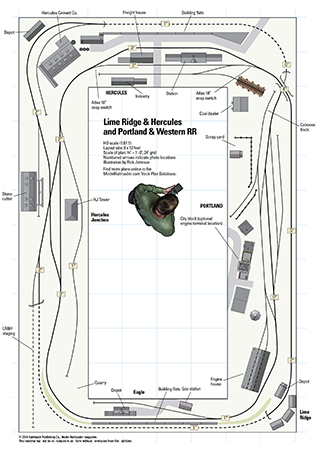
Name: Lime Ridge & Hercules and Portland & Western Layout designer: Steven Otte Scale: HO Size: 8 x 12 feet Theme: Stone and gravel industries Locale: generic Era: late steam to early transition era Style: around-the-walls Mainline run: 63 feet Minimum radius: 15″ Minimum turnout: Atlas 18″ Snap-Switch (rest are no. 4) Maximum grade: 2 […]
Read More…
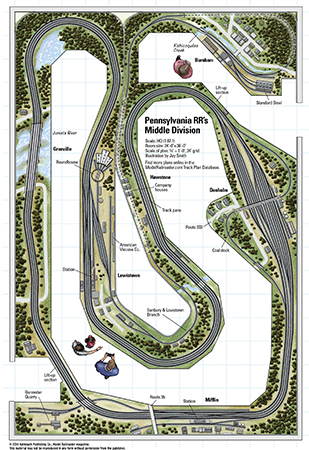
Name: Pennsylvania RR’s Middle Division Layout designer: Will Darrow Scale: HO (1:87.1) Size: 24 x 36 feet Prototype: Pennsylvania RR Locale: Mifflin to Lewistown, Pa. Era: steam-to-diesel transition era Style: walk-in Mainline run: 130 feet Minimum radius: 36″ Minimum turnout: no. 6 Maximum grade: 2 percent Originally appeared in the April 2014 Model Railroader. Click […]
Read More…
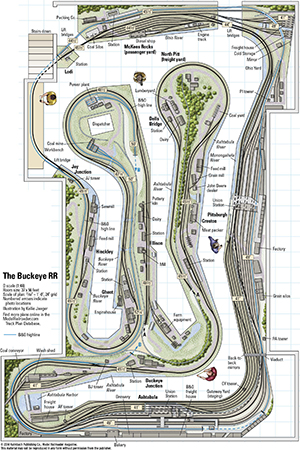
Name: The Buckeye RR Layout designer: Herm Botzow Scale: O (1:48) Size: 37 x 56 feet Locale: northeast Ohio and western Pennsylvania Era: June 1956 Style: walk in Mainline run: 368 feet Minimum radius: 54″ Minimum turnout: no. 5 Maximum grade: 1.5 percent Originally appeared in the April 2014 Model Railroader. Click on the link […]
Read More…