Walt Downer’s collection of Lionel Factory Layouts
Ever since Walt Downer can remember, he has been fascinated by things that move. That desire to see something move explains the approach Walt has taken to collecting Lionel trains and accessories from the postwar era. Passionate about Lionel history, he set out to build a great collection of models from the 1945-69 period.
Walt points out that his infatuation with Lionel trains is due to having two older and bigger brothers. His determined pursuit of the best Lionel offered during the postwar era can be attributed to another pair of big brothers.
Walt has in mind two widely known and highly respected authorities on Lionel’s postwar trains. Paul Ambrose took Walt under his wing when the latter began attending train shows and showed a serious desire to obtain the top trains. Paul, a longtime contributor to CTT, taught his protégé to chase after the finest models in the best condition.
Walt’s other mentor is Ed Dougherty, who has been a significant presence in the toy train hobby for almost 40 years. Readers of CTT have had the pleasure of seeing Ed’s great collection of Lionel postwar displays in the Summer 1989 and January 1993 issues.
Which Lionel outfits does Walt count among his favorites? Thinking chronologically, he begins with the No. 2146WS from 1948; it featured a No. 726 Berkshire steam locomotive pulling a trio of heavyweight Pullmans. Next comes the No. 2148WS from 1950, a similar train led by a No. 773 Hudson and tender.
Over time, however, Walt’s direction in collecting shifted gradually towards the displays Lionel developed.
The story of Lionel’s superlative displays is a familiar one to most hobbyists. It’s a tale that opened during the company’s early years, gained momentum late in the prewar era right up to World War II, and reached what many enthusiasts believe was its peak in the 1950s and into the early ’60s.
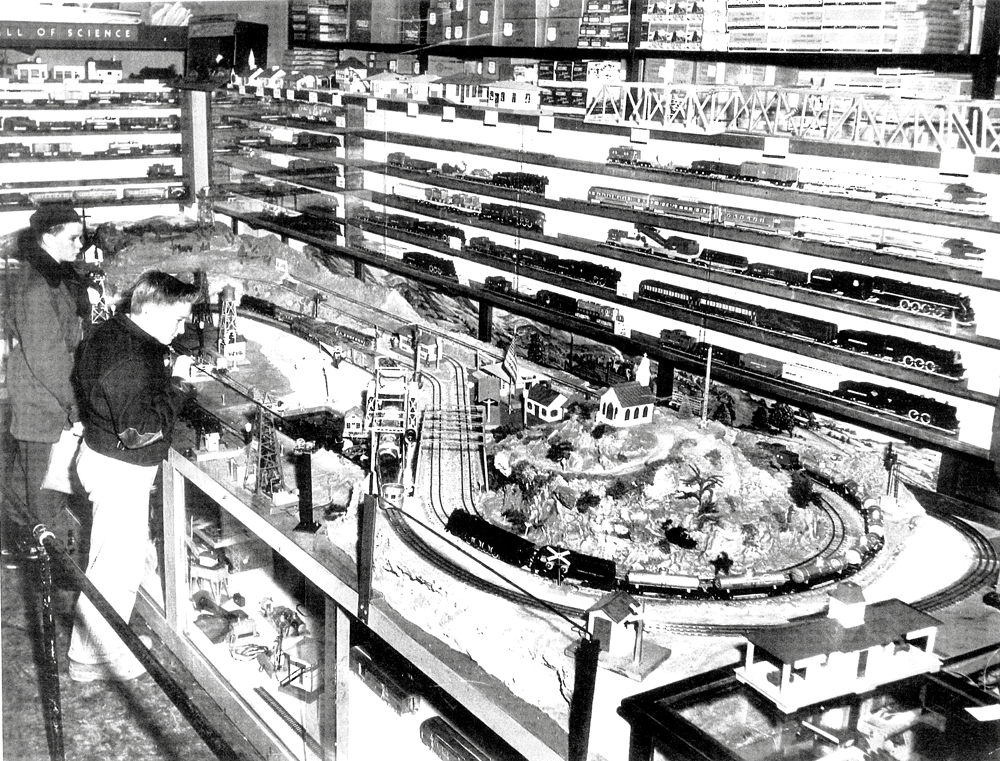
The rationale for creating such a department, with its own supervisors and hard-working crew of laborers, boiled down to the belief that consumers would buy more of Lionel’s trains and accessories if they were able to watch those items operate. Rather than depend on various retailers (department and hardware stores, appliance and toy shops, and others) to build displays, Lionel would supply them.
Lionel’s Display Department
The Display Department thrived under the direction, first, of Joseph Donato, and later his son and namesake. Joe Donato Jr. in partnership with William Bonanno, whose brother served as Lionel’s chief engineer, supervised the design and production of the static and operating displays in the postwar era.
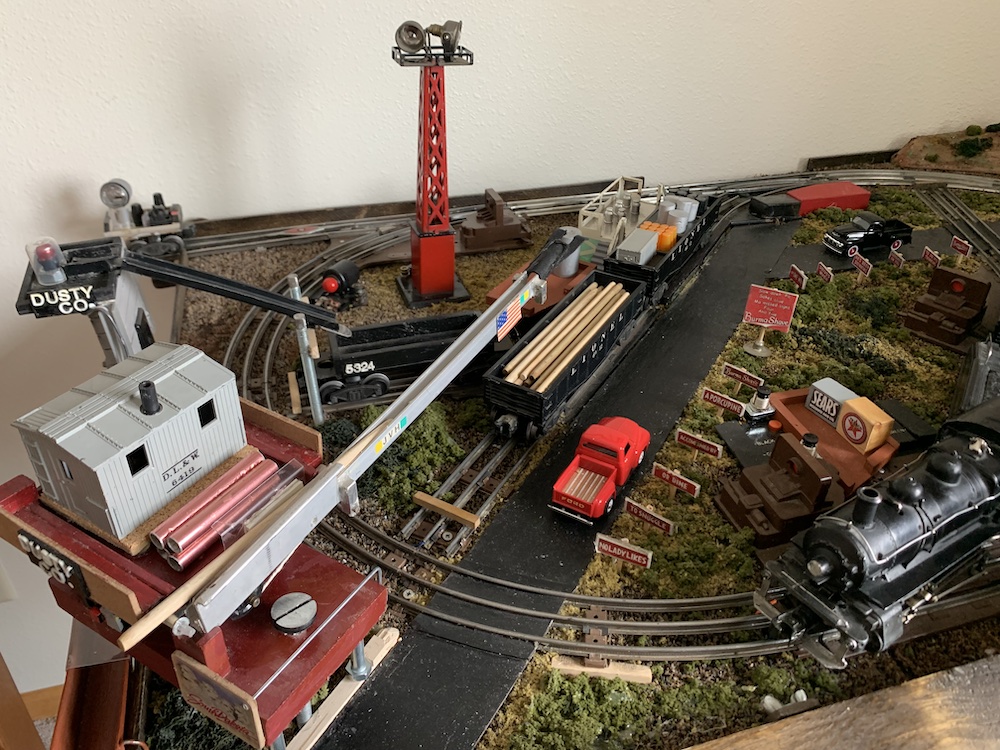
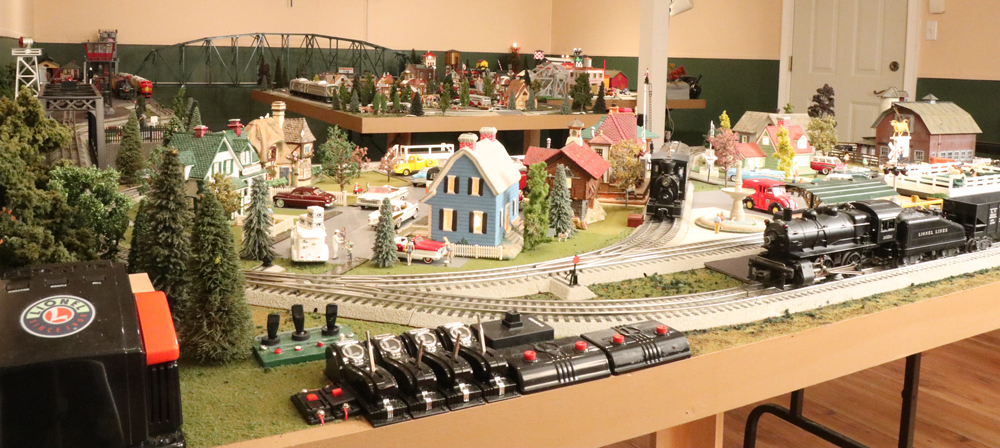
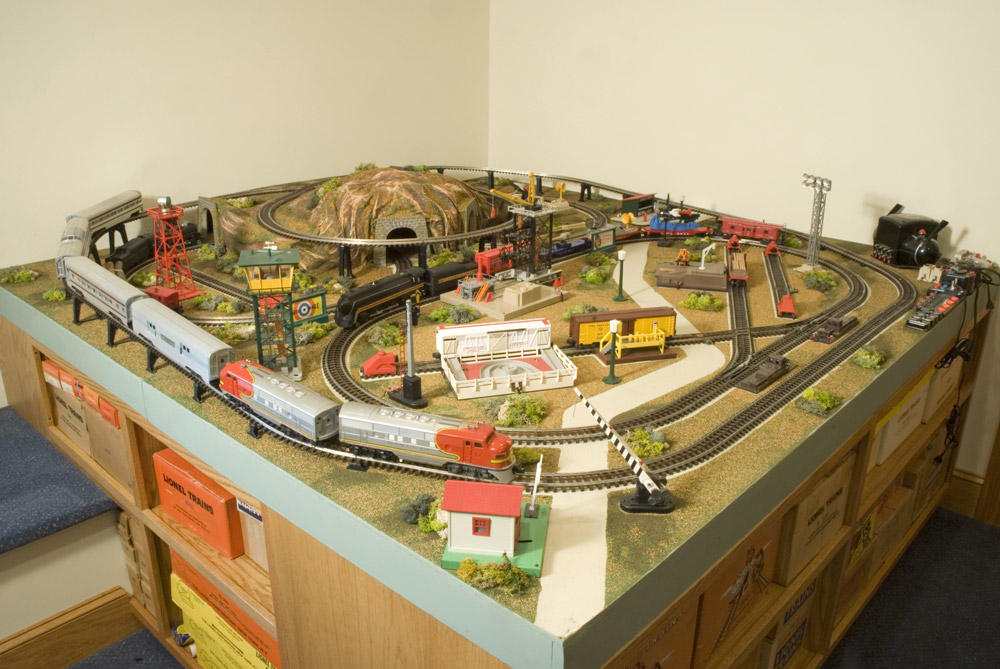
Speaking broadly, the purpose of the Display Department amounted to coming up with exciting layouts filled with track and accessories every year that best showcased the latest additions to the product line. The operating displays ranged in size from 4 x 6 feet to 8 x 8 feet and featured O-27 or O gauge track (Super O and even HO scale sections were used during the years starting in 1957 when Lionel offered those track systems).
Once the layouts created for a particular year were shown and described in either a special display brochure or the yearly advance catalog, wholesale and retail accounts decided whether to order them. As the orders reached the Lionel factory, Donato, Bonanno, and the men employed by them worked feverishly to build and paint the wood platform, lay and wire the track, and place accessories.
According to the recollections of members of the Display Department, hundreds of layouts were constructed each year. Stores set them up and relied on them to improve sales during the holiday season.
Shop owners and managers might put their displays away until the following year. Or they might strip the layouts of accessories and trains to meet the demands of customers. Some retailers even sold entire displays. In time, the layouts lost their luster and were destroyed or packed up and forgotten.
Whatever the reason, few of these layouts survived. When, in the 1970s and beyond, Lionel collectors discovered these original displays, the competition for them gained heat.
Now our magazine is proud to turn your attention to Walt Downer. Just seeing a display layout is a joy; to find several so nicely preserved, with their track, scenery, and accessories intact, lets us return to the postwar decades, when Lionel dominated the toy world and these layouts delighted countless kids.
Want to learn more about Lionel Store Displays? We published an entire special issue about them!
Share this article