During the first three decades of the 20th century, most toy train manufacturers simulated the appearance of prototype railroad cars by decorating them with realistic heralds and complex decoration. The secret to producing these cars economically was a process called lithography, in which images are transferred from smooth stone plates to another surface, such as paper or tinplated steel.
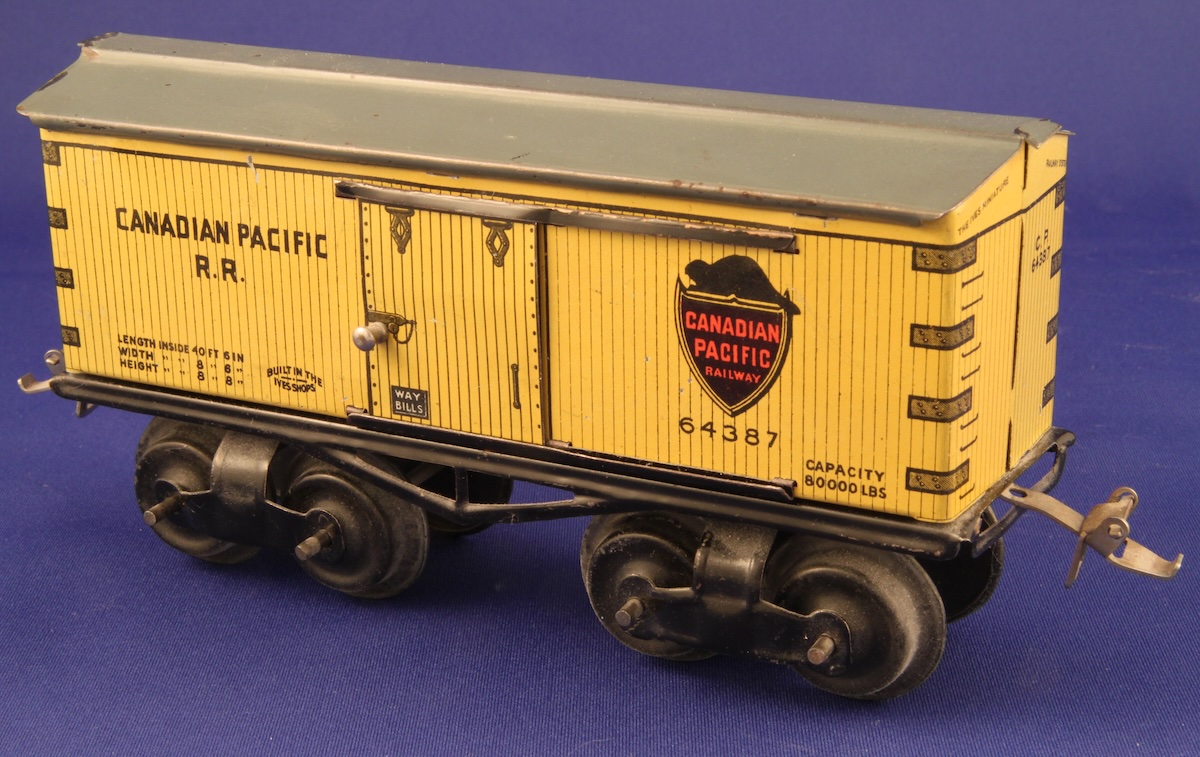
The process was first used for reproduction of artwork and text in books, and perfected in 1798 by Alois Senefelder in Germany. In simple terms, a lithograph printer created an oil-based image on a printing plate, and then moistened the plate with water. Oil and water do not mix, so when the printer rolled ink across the plate, it adhered only to the oily elements of the drawing. When the plate was pressed to the paper, it transferred the ink to the new surface. Different colors required multiple pressings.
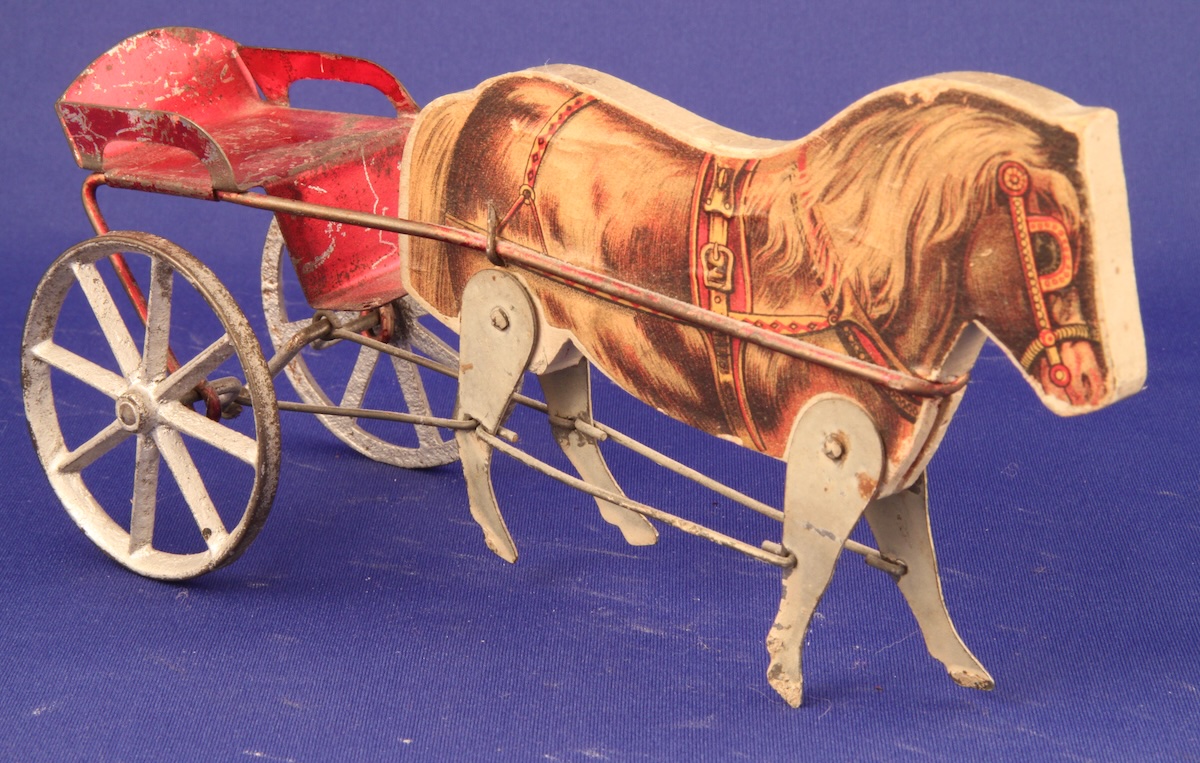
The lithography process was later refined to a two-stage procedure, in which the printer moved a large rubber roller over the printing plate to pick up the ink, then transferred the image from the roller to another medium, including the tinplated steel from which toys are made. This technique, called offset lithography, produced an exceptionally fine image.
Lithography on toy trains
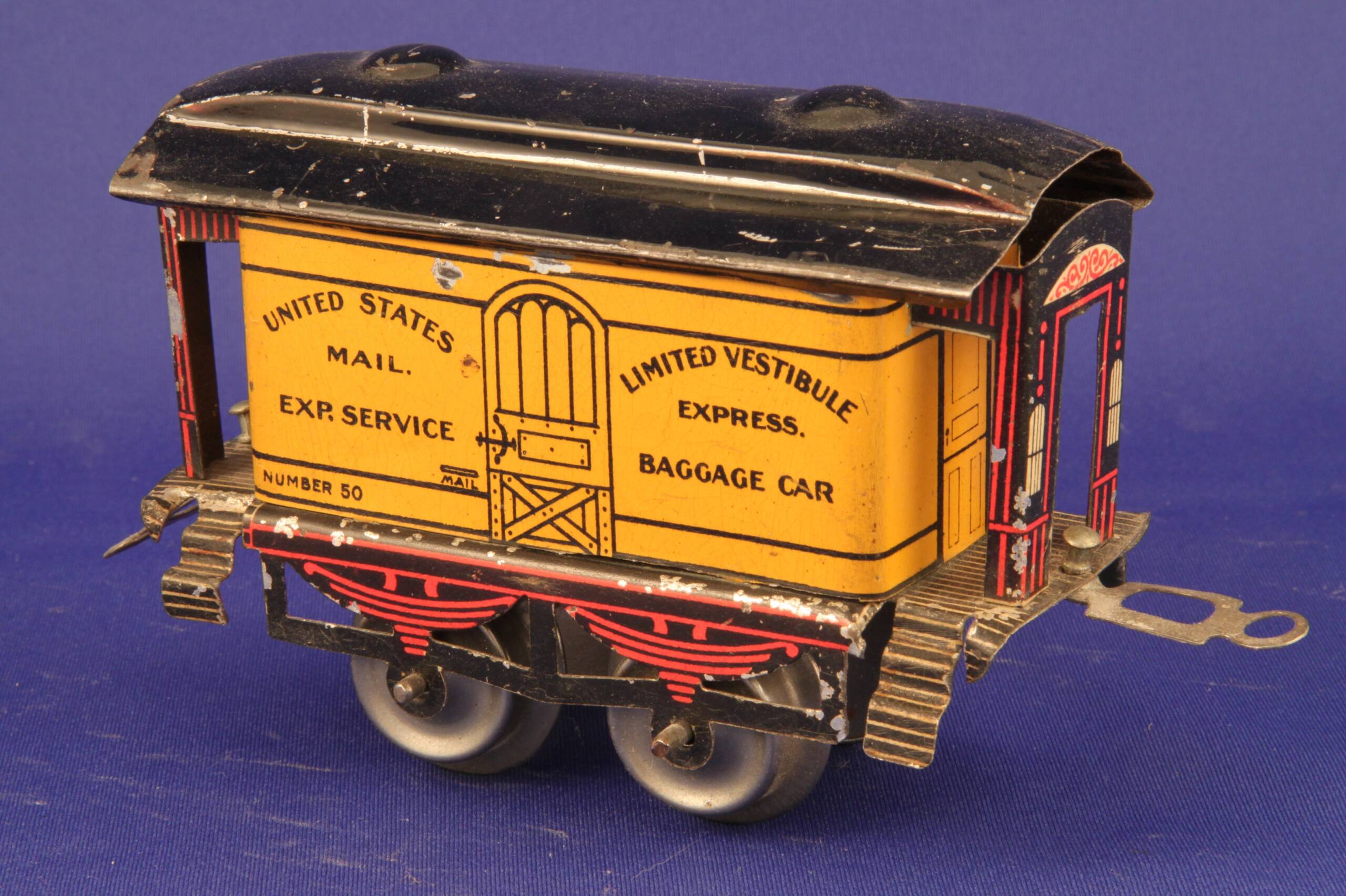
During the latter part of the 19th century, the Ives Corporation of Bridgeport, Conn. was well known for a line of trackless floor toys. After a fire destroyed the factory in 1900, the company changed its emphasis to clockwork trains. These were made to operate on lightweight sectional track, which consisted of tinplated rails mounted on tin ties. (This sectional track eventually developed into the popular 027 size used by Lionel starting in the 1930s.) The first cars were hand painted, but in 1903 the company adopted offset lithography to create intricately decorated and detailed coaches such as the one shown in Photo 3.
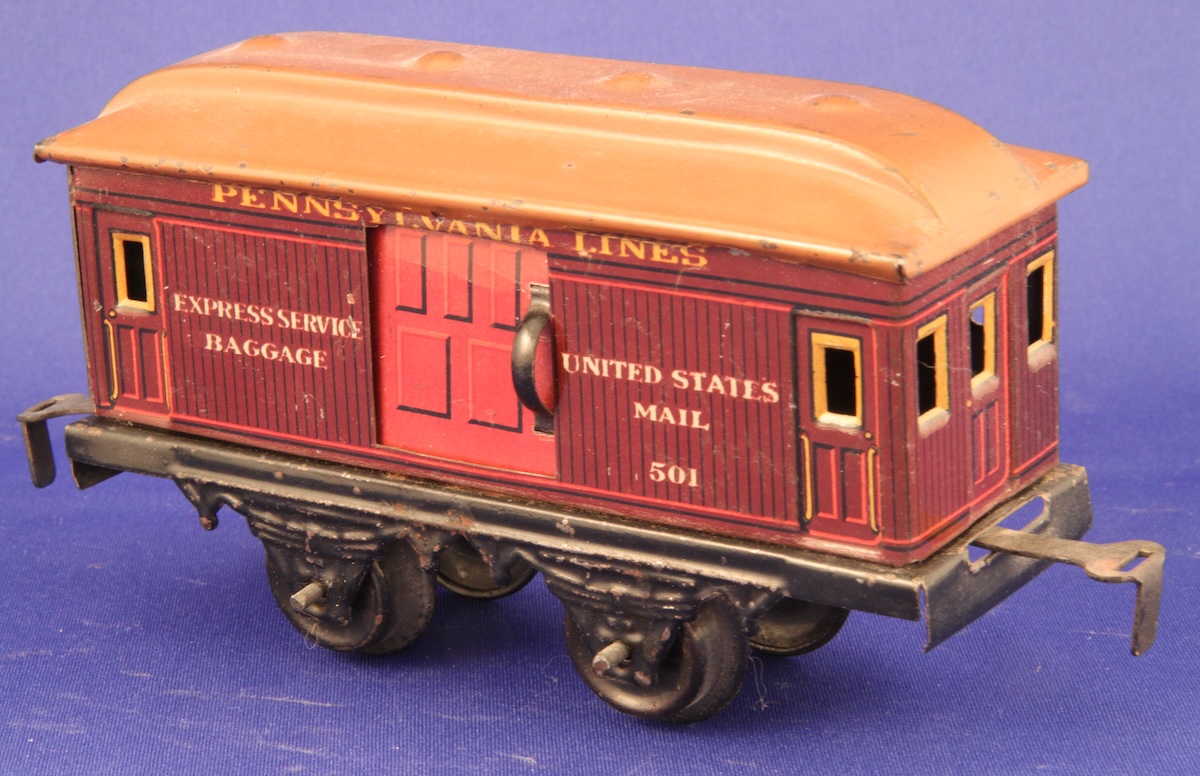
In Germany, toymakers such as Märklin, Karl Bub (KBN), and Bing became experts in this method of decorating their trains. While Märklin and KBN concentrated on European-style toys, Bing created a line of North American-style trains (Photo 4), and opened an office in New York in 1910 to distribute them. In the years leading up to World War I, Bing was a competitor to Ives in the United States market, and its products were of similarly high quality.
The onset of war created a backlash against German products, however, and customers increasingly began to favor American-made toys. Nevertheless, Ives continued to face stiff competition from domestic firms like Lionel and American Flyer. Lionel did not adopt lithography in the early years. While these toys look somewhat plain when compared with the lithographed cars made by Ives and American Flyer, their durable finish and bright colors made them popular.
Flyer and lithography
American Flyer trains developed from a modest offering of clockwork toys produced as a sideline to the hardware business of the Edmonds-Metzel Manufacturing Company, beginning in 1907. The train component of the company was initially operated by William Frederick Hafner and William Ogden Coleman. The name “American Flyer” first appeared in advertisements dated 1908, and also on the toys themselves. The company was renamed the American Flyer Manufacturing Company in 1910.
Hafner left to develop his own line of clockwork trains, named after himself, in 1913, and Coleman remained at the helm of American Flyer. These trains were similar in concept to those produced by Ives and Bing, with cast iron steam outline locomotives powered by clockwork motors pulling lithographed rolling stock.
Early American Flyer cars generally paralleled the sizes made by Ives. The less expensive models had just four wheels mounted in a simple sheet metal frame, while premium versions came with pairs of four-wheel trucks, similar to those made by Ives (Photo 1). But American Flyer exploited the use of lithography to a much greater extent than Ives. The company decorated passenger cars in a variety of color schemes, most of which were printed with “American Flyer” or “American Flyer Lines.” As the company prospered, North American railroad names were added, such as Chicago, Milwaukee and St. Paul, Pennsylvania, and Baltimore & Ohio, among others.
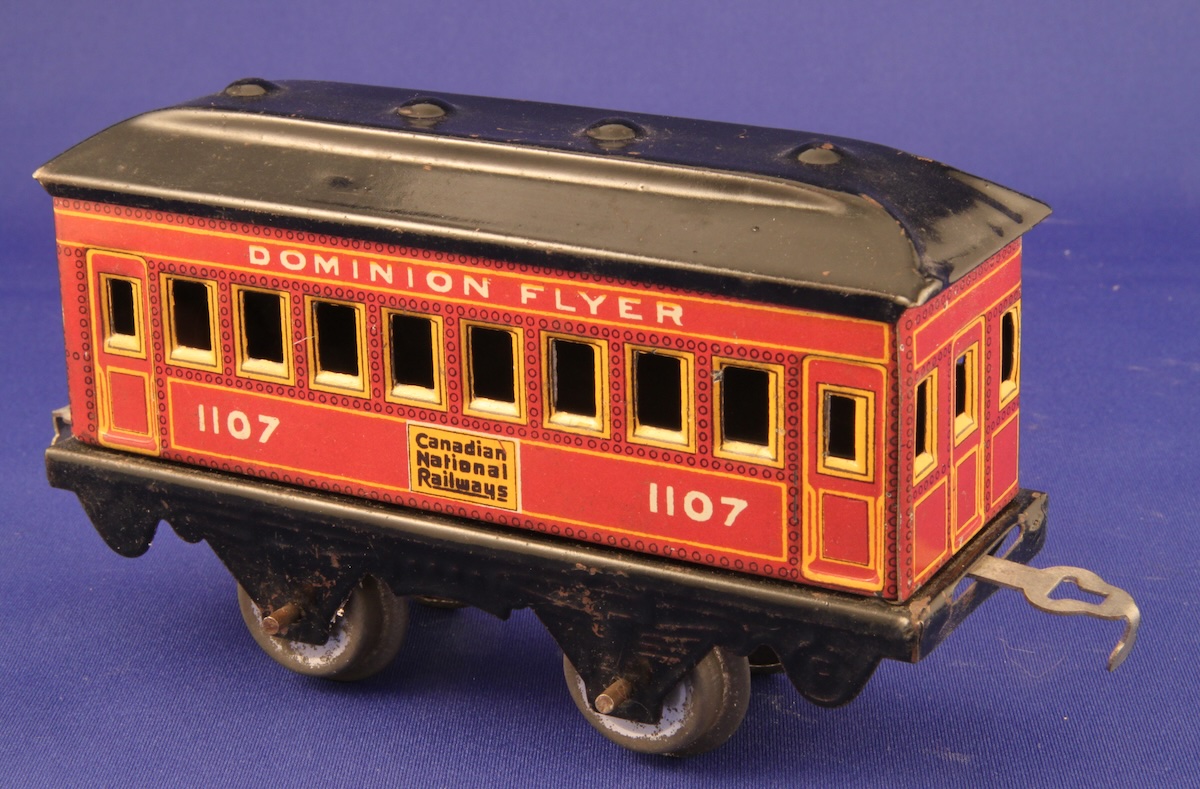
Among the earliest of these roadname cars were the Dominion Flyer coaches and baggage cars decorated for the Canadian National Railways. These cars first appeared in 1916, and were numbered 1105. They were made in limited quantities specifically for the Canadian market, and are relatively scarce today. Despite enjoying fewer sales than cars made to be sold in the United States, the Dominion Flyer cars remained in production at least as late as 1925, bearing number 1107 on the coaches (Photo 5) and 1108 on the baggage cars. In addition to the Canadian National version, some were lithographed for the Canadian Pacific Railroad.
In the 1920s, the Lionel Corporation’s aggressive advertising practices and brightly-colored enameled cars elevated it to a commanding position in the marketplace. In order to compete, both Ives and American Flyer turned to painted bodies for many of their freight and passenger cars. While these toys were less faithful to the prototype than lithographed cars with actual roadnames and heralds, many customers preferred Lionel’s approach. Slumping sales and diminishing profit margins, caused in part by outdated manufacturing techniques, forced the Ives Corporation into bankruptcy in 1928. The firm was subsequently acquired by Lionel and American Flyer, at first acting jointly, and later by Lionel alone.
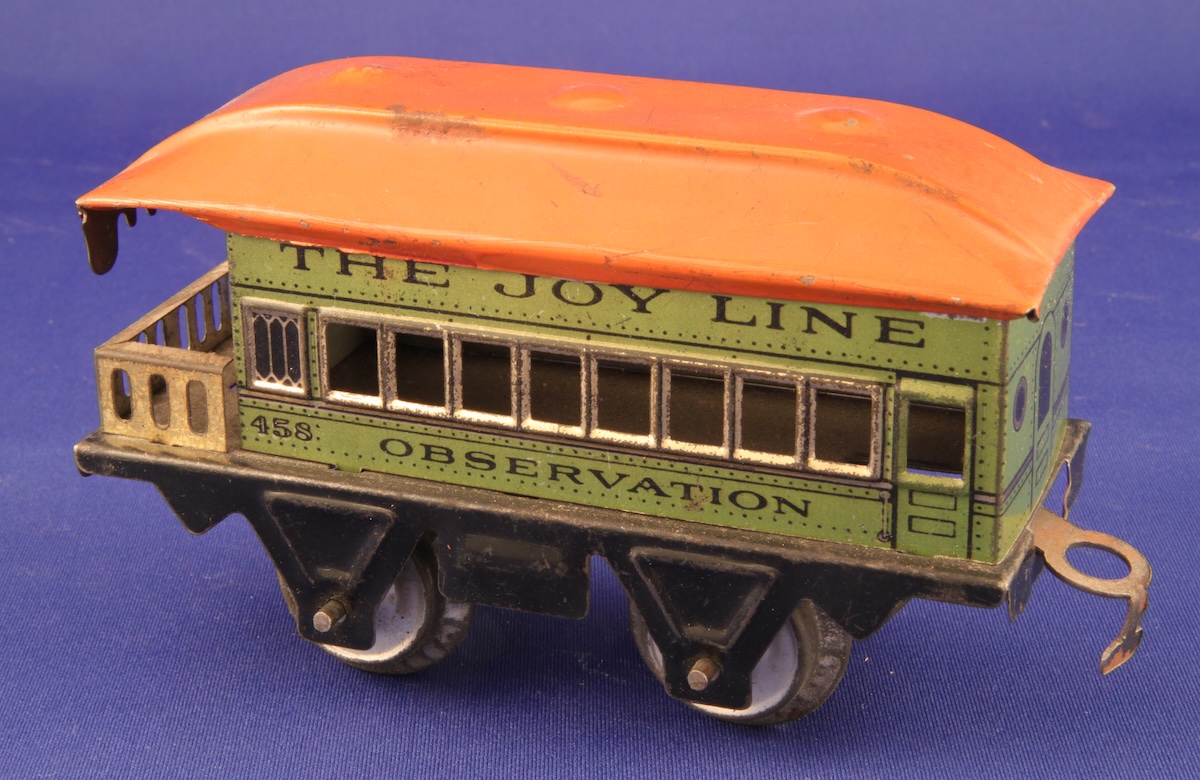
There were other players on the North American scene, such as the Girard Model Works of Girard, Pa. Girard began producing its low-priced Joy Line clockwork trains in 1927. The freight and passenger cars operated on O gauge track and were lithographed in limited colors and with relatively simple lettering (Photo 6). The company foundered in 1934 as a result of the Great Depression, and was absorbed by the Louis Marx & Company, Inc. Marx had been distributing Joy Line trains since 1928.
Introducing Dorfan
Yet another company challenged Lionel and American Flyer in the market for higher-end trains. In the years between the two World Wars, another German company of toymakers established itself in Newark, New Jersey. Milton and Julius Forchheimer of Nürnburg had been involved in manufacturing Fandor trains for Joseph Kraus & Company, and in 1924 they set up a branch manufacturing operation in their adopted country, under the name Dorfan (a reversal of the syllables in the Fandor name).
Dorfan trains were noted for innovative manufacturing techniques, including a relatively new casting process that produced extremely durable locomotives. (Unfortunately, impurities in the metal used in these castings led to premature disintegration of the toys, and while Dorfan endeavored to replace defective castings for its customers, the expense ruined the company when sales dropped off as the Depression deepened.)
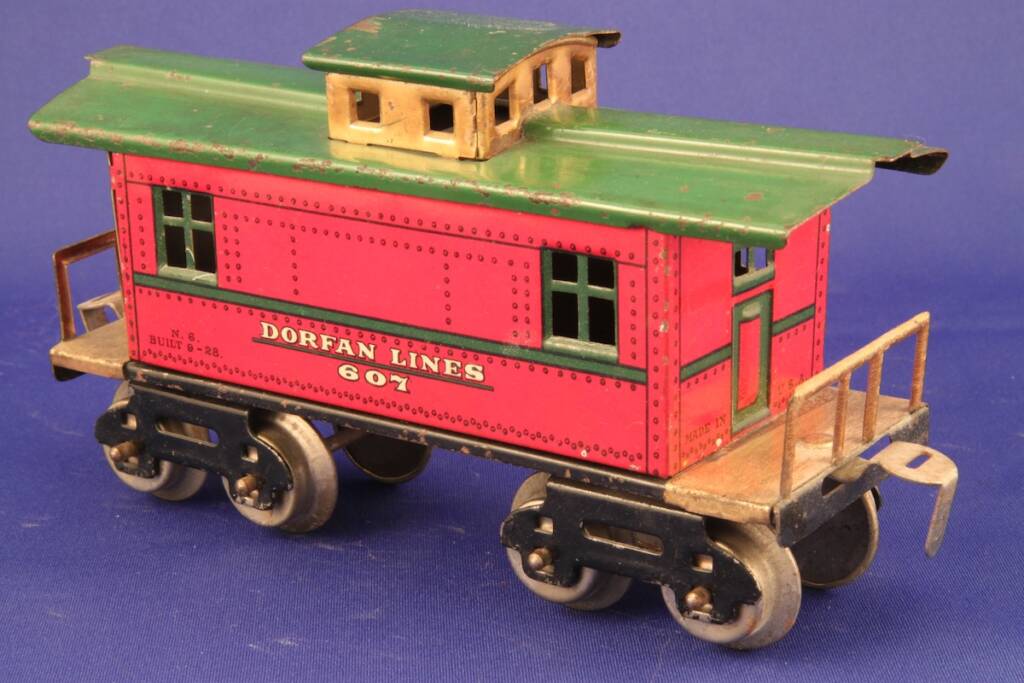
Nevertheless, during its 10 years of operation, Dorfan built a line of attractive trains in both “Narrow” (O) gauge and “Wide” (Standard) gauge, and some of the most attractive cars were created with the lithograph process. The No. 607 caboose in Photo 7 dates from 1928, and features lithographed rivet detail and brass end platforms and cupola.
Post-Depression era products
The onset of the Great Depression began to affect the toy industry substantially as the new decade began. Whereas Lionel and American Flyer built their success with lavish train sets during the prosperous 1920s, the realities of massive job losses meant that most families could no longer afford such luxuries. This led companies to seek ways to produce less expensive products.
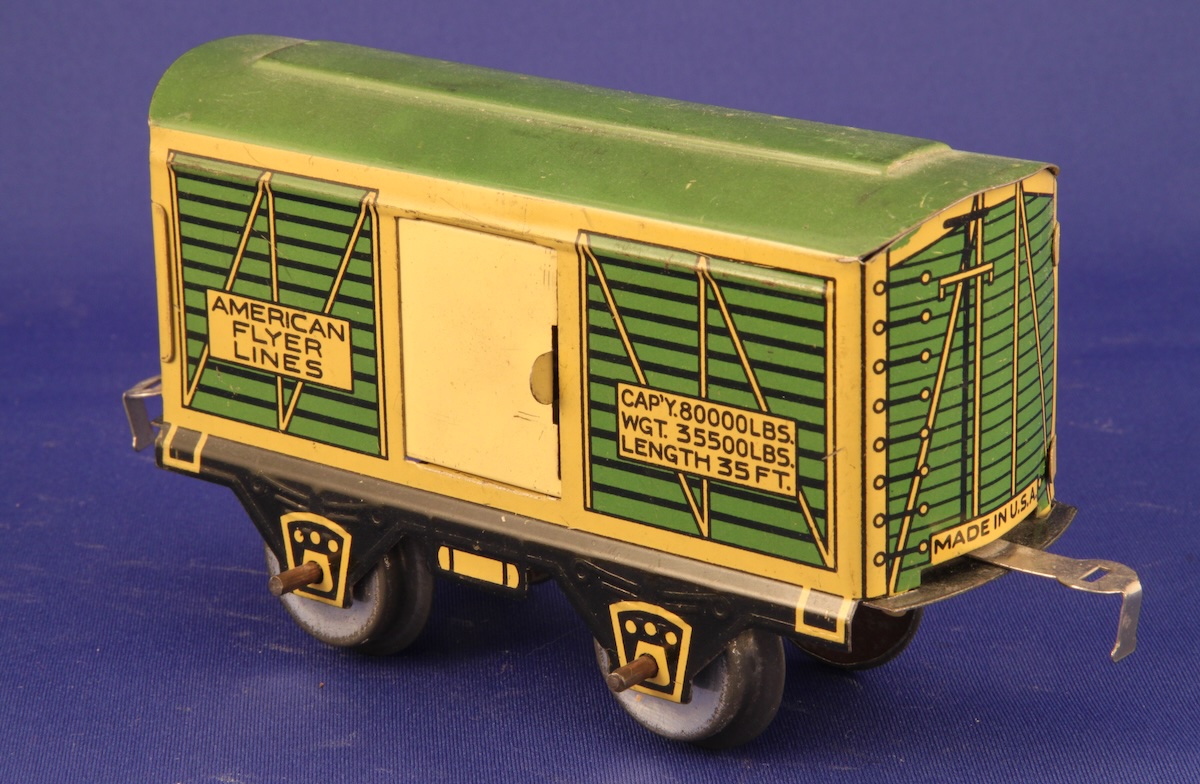
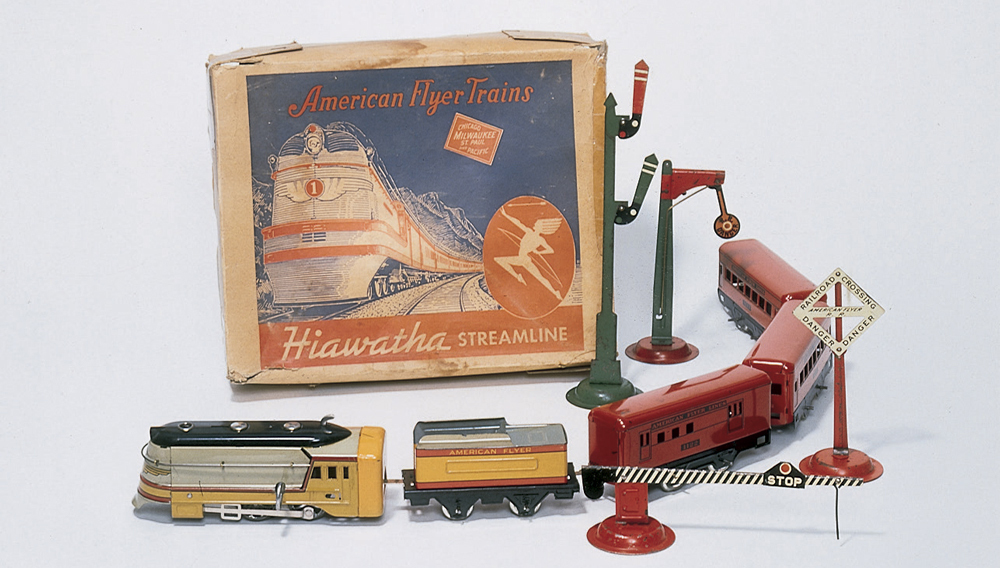
Two brand names that weathered the economic storm did so with shrewd market placement. Both Marx and Hafner concentrated their production on low-cost, lithographed clockwork trains, costing just a few dollars for an entire set. Marx was especially successful with electric-powered train sets at rock-bottom prices. In addition, American Flyer was not new to the low-priced market. The company had been selling inexpensive sets under the Hummer brand name since 1916, featuring basic rolling stock with finely lithographed bodies (Photo 8). In 1932 the company marketed these cars with simplified sheet metal locomotives under the Champion brand name.
To meet the competition from Marx, Hafner, and American Flyer, Lionel created a subsidiary company to produce low-cost train sets in 1930, named the Winner Toy Corporation. To preserve the reputation for quality that the Lionel name enjoyed, Winner trains were not initially identified as being built by Lionel. They represented a departure from the heavy-gauge steel trains that had made the company the most successful maker of toy trains in the 1920s.
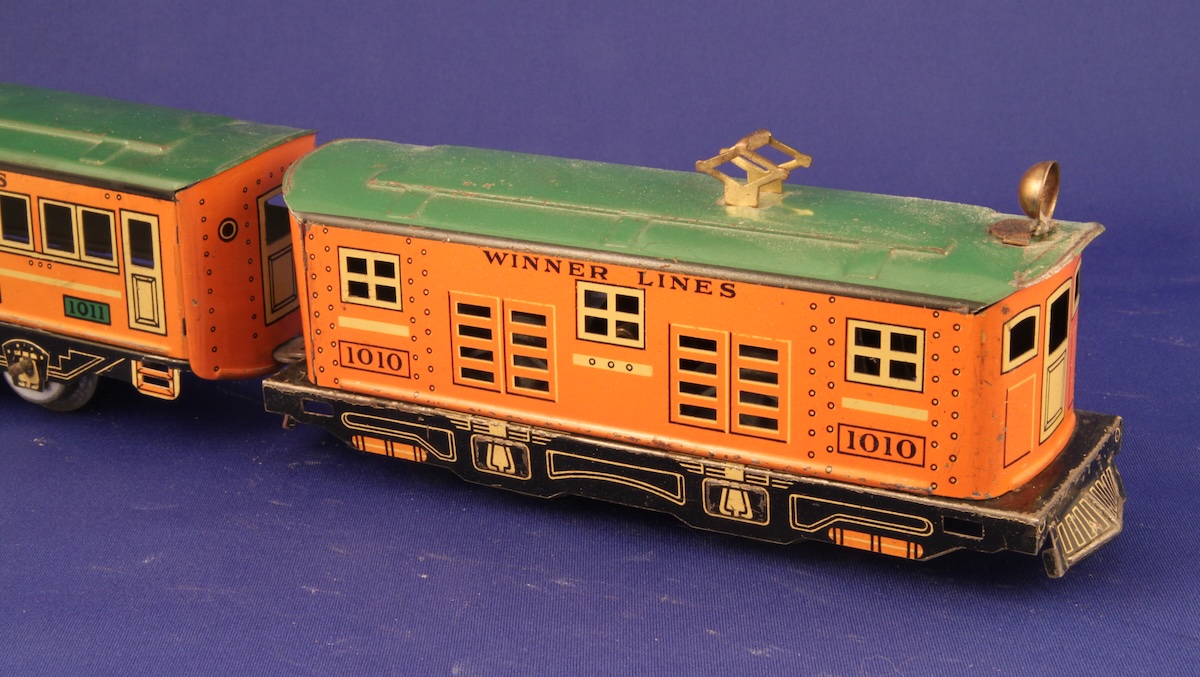
Cost-cutting measures included simple one-piece folded bodies made of light gauge steel with lithographed decoration. Both the cars and electric-outline locomotives were lithographed (Photo 9). Unlike Marx and Hafner, Lionel resisted the temptation to use inexpensive clockwork motors, at least at first. These trains were powered by small but capable electric motors. It wasn’t until the Depression reached its peak that Lionel marketed a limited number of clockwork sets.
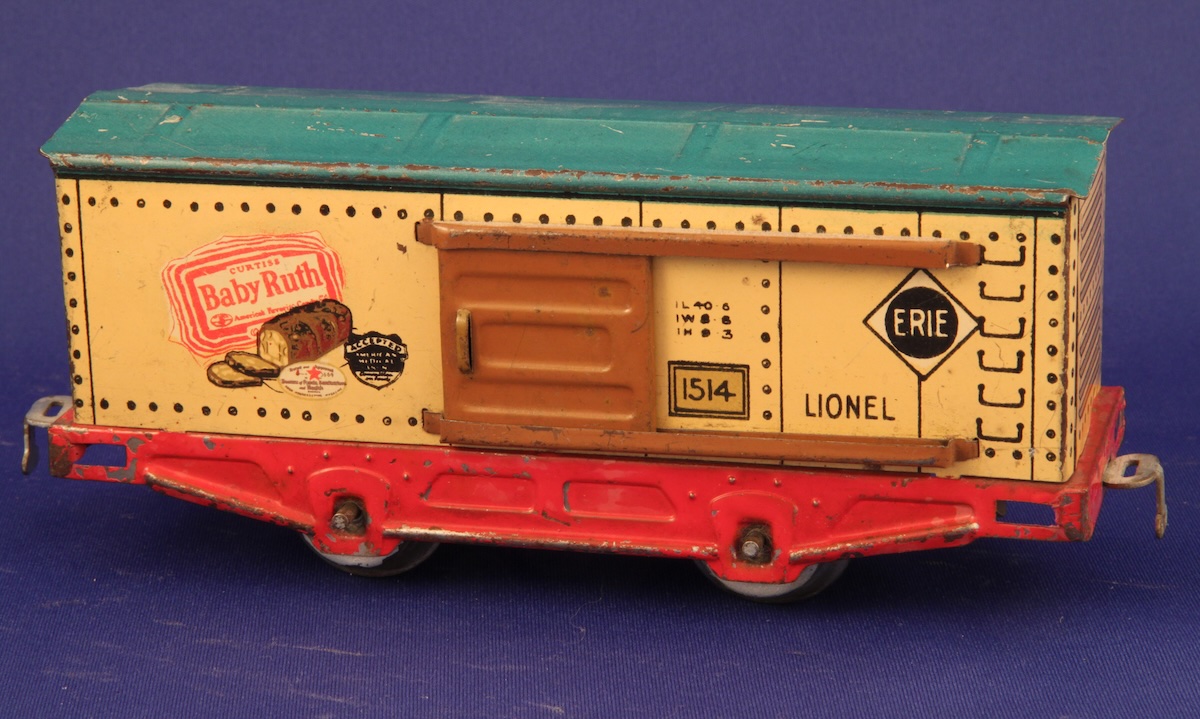
The Winner Lines experiment was short-lived, and after 1932 the company’s low-priced trains were marketed as Ives and Lionel-Ives, and finally in 1934 as Lionel Junior. All of these inexpensive trains used the lightweight 027-type track Lionel had inherited in the aftermath of the Ives bankruptcy. Whereas Winner Lines products did not have the name Lionel included in their decoration, some of the later freight cars did so when included in post-Winner sets (Photo 10).
In 1931 Lionel brought out a series of 7-1/2 inch lithographed freight cars as part of its Ives division, and a year later incorporated them into the regular line, with the Ives name replaced by Lionel. These cars remained in the catalog until production ceased in 1942. They were sometimes sold in sets along with enameled cars, and were pulled by a variety of Lionel Junior (027) locomotives, as well as the new scale-detailed engines that appeared in 1938 as the economy began to improve.
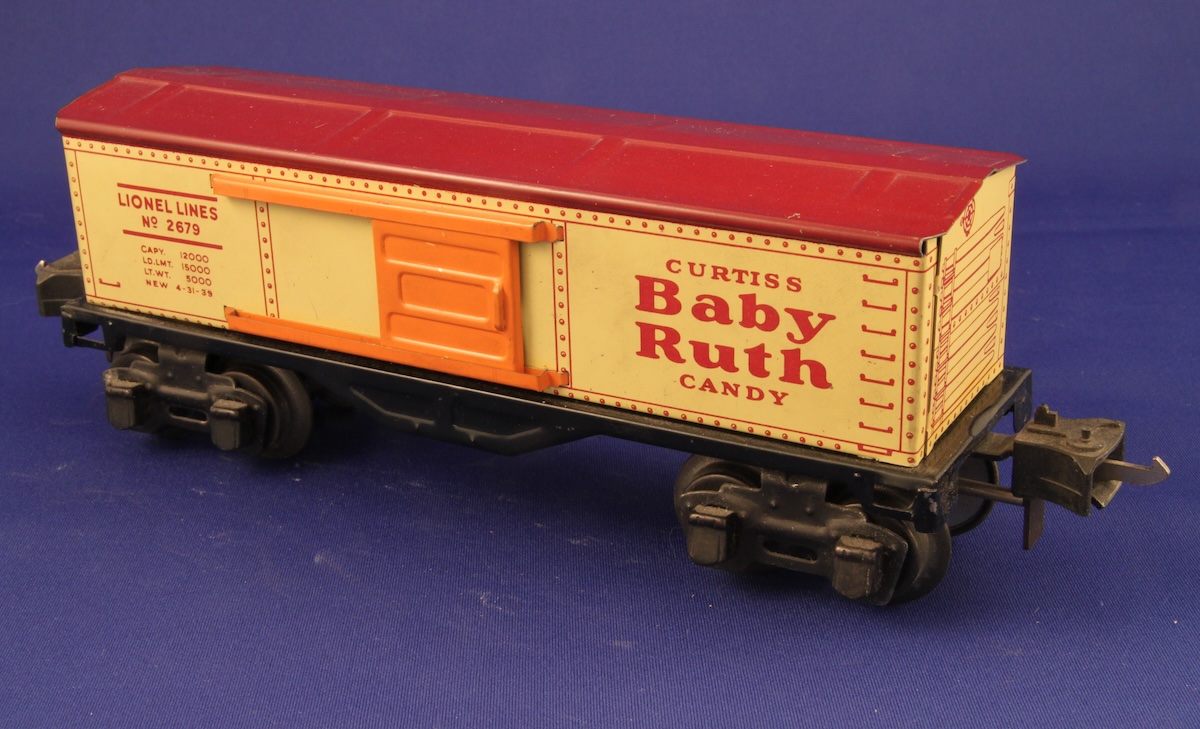
These attractive cars first came with simple latch couplers, but beginning in 1938 some were fitted with the then-new automatic box couplers. On the boxcars, a variation of the Baby Ruth candy bar advertising was borrowed from the smaller cars (Photo 11). Lionel also made a four-car series of larger 9-1/2 inch cars (gondola, boxcar, stock car and caboose), first with Ives identification and later marked Lionel, from 1932 until production stopped when the United States entered WWII.
Cue the mouse
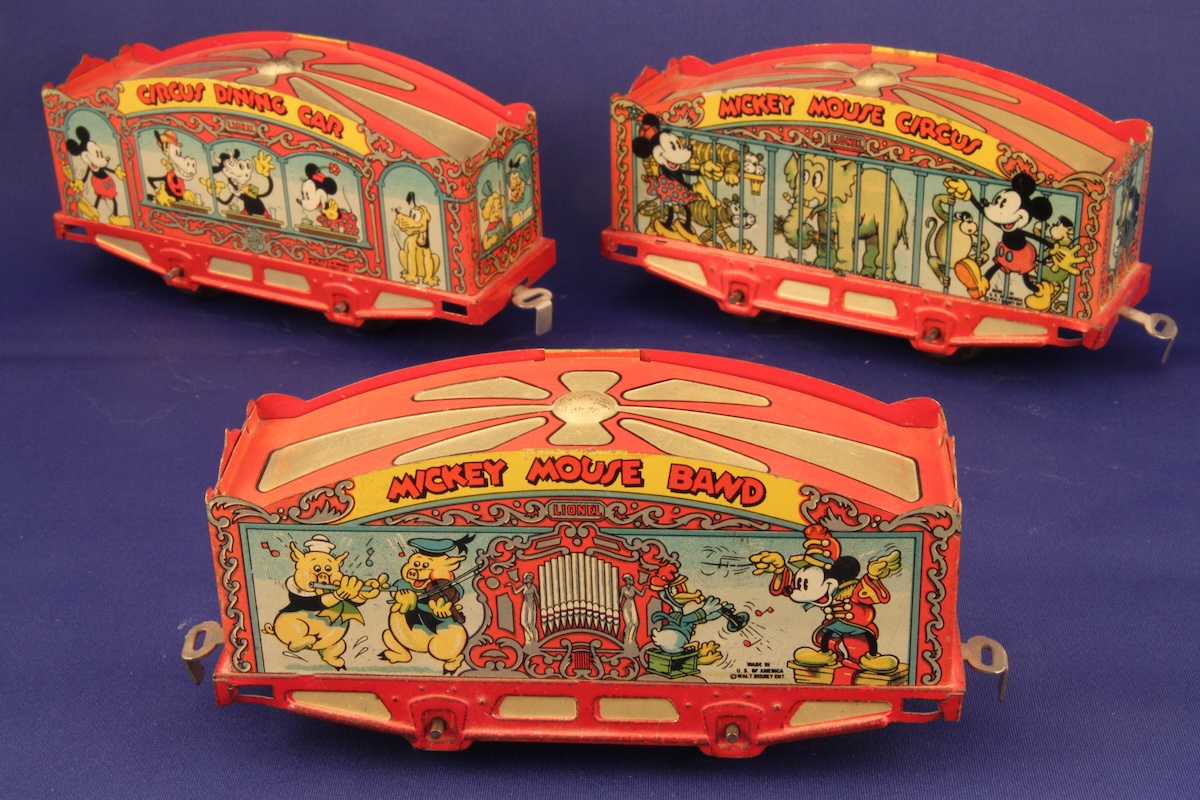
Possibly the most best-known low-priced Depression-era Lionel train set, at least among collectors, was produced for just one year, 1935: the Mickey Mouse Circus Train. This set featured the most elaborately lithographed cars produced up to that time, resulting from a commercial tie-in with Walt Disney. Each car displayed Disney cartoon characters in various poses—in a dining car, next to an animal cage, and with Mickey himself conducting a band made up of Donald Duck and two of the Three Little Pigs (Photo 12).
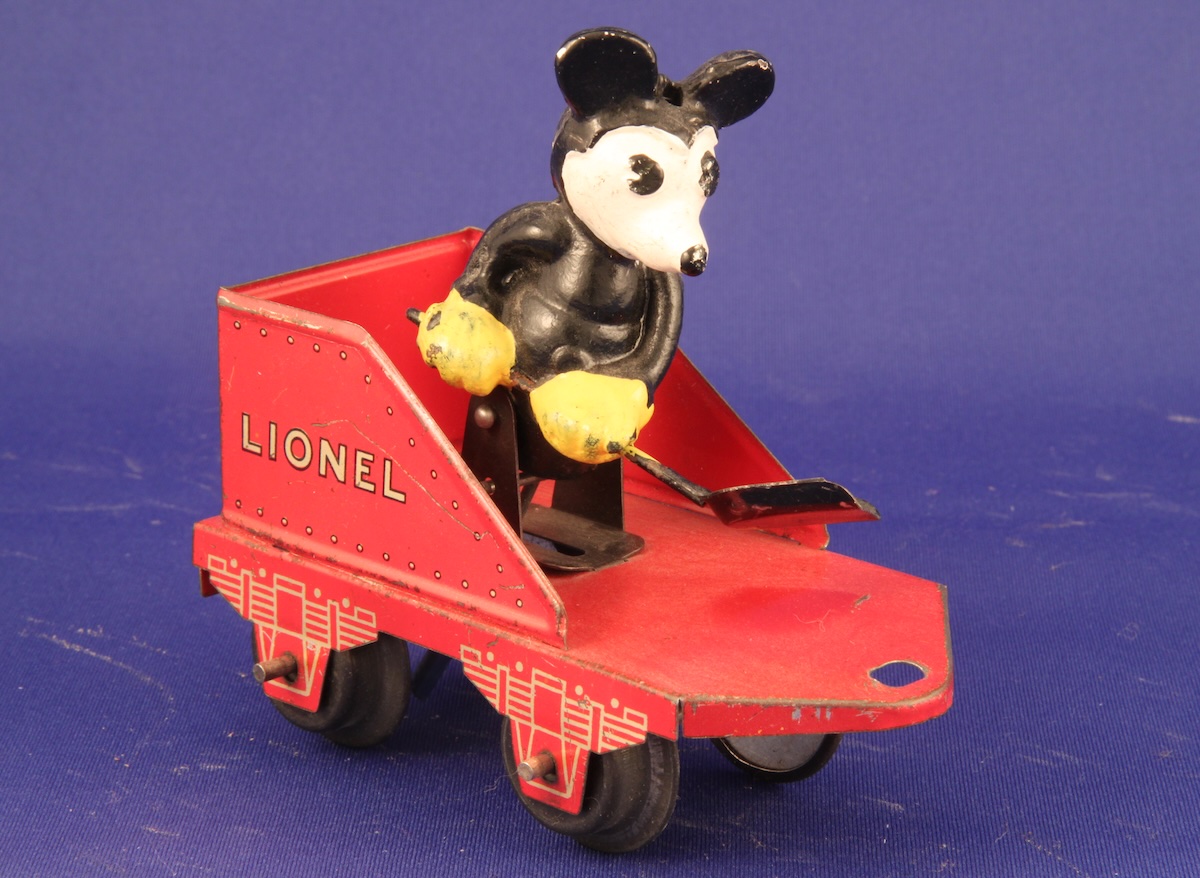
The set contained a miniature clockwork Commodore Vanderbilt locomotive, a tender, three cars, and an oval of track. A composition Mickey Mouse figure holding a shovel rode in the lithographed tender (Photo 13). As the train moved along the track, a lever underneath the tender struck the ties, causing the figure to raise and lower the shovel as if adding coal to the locomotive.
As a testament to the economy of lithography, the Mickey Mouse Circus Train was arguably the most elaborate playset marketed toward low-income families in the 1930s. It included a cardboard circus tent that measured 20 inches long, a gas station, other cardboard accessories (all lithographed in bright colors and extensive detail) and a stand-up figure of Mickey Mouse—all for the low price of just $2.00 (about $48 today).
That was an astounding value in 1935, and given the tie-in with Disney, it is almost certain that the majority of sets were purchased for children in a household. Therefore they were heavily played with, and those that survive today are often scratched and dented. As a result, excellent to like-new examples, such as those shown in the photos, are much sought-after by collectors today.
Toy train manufacturers and enthusiasts of the past—and collectors today—certainly owe a debt of gratitude to Alois Senefelder, the inventor of lithography. Without his economical method of printing, the products of Ives, American Flyer and others would have been much less attractive, much less authentic, and much less significant in the history of our culture.
Resources
A reader asks for tips on restoring his prewar Ives set.
Learn about Lionel’s prewar competitors.
Toy trains in Argentina from 1920-1960
Share this article