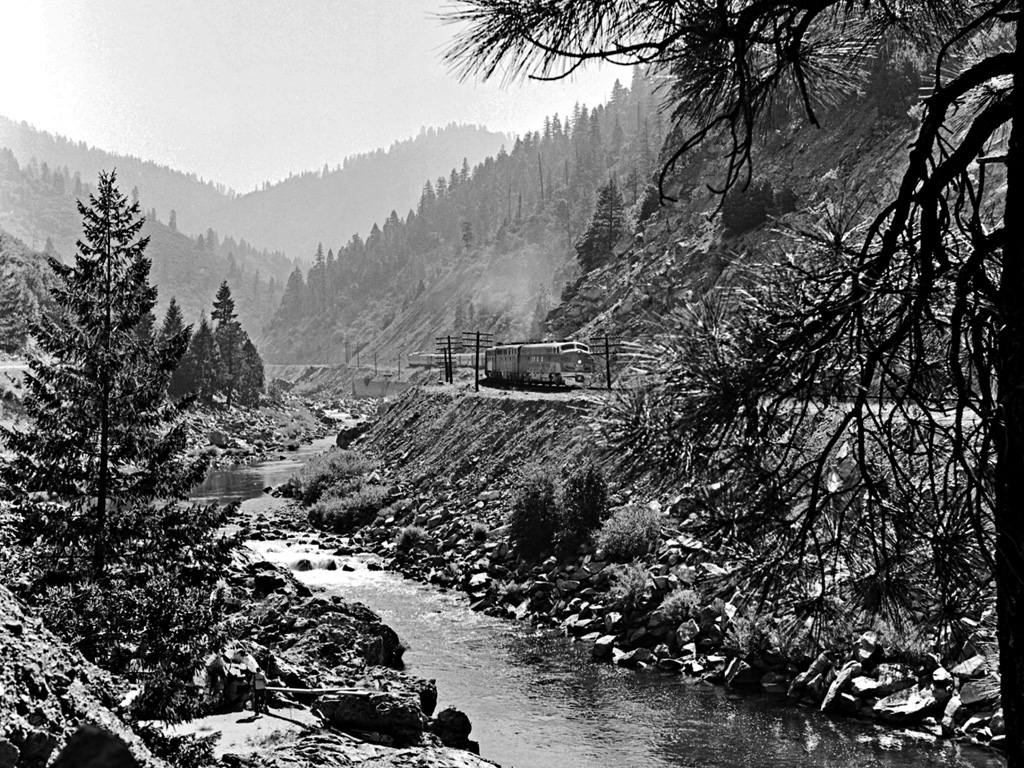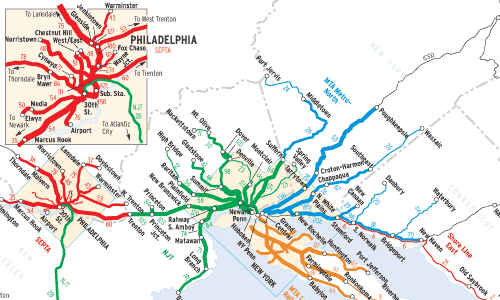

Chesapeake & Ohio in the West Virginia coal fields
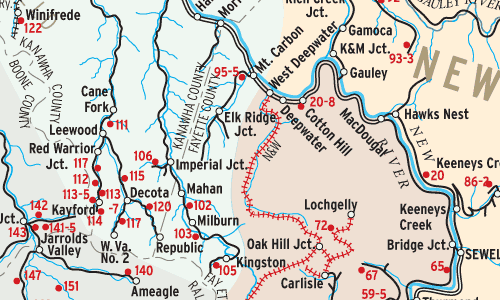
Eastern coal railroads issued maps of coal mines they served for the information of customers. This map (redrawn for clarity) shows C&O’s New River and Kanawha (Ka-NAW) Districts in 1966. their common border marks the divide between high and low volatile coal measures, an important distinction that determines whether coal is used to make coke […]

Read More…

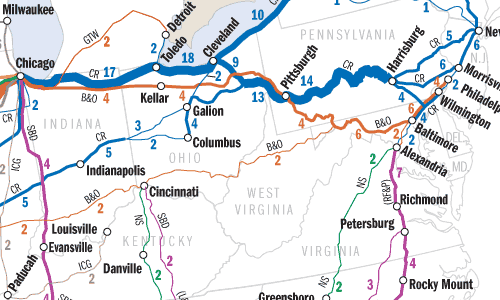
Intermodal trains per day in 1984

Intermodal haulage on railroads initially resembled loose-car railroading: Cities of varying sizes had ramps that originated a few flatcars, which were added to merchandise freights. A trucker, though, could beat that service easily. Larger cities generated solid intermodal trains, but the cost of terminals, equipment, and operations made the business lucrative only in lanes of […]

Read More…

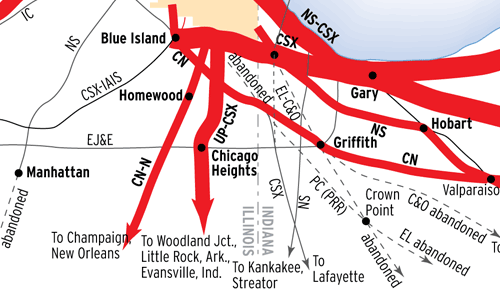
Chicago tonnage by railroad: 1971 and 2000

Traffic density changes in the past 30 years on freight railroads’ main lines to Chicago reflect factors both geographic and corporate. Geographic factors include the shift of manufacturing from domestic to offshore; air quality regulations that closed high-sulfur Western mines; and general population and economic growth. Corporate factors include the desire of railroad managements to […]

Read More…

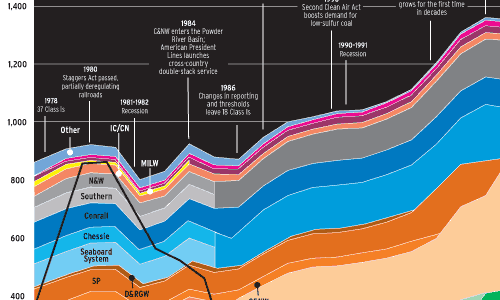
Class I railroad work volume, 1978-2008

Class 1 railroad volume map image

The undeniable triumph of U.S. railroading can be seen in this graph of revenue ton-miles: the most basic unit of measurement (hauling one ton of freight one mile) for the work railroads perform. The data for this illustration come from the Association of American Railroads, and are confined to Class I railroads, the largest group […]

Read More…

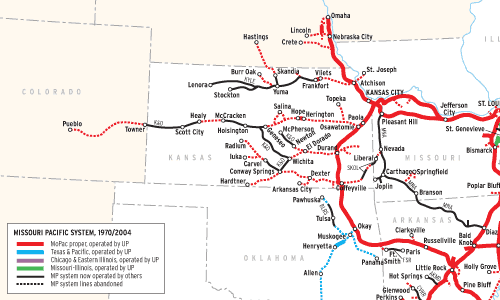
What happened to the Missouri Pacific, Texas & Pacific, and Chicago & Eastern Illinois?

Missouri Pacific system 1970/2004 map image

Before the mega-merger movement of the 1980s, only a few U.S. Class I systems attained route-mileage in five figures. Santa Fe, Southern Pacific, and Milwaukee Road did so by spanning the transcontinental West, Pennsylvania and New York Central bulked up in the East, and Chicago & North Western and Burlington Route (if you include its […]

Read More…

AC traction: a motive power boss’s perspective

EDITOR’S NOTE: When we asked the Class I railroads for input on the May 2010 locomotive column on the subject of A.C. traction diesels, Norfolk Southern Assistant Vice President-Mechanical Don Graab responded by email and provided us some great detail. What follows is his perspective on why some railroads order only A.C. diesels, some D.C., […]

Read More…