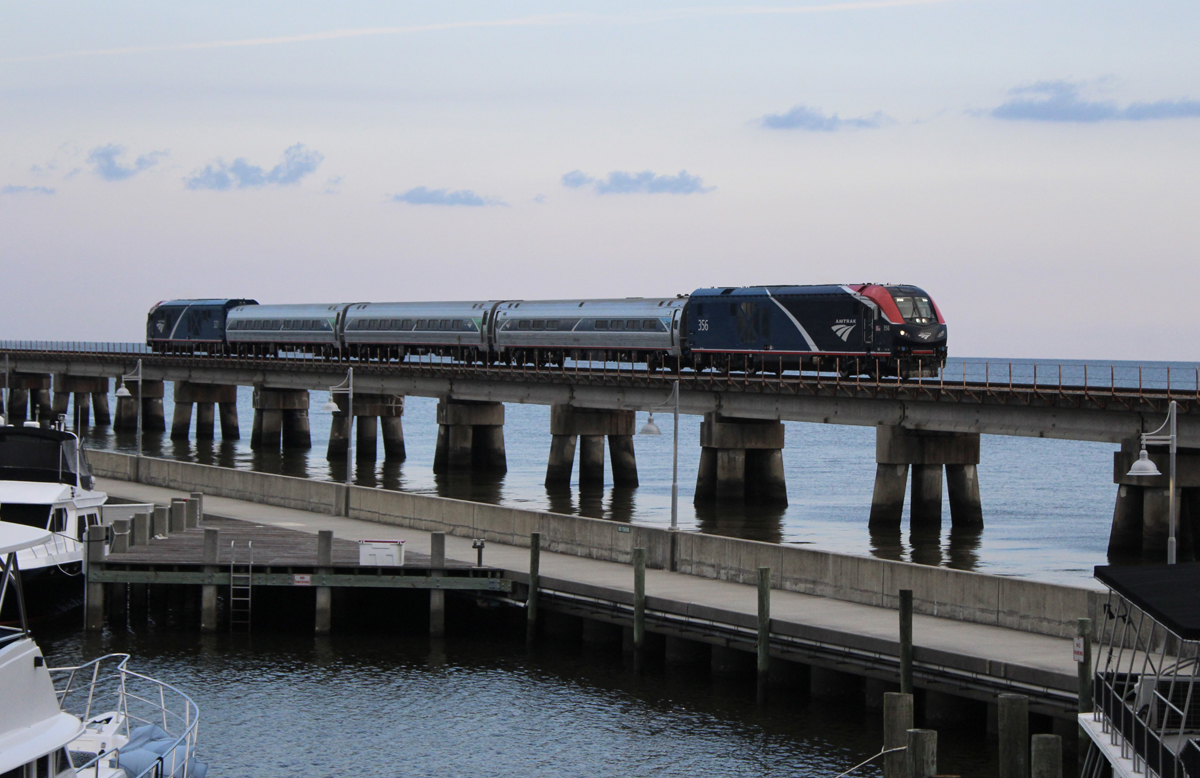
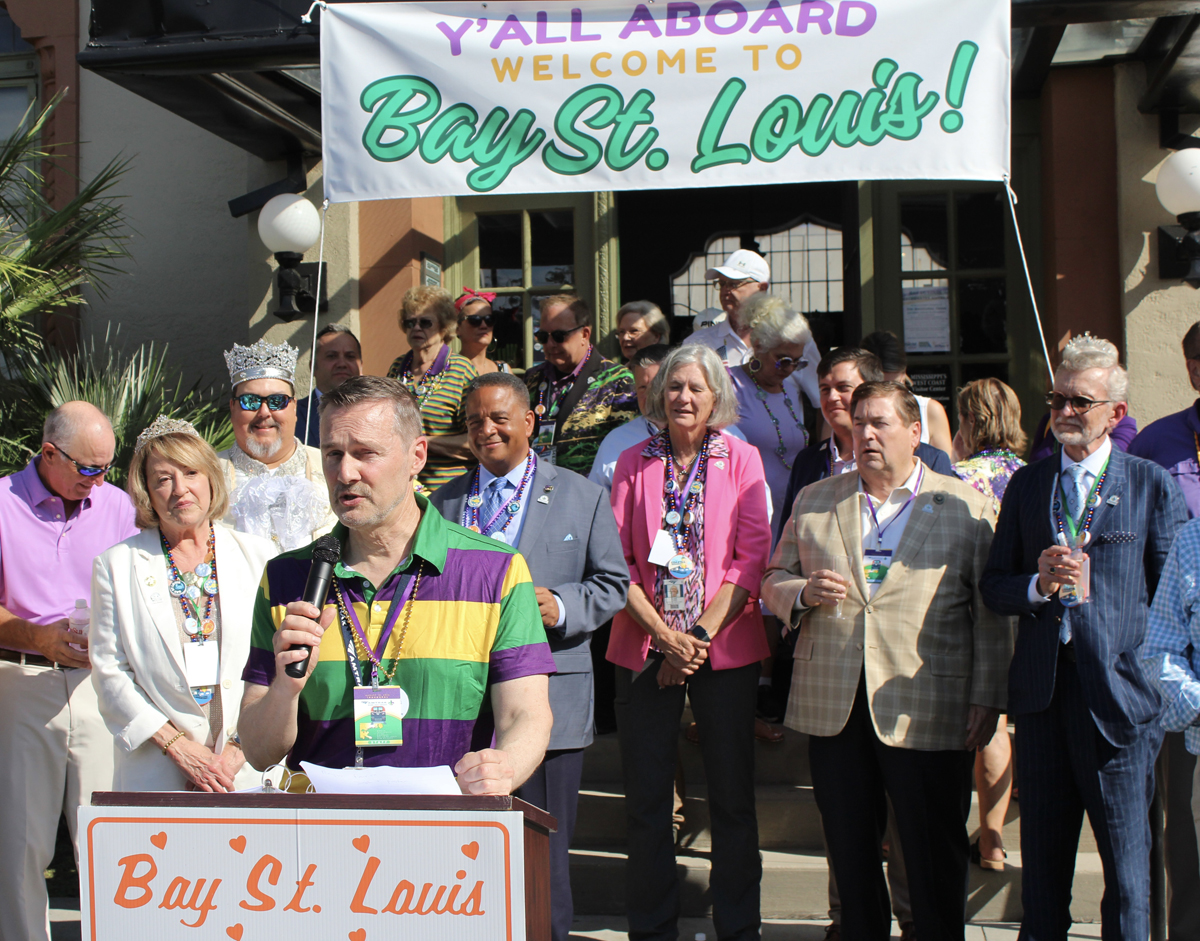
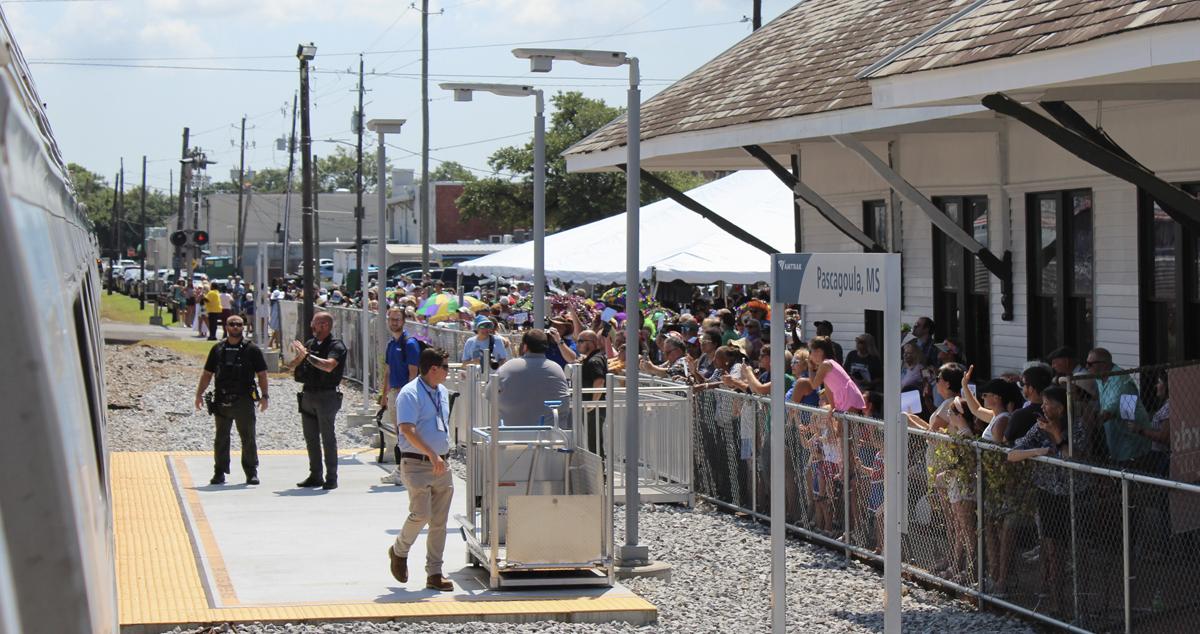
Blaring locomotive horns announce the presence of four new passenger trains every day at most of the 170 grade crossings on the 144 miles between New Orleans Union Passenger Terminal and a temporary platform at Mobile, Ala. Two daily Amtrak Mardi Gras round trips have been running since Aug. 18, days after throngs turned out for rousing ceremonies at coastal Mississippi towns to greet a 10-car inaugural special.
Operations began almost a decade after a Feb. 18, 2016, demonstration train attracted similar crowds clamoring for meaningful passenger service. Launch of this short corridor — the first new Amtrak route since the introduction of the Downeaster in 2001 — is important for a number of reasons, some congratulatory, others cautionary.
The trains are doing far better than expected
In March, before a firm start date was established, Amtrak estimated 71,000 passengers would ride Mardi Gras trains in their initial year. But after 90 days, more than 41,000 travelers had bought tickets. Consists are short because extra equipment is hard to come by: only two Amfleet I or II coaches and an Amfleet I café/business-class car are regularly assigned.
Full-route adult fares starting at $24 in coach and $59 in business class crept up to $71 and $114, respectively, as inventory approached sellout levels around weekends, though midweek patronage also was strong. In reaction, Amtrak added the operation’s standby “protect” coach to a trainset Friday through Monday when the New Orleans Saints played at the Superdome. If available on every departure, that extra car most likely would have generated significant additional ridership and revenue. During those first 90 days, the train produced an average load factor of 64%, compared with a nationwide average of 40% for state-supported trains (excluding California routes).
Amtrak’s ridership projection underestimated the willingness of locals to leave cars at home, forsake New Orleans parking garages, explore coastal communities well off Interstate 10, and enjoy the freedom to look out the window (or at their phones). People who use Amtrak or other public transportation take these advantages for granted. But a recent Trains round trip from the Crescent City to Biloxi, Miss., revealed trainloads of people for whom rail travel has become acceptable in a region where that option hadn’t existed.
The last Amtrak train operating between Mobile and New Orleans was the Los Angeles-Florida Sunset Limited. It ran three times per week — usually unpredictably and at odd hours, on different days in each direction. It was permanently “suspended” following Hurricane Katrina’s devastation in 2005. So Mardi Gras service is definitely something new.
Targeted promotion also produces riders. Tourist organizations such as Visit Mobile and Coastal Mississippi Tourism have invested heavily in letting the world know about the service and the unique towns it serves. Travel-writer junkets financed by civic tourism groups are paying dividends, as evidenced by recent articles in international publications such as Britain’s Independent, as well as the New York Times.
Another plus: Questions by first-timers about the trains or destinations are often answered by the Mobile-based Gulf Coast Amtrak Facebook group, which has more than 31,000 followers.
Locally focused Amtrak management can deliver a quality product
If the transportation experience was disappointing, customers wouldn’t return. Credit Amtrak’s New Orleans District Manager Richard Hullender for leading operating, onboard service, and maintenance teams in keeping the trains spotless inside and out. [It helps that New Orleans’ modernized train wash is now functioning.] They also dial up hospitality at stations and onboard. Nothing is perfunctory aboard a Mardi Gras train.
Political involvement triggered federal financial support
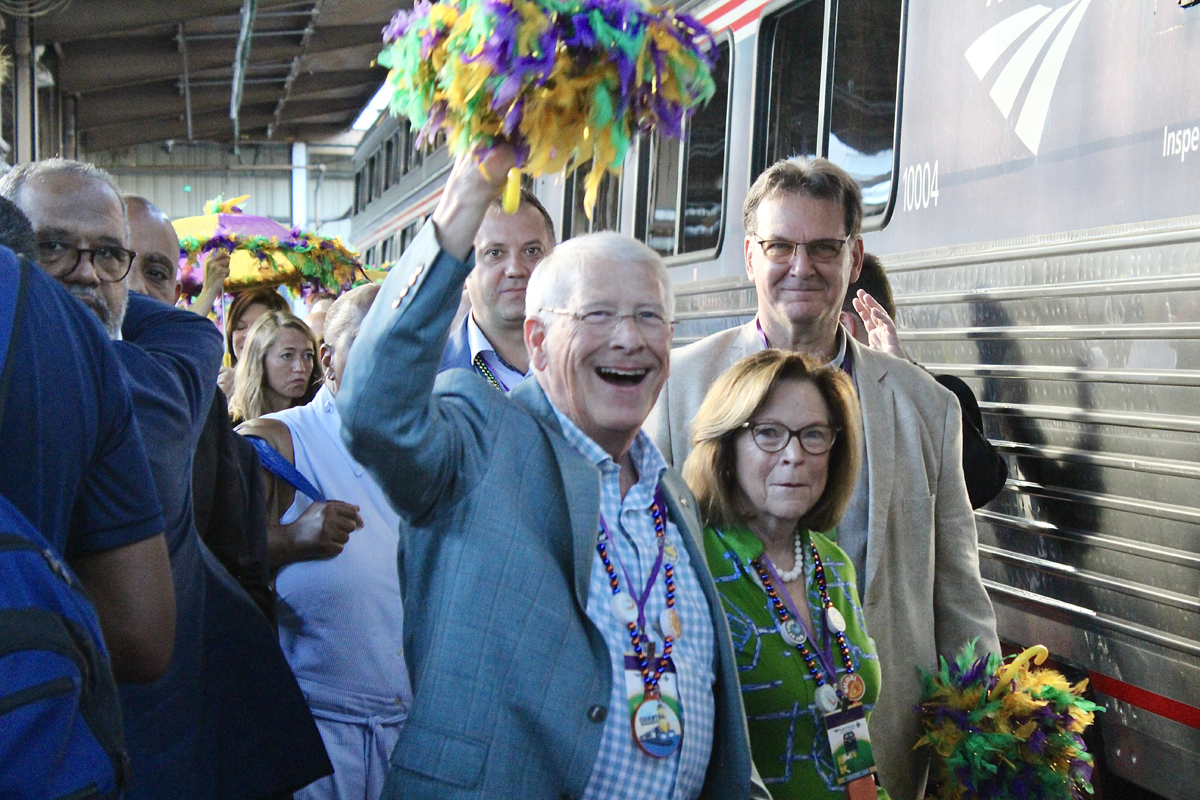
The service would never have launched without decades of relentless advocacy by the organization now known as the Southern Rail Commission. Its previous efforts resulted in short-lived daily Gulf Coast Limited round trips in the mid-1980s and 1990s that died when state funding expired. Those failures underscored the need for federal government involvement in infrastructure and initial operating support, an idea the SRC promoted with U.S. Sens. Thad Cochran and Roger Wicker, Mississippi Republicans on the Senate Commerce Committee.
Enlisting the lobbying acumen of Transportation for America and its chairman, John Robert Smith, a legislative framework for federal cost-sharing found its way into 2015’s Fixing America’s Surface Transportation Act. The service would not exist without $174 million from a Consolidated Rail Infrastructure and Safety Improvement (CRISI) grant to help fund capacity improvements; a $21 million Restoration and Enhancement (RAISE) grant to support the first three years of operation; and matches from Louisiana, Mississippi, and Mobile. A recent Transportation for America video recaps how those efforts came about.
Host railroad opposition caused expensive delays
SRC involvement with the route’s civic leaders, state funders, and Washington political connections encouraged Amtrak to hold the line on service pricing and persevere in the face of strident opposition from host railroad CSX.
CSX collaboration that resulted in extension of the Sunset Limited east of New Orleans to Florida in 1993 was replaced by a fixed-bayonet approach to the new service. Beginning in 2017, the railroad demanded more than a billion dollars of infrastructure improvements to run passenger trains. The company cited consultant reports claiming, among other things, that it would be necessary to double-track approaches to many of the route’s 13 drawbridges because of unpredictable bridge openings. With the Port of Mobile supporting its position, CSX essentially blocked compromise until after Surface Transportation Board hearings on the service in 2022. Ultimately, a deal was reached because all parties were concerned what the STB might order.
To their credit, CSX, the Port, and the city of Mobile have become willing partners, no doubt aided by federally financed infrastructure projects set to begin in 2026. The port helped subsidize the city’s $3 million match to the RAISE grant. Meanwhile, CSX has been running the passenger trains mostly on time, even with few capacity upgrades in place. For that initial 90-day period, Mardi Gras all-station on-time performance is 92%, compared with Amtrak’s state-supported service goal of 80%.
Though reliability is crucial, there may be a more subtle reason for widespread acceptance of the new service. Perhaps Wicker put his finger on it during a speech at Pascagoula on Aug. 16: “Today, 20 years later, we’ve put in one of the final pieces of the puzzle in recovering from Katrina.”
Anyone who saw the storm’s Mississippi Coast devastation can easily understand why residents not only came out for inaugural festivities but have embraced the two daily round trips as “their” train.
— To report news or errors, contact trainsnewswire@firecrown.com.
Previous Trains.com coverage
Analysis: Amtrak’s Gulf Coast STB filing tests right of access, March 25, 2021
Amtrak, freight railroads say they have a deal on Gulf Coast service, Nov. 22, 2022
Gulf coast service awaits Mobile station track, PTC gap closure, Sept. 9, 2023
Gulf Coast impasse at Mobile remains unresolved: Analysis, March 18, 2024
What’s next for Amtrak Gulf Coast service: Analysis, Aug. 7, 2024
Amtrak Gulf Coast service to receive $21 million grant, Jan. 6, 2025
Amtrak Gulf Coast trains to be known as ‘Mardi Gras Service,’ April 24
Start of Amtrak’s Mardi Gras Service sees further delay, May 29
Amtrak to launch Mardi Gras Service on Aug. 18, July 1
Fare, schedule, and equipment plans detailed for Amtrak Mardi Gras, July 1
Inaugural ‘Mardi Gras’ train brings out hundreds along the Gulf Coast, Aug. 17
Mardi Gras Service debuts with track blockage, CSX dispatching questions: Analysis, Aug. 19
Mardi Gras Service off to a solid start: Analysis, Sept. 14
What’s next for Mardi Gras Service? Anaylsis, Sept. 15
Mardi Gras Service is off to a fast start, Amtrak says, Dec. 4