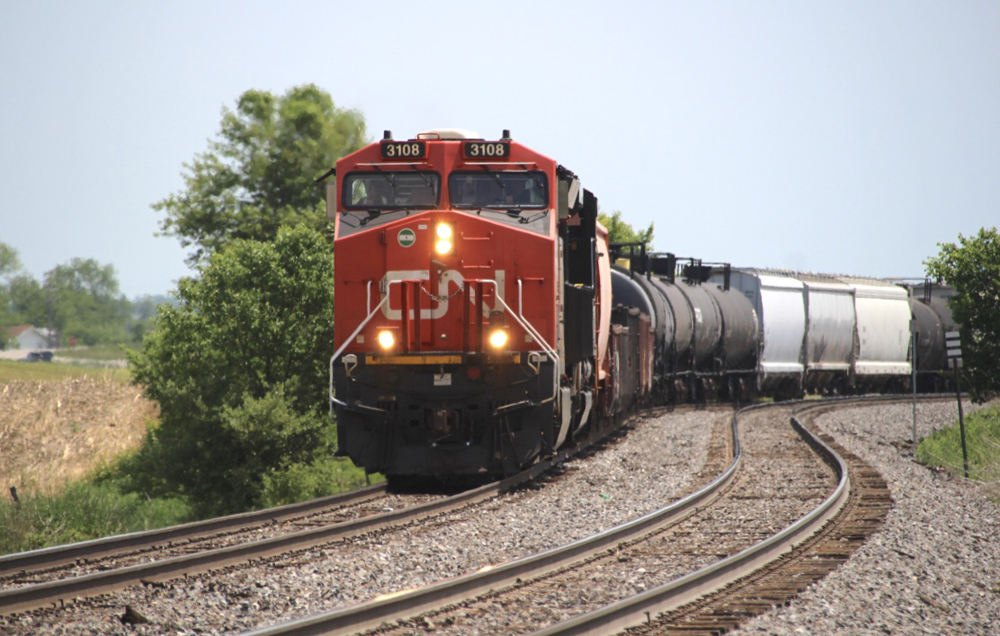
MONTREAL — Strength in bulk traffic and fluid operations propelled Canadian National to first-quarter records for operating income, revenue, and earnings per share. The strong quarter prompted CN to raise its financial outlook for the year to mid single-digit earnings per share growth, up from its previous guidance of low single-digit growth. “It’s important to […]
Read More…
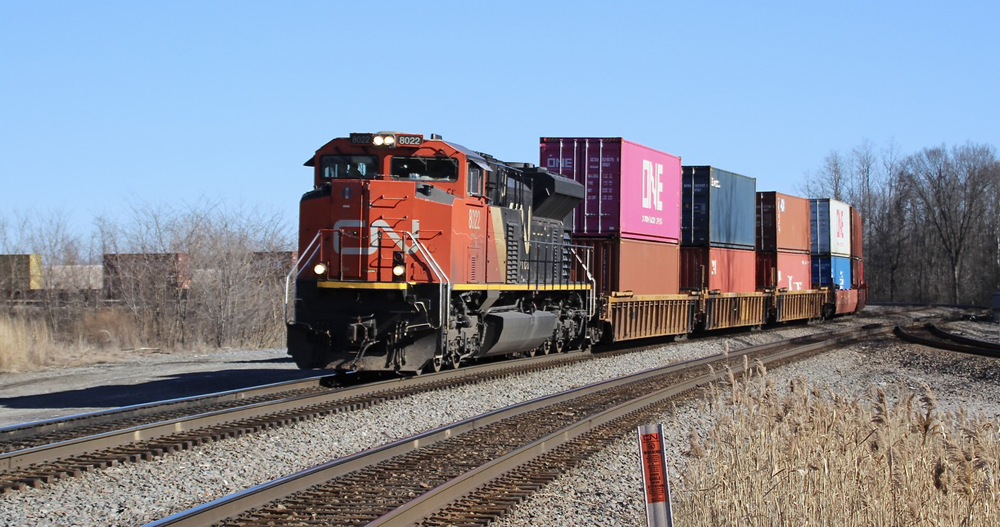
MONTREAL — Canadian National, Union Pacific, and Ferromex will launch new intermodal service next month linking Canada and Detroit with Mexico, the railroads announced today (Monday, April 24). The Falcon Premium service will connect a dozen CN terminals with the Ferromex terminals in Monterrey and Silao via the Eagle Pass, Texas, gateway. CN and UP […]
Read More…
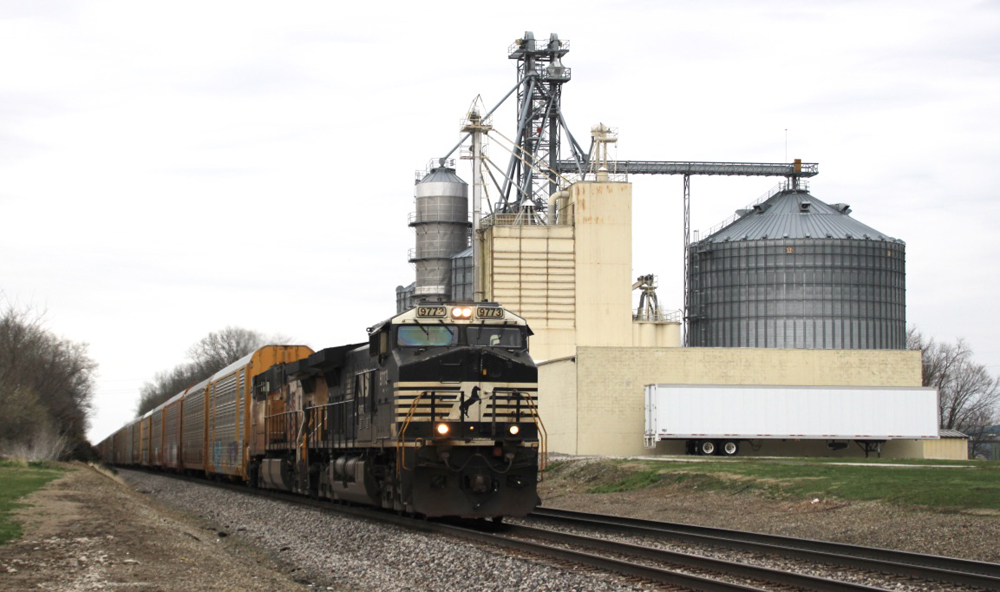
The publicly traded U.S. Class I railroads are putting more of an emphasis on service and volume growth in the annual incentive plans they offer to their executives. It’s a clear sign, analysts say, that the railroads are shifting into growth mode after years spent concentrating on reducing their operating ratios in a quest for […]
Read More…
MONTREAL — Canadian National Railway and the Teamsters Canada Rail Conference have reached a tentative labor agreement, the parties announced Sunday. The agreement covers approximately 6,000 locomotive engineers, conductors, and yard workers in Canada, who now must ratify the deal. A ratification vote will be held via electronic secret ballot May 5-26. The union said […]
Read More…

FLINT, Mich. — A single-engine aircraft made a forced landing on the double-track mainline of Canadian National Railway’s Flint Subdivision Thursday morning, April 20. The pilot, the plane’s sole occupant, was uninjured in the landing near Linden and Bristol roads west of Flint. According to Michigan State Police, the railroad was contacted to immediately shut […]
Read More…
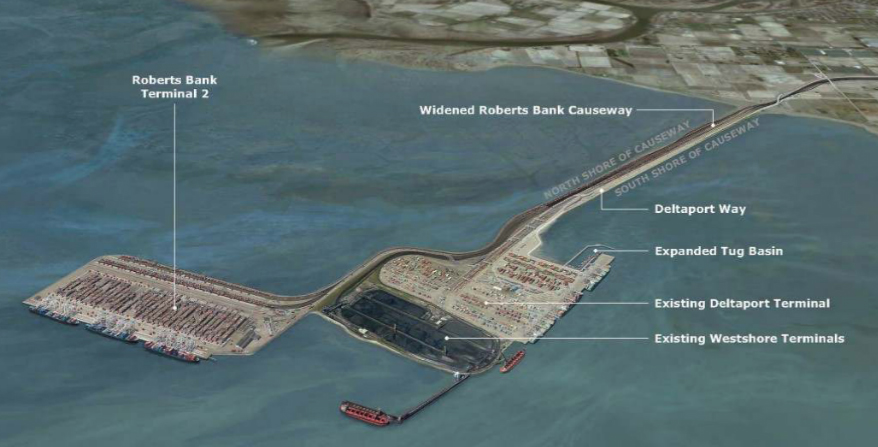
DELTA, British Columbia — The Canadian government announced Thursday it has approved a C$3.5 billion project to build a new West Coast container terminal, subject to some 370 legally binding conditions, the Globe and Mail newspaper reports. The Roberts Bank Terminal 2 project, which has been in development for more than a dozen years, involves […]
Read More…

MONTREAL – Canadian National has launched a new sustainability tool, My Carbon Emissions, that allows customers to calculate the greenhouse gas emissions of all of their loaded shipments moving on the railway. CN’s initial Carbon Calculator, the first in the industry when it debuted 13 years ago, gave customers visibility into their estimated greenhouse gas […]
Read More…
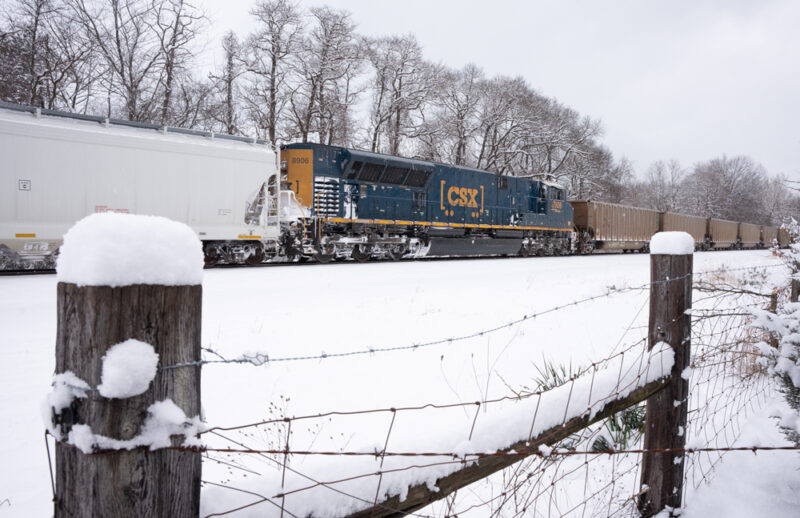
Distributed power Placing locomotives at various locations within a train is nothing new, although the latest technology has improved the operation and extended the length of trains. The adoption of Precision Scheduled Railroading by most Class I railroads accelerated the push to make trains longer, lowering crew starts, and improving train handling in most situations. […]
Read More…
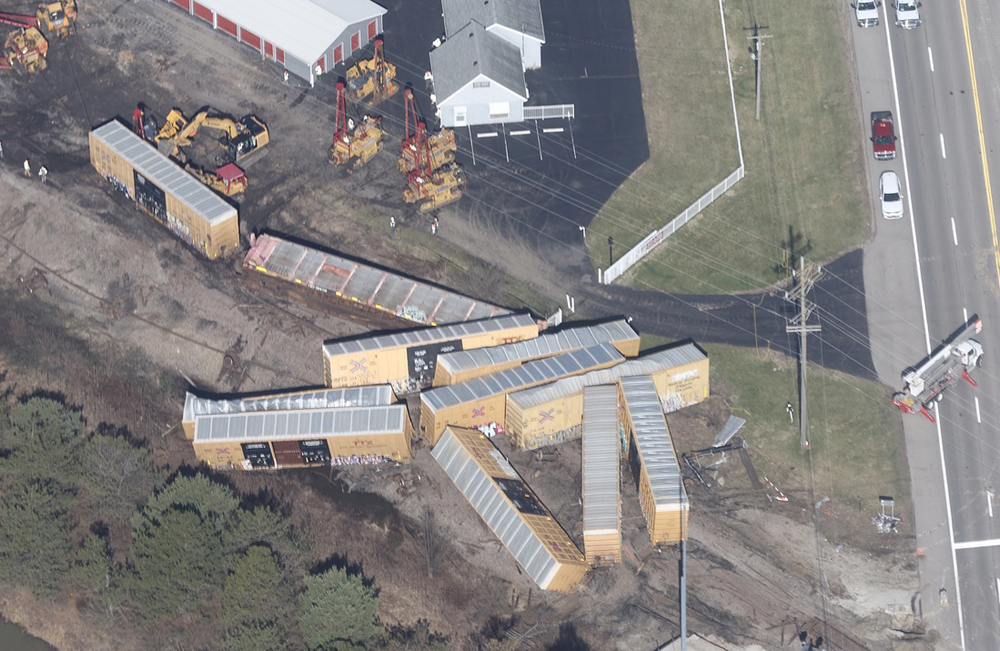
Rail labor leaders welcomed the safety advisory that the Federal Railroad Administration issued last week that encourages railroads to take steps to reduce the in-train forces that can cause long trains to derail. Railroads, meanwhile, said they were reviewing the advisory to make sure their operating practices are in line with the FRA’s recommendations. “For […]
Read More…

UNCAS, Alberta — Seventeen cars of a Canadian National Railway grain train derailed early today (April 5), Global News reports. No injuries were reported. Investigators from the Transportation Safety Board of Canada have been sent to the scene east of Edmonton. CN told Global News the derailment occurred about 6 a.m. near Uncas, about 22 […]
Read More…
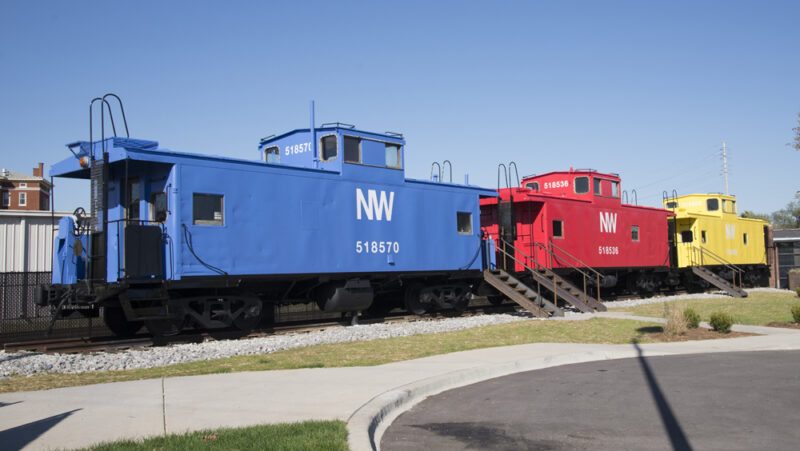
Looking for interesting uses for cabooses? If you’re of a certain age (myself included), you remember when a caboose was on the end of almost every train. Then, in the 1990s, cabooses began to disappear. Instead of a friendly wave at the end of a train, you were greeted by a blinking red light on […]
Read More…
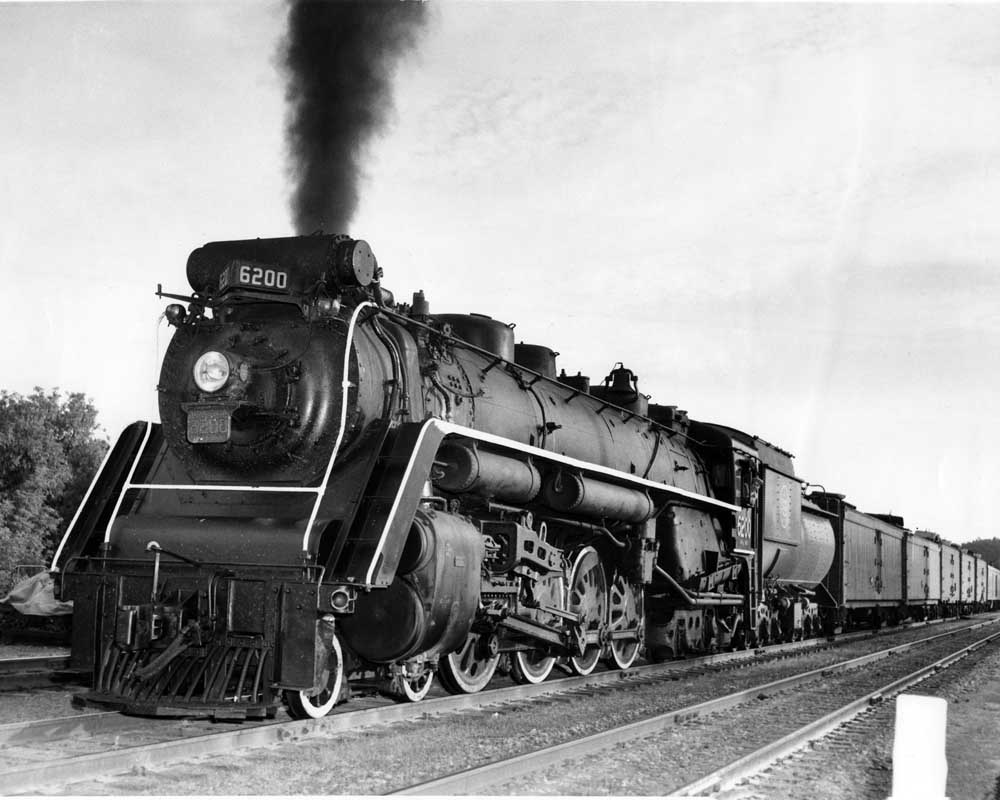
Canadian National U-class 4-8-4 locomotives proved to be the most versatile of the type operated in North America. It’s generally accepted that the ultimate in steam power was the 4-8-4 Northern type, if defined by criteria that includes speed, power, technology, and, perhaps most importantly, versatility. A lot of railroads capped off the steam […]
Read More…