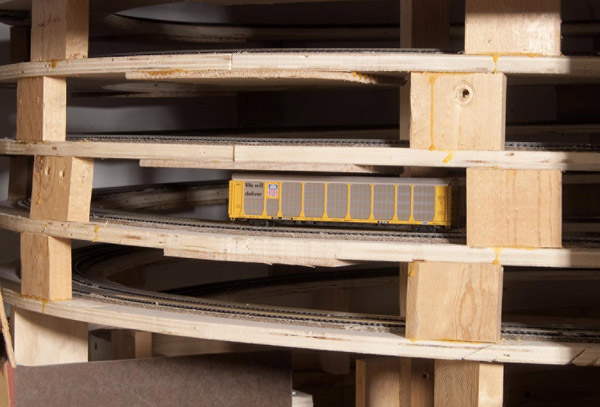
Helixology for N scalers: Never say never. I thought I’d never build a layout with a helix because of a number of well-known disadvantages: Helixes take up a lot of space, so unless you’ve got a large area in which to build, you aren’t gaining much layout. If you have enough space available for a […]
Read More…
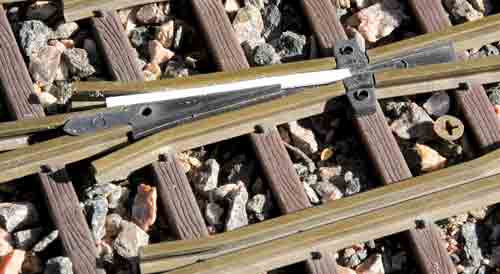
Troubleshooting problems with gauge-1 switches: If you were to ask any model railroader what the biggest headache on his or her railroad was, “switches” would rank in the top three every time. If we want our trains to do more than just run around in circles, however, they’re a necessary part of any model railroad. […]
Read More…
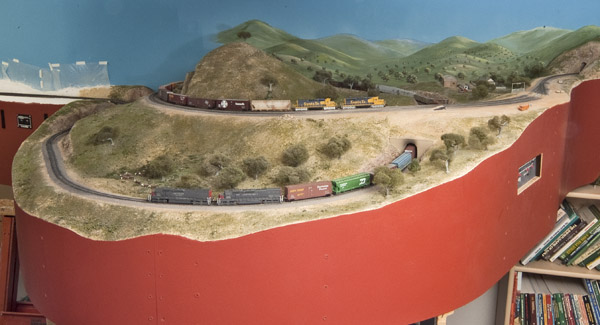
A (sort of) successful move: Back in 1995, I wrote a story for the first issue of Model Railroad Planning about Tehachapi III, the N scale Southern Pacific and Santa Fe layout I was building. In that story I told how I built the layout in 13 bolted-together sections supported by easy-to-disassemble L-girder benchwork. The […]
Read More…
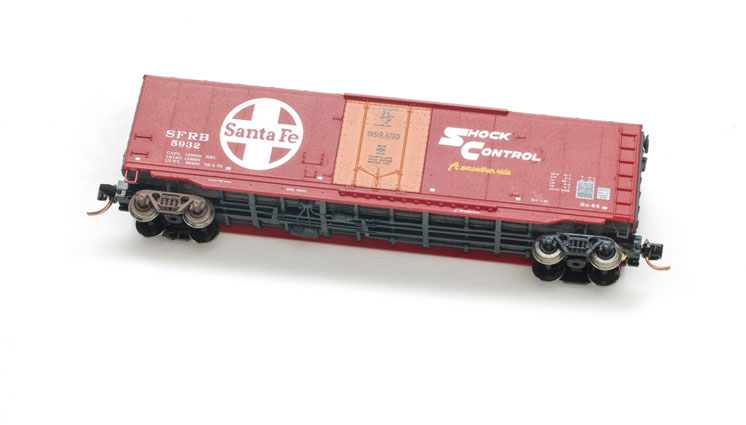
Improve ready-to-run freight cars: A few weeks ago I bought an N scale freight car at my local hobby shop. The car was a bright yellow Milwaukee Road covered hopper by Trainworx, and besides the marvelous detail, it had two other features I’ve come to look for on cars: metal wheels and body-mounted Magne-Matic couplers. […]
Read More…
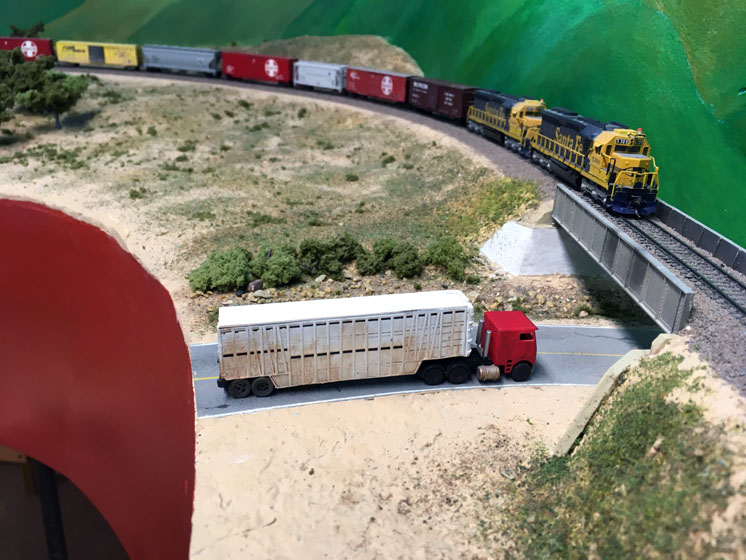
A signature N scale truck for Tehachapi: This photo of a cattle truck at Caliente, Calif., existed in my mind for perhaps 10 years before it finally came to fruition, and it was spurred by buying a Road Apples N scale stock trailer kit. The kit had two things going for it. First, I thought […]
Read More…
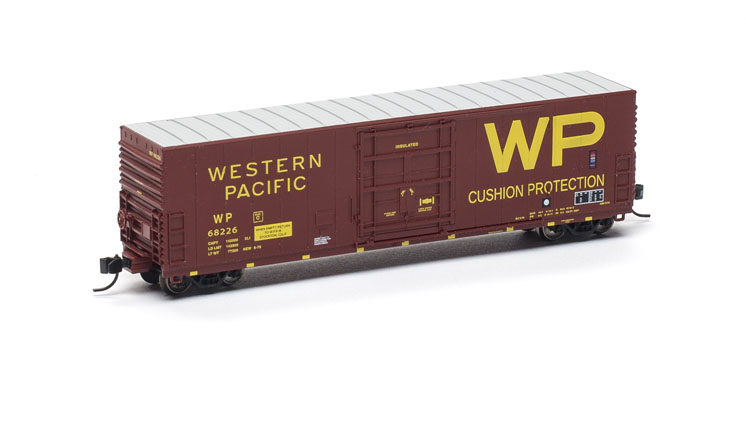
N scale by the numbers: Scale model railroading couldn’t exist without numbers, some that are very important and some that are not important at all, but fun to play around with. This article is for those who model in N scale, so let’s look at N scale numbers, starting with the two most critical, 9mm […]
Read More…
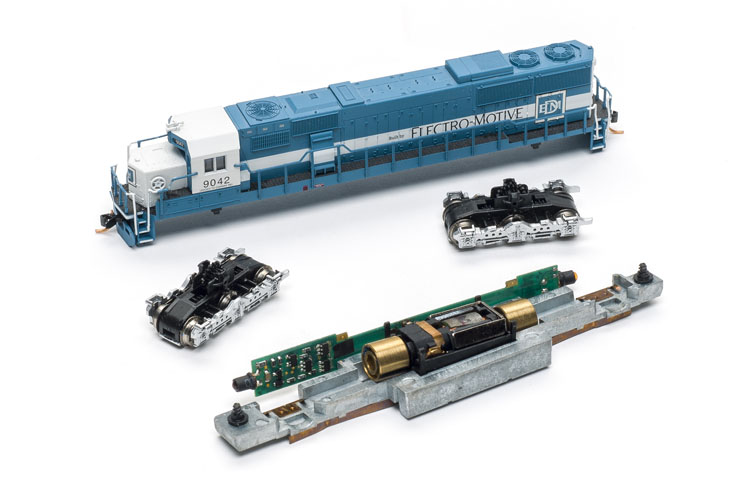
Improving N scale engine performance: One of the most puzzling N scale locomotive performance problems I’ve encountered came with the two Atlas Electro-Motive Division (EMD) SD60s I purchased in 2014. The prototype locomotives were lease units from Oakway (an EMD subsidiary), and they were painted in the gorgeous blue-and-white scheme EMD had used for years […]
Read More…
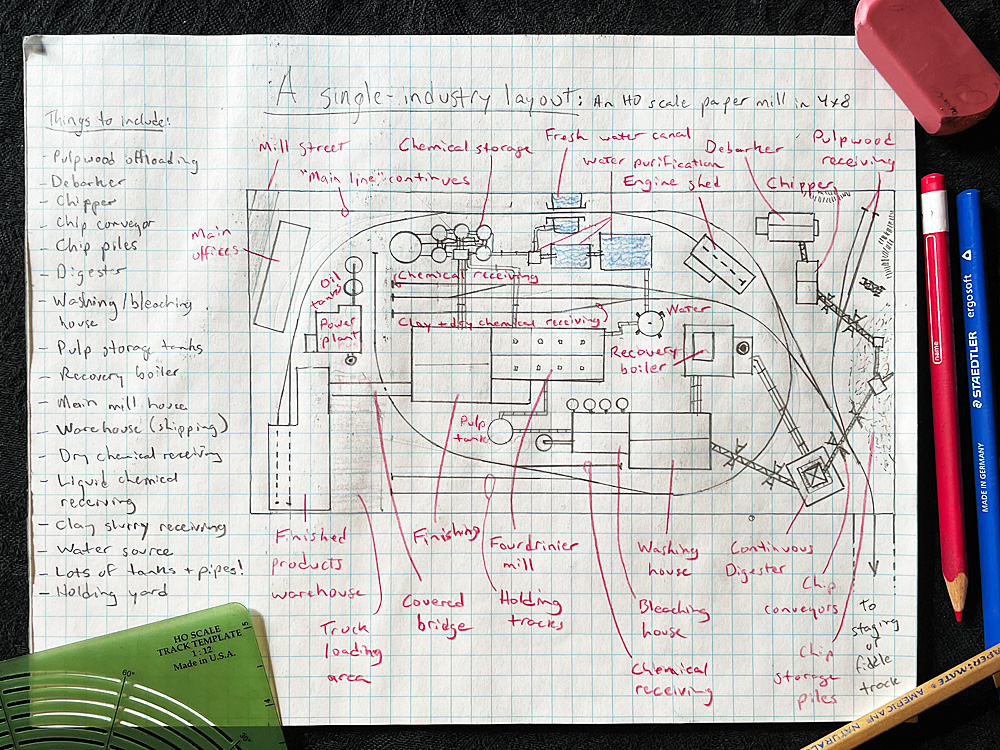
Modelers often compress industries to fit more of them on our model railroads. But doing the opposite – expanding a modeled industry to prototypical proportions – can create an intensely realistic operating experience that can’t be matched. Let’s explore that idea with a 4×8 HO scale paper mill layout. Some industries are just too large and […]
Read More…
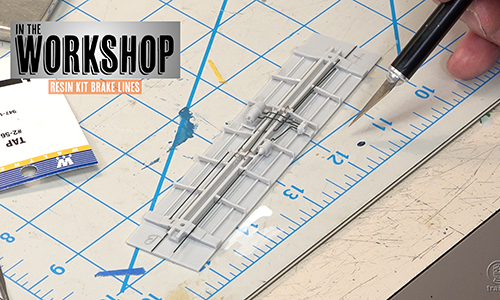
Host Eric White demonstrates how to assemble an underbody brake system for a resin car kit. Follow his expert insights and advice, and you’ll appreciate how this process differs from a typical plastic car kit assembly. Be sure to follow the exclusive In The Workshop series for tips, tricks, and clever insights, as demonstrated by various […]
Read More…
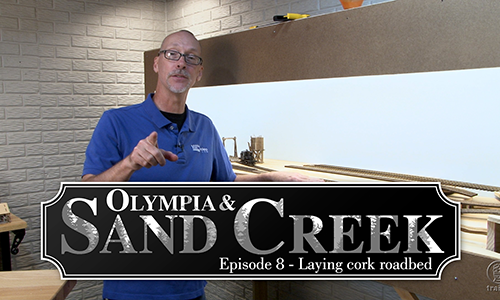
Host David Popp has the track and cork roadbed in hand, so he’s all set for trackwork! Following good construction processes, David first surveys the various sites where tracks will route. You’ll see how to install roadbed along the main line roadbed, along the turntable lead tracks, under turnouts, and even over bridges! Follow along […]
Read More…
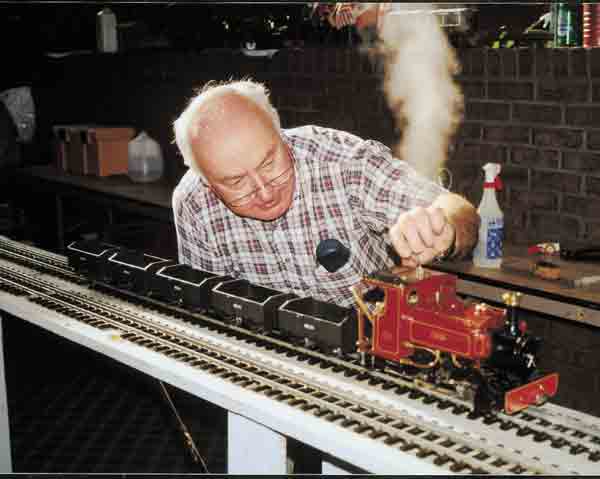
Common questions about live steam locomotives: At model-train shows and garden-railway open houses, live-steam locomotives always seem to gather a crowd of interested onlookers. Our small steam locomotives are new to many people and questions naturally arise. I thought it would be worthwhile to answer some of the most common questions for those of you […]
Read More…
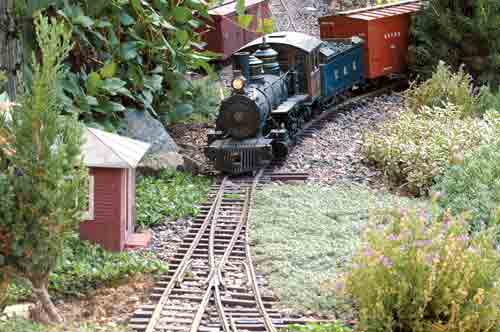
An overview of garden railroading: Garden railroading is the art of combining a model railroad and a beautiful garden to create a railway-like atmosphere. The difference between a traditional indoor layout and a garden railway is the difference between realism and reality. Indoors, the goal is to create the illusion of reality through the use […]
Read More…