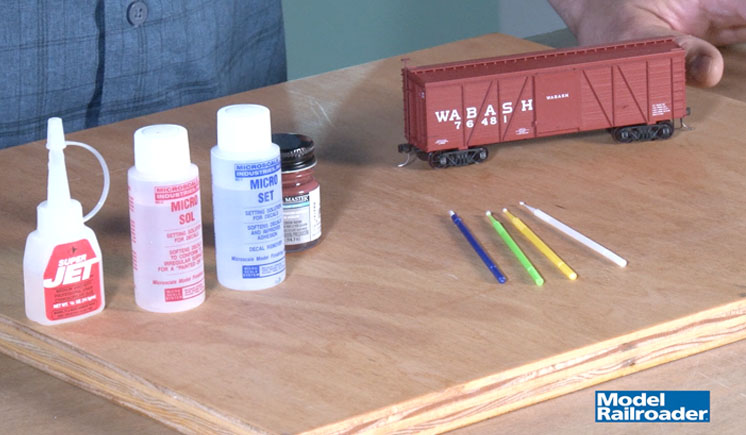
Having trouble viewing this video? Please visit our Video FAQ page Microbrush applicators have myriad uses in a model railroader’s workshop. Learn about these useful tools with Model Railroader Senior Editor Dana Kawala. If you need to stock up on microbrushes, get some at the Kalmbach Hobby Store! […]
Read More…
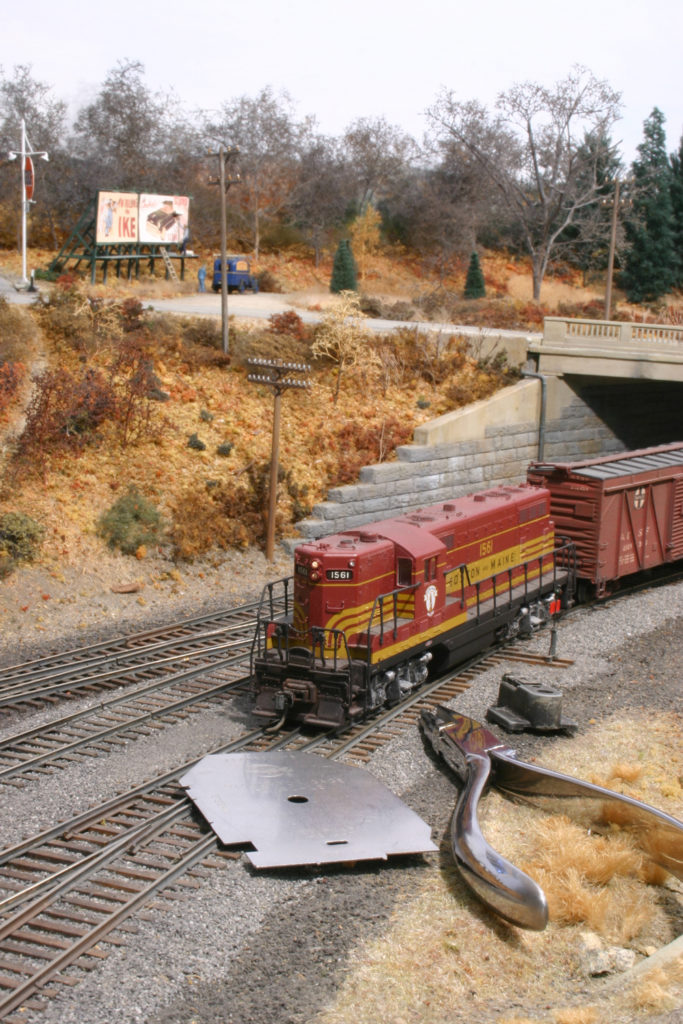
So long as your rails are clean and your rolling stock is fine-tuned, it’s time to inspect your right-of-way for problems. This is the first of five quick articles on how to check for and fix common mechanical and electrical track problems with model railroad track. First, you’ll need to run a test train over […]
Read More…
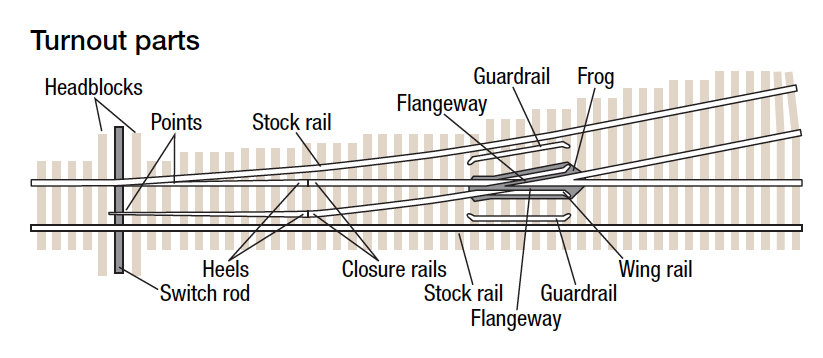
Theo Cobb illustration Theo Cobb illustration For each turnout, make sure that the check gauge — spacing between the guardrail and the frog — is correct. Paul J. Dolkos So long as your rails are clean and your rolling stock is fine-tuned, it’s time to inspect your right-of-way for problems. This is the second of […]
Read More…
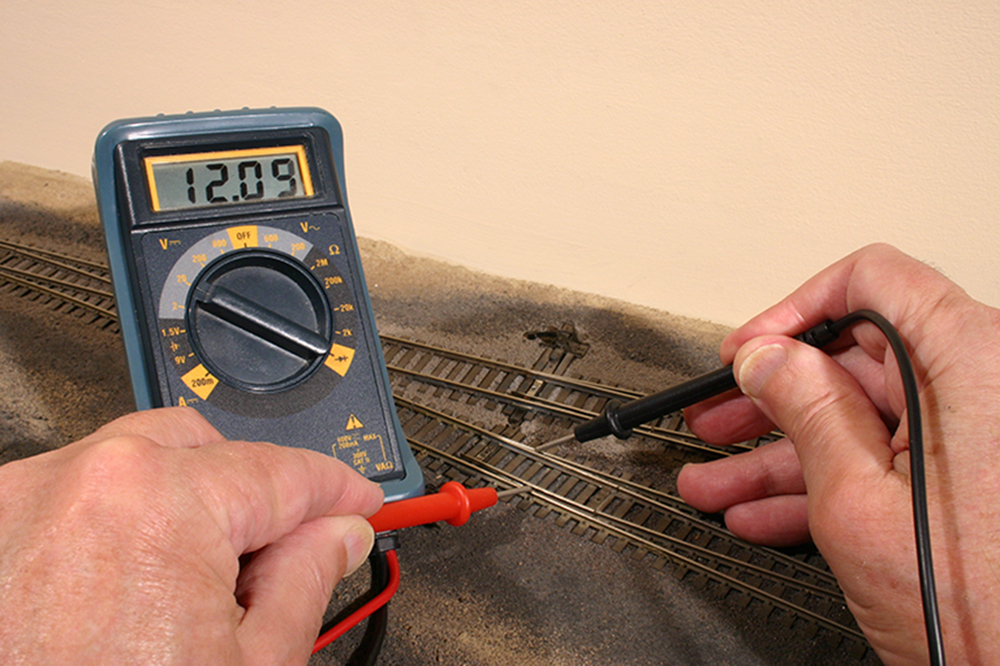
Check the track voltage using a multimeter. The voltage reading should be the same along each powered track section. Paul J. Dolkos So long as your rails are clean and your rolling stock is fine-tuned, it’s time to inspect your right-of-way for problems. This is the third of five quick articles on how to check […]
Read More…
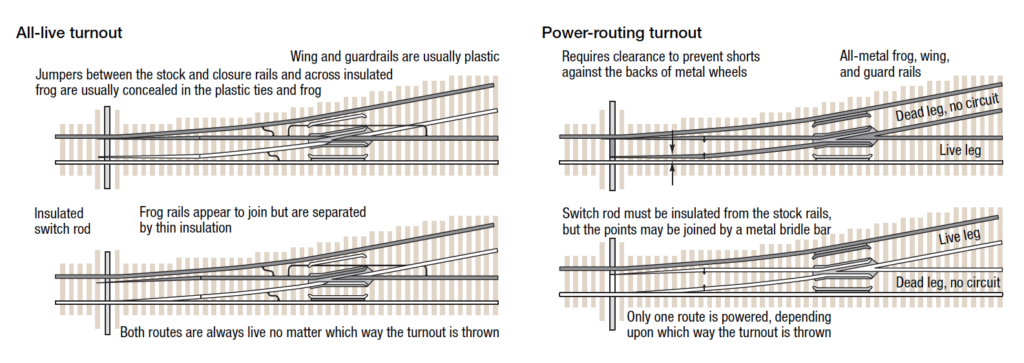
Theo Cobb illustration So long as your rails are clean and your rolling stock is fine-tuned, it’s time to inspect your right-of-way for problems. This is the fourth of five quick articles on how to check for and fix common mechanical and electrical track problems with model railroad track. Electrical problems in turnouts and switches […]
Read More…
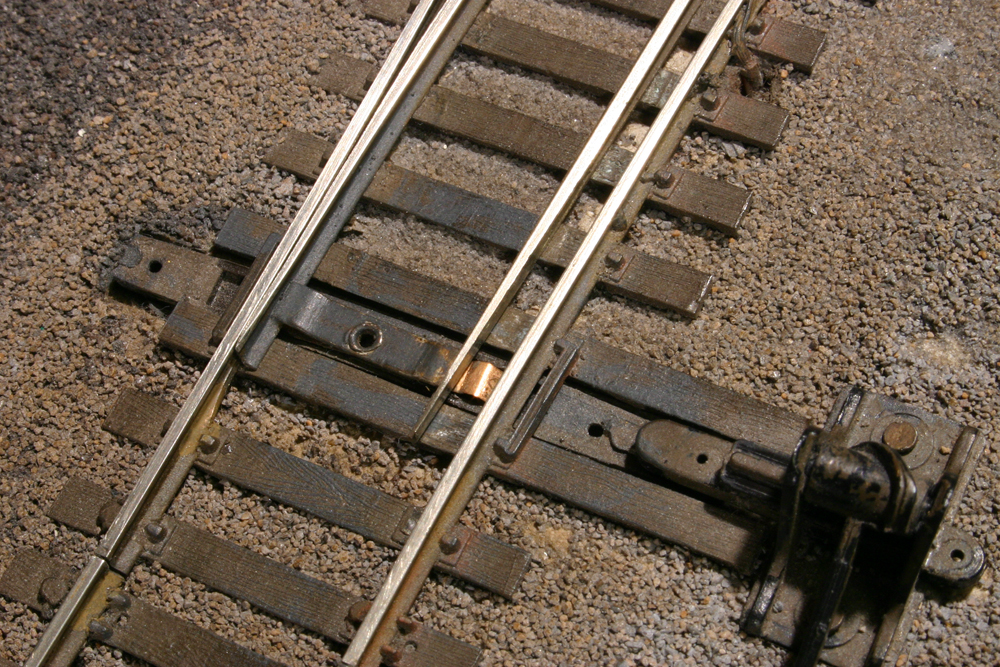
Some power-routing turnouts use thin metal tabs to provide contact between the stock rails and switch points. These tabs are often unreliable, especially on older turnouts, and can cause locomotives to stall. Paul J. Dolkos Theo Cobb illustration So long as your rails are clean and your rolling stock is fine-tuned, it’s time to inspect […]
Read More…
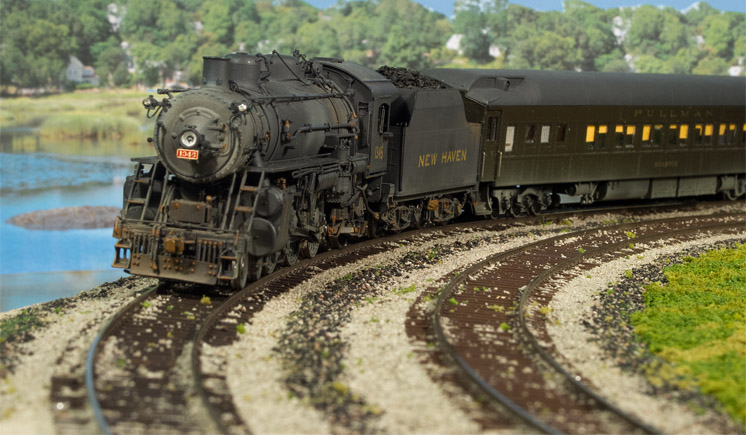
A locomotive leaning into a superelevated curve is a dramatic scene on a prototype and model railroad. Follow the simple method above for making superelevated curves on your model train layout using layers of cardstock shims I think the most exciting railroad photos are of a locomotive at speed leaning into a curve. This “lean” […]
Read More…
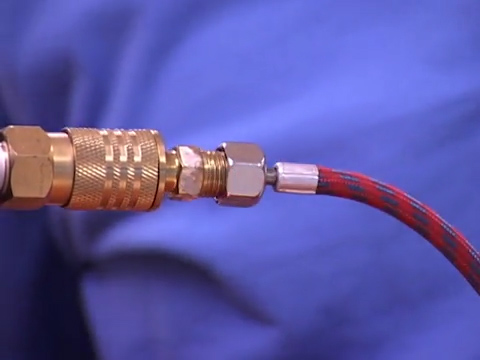
Having trouble viewing this video? Please visit our Video FAQ page Portable air compressors are a great tool for a model railroader’s home workshop. They’re especially useful for airbrushing. Model Railroader associate editor Cody Grivno shows you how to get your air compressor ready for your next airbrushing project. […]
Read More…
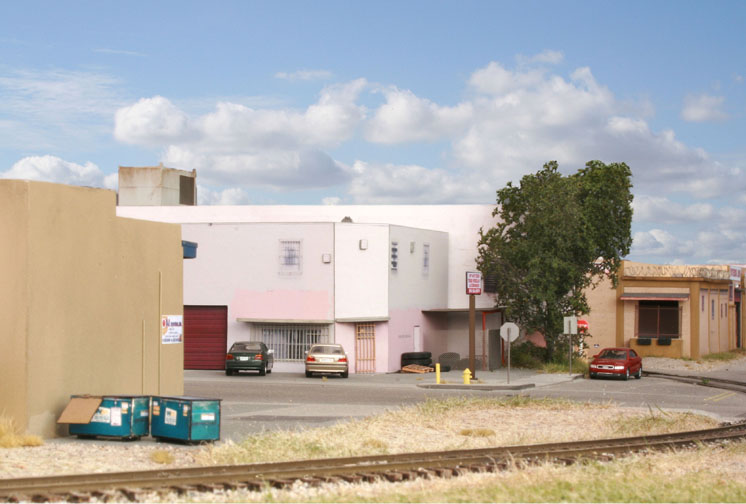
Adding mundane and non-revenue structures to your layout can enhance the authenticity of a scene, as demonstrated in these two scenes from the author’s Miami-based HO scale CSX Downtown Spur layout. The gray and salmon structure at the center of the top photo is 10th Avenue Tires in Miami. Structure building is one of the […]
Read More…
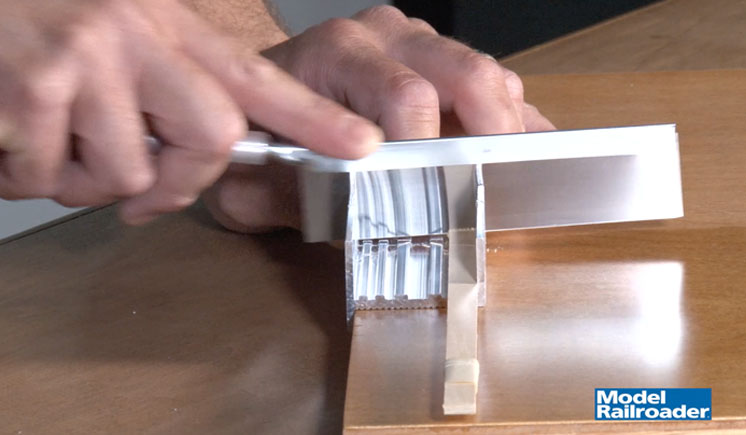
Having trouble viewing this video? Please visit our Video FAQ page Getting straight cuts is a necessary skill for any modeler. That’s why a good razor saw and miter box are essential tools for any model railroader’s workshop. Senior editor Dana Kawala shows you the basics of using this razor saw/miter box set from […]
Read More…
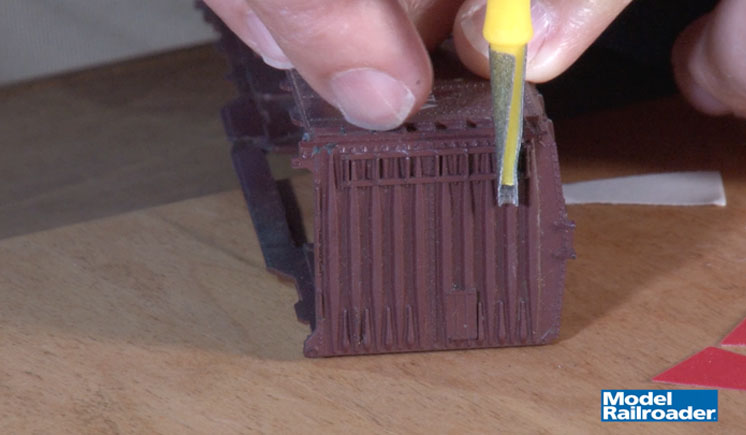
Having trouble viewing this video? Please visit our Video FAQ page The Flex-I-File cone-tip sander is a versatile tool for getting into tight corners and odd shapes. Model Railroader associate editor Eric White shows you how he uses the sander and its peel-and-stick pads for his modeling projects. Pick up a sander and a […]
Read More…

Having trouble viewing this video? Please visit our Video FAQ page Model Railroader managing editor David Popp shows how to make waves on modeled water. […]
Read More…