




Having trouble viewing this video? Please visit our Video FAQ page […]
Model Railroader Quick Tips: Isopropyl alcohol for cleaning model train track
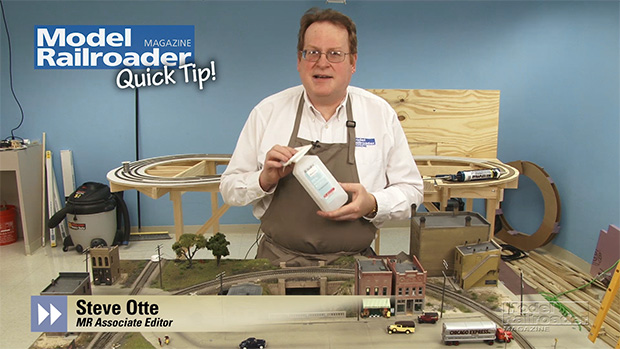
Having trouble viewing this video? Please visit our Video FAQ page […]
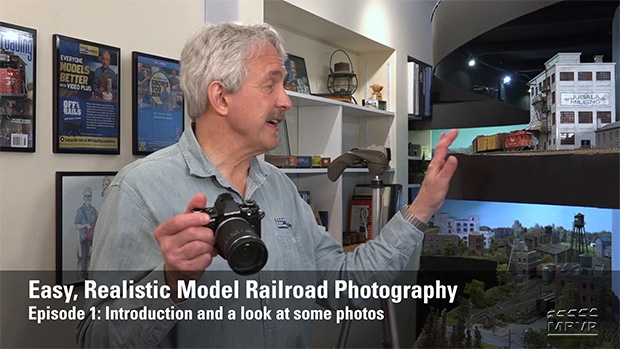
Having trouble viewing this video? Please visit our Video FAQ page In this MRVP exclusive mini-series, Gerry Leone walks you through the basic steps you can use to capture great shots of your model railroad…and you don’t even need an expensive camera to get impressive results! […]
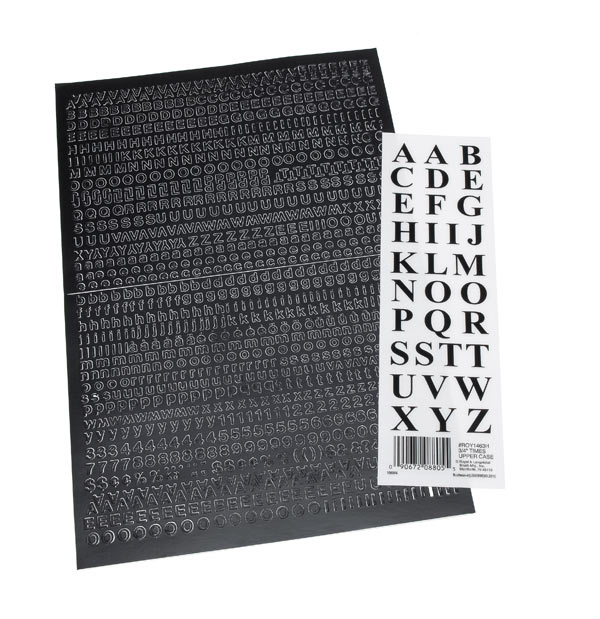
By the letter (and number) Vinyl letters with self-adhesive backing as well as dry transfers can be used straight from the package or as masks to letter structures, rolling stock, and locomotives. Alphanumeric sets are typically located with the drafting supplies. Additional self-adhesive and dry-transfer letters can be found in the scrapbooking supplies. Mark it […]
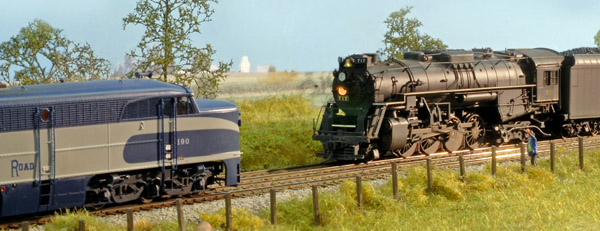
1950: Dieselization – Ten Class 1 railroads had already dieselized before this year, including the Atlanta & St. Andrews Bay; Chicago, Indianapolis & Louisville (Monon); Columbus & Greenville; Detroit & Mackinac; Elgin, Joliet & Eastern; Gulf, Mobile & Ohio; Lehigh & New England; New York, Ontario & Western; New York, Susquehanna & Western; and Texas-Mexican. […]
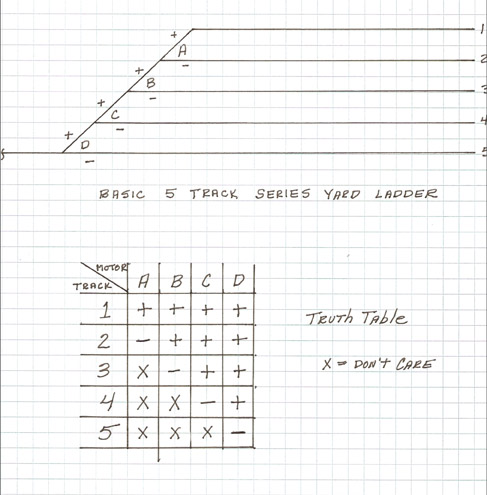
Introduction In an article in the August 2011 Model Railroader, I described a method to control yard ladders with a single rotary switch. By simply turning the rotary switch, all turnouts would automatically line up for the selected yard track. The method was based on using a bipolar power supply, Tortoise switch machines, and one […]
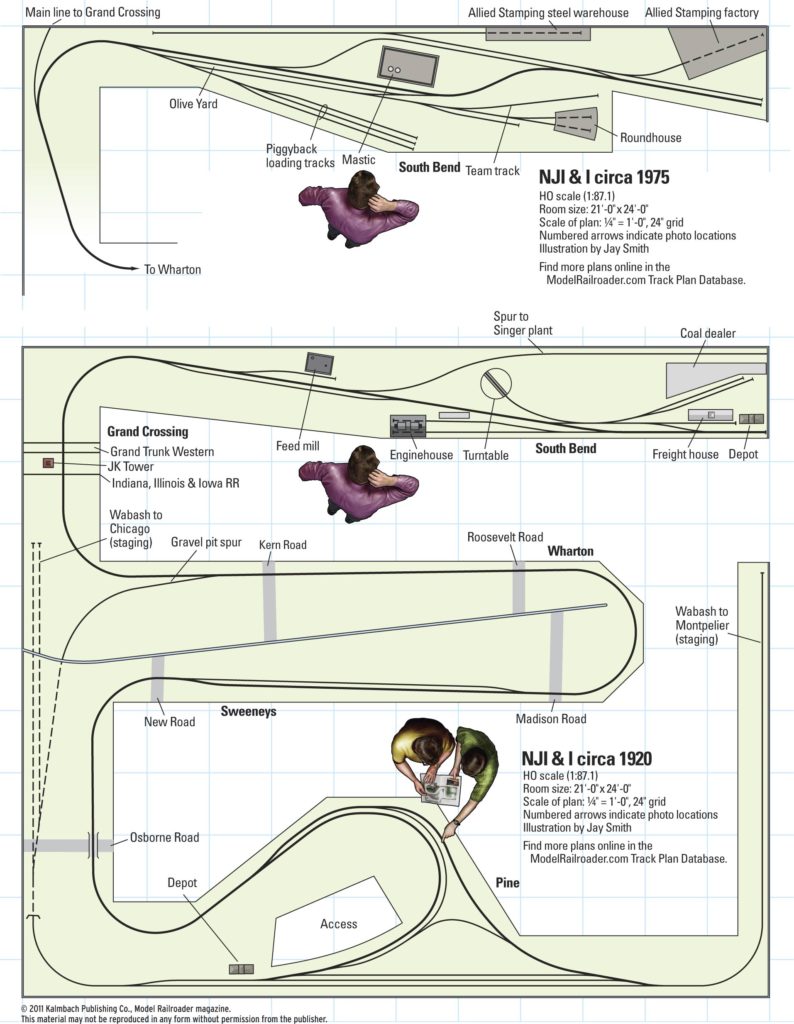
Name: New Jersey, Indiana & Illinois RR Layout designer: Dan Lawecki Scale: HO (1:87.1) Size: 21 x 24 feet Prototype: NJI&I (Wabash subsidiary from 1926 to 1966; Norfolk & Western branch line thereafter) Locale: South Bend, Ind. Era: 1920 or 1975 Style: walk-in Mainline run: 88 feet Minimum radius: 24 inches Minimum turnout: no. 6 […]
[…]
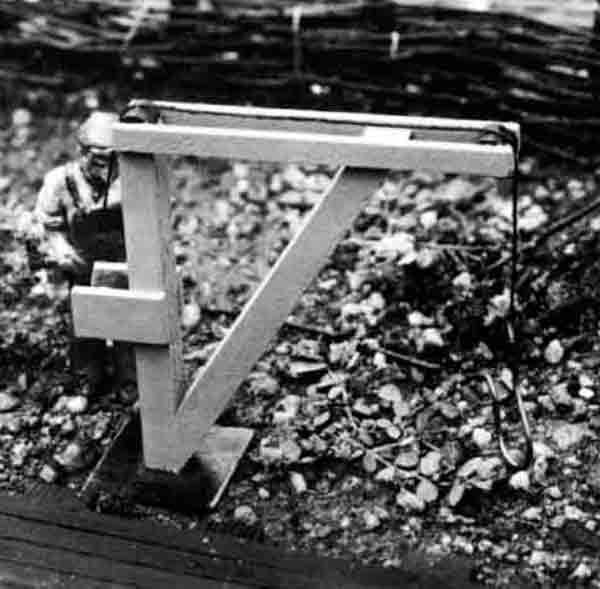
Click here to download a PDF of Build a Loading Crane. […]
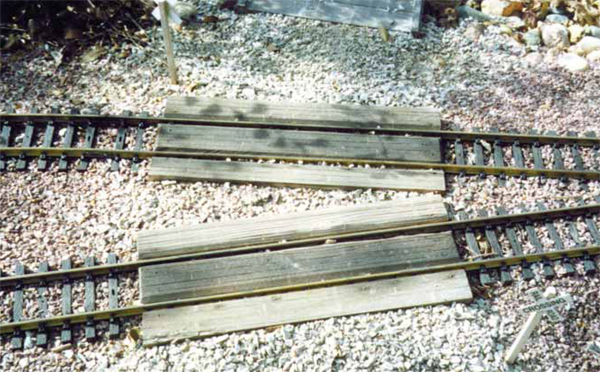
Download a PDF of the article here! […]

This PDF is formatted to print on your home printer. Most pieces are formatted to fit on a 8.5″ x 11″ piece of paper. For larger parts of the plan, you will see “break lines.” Line up the break lines to create the larger piece. Despite our best efforts to compress this file, it is […]
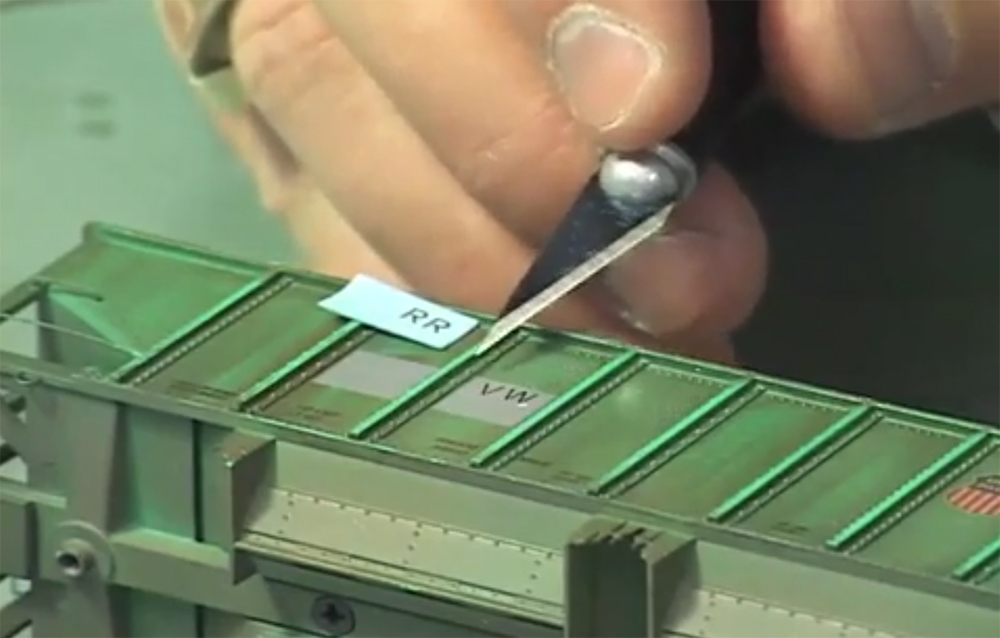
Having trouble viewing this video? Please visit our Video FAQ page Model Railroader associate editor Cody Grivno shows how to model patchout without any masking. […]
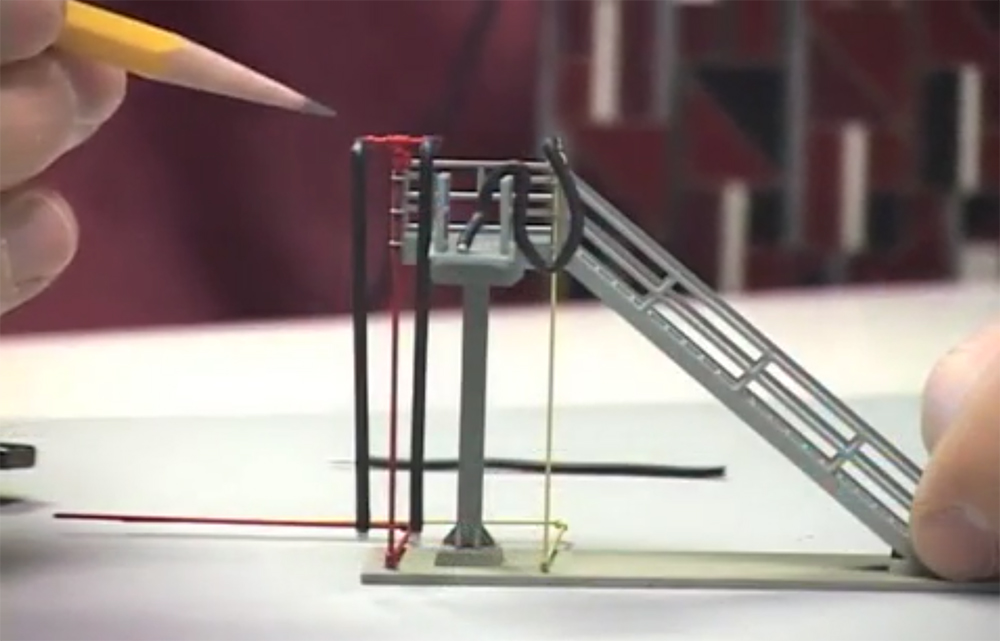
Having trouble viewing this video? Please visit our Video FAQ page Model Railroader associate editor Cody Grivno shows how to model simple hoses. […]
