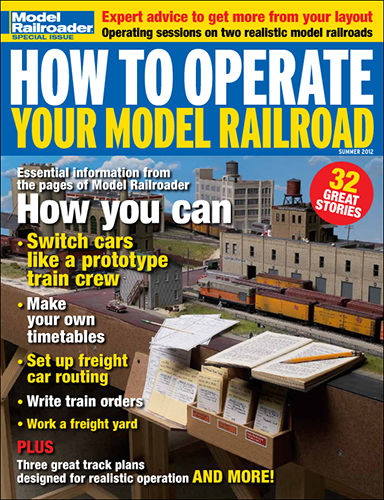
Click to see what’s inside this special issue Click the links to see all the online extras from How to Operate Your Model Railroad. Order How to Operate Your Model Railroad today! Switching Watch the video: Operations on the N scale Waterbury Industrial District. Car routing Download David’s industry lists and switch lists on his […]
Read More…
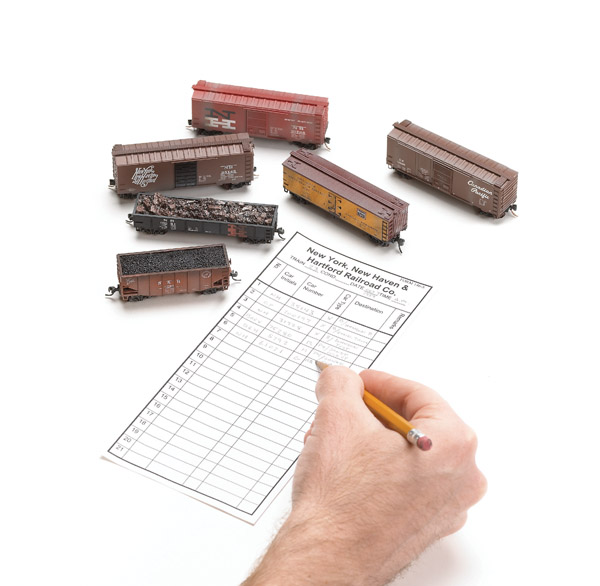
Model Railroader managing editor David Popp developed an operating scheme for his N scale New Haven layout. Adopting the idea of operating trains with a purpose will make your layout more interactive and realistic. Click on the links below to download the industry lists and switch lists David uses on his layout. Switch list front […]
Read More…

Peter Jones, 1944-2009 As many of you know by now, Peter Jones has passed on. He leaves behind a sparkling legacy, having provided inspiration for so many of us. Peter had a uniquely brilliant approach to garden railroading and a compelling, evocative way of presenting his ideas. I have had the pleasure and privilege of […]
Read More…
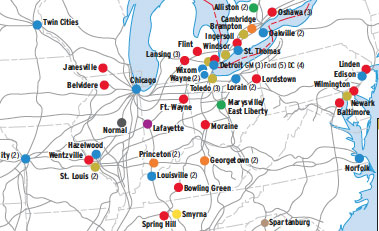
In the early 2000s, North America’s 88 automobile assembly plants produced about 15 million new cars and trucks a year. And railroads moved 70 percent of the vehicles built in the United States alone. Most Canadian and U.S. plants are concentrated in a wide corridor stretching from Toronto to Mobile, Ala. Plants in Mexico are […]
Read More…
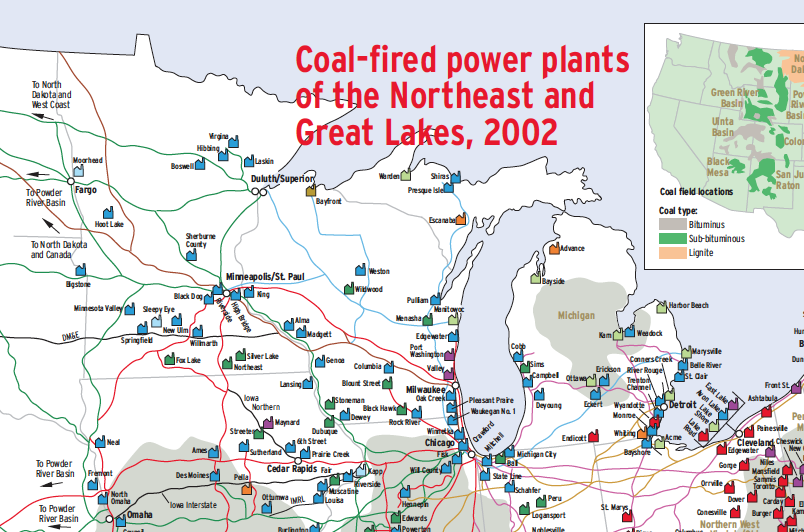
Coal is the most important rail commodity in the United States. In the early 2000s, when this map was produced, coal accounted for one of four cars loaded and slightly more than 20 percent of rail revenue. Eighty percent of the coal goes to the generation of electricity at steam power plants, so a map […]
Read More…
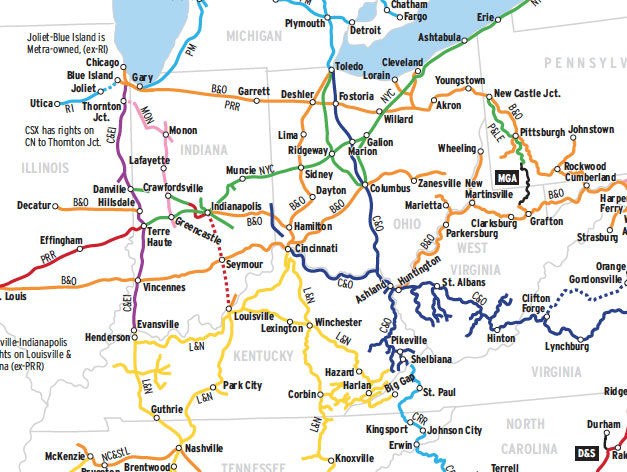
Geographic growth by acquisition or merger, and the elimination of redundant routes by sale or abandonment, are two factors that have been with American railroading from the outset…and are not about to go away. Consider this map of CSX Transportation’s principal ancestors. Shown here are 22 former Class I railroads — in post-World War II […]
Read More…
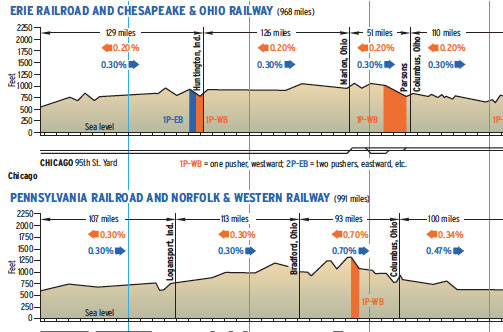
Compared here are the main lines of railroads that, for most of the 20th century, fed the nation with its most important natural resource: bituminous coal mined in Appalachia — the critical ingredient in power plants, steel mills, home furnaces, and factories. In 1927, the year of our comparison, the Chesapeake & Ohio and Norfolk […]
Read More…
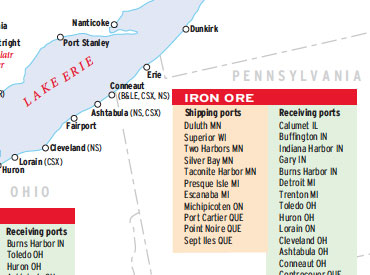
Commercial shipping on the Great Lakes follows a 2,300-mile corridor from the St. Lawrence Seaway to the western edge of Lake Superior. Over 200 million tons of cargo a year cross the five lakes and connecting waterways, hauled in some 150 U.S. and Canadian lakers, 50,000 barges, and about 1,000 visits by ocean-going vessels, or […]
Read More…
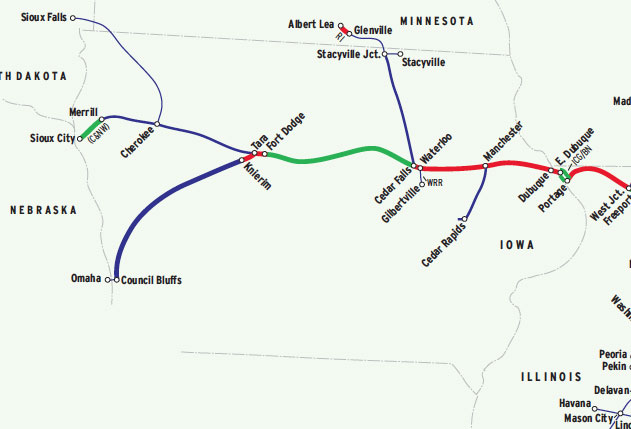
This Map of the Month was featured in the February 2009 issue of Trains magazine. The railroad Abraham Lincoln so ardently championed in the 1800s had changed dramatically in the ensuing century. On a mainly double-track speedway (enhanced with Automatic Train Stop in Illinois), diesel locomotives rushed goods from Gulf Coast ports and farms to […]
Read More…
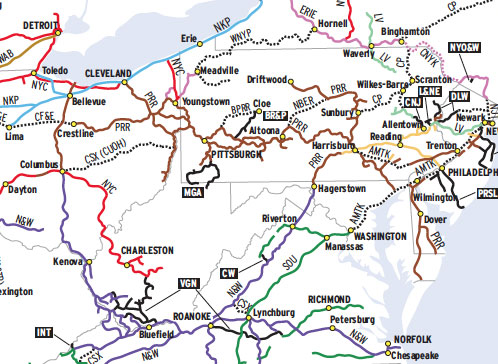
This Map of the Month appeared in the February 2004 issue of Trains magazine. Historians have argued that one key to the success of Norfolk & Western’s 1982 consolidation with Southern Railway was that the railroads shared a similar culture — determined, forward-looking, and committed to success. This served to douse the fires of early rivalries […]
Read More…
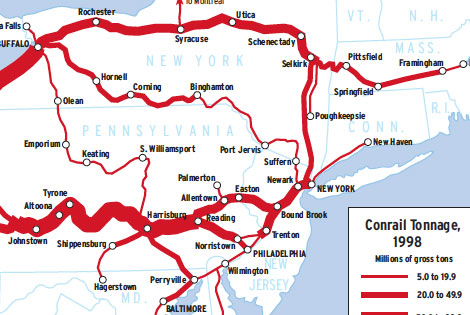
Twenty-four years separate these two density maps — a long time in North American railroading. The 1974 Penn Central map uses the last data available for the failed railroad; the 1998 Conrail map likewise is based on the last data before its system was split between CSX Transportation and Norfolk Southern. While similarities appear, the […]
Read More…
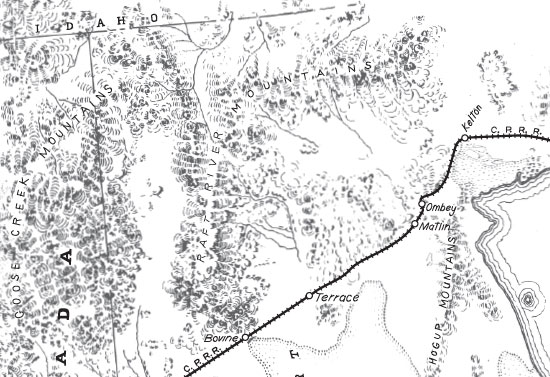
An English import, the American railway diverged sharply from English ideals. Environment proved stronger than genetics — settled and industrializing England constrained railway builders to design the most efficient routes possible, whereas their counterparts in unsettled and impecunious America disregarded gradient and circuity on pain of not completing lines at all. As the American era […]
Read More…