




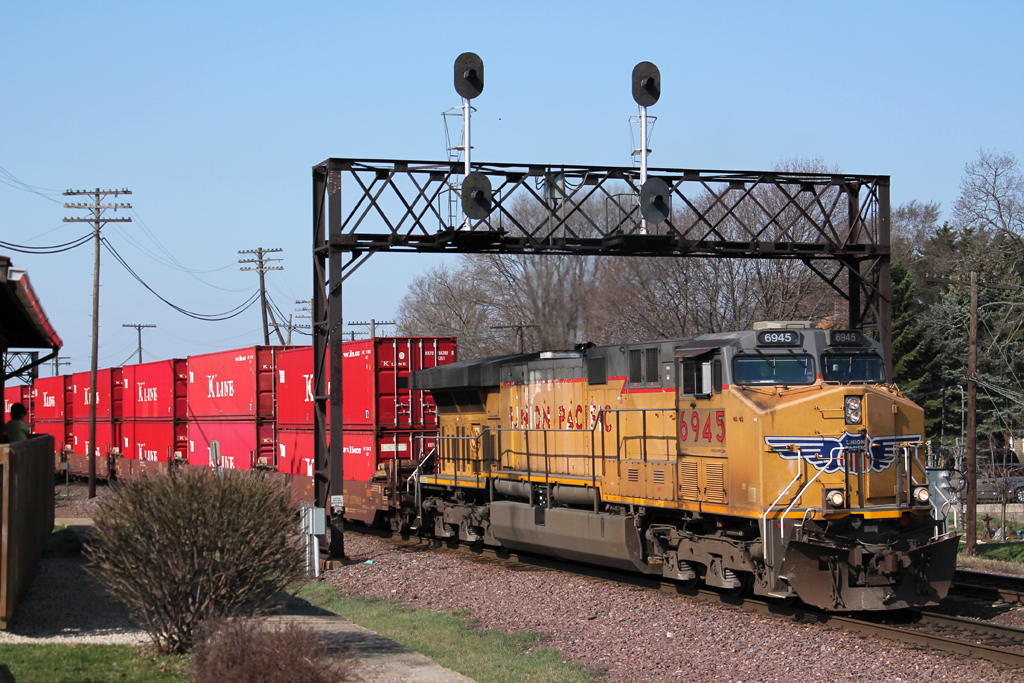
Union Pacific No. 6945 hustles past the railroad park in Rochelle, Ill., with double-stacked K-Line containers from Global 3. Photo by Sean Valk […]
Doing the hustle
Action may be required on your Trains.com account in order to continue accessing content. Click here to learn more.
Union Pacific No. 6945 hustles past the railroad park in Rochelle, Ill., with double-stacked K-Line containers from Global 3. Photo by Sean Valk […]
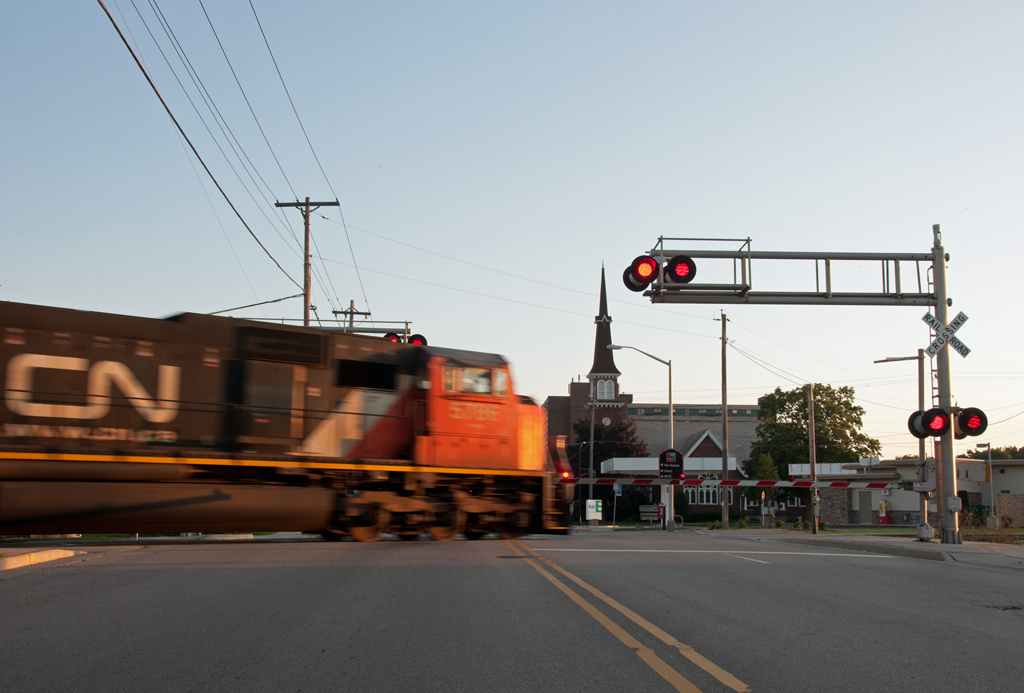
Morning sunlight glints off a Canadian National freight train rolling across Broadway in Waukesha, Wis., in August 2011. The train left Chicago in the wee hours and is headed for western Canada. Photo by Matt Van Hattem […]
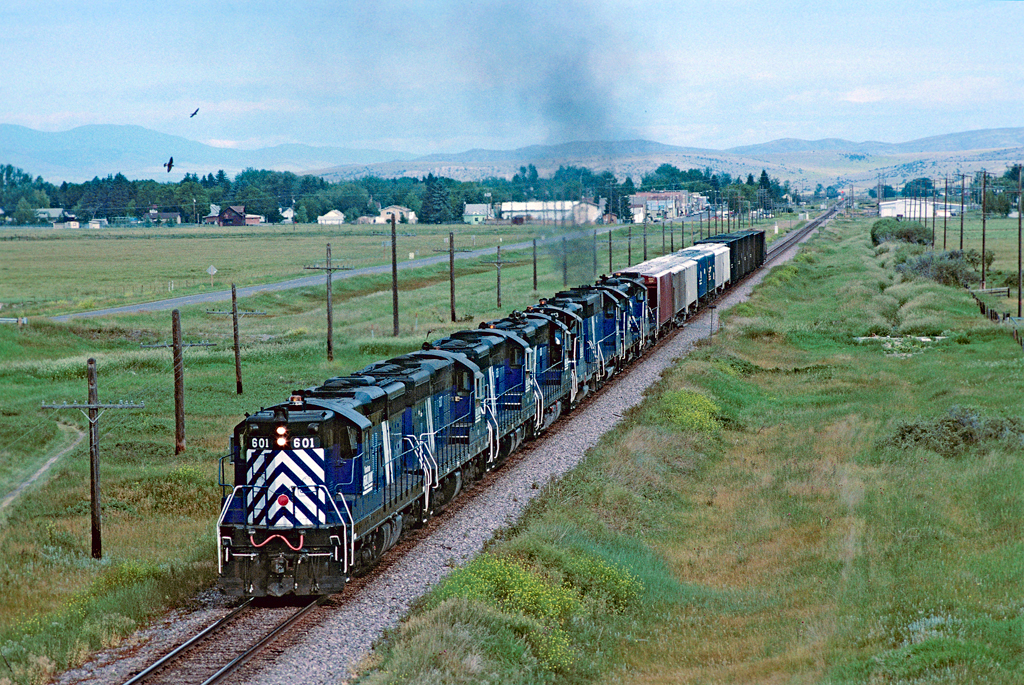
On July 2, 1994, a Montana Rail Link local heads east at Manhattan, Mont., with an incredible SD9/SD9/SD9/SD9/GP9/GP35/GP9/GP9 lashup. Photo by Tom Danneman […]
[…]
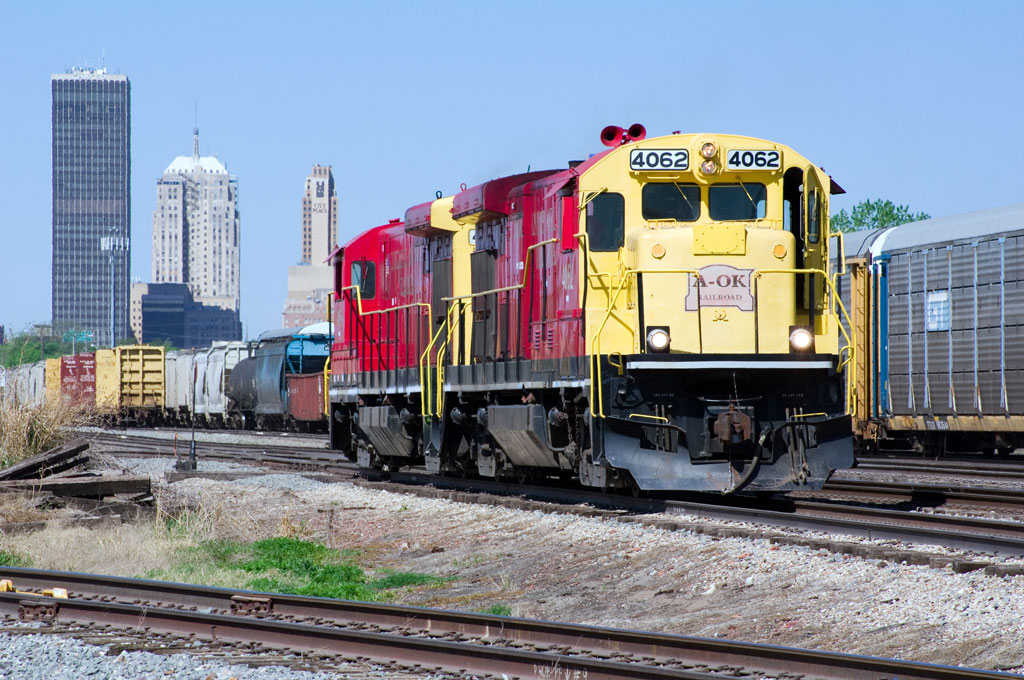
Arkansas & Oklahoma B23-7 No. 4062 leads a train to interchange cars with Union Pacific in Oklahoma City. John Leopard Although General Electric B23-7s dominate the Arkansas & Oklahoma’s roster, the railroad does use a few Electro-Motive Division locomotives and has previously even rostered a couple of Alcos. With heritages ranging from Santa Fe to […]
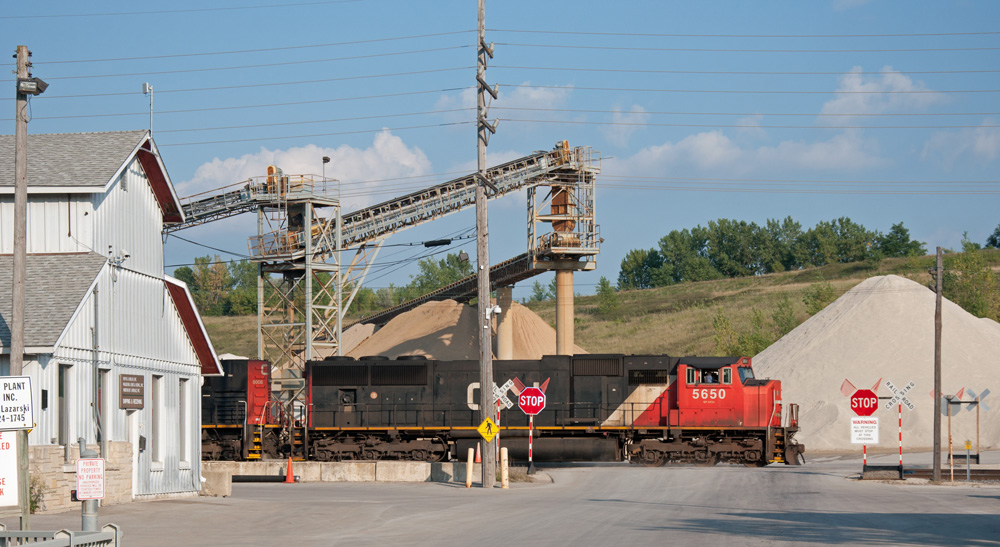
A southbound Canadian National freight rolls through a limestone quarry in Waukesha, Wis., in August 2011. Stone, sand, and gravel make up the largest source of originating traffic on Wisconsin railroads. Photo by Matt Van Hattem […]
DUNMORE, Pa. – The Erie Lackawanna Dining Car Preservation Society’s ex-Delaware, Lackawanna & Western diner 469 is on its way over Norfolk Southern and Delaware-Lackawanna from Collierville, Tenn. to Scranton, Penn. The Budd Co. built the car in 1949 for the DL&W’s premier train, the Phoebe Snow. Renumbered 769 after the merger forming the Erie […]
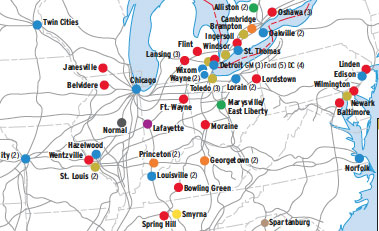
In the early 2000s, North America’s 88 automobile assembly plants produced about 15 million new cars and trucks a year. And railroads moved 70 percent of the vehicles built in the United States alone. Most Canadian and U.S. plants are concentrated in a wide corridor stretching from Toronto to Mobile, Ala. Plants in Mexico are […]
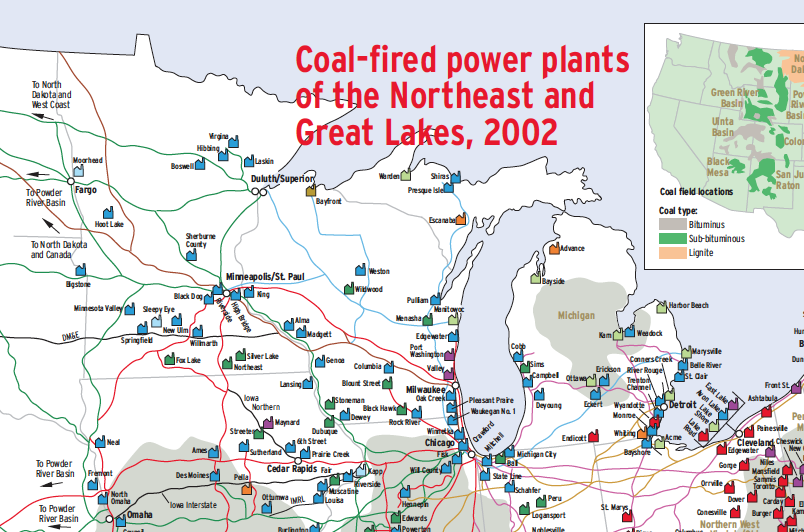
Coal is the most important rail commodity in the United States. In the early 2000s, when this map was produced, coal accounted for one of four cars loaded and slightly more than 20 percent of rail revenue. Eighty percent of the coal goes to the generation of electricity at steam power plants, so a map […]
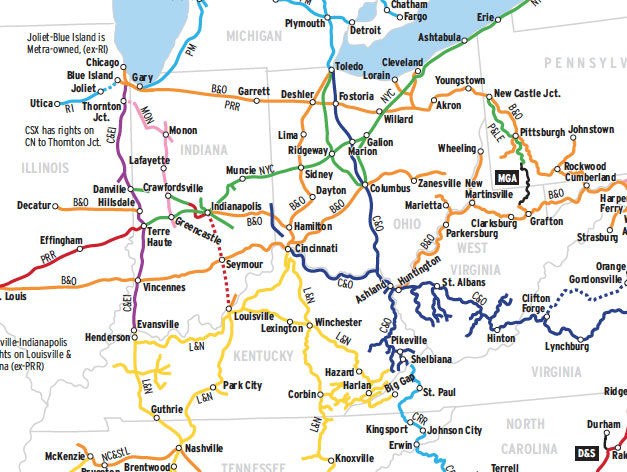
Geographic growth by acquisition or merger, and the elimination of redundant routes by sale or abandonment, are two factors that have been with American railroading from the outset…and are not about to go away. Consider this map of CSX Transportation’s principal ancestors. Shown here are 22 former Class I railroads — in post-World War II […]
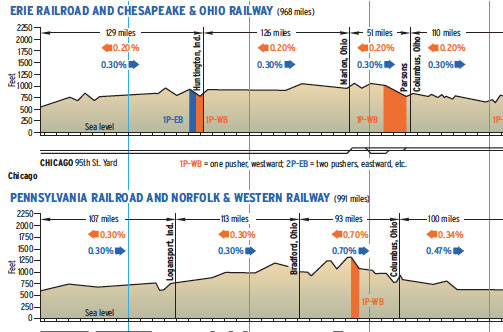
Compared here are the main lines of railroads that, for most of the 20th century, fed the nation with its most important natural resource: bituminous coal mined in Appalachia — the critical ingredient in power plants, steel mills, home furnaces, and factories. In 1927, the year of our comparison, the Chesapeake & Ohio and Norfolk […]
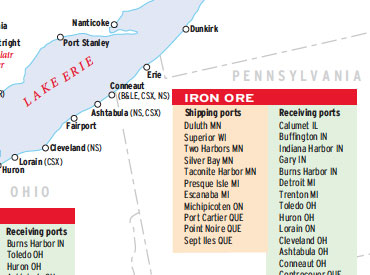
Commercial shipping on the Great Lakes follows a 2,300-mile corridor from the St. Lawrence Seaway to the western edge of Lake Superior. Over 200 million tons of cargo a year cross the five lakes and connecting waterways, hauled in some 150 U.S. and Canadian lakers, 50,000 barges, and about 1,000 visits by ocean-going vessels, or […]
